Druin Burch

Druin Burch is a consultant physician, a former junior doctor, and the author of books on history and medicine.

How can measles have broken out in London?

From our UK edition

Last month the World Health Organisation removed Britain from its list of countries where measles had been effectively eliminated. The disease has been circulating continuously since late 2023. Last year there were almost a thousand cases, and a child died in Liverpool. Now there is a measles outbreak in Haringey and Enfield. So far it has affected fewer than a hundred, with no deaths. That could change at any moment. If you want to warn people that travelling to certain countries is high risk, you name those countries. The fear that doing so is racist is not only misplaced, it is harmful to the people you need to protect A third of children in those boroughs aren’t protected against measles, mumps, and rubella. Other boroughs are as bad; most only a little better.

Does coffee really lower the risk of dementia?

From our UK edition

People who drink coffee and tea are less likely to suffer dementia, according to a large study published this week. The research is from Harvard and appears in the Journal of the American Medical Association (JAMA), one of my profession’s top outlets. There is every reason to presume its conclusion is wrong. A total of 131,821 people were followed over a period of up to 43 years. The number of dementia cases was high, giving the study good statistical power. Every few years a dietary questionnaire asked participants how much tea and coffee they drank: After adjusting for potential confounders ... higher caffeinated coffee intake was significantly associated with lower dementia risk ... and lower prevalence of subjective cognitive decline.

The latest junior doctors’ strikes aren’t about pay

From our UK edition

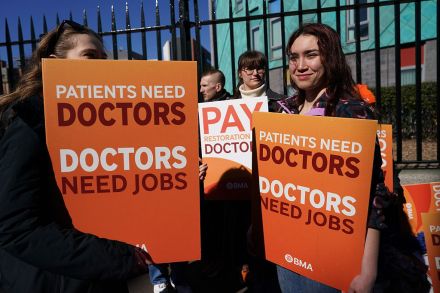
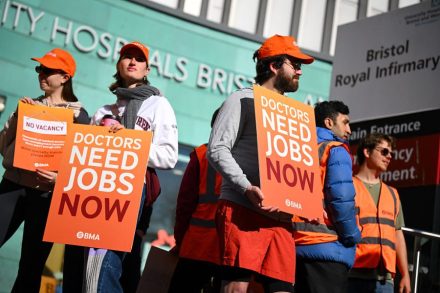
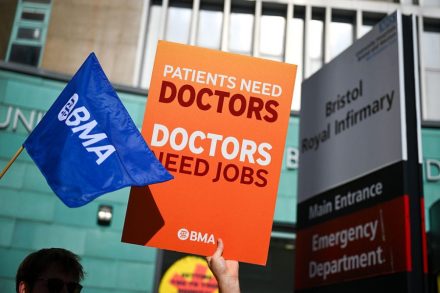
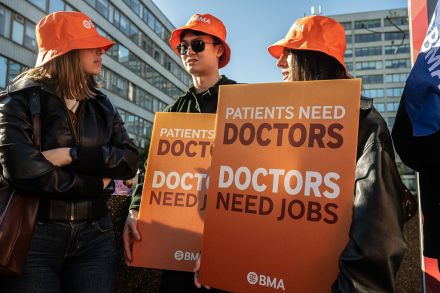
Junior doctors have voted to extend their strikes – by a whisker. Turnout for yesterday's vote collapsed to less than 53 per cent – a whisker above the threshold needed to make it legal. Framed as a pay dispute, the strikes are the result of a needlessly ruined career structure, and a government perversely willing to leave British doctors unemployed. The strikes started after an early February 2023 ballot in which turnout was more than three quarters and 98 per cent were in favour. In the following strikes, support remained at or above 90 per cent, but turnout kept dropping. In March 2024 it was 62 per cent, last July it was 55 per cent. Some readers will feel juniors merit more pay; I suspect there are few who think the injustice is such that they are right to strike.

The solace of spring

From our UK edition

By the calendar it is winter, but the days are longer and the birds are singing. Snowdrops are scattered around the front door, and crocuses have already broken through on my lawn. Mostly they are slim and pale, but when the sun has shone they have opened their purple cups to its warmth. Virginia Woolf compared the yellow anther within to a lit match.  In defiance of the calendar, spring shows its face. Hellebores droop with dappled flowers. Kneeling in damp earth to trim back their old leaves reveals their profusion. Catkins are on the trees, magnolia buds are splitting with promise, the scent of the daphne cuts the cold air, and the blade-like leaves of spring bulbs, ‘the green fuse that drives the flower’, push up along the grass bank beside the road.

Don’t bet on Elon Musk’s failure

From our UK edition

Tesla’s last quarterly report revealed that deliveries had declined for the second year running and, for the first time, annual revenues had fallen. “It is starting to look as if Tesla is finished,” concluded a piece in The Spectator. To what extent Musk will succeed can’t be known, but his track record demands thoughtful uncertainty at the least If you felt you’d read about Tesla’s death before, you would have been right. Success in one arena guarantees nothing in another – brilliant men, such as Tesla's boss Elon Musk, can be bafflingly stupid. Writing them off too soon, though, can become a bad habit.

What Lego taught me about my own mediocrity

From our UK edition

Lego – I can’t bring myself to capitalise it more than once – was born today in 1958, when it was granted its Danish patent. Parents have been performing staccato hops over the plastic bricks ever since. I will not be alone in remembering a Lego set as being an object of endless desire. As a Christmas or a birthday approached, my mind was stirred not with gratitude for the son of God, or for my parents having brought me into the world, but with anticipation for the hollow rattle of a rectangular box hidden somewhere in a wardrobe. Children don’t question why they receive gifts on their birthdays rather than give them.  How I’d dream of the worlds the Lego would unfold.

Belsen haunted my friend to the grave

A patient, an old woman with white hair, stripped of speech by dementia, followed us each shift, staying an inch behind, wanting nothing more than human presence. We let her into the staff room, where she hovered behind whoever was nearest, her tattooed number visible on her forearm. They found a young girl, Doris, who could speak some English. Malnutrition had left her mouth and face gangrenous I am aware of only one other patient, these past thirty years, who had survived the Nazi death camps. Normally sane and sensible, dusk brought confusion, dragging him backwards in time. Each sundown he began screaming and we could not console him; he took us for guards. I drugged him.

belsen

Labour’s drink-driving law won’t cut road deaths

From our UK edition

'We will tread more lightly on your lives,' promised Keir Starmer in his first speech as Prime Minister. Yet his government has not lifted the weight of the state in their 18 months of power but made it more intrusive. Today, as part of a new road safety strategy, Labour is proposing cutting the drink-drive limit from 80 to 50 milligrams per hundred millilitres of blood, matching the stricter Scottish limits. I'm not convinced this crackdown will save lives. I have not had to peel the remains of mangled children and adults from cars and pavements, as many police officers and paramedics have. But as an A&E doctor I have heard their stories and looked after those they brought in who survived, sometimes only long enough to die as I tried to keep them alive.

January is the time to drink

From our UK edition

Of all the months to choose for abstinence, January seems the strangest. May is intoxicating by itself; winter, when life feels threatened by the silent ministry of frost, needs cheer. Christmas and New Year are past, the birds are already singing loudly in the early mornings, snowdrops push up their green fuses, hellebores grow fresh leaves, and the magnolia buds swell. They will bloom on sunny but cold days and look perfect for a moment, before frost burns their scarlet and white edges to brown. Spring is coming, but winter retains its hold. January is the time to drink port. Dickens understood this. He mentioned drinks of all kinds a great deal, and port more than any other wine.

Christmas and the luxury of fallow time

From our UK edition

Christmas is now a festival of family and overeating, yet it keeps its pockets of quiet reflection, even for those for whom the sacred has slipped away. There are times when life insists we do nothing, and some come at Christmas. Holidays bring downtime, moments when work and parties, preparations and cleaning, computer games and social media, all cease. William Henry Davies knew the value of time left fallow: What is this life if, full of care,We have no time to stand and stare. No time to stand beneath the boughsAnd stare as long as sheep or cows. I remember a fertile silence as a young man in a wintry chapel, where incense lingered and the only sound was stone settling after six hundred years.

The welcome tyranny of Christmas cheer

From our UK edition

In 1946, buoyed by post-War optimism, the World Health Organisation adopted a famous definition. Health, it declared, was more than the mere absence of disease or infirmity, it was 'a state of complete physical, mental and social well-being'. A beautiful and tyrannical idea, sentimentally idealistic and setting an impossible standard for human lives. In these qualities of cheerful and unreasonable despotism, it resembles Christmas. Our wish to make kids happy at Christmas turns us into untiring fifth columnists of festive tyranny On the first of November, collecting my cardboard cup of coffee in Costa, I noticed it was decorated with a festive scene. I scowled, which comes naturally, but felt a small and undignified flutter of pleasure.

Death at Christmas

From our UK edition

That time of year thou mayst in me beholdWhen yellow leaves, or none, or few, do hangUpon those boughs which shake against the cold,Bare ruin'd choirs, where late the sweet birds sang.In me thou see'st the twilight of such dayAs after sunset fadeth in the west,Which by and by black night doth take away,Death's second self, that seals up all in rest. Not the most festive of openings, but Christmas is about darkness as well as light, and the sonnet is in the key of bleak midwinter. We know roughly what year Christ was born – although, since it was before Herod died, it may have been a few years B.C. But about the month of his birth we know nothing. December 25 echoes the pre-Christian pagan festivals, embodying their hopes – of spring, rebirth, eternal life – in Christ’s coming.

The yearly flu crisis is entirely avoidable

From our UK edition

Each winter our NHS is struck by an ‘unprecedented’ number of cases of seasonal illness. Politicians talk gravely of the hard work done by our doctors and nurses, and ask the public to do what they can to help. Newspapers and scientists describe the influx of cases in meteorological terms – a ‘surge’, a ‘wave’, perhaps a ‘viral maelstrom’ – and the bugs themselves, which are biologically ordinary, are given glamorous names. This year, influenza A strain H3N2 became ‘superflu’. We’re told the strain on the NHS this winter is unparalleled, but it’s really only slightly worse than last year. For the three decades I’ve worked in British hospitals, each winter is meant to be a uniquely terrible flu year. In actuality, every year largely resembles the one before.

Why are world leaders shocked by the Bondi Beach attack?

From our UK edition

Micheál Martin, Ireland’s Taoiseach, said he is shocked by the anti-Semitic slaughter on Sydney’s Bondi Beach. Ursula von der Leyen, the president of the European Commission, is shocked too. So is Christopher Luxon, the prime minister of New Zealand. Yet there is really nothing shocking about the Australian attack. Insanity, as the saying goes, is doing the same thing over and over again and expecting a different result. Australia's ABC News is reporting this morning that one of the Bondi Beach gunmen was previously investigated over his ties to a Islamic State (IS) terrorism cell. An Isis flag was also reportedly found in the car of the gunmen. Islamic terrorist attacks on innocents happen over and over again.

How terror triumphed at the Christmas market

From our UK edition

Mulled wine and Heckler & Koch assault rifles don’t belong together, except in Christmas films like Die Hard. Festive visitors to Christmas markets in Berlin, London or Strasbourg this year will notice the pairing all the same. Concrete blocks surround fairy lights, and the scent of cloves and cinnamon wafts over armed police carrying submachine guns. Concrete blocks surround fairy lights, and the scent of cloves and cinnamon wafts over armed police carrying submachine guns Since an Islamist drove a lorry into the Breitscheidplatz market in Berlin in December 2016, killing twelve and injuring dozens, we deck the halls with blast protection.

Supermarkets have finally discovered chilli

From our UK edition

When Columbus brought chilli back from the New World, the British were indifferent. Strange, really, when our taste for horseradish and mustard was keen, and when we later found a love for Marmite, stilton and Pickled Onion Monster Munch. A culture shaped by drizzle should have been an early adopter. Instead, that part of our culinary soul which prizes macaroni cheese for its inoffensiveness prevailed. Kedgeree had been here for a century, spiced with nothing hotter than pepper, when we started developing more fiery tastes. Students showing off to each other would compete to eat a vindaloo or a phall. There are attitudes that youth and inexperience make forgivable.

Is racism to blame for the NHS maternity crisis?

From our UK edition

'Nothing prepared me,' said Baroness Amos as she released her 'reflections and initial impressions' about England’s maternity and neonatal services, 'for the scale of unacceptable care that women and families have received, and continue to receive, the tragic consequences for their babies, and the impact on their mental, physical and emotional wellbeing.' Amos's words today paint a bleak picture of English maternity services, staffed by people who often don’t care, don’t listen, and deliver worse outcomes for the working class and people who aren’t white. It's a picture that many parents – including myself – recognise. But is it right to suggest that black mums are being discriminated by the NHS?

The joy of receiving Christmas cards – even from people I loathe

From our UK edition

These days I barely know what my own handwriting looks like; about my friends, the knowledge is all but lost. Seeing their pen strokes has grown rare. But, for a brief period each winter, that odd intimacy returns as Christmas cards – some with messages, most with just a scribbled name – land on my mat. I adore receiving cards. Even ones from people I cordially dislike, or frankly loathe, are welcome There used to be something exciting about the sound of the postman’s footsteps, of letters being pushed through the door, of their thump as they landed within. That was during the days when there was a great deal of post. Even then, unexpected letters from old friends arrived rarely and, strange to say, the endowment begging me to write full time never arrived at all.

Why GPs are reluctant about online booking

From our UK edition

'Moaning Minnies' is how the Health Secretary Wes Streeting has described GPs opposing his rollout of online appointment booking. Originally, that moniker referred to German artillery pieces – and it’s pleasant for a doctor like myself to imagine we still possess that sort of firepower. But Streeting meant that the British Medical Association’s GP committee, which he has accused of undermining the attempt to make primary care more accessible, are a bunch of whining complainers, rather than us ordinary doctors. So, is Streeting right? General practice, as everyone is painfully aware, is in trouble. Except in a shrinking minority of places, the old model that made it so valuable is dead.

Junior doctors are striking for the wrong reason

From our UK edition

Oh God, another junior doctor strike. That seems to be the feeling of the country and of the junior doctors I've spoken to. Certainly it's the feeling of the consultants, like myself, who will be covering for them. Why the BMA has called another strike is clear. They haven't got what they wanted, and their current mandate expires in early January. What is less clear is whether they should be striking at all. During the last strikes I wrote that the majority of juniors weren't striking chiefly for a pay rise, but because their jobs and prospects of career progression are being allocated to foreign doctors who, data shows, perform worse on average.