Douglas Murray

Douglas Murray

Douglas Murray is associate editor of The Spectator and author of The War on the West: How to Prevail in the Age of Unreason, among other books.

The truth about grooming gangs, ‘why I’m voting for the AfD’ & exploring YouTube rabbit holes

47 min listen

This week: what does justice look like for the victims of the grooming gangs?In the cover piece for the magazine, Douglas Murray writes about the conspiracy of silence on the grooming gangs and offers his view on what justice should look like for the perpetrators. He also encourages the government to take a step back and consider its own failings. He writes: ‘If any government or political party wants to do something about the scandal, they will need to stop reviewing and start acting. Where to begin? One good starting point would be to work out why Pakistani rapists in Britain seem to have more rights than their victims.’ To unpack his piece in a little more detail, we were joined by journalist Julie Bindel, who has been reporting on the grooming gangs for almost 20 years.

What real justice would look like for grooming gang victims

It is always interesting to watch a dam burst. In the past week, as Elon Musk and other prominent Americans discovered the British ‘grooming gang’ scandal, British politics has suddenly had to face up to something it has spent a quarter of a century trying to ignore. One would hope that the claim that thousands of underage girls had been gang-raped by thousands of men in cities across the country would be a subject of profound concern for our politicians. Who did this? Why? How can we help the victims and prevent any reoccurrence? But no society asks questions to which it does not want an answer. The language used about this mass crime has been coyly euphemistic. Take ‘grooming’.

Why do Americans care about Tommy Robinson?

34 min listen

Douglas Murray, Spectator columnist, joins Americano host and Spectator deputy editor Freddy Gray. This week, Home Office Minister Jess Phillips rejected Oldham Council’s request for a government-led inquiry into the horrific scandal of grooming gangs in dozens of UK cities. Her decision has led to real backlash – with X owner Elon Musk calling for safeguarding minister Jess Phillips to be jailed, and for the King to dissolve parliament. Have politicians underestimated the strength of public feeling in the UK and the US? They also discuss the Southport riots, and ask why some politicians are unwilling to confront societal problems in the name of political correctness.

Most-read 2024: The unfashionable truth about the riots

We’re closing 2024 by republishing our five most-read articles of the year. Here’s No. 4: Douglas Murray’s article from August about the UK riots. As the days slip by, the likelihood that anything will be learned from the recent rioting looks ever more remote. And with that suspicion comes the inevitable sense of déjà-vu. Because we have indeed been here before. In 2011 England was engulfed by riots, originating in London but leading to copycat violence across the north of England. The ostensible cause that time was the shooting by police of Mark Duggan, a charming young drug dealer who was in possession of a gun. The initial unrest in Tottenham may well have started as a result of claims that police had shot an innocent man – and an innocent black man at that.

My rules for church readings

It is that time of year when people in churches across the land have to face the difficult question of how to read scripture out loud. I count myself a bit of an expert in this, not because I have had to do it many times for some 35 years, but because I have seen everything go wrong that can go wrong. It is like the fear that engulfs me when-ever an unaccompanied treble kicks off the first verse of ‘Once in Royal David’s City’ at the service’s start. If the treble goes off-key in that solo verse, one of the great black holes in the universe opens up – for the choir and conductor must swiftly decide whether they should begin their next unaccompanied verse in the original key, or resign themselves to whatever key the treble has arrived at.

Beware the Qataris

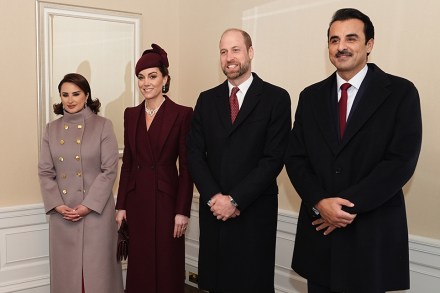
I feel some sympathy for the British royal family because of the ghastly people they are forced to meet. The late Queen had to greet Nicolae and Elena Ceausescu, Idi Amin and Robert Mugabe. This week the King and Prince and Princess of Wales had to meet the Emir of Qatar and his wife. True to form, the state media in Britain managed to miss every major problem with this. The BBC did say that there might be protests around the visit because of Qatar’s record on ‘LGBT rights’. But more troubling is that Britain should ever have welcomed the leadership of such a sordid, terrorist-supporting statelet.

How to get on the housing ladder

It is always interesting to watch the debates that roil a nation. So far as I can see, the current debate in parliament mainly consists of trying to work out whether the NHS is competent enough to kill people or not. This week one of our greatest Home Office ministers – Jess Phillips MP – was asked about the question of ‘assisted dying’. She said that, naturally, she is in favour of this ‘progressive’ policy. But one qualm held back her support. In Phillips’s estimation the NHS is ‘not in a fit enough state’ at present to kill patients on demand. Many people whose family members have gone through the NHS might beg to differ with Phillips on this point.

Britain’s failing statecraft

I mentioned some weeks ago that one of the great points of interest – not to say enjoyment – in our era will be seeing how Keir Starmer’s government copes with the incoming Donald Trump administration in Washington. It is fair to say that many Labour MPs, not to mention the mayor of London (who spends more time grandstanding abroad than he does addressing violent crime in his own city), have been wildly impolitic. If there are two candidates in the running to lead your most important ally it would seem prudent for a wise man to keep his diplomatic options open. Alas, Westminster does not appear to be flooded by wise men.

Will Elon Musk Make America Great Again?

28 min listen

As Donald Trump selects his new cabinet, Elon Musk has been chosen to head up the new efficiency department. Douglas Murray, Spectator columnist, joins Americano host Freddy Gray to discuss. How will their relationship shape Trump’s presidency? What will Musk’s ownership of X, formerly Twitter, mean for free speech? And will their newfound friendship last the stretch of Donald Trump’s second term?

Welcome to life on Planet Elon

On 13 July this year, an assassin’s bullet grazed the ear of Donald Trump as he turned his head on stage in Butler, Pennsylvania. The whole world saw it and his response: ‘Fight, fight, fight.’ For Elon Musk, this was not just a news event but a galvanising and clarifying moment. He immediately posted a video of the shooting to X and wrote: ‘I fully endorse President Trump and hope for his rapid recovery.’ Musk is different from most people. For him, going all-in really means going all-in. When Trump returned to Butler last month, he was joined on stage by the billionaire. Musk is now one of the most important figures in the team around the President-elect as he prepares his new administration.

The problem with Dawn Butler

We hear a lot about white supremacy these days. But for some reason we rarely hear about black supremacy. I wonder why? There’s a lot more of it around. For Butler, describing someone as white or as trying to be white is clearly a great insult While it is vanishingly difficult to find an overt white supremacist in British public life, it is extremely easy to identify their black counterparts. As exhibit A I would present the Labour MP Dawn Butler. I have written about her once before, in 2020, when Ms Butler was in a car that was stopped by police. At the time I speculated that the coppers may have pulled the vehicle over in the hope of reclaiming the whirlpool bath that Butler had treated herself to at taxpayers’ expense a few years before. But it was not to be.

The strange silence around the Southport attacks

There are certain rules in British public life that are worth noting. Such as this one: if someone is killed by a jihadist or someone who could plausibly be connected to immigration in any way, the British public will not be informed of the possible motive – or at least not until it becomes impossible to conceal it any longer. It was revealed that the attacker was of Rwandan heritage, at which point people said: ‘Nothing to see here’ Certain rules follow on from this. One is that ‘wise’ heads will inform anyone who does mention a likely motive that they must be exceptionally careful not to prejudice any forthcoming trial. There then comes an insistence that there will be a time and a place to debate these things. Quite often, that time and place never arrives.

The ICC’s rogue prosecutor

Yahya Sinwar, the mastermind of 7 October, went to meet his maker last week. Having spent a year being pursued through the underground tunnels of Gaza that he had built, he finally put his head up above the surface in the Tal al-Sultan area of Rafah. The world that had told the IDF not to go into Rafah was once again proved wrong. Sinwar was killed in an exchange of fire by a 19-year-old Israeli soldier who was not even in uniform on 7 October. People inside the ICC were annoyed by the way Khan made himself a sort of ‘world policeman’ A couple of days after Sinwar’s demise, I went into Rafah to see the house where he spent his final minutes.

The rise of anti-Elonism

You can tell a lot about a country by who it admires. I was pleasantly surprised some years ago to see a poll showing that the most admired man in the UK was Richard Branson. You may not love all his publicity stunts, or have liked the sandwich selection on Virgin trains, but that poll suggested the British public still liked entrepreneurialism and achievement. It seems mainly to affect people who have really never done very much with their lives I slightly dread a rerun of such a poll today, because I suspect that among the youth vote in particular the winner would be the person with the most perceived disadvantages in life.

Does Keir Starmer have a soul?

One of the main arguments against hereditary peerages is that talent and ability are not always passed down across generations. There is much to this. Students of history will know that all the great dynasties see some kind of falloff in capability. Whether the Habsburgs, the Plantagenets or the Kinnocks, the families produce a man – or occasionally a couple of men – of quality, only to see their heirs and successors squander everything. The same rule exists in a meritocratic age. Someone in a family makes a fortune. The next generation spends it. A generation after that, the family is back to square one. Give or take a generation, and you can follow this rule in all of nature, as well as in the obituaries section of the Daily Telegraph.

Israel was right to ignore the West

There are sources in the Jewish tradition that warn against exultation at the downfall of one’s enemies. But I am not Jewish, and so I have exulted greatly these past two weeks. If you follow most of the British media, you may well think that the past year involves the following events: Israel attacked Hamas, Israel invaded Lebanon, Israel bombed Yemen. Oh and someone left a bomb in a room in Tehran that killed the peaceful Palestinian leader Ismail Haniyeh. Kamala Harris warned that the IDF shouldn’t go into Rafah. As she wisely said: ‘I’ve studied the maps’ Of course all this is an absolute inversion of the truth. Hamas invaded Israel, so Israel attacked Hamas.

Sky News has lost its way

Occasionally I am told that I go too hard on the BBC. It is an understandable gripe which I sometimes hear from disgruntled journos from Broadcasting House. So let me start by saying that, as an equal-opportunities insulter, I would like to put on the record how completely rancid Sky News in the UK has become. To give an idea of where Sky UK has gone wrong since being sold, allow me to highlight one story as the channel reported it this week. After the targeted strikes on Hezbollah operatives via their pagers and walkie-talkies, Sky ran a story headlined: ‘Hezbollah has been provoked like never before by Israel and may be tempted to unleash its firepower.’ That is truly fascinating framing.

Are the Tories brave enough to be conservative?

The Conservative party is out of power – and that’s not easy if you’ve been in power for more than a decade. Even after a short spell in government there are certain aspects of life that you miss. The drivers and others who used to manage your life and get you around. The legions of advisers. The security detail (if you held one of the high offices of state). And the civil servants who do your bidding. That last one is a joke, of course. I know most readers will, like me, have found it difficult to listen to Conservative ministers complaining about civil servants during their 14 years in power. There might well have been cause to moan that civil servants were all a bunch of lazy lefties for the first couple of years.

The C of E’s raving madness

In February there was a commotion at Canterbury Cathedral. Or, to be more precise, there was a silent commotion. The cause was a ‘silent disco’ which took place in the nave over two nights. For anyone above the age of 12, a silent disco is where everybody has headphones on and is in their own world. Like the London Underground but with more legroom. There is a DJ as well and so I think (if I’ve got this right) everybody is listening to the same music. In any case, over two nights thousands of revellers came to the cathedral, put on headphones, bought drinks in the side aisles, brushed past the tomb of Thomas Becket and then waved neon lightsabers and danced around to their heart’s content.

The joy of our deluded politicians

There are a number of joys in life that do not get enough attention. One is the sheer, unadulterated pleasure that can be gained from watching a politician speak about something they know nothing about. This season Kamala Harris is giving especially abundant material for connoisseurs. Recognising that there is plenty she doesn’t know about, her campaign team are hoping that, Starmer-like, she can glide into office without having to say anything about what she might do once there. On the rare occasions when she does sit down and get asked questions, she is a master in her peculiar field.