Douglas Murray

Douglas Murray

Douglas Murray is associate editor of The Spectator and author of The War on the West: How to Prevail in the Age of Unreason, among other books.

The death of public discourse

It is said that since Donald Trump returned to the Oval Office, it is once again possible to use the word ‘retarded’. Or at least to use it without being cancelled by a group of demonic online third parties pretending to be woefully offended by the use of an often-useful term. I don’t know how long this window of opportunity will remain open, so let me note while I can that it is hard to think of a country in the world that has a more retarded public discourse than Britain. Almost everyone in public life aims to stop any discussion of the issues via obfuscation and misrepresentation The journalist Andrew Norfolk died this month at the age of 60. For once the term ‘brave’ deserves to be used of a journalist.

Should you be arrested for reading The Spectator?

Regular readers will know that I have an obsession with home burglaries. Specifically those occasions when a burglar goes into a British home, helps himself to the contents of the household and finds that the last people on his case are the British police. Scanning some recent burglary statistics, I was struck again by the almost miraculous failures of force after force. Take Kent Police. In a recent breakdown of crime statistics, the force managed a career high. In one of the areas where they are meant to have oversight, there were 123 home burglaries. Of those 123 burglaries, they managed a great, round zero in their detection rate of the burglars. Or 0.

Our politicians find truth more painful than fiction

Do you remember the great Adolescence debate? It may feel like an age ago, but way back in March Netflix released a drama about a 13-year-old caucasian boy who stabs a female classmate to death. For a time it was one of the most watched shows on Netflix. British politicians and opinion writers spent weeks chewing over this entirely fictional programme. What could we learn about the epidemic of white 13-year-old boys from decent two-parent families killing their female schoolmates? Should everyone watch it? Should anyone who hasn’t watched it be hounded from public life?

The unbearable smugness of the White House Correspondents’ Dinner

Polls occasionally appear which reveal the extent to which people trust – or rather don’t trust – journalists. In one last year, something called the Edelman Trust Barometer found that just 31 per cent of the British public said they trust the media, a fall of 6 per cent in a year. This puts the media class at a level of trust somewhere between politicians and burglars in the public’s eyes. Still, any British hacks reading this can console themselves with one thing: at least most of our media does not cloak itself in the mantle of the utmost righteousness and hold itself out as some sort of priestly class. The same poll discovered that only 39 per cent of the American public trust journalists.

When will the BBC ever learn?

They say that death and taxes are the only certain things in this life. I would add BBC bias into that mix. It was probably about 20 years ago that I first went on Newsnight. In those days Jeremy Paxman ruled the roost and taught me an early lesson in live television. Jeremy asked me my view and I gave it. He then turned to the other guest and duffed him up a bit. I made the mistake of smiling briefly, only for Paxman to turn on me and say something along the lines of: ‘I don’t know what you’re grinning about.’ He then proceeded to duff me up a bit too. Lesson learned. Back then, when you left the Newsnight studio, your phone would explode. Like Question Time some decades ago, it was must-watch television.

Why were the Abedis here in the first place?

In recent days parliament has been recalled on a Saturday to debate the renationalisation of the British steel industry. Then, after a month-long strike by binmen in Birmingham, army planners have been called in to help address the issue of large amounts of refuse piling up in the city. Absent a major ideological split on the right, it is hard to see how much more reminiscent of the 1970s Britain could become. I don’t however want to join the legions of people who are carping. Rather, I should like to suggest an answer to some of these things.

The secret to great friendships

A few years back, a friend from Newcastle was down in London and I was giving him a tour of the town. At various points I stopped and pointed out where various friends had lived. ‘That’s where my late friend X used to live.’ ‘That’s where my much-missed friend Y had his shop.’ Eventually my delightfully straight-talking friend stopped me and said: ‘Are any of your friends fucking alive?’ I’m happy to report that the answer was ‘yes’, but it did make me think about something I’ve unwittingly done all my life – which is to have a disproportionate number of friends who are much older than me. One of my closest friends died last week at the age of 93.

The hypocrisy of the Heathrow Nimbys

Some readers may have noticed that it takes rather a long time to get anything done in Britain these days. For example, if you added them all together, I wonder how many hours of Prime Minister’s Questions and BBC Question Time – under consecutive governments – have been taken up by a discussion of HS2. The debate over whether the country could construct a faster way to get out of Birmingham seems to have dangled over us for decades now. It is always we who must become impoverished and everyone else who can become enriched It is the same with almost every other major infrastructure project. That is because the UK is not just caught up by a sclerotic officialdom, legal overreach and much more, but because we seem to be caught between ideas.

JFK conspiracy theories won’t die

One of the most controversial things that can happen at any American table is to start talking about the JFK assassination and then say: ‘I think Lee Harvey Oswald acted alone.’ Thanks to decades of theories, counter-theories and Hollywood movies, a majority of the American public have for many years believed that there was a conspiracy to kill the 35th president. In their view, even if Lee Harvey Oswald was the gunman (which some dispute) then he must have been acting as part of a larger plot involving the CIA, FBI, LBJ, KGB, KKK or KFC. OK, I threw in the last one to check you were still with me.

Something is rotten in Stratford-upon-Avon

Almost every nation has a national poet. The Russians have Pushkin. The Persians have Ferdowsi. The Albanians have Gjergj Fishta. But it would be a very odd thing if any of these peoples had their national poet taken away from them or were forced to have their national poet insulted. Indeed, it might be considered rather bad form if someone told the Russians that the author of Eugene Onegin should be held accountable for the era of serfdom. Or told the Persians that the author of the ‘Shahnameh’ should be as nought because his era did not have all our views on gay marriage. Yet the English. Ah – the English. We are allowed to be treated with a unique type of disrespect. And so naturally that disrespect can even be levelled at our national poet.

Why Nigel should listen to Rupert

I was thinking lately of Robert Kilroy-Silk. For younger readers, and people who were never students or unemployed, a quick refresher course may be needed. From 1986 to 2004 Kilroy-Silk was the presenter of a BBC daytime television programme called Kilroy. It had something of a cult following because of its unintentional hilarity. The live audience was carefully ring-mastered by Kilroy-Silk, who wandered around the studio with a microphone asking people what they thought about various ‘ishoos’ of the day. For some of us the main entertainment came from the fact that there was never quite enough room on the audience banquettes and so we watched for those moments when Kilroy-Silk would ask the opinion of an audience member and then inadvertently sit on them.

The MAGA movement is wrong on Ukraine

How can the right be so wrong? Or at least portions of the right – especially the American right – when it comes to Ukraine? To begin to grapple with this you have to go way, way back to Donald J. Trump’s first term in office. In that time Ukraine came to the public’s consciousness just twice. The first occasion was when Trump and other Republicans began to make hay over the business dealings of Hunter Biden. Since 2014 the then vice-president’s son had been sitting on the board of Ukrainian energy company Burisma. He was earning around $1 million annually to advise a company in a sector about which he had zero expertise. Why might a foreign company want the son of the vice-president on their board?

What Europe gets wrong about the far right

The head of America’s ‘Department of Government Efficiency’ (Doge) has written to all federal workers in the US asking them to explain in a brief email what they did last week. The exercise is intended to take no more than five minutes but has already lead to howls from many employees. How could anyone expect them to perform such a task? How can one explain the intricacies of supporting transgender opera among the Inuit in such short order? Happily, the new editor is not putting those of us on The Spectator’s payroll through any similar exercise. Nevertheless, something in the global vibe-shift perhaps impels me to mention a little of what I have been doing with my time.

Is Britain ready for blasphemy laws?

In its infinite wisdom, the Labour government appears to be reconsidering the introduction of a blasphemy law in the UK. It has picked up this idea despite it being so idiotic that it was even rejected by the last Conservative government. That well-known theologian Angela Rayner has decided to set up a council to look into the question of ‘Islamophobia’. As mentioned, there was a push to do this during the Conservative era, when a committee including some of the worst people then in public life – Dominic Grieve, Naz Shah, Anna Soubry – looked into the same thing. Their scholarship foundered, as it always will, on how you protect Muslims without simply protecting the feelings of Muslims.

Pride in Britain? It’s history

A poll out this week found that only 41 per cent of those aged 18 to 27 are proud to be British. Frankly I’m surprised the figure is that high. After all, if you add together the immigration of recent decades and the concerted effort to demoralise the population that has gone on, that is exactly the sort of result you would expect. It has been achieved in a remarkably short space of time. In 2004, some 80 per cent of young people in the same age cohort said that they felt proud to be British. So within 20 years we have managed to halve our sense of national self-worth. What explains it? Perhaps I should get the most dangerous explanation out of the way first.

America has seen sense on aid. When will we?

The new administration in Washington has somewhat startled its critics by issuing a blizzard of executive orders during its opening weeks in office. So far the reaction from the American left might be summed up by the sentiment: ‘That’s not fair – it’s only us that are allowed to do things when we are in power.’ The American left are in a particular funk about the Department of Government Efficiency (Doge) – as though railing against the proposed reduction of federal spending and reduction of the American deficit is a natural vote-winner. But good news does just keep on coming. On Monday, Elon Musk said that President Donald Trump had agreed to shutter USAID – the US government money spigot that sprays money around the world, much of it to people who hate America.

The hard truth about Britain’s soft power

How hard is your soft power? According to David Lammy, Britain’s soft power is so strong and underrated that he has decided to set up a ‘soft power council’ to show just how hard we are. Put aside such details as waste and futility for a second. Surely there is something rather embarrassing about boasting about such things? It reminds me of the phrase ‘muscular liberalism’. A person may define the political concept of muscular liberalism. He may even be described by others as a ‘muscular liberal’. But no one should go around declaring themselves to be such a thing, without expecting to be greeted with a chorus of ‘I don’t doubt it, dearie’ and the like.

Britain is losing friends – and making enemies

Whatever way you voted in 2016, I suspect that many of us have the same image of post-Brexit Britain. It is easier to capture in a cartoon than in prose but it looks something like this. A chap tries to make a leap across a canyon, falls ever so slightly short and as a result gets wedged in a crevice. And there he is – stuck. Neither on one side or the other and gaining the benefits of neither ledge. The Conservative party obviously carries a large amount of responsibility for this – not least for the fact that European law still dictates our insane migration policy. But the current government must also take its share of responsibility. If we were run by competent men and women of vision then getting out of the spot we are in could be possible.

The day DEI went up in smoke

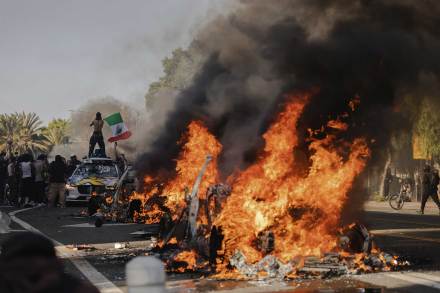
What’s in a word? ‘Equality’. ‘Equity’. It’s the sort of thing that Channel 4 newsreaders find impossible to understand. Surely they’re the same thing, aren’t they? And even if they aren’t then what kind of pedant would keep trying to point it out? What difference does it make anyway? Well, quite a lot. Potentially the difference between your home burning down and it not burning down. It’s important that people who come to your burning home look like you.This is meant to be empowering  In the past couple of weeks residents of some of the most ‘progressive’ neighbourhoods in America have had, in real time, an unfortunate crash course on the difference between these two words and are now raising questions on which has been prioritised.