Douglas Murray

Douglas Murray

Douglas Murray is associate editor of The Spectator and author of The War on the West: How to Prevail in the Age of Unreason, among other books.

What Europe gets wrong about the far right

From our UK edition

The head of America’s ‘Department of Government Efficiency’ (Doge) has written to all federal workers in the US asking them to explain in a brief email what they did last week. The exercise is intended to take no more than five minutes but has already lead to howls from many employees. How could anyone expect them to perform such a task? How can one explain the intricacies of supporting transgender opera among the Inuit in such short order? Happily, the new editor is not putting those of us on The Spectator’s payroll through any similar exercise. Nevertheless, something in the global vibe-shift perhaps impels me to mention a little of what I have been doing with my time.

Is Britain ready for blasphemy laws?

From our UK edition

In its infinite wisdom, the Labour government appears to be reconsidering the introduction of a blasphemy law in the UK. It has picked up this idea despite it being so idiotic that it was even rejected by the last Conservative government. That well-known theologian Angela Rayner has decided to set up a council to look into the question of ‘Islamophobia’. As mentioned, there was a push to do this during the Conservative era, when a committee including some of the worst people then in public life – Dominic Grieve, Naz Shah, Anna Soubry – looked into the same thing. Their scholarship foundered, as it always will, on how you protect Muslims without simply protecting the feelings of Muslims.

Pride in Britain? It’s history

From our UK edition

A poll out this week found that only 41 per cent of those aged 18 to 27 are proud to be British. Frankly I’m surprised the figure is that high. After all, if you add together the immigration of recent decades and the concerted effort to demoralise the population that has gone on, that is exactly the sort of result you would expect. It has been achieved in a remarkably short space of time. In 2004, some 80 per cent of young people in the same age cohort said that they felt proud to be British. So within 20 years we have managed to halve our sense of national self-worth. What explains it? Perhaps I should get the most dangerous explanation out of the way first.

America has seen sense on aid. When will we?

From our UK edition

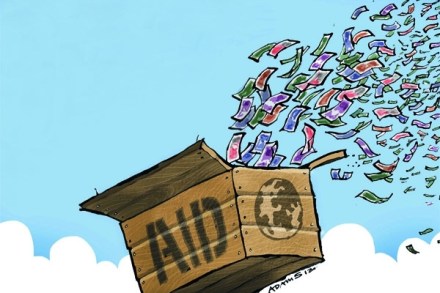
The new administration in Washington has somewhat startled its critics by issuing a blizzard of executive orders during its opening weeks in office. So far the reaction from the American left might be summed up by the sentiment: ‘That’s not fair – it’s only us that are allowed to do things when we are in power.’ The American left are in a particular funk about the Department of Government Efficiency (Doge) – as though railing against the proposed reduction of federal spending and reduction of the American deficit is a natural vote-winner. But good news does just keep on coming. On Monday, Elon Musk said that President Donald Trump had agreed to shutter USAID – the US government money spigot that sprays money around the world, much of it to people who hate America.

The hard truth about Britain’s soft power

From our UK edition

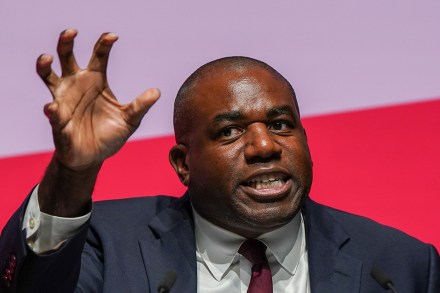
How hard is your soft power? According to David Lammy, Britain’s soft power is so strong and underrated that he has decided to set up a ‘soft power council’ to show just how hard we are. Put aside such details as waste and futility for a second. Surely there is something rather embarrassing about boasting about such things? It reminds me of the phrase ‘muscular liberalism’. A person may define the political concept of muscular liberalism. He may even be described by others as a ‘muscular liberal’. But no one should go around declaring themselves to be such a thing, without expecting to be greeted with a chorus of ‘I don’t doubt it, dearie’ and the like.

Britain is losing friends – and making enemies

From our UK edition

Whatever way you voted in 2016, I suspect that many of us have the same image of post-Brexit Britain. It is easier to capture in a cartoon than in prose but it looks something like this. A chap tries to make a leap across a canyon, falls ever so slightly short and as a result gets wedged in a crevice. And there he is – stuck. Neither on one side or the other and gaining the benefits of neither ledge. The Conservative party obviously carries a large amount of responsibility for this – not least for the fact that European law still dictates our insane migration policy. But the current government must also take its share of responsibility. If we were run by competent men and women of vision then getting out of the spot we are in could be possible.

The day DEI went up in smoke

From our UK edition

What’s in a word? ‘Equality’. ‘Equity’. It’s the sort of thing that Channel 4 newsreaders find impossible to understand. Surely they’re the same thing, aren’t they? And even if they aren’t then what kind of pedant would keep trying to point it out? What difference does it make anyway? Well, quite a lot. Potentially the difference between your home burning down and it not burning down. It’s important that people who come to your burning home look like you.This is meant to be empowering  In the past couple of weeks residents of some of the most ‘progressive’ neighbourhoods in America have had, in real time, an unfortunate crash course on the difference between these two words and are now raising questions on which has been prioritised.

The truth about grooming gangs, ‘why I’m voting for the AfD’ & exploring YouTube rabbit holes

From our UK edition

47 min listen

This week: what does justice look like for the victims of the grooming gangs?In the cover piece for the magazine, Douglas Murray writes about the conspiracy of silence on the grooming gangs and offers his view on what justice should look like for the perpetrators. He also encourages the government to take a step back and consider its own failings. He writes: ‘If any government or political party wants to do something about the scandal, they will need to stop reviewing and start acting. Where to begin? One good starting point would be to work out why Pakistani rapists in Britain seem to have more rights than their victims.’ To unpack his piece in a little more detail, we were joined by journalist Julie Bindel, who has been reporting on the grooming gangs for almost 20 years.

What real justice would look like for grooming gang victims

From our UK edition

It is always interesting to watch a dam burst. In the past week, as Elon Musk and other prominent Americans discovered the British ‘grooming gang’ scandal, British politics has suddenly had to face up to something it has spent a quarter of a century trying to ignore. One would hope that the claim that thousands of underage girls had been gang-raped by thousands of men in cities across the country would be a subject of profound concern for our politicians. Who did this? Why? How can we help the victims and prevent any reoccurrence? But no society asks questions to which it does not want an answer. The language used about this mass crime has been coyly euphemistic. Take ‘grooming’.

Why do Americans care about Tommy Robinson?

From our UK edition

34 min listen

Douglas Murray, Spectator columnist, joins Americano host and Spectator deputy editor Freddy Gray. This week, Home Office Minister Jess Phillips rejected Oldham Council’s request for a government-led inquiry into the horrific scandal of grooming gangs in dozens of UK cities. Her decision has led to real backlash – with X owner Elon Musk calling for safeguarding minister Jess Phillips to be jailed, and for the King to dissolve parliament. Have politicians underestimated the strength of public feeling in the UK and the US? They also discuss the Southport riots, and ask why some politicians are unwilling to confront societal problems in the name of political correctness.

Most-read 2024: The unfashionable truth about the riots

From our UK edition

We’re closing 2024 by republishing our five most-read articles of the year. Here’s No. 4: Douglas Murray’s article from August about the UK riots. As the days slip by, the likelihood that anything will be learned from the recent rioting looks ever more remote. And with that suspicion comes the inevitable sense of déjà-vu. Because we have indeed been here before. In 2011 England was engulfed by riots, originating in London but leading to copycat violence across the north of England. The ostensible cause that time was the shooting by police of Mark Duggan, a charming young drug dealer who was in possession of a gun. The initial unrest in Tottenham may well have started as a result of claims that police had shot an innocent man – and an innocent black man at that.

My rules for church readings

From our UK edition

It is that time of year when people in churches across the land have to face the difficult question of how to read scripture out loud. I count myself a bit of an expert in this, not because I have had to do it many times for some 35 years, but because I have seen everything go wrong that can go wrong. It is like the fear that engulfs me when-ever an unaccompanied treble kicks off the first verse of ‘Once in Royal David’s City’ at the service’s start. If the treble goes off-key in that solo verse, one of the great black holes in the universe opens up – for the choir and conductor must swiftly decide whether they should begin their next unaccompanied verse in the original key, or resign themselves to whatever key the treble has arrived at.

Beware the Qataris

From our UK edition

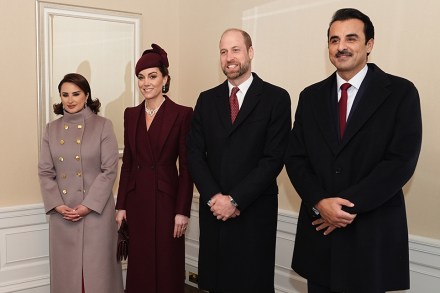
I feel some sympathy for the British royal family because of the ghastly people they are forced to meet. The late Queen had to greet Nicolae and Elena Ceausescu, Idi Amin and Robert Mugabe. This week the King and Prince and Princess of Wales had to meet the Emir of Qatar and his wife. True to form, the state media in Britain managed to miss every major problem with this. The BBC did say that there might be protests around the visit because of Qatar’s record on ‘LGBT rights’. But more troubling is that Britain should ever have welcomed the leadership of such a sordid, terrorist-supporting statelet.

How to get on the housing ladder

From our UK edition

It is always interesting to watch the debates that roil a nation. So far as I can see, the current debate in parliament mainly consists of trying to work out whether the NHS is competent enough to kill people or not. This week one of our greatest Home Office ministers – Jess Phillips MP – was asked about the question of ‘assisted dying’. She said that, naturally, she is in favour of this ‘progressive’ policy. But one qualm held back her support. In Phillips’s estimation the NHS is ‘not in a fit enough state’ at present to kill patients on demand. Many people whose family members have gone through the NHS might beg to differ with Phillips on this point.

Britain’s failing statecraft

From our UK edition

I mentioned some weeks ago that one of the great points of interest – not to say enjoyment – in our era will be seeing how Keir Starmer’s government copes with the incoming Donald Trump administration in Washington. It is fair to say that many Labour MPs, not to mention the mayor of London (who spends more time grandstanding abroad than he does addressing violent crime in his own city), have been wildly impolitic. If there are two candidates in the running to lead your most important ally it would seem prudent for a wise man to keep his diplomatic options open. Alas, Westminster does not appear to be flooded by wise men.

Will Elon Musk Make America Great Again?

From our UK edition

28 min listen

As Donald Trump selects his new cabinet, Elon Musk has been chosen to head up the new efficiency department. Douglas Murray, Spectator columnist, joins Americano host Freddy Gray to discuss. How will their relationship shape Trump’s presidency? What will Musk’s ownership of X, formerly Twitter, mean for free speech? And will their newfound friendship last the stretch of Donald Trump’s second term?

Welcome to life on Planet Elon

From our UK edition

On 13 July this year, an assassin’s bullet grazed the ear of Donald Trump as he turned his head on stage in Butler, Pennsylvania. The whole world saw it and his response: ‘Fight, fight, fight.’ For Elon Musk, this was not just a news event but a galvanising and clarifying moment. He immediately posted a video of the shooting to X and wrote: ‘I fully endorse President Trump and hope for his rapid recovery.’ Musk is different from most people. For him, going all-in really means going all-in. When Trump returned to Butler last month, he was joined on stage by the billionaire. Musk is now one of the most important figures in the team around the President-elect as he prepares his new administration.

The problem with Dawn Butler

From our UK edition

We hear a lot about white supremacy these days. But for some reason we rarely hear about black supremacy. I wonder why? There’s a lot more of it around. For Butler, describing someone as white or as trying to be white is clearly a great insult While it is vanishingly difficult to find an overt white supremacist in British public life, it is extremely easy to identify their black counterparts. As exhibit A I would present the Labour MP Dawn Butler. I have written about her once before, in 2020, when Ms Butler was in a car that was stopped by police. At the time I speculated that the coppers may have pulled the vehicle over in the hope of reclaiming the whirlpool bath that Butler had treated herself to at taxpayers’ expense a few years before. But it was not to be.

The strange silence around the Southport attacks

From our UK edition

There are certain rules in British public life that are worth noting. Such as this one: if someone is killed by a jihadist or someone who could plausibly be connected to immigration in any way, the British public will not be informed of the possible motive – or at least not until it becomes impossible to conceal it any longer. It was revealed that the attacker was of Rwandan heritage, at which point people said: ‘Nothing to see here’ Certain rules follow on from this. One is that ‘wise’ heads will inform anyone who does mention a likely motive that they must be exceptionally careful not to prejudice any forthcoming trial. There then comes an insistence that there will be a time and a place to debate these things. Quite often, that time and place never arrives.

The ICC’s rogue prosecutor

From our UK edition

Yahya Sinwar, the mastermind of 7 October, went to meet his maker last week. Having spent a year being pursued through the underground tunnels of Gaza that he had built, he finally put his head up above the surface in the Tal al-Sultan area of Rafah. The world that had told the IDF not to go into Rafah was once again proved wrong. Sinwar was killed in an exchange of fire by a 19-year-old Israeli soldier who was not even in uniform on 7 October. People inside the ICC were annoyed by the way Khan made himself a sort of ‘world policeman’ A couple of days after Sinwar’s demise, I went into Rafah to see the house where he spent his final minutes.