Daniel Korski

Stability versus freedom? 

Since the Iraq War, there has been a protracted silence about whether or not the West should promote democracy and human rights in the Middle East. Predominantly, we have looked away as venal but seemingly stable regimes abuse their citizens, but events in Tunisia have reignited the debate. Writing in the International Herald Tribune, Roger Cohen argues that the West's support for stability in the Middle East proved in the end a recipe for radicalisation:   "Arab regimes, many of them U.S. allies, have lost touch with young populations. Their ossified, repressive, nepotistic, corrupt systems have proved blind to the awakening stirred by satellite TV networks, Facebook posts, tweets, Web videos and bloggers.
A flooded world

It looks like the opening of a Hollywood disaster film. The South African government has declared parts of the country disaster areas, after 40 people died in floods in a month. At the same time, the UN is to launch an appeal for emergency flood aid for Sri Lanka, where at least 32 people have died and more than 300,000 have been displaced. Meanwhile flood waters in Australia have left a trail of destruction, at least 18 dead and a billion dollar bill for reconstruction. And in Brazil, survivors of the floods that have killed more than 600 people are frustrated by the lack of government help. Are these floods causes by climate change? Well, yes and no.

Labour leaves behind contractual IEDs for the coalition to clear

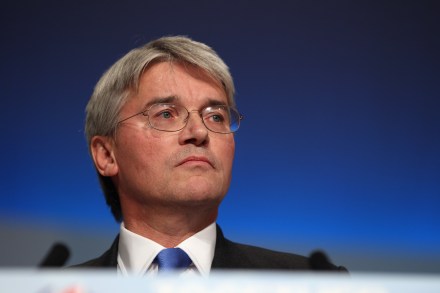
Before they left office, Labour laid a number of contractual IEDs, primed to blow up sooner or later. Last year, the SDSR revealed that the Government had to buy the two aircraft carriers – whether they were needed or not – lest the taxpayer lose even more money. Now the Sunday Telegraph reveals that the coalition is powerless to stop money from Britain's overseas aid budget being spent on hosting coffee mornings and salsa dancing to "raise awareness" of poverty abroad. Keen to scrap all such schemes, International Development Secretary Andrew Mitchell has found to his frustration that contracts signed by the Labour government cannot simply be scrapped, but need to be reviewed first. At least he has called for a halt to any further payments.

Freedom in the desert

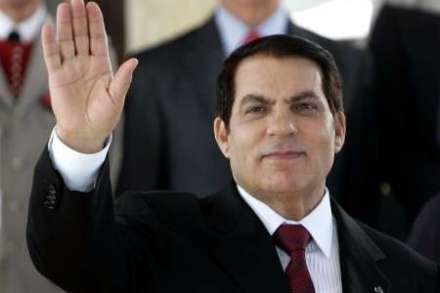
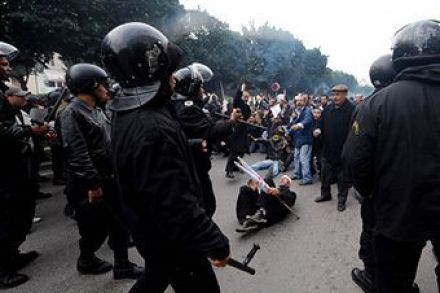
When in power, authoritarian regimes can look immovable - even when, in hindsight, they turn out to have been brittle. This seems to have been the case with Zine el-Abidine Ben Ali's Tunisian regime. Weeks ago, nobody would have believed that the Tunisian strongman, who has held power for more than 23 years, could have been chased from office so quickly. A diplomat friend who served in Tunis marvelled at the dictatorship, where information was so restricted that he depended on information from colleagues stationed elsewhere in the region. Ben Ali's rule was apparently total; the opposition was comprehensively suppressed and the population had little scope for expression or assembly.

Sherard v The Generals

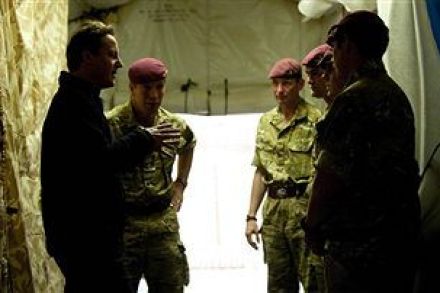
As wars begin to end, arguments about their conduct begin. Such is the case with the British campaign in Helmand. In a submission to the Foreign Affairs Committee, the former British ambassador in Kabul – and one of the best diplomats of his generation – Sir Sherard Cowper-Coles blasted the Army: "Almost by definition, good soldiers are irrepressibly enthusiastic, unquenchably optimistic, fiercely loyal to their service and to their own units within that service, and not especially imaginative." But his strongest criticism was reserved for the Army's strategy of seeing Helmand through the prism of the SDSR – looking to save brigades from being cut, not looking primarily to win the war.

Decentralisation key to Afghan pullout, says David Miliband

It is fashionable to ridicule David Miliband's search for a post-political career. But in yesterday's Daily Telegraph the former Foreign Secretary showed that – for all his mistakes in office – his intellect, and judgement on a number of key issues, including how to bring the Afghanistan War to an end, was, and remains, razor-sharp: "Afghanistan's battles are not just between the Afghan and foreign forces and the Taliban insurgency, but between (and within) Afghanistan's often warring tribes. When Nato trains the Afghan National Army, it's good – but not if you are a Pashtun who sees the predominantly Tajik army as the enemy.

“Our democracy to be as good as she imagined it”

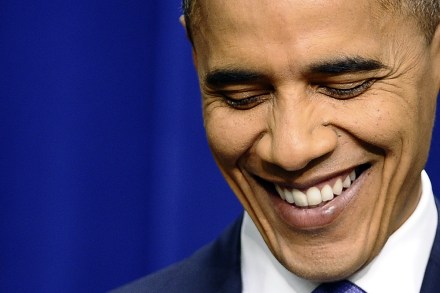
President Obama rode to power on his rhetoric. Yesterday, for the first time in months, he rekindled that initial spark to speak to the nation – and the world – about loss, democracy and the compassion that is needed for a society to work. You can watch the full speech above. To me, though, this passage was particularly affecting: "I believe we can be better.  Those who died here, those who saved lives here – they help me believe.  We may not be able to stop all evil in the world, but I know that how we treat one another is entirely up to us.  I believe that for all our imperfections, we are full of decency and goodness, and that the forces that divide us are not as strong as those that unite us.

The China arms embargo should be discussed – though not lifted

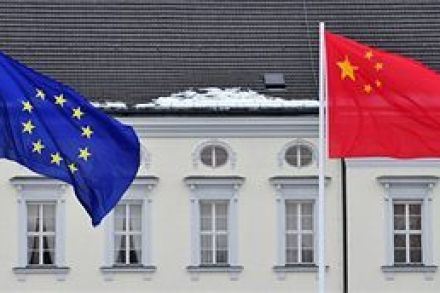
Today's Times splashed on the spat between Britain and EU foreign policy "czar" Catherine Ashton over the embargo barring arms sales to China. The embargo was put in place after the Tianamen Square massacre and has remained in place, largely at US insistence, ever since. But is it the right policy? The policy has not prevented China from becoming a military power — its annual defense budget officially stands at $70 billion, although the Pentagon believes the real figure to be twice as high. China is developing carrier-killing missiles that even NATO does not have, and will soon sell weapons rather than seek to import them. There is, of course, a moral argument: the sanctions were put in place because of China's human rights violations.

South Sudan set for difficult independence

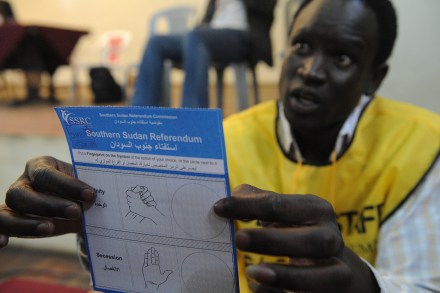
Today, voters in the southern part of Sudan head to the polls in a referendum which will determine whether they should form their own state or remain part of Sudan, Africa's largest country. Secession – the most likely outcome of the referendum, and called for in the 2005 peace agreement that ended 21 years of civil war between the country's north and south – would mean that the government in Khartoum could lose not only territory, but also over 80 percent of the revenues it receives from oil exportation, as most of the oil is located in the would-be state of South Sudan. As a result, many fear that bloodshed will follow the poll.

China in a bullshop

As if to illustrate Pete’s post about the rise of China and India, Chinese Vice Premier Li Keqiang has just finished a visit to Spain during which agreements worth 5.7 billion euros were signed. The Chinese delegation is said to have committed itself to buying six billion euros of Spanish debt, which helped calm markets and provided some relief for Spain’s recession-hit economy. Around the time that the Soviet Union collapsed, the Chinese used to say only they could save communism. Twenty years on, it seems only they can save capitalism. The Spanish are certainly in no doubt about the importance of their newfound Chinese friends. The left-leaning Spanish newspaper El País wrote that that Li was received in Madrid as "a new Mr.

Will he be back?

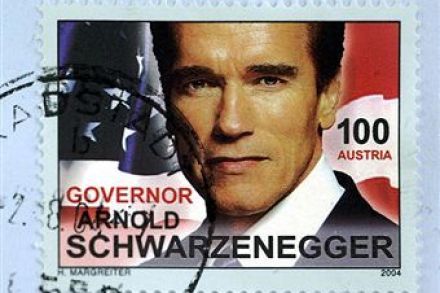
Clichéd, for sure, but it is the line that's tagged every story about Arnold Schwarzenegger's departure from office. Will Arnie return to the political fray or enjoy a sun-kissed retirement? The odds of a return to office are long. California, the state that did most to shape America's self-image in the 20th century, is now like former movie stars who eke out an existence in Hollywood's run-down parts - they once had it all but have since lost both looks and love. Fair or not - the Californian governor doesn't have as much power as his peers. Voters give Schwarzenegger part of the blame for the state's mess; his approval ratings on his last day in office were as bad as those of the governor he defeated in a recall election, Gray Davis.

Across Europe, students are protesting against the end of their entitlements

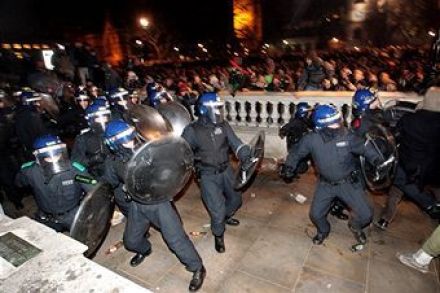
A month ago I found myself in the space of one week in two different countries, yet in the midsts of what felt like the same phenomenon: the political awakening of a new generation. In both London and Rome, students took to the streets to protest against government policies in numbers and in ways that those who graduated just a few years before would have found anachronistic, odd even. Unsurprisingly, given the historical, political and even emotional differences between Britain and Italy, there were differences between the protests. But as I walked the packed streets, listened to the protests, read their slogans, I heard similar arguments - particularly about the lack of fairness. When both events were finished, Whitehall and Via del Corso looked similarly destroyed.

What to do about Belarus, Europe’s last dictatorship?

For a while it looked like the West had the upper hand. Belarus' Aleksandr Lukashenko, Europe's last dictator, seemed to be moving away from Russia and closer to the West. A succession of European ministers went to see him and returned to develop packages of support and assistance with his country. In that new "Great Game" played out on Europe's periphery it looked like Vladimir Putin's winning streak was finally coming to en end, after partial success in Georgia and outright victory in Ukraine. Or so European leaders hoped. But any hope of changing Belarus' position has now been dashed with the violent crackdown in Minsk against pro-democracy activists following December's presidential elections.

Wrong to be too Right

From a right-wing perspective, there are several things wrong with David Cameron's leadership - not least the fact that he did not win the 2010 election outright. As an unassailable report by Lord Ashcroft showed, the Tory campaign squandered a historic lead over Labour. The policy disagreements - over the EU, civil liberties, and the AV referendum - are compounded by personal grievances. The Prime Minister, despite investing quite a lot of time placating quarrelsome  MPs - calling them, writing them letters, inviting them to No 10 - cannot shake the impression of a man who is buoyed by confidence verging on arrogance, and someone who is reliant on - indeed most comfortable with - a small, largely unelected group of friends.

A handful of predictions

Here we go. Spurred on by Pete earlier, it's time for that essential, although often regrettable, end-of-year ritual. Not the prosecco-fuelled partying, but rather something with far more embarrassment potential: predictions for next year. That's right, amateur guesswork dressed up as serious-ish journalism. Some scribes are better at this than others. Ex-blogger Iain Dale hit the nail on the head by predicting the election of Ed Miliband as Labour leader. In a German aquarium, Paul the Octopus nailed all eight of his predictions for the 2010 World Cup in South Africa. By contrast, Mike Adams from NaturalNews probably ought to stop trying to channel Nostradamus. Last year, he predicted that nuclear weapons would be unleashed in the Middle East.

Help for Helmand

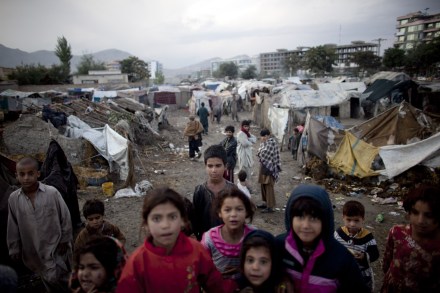
With 2011 promising to be another difficult year in Afghanistan, my friend Alex Strick van Linschoten – a noted scholar of the region – has decided to do something to help. He is organising to get some charcoal to refugee families from Helmand, who have fled the fighting between NATO and the Taliban and now live at a makeshift refugee camp just outside Kabul City. Like millions of refugees, the people at the camp have seen things they will rarely forget: "The sight of a woman’s hair entangled in the mulberry branches, her legs strewn far away in the dirt. Or the sounds they heard as they hid in an underground hole, counting the bombs to pass the time, praying the American troops would leave.

In Cote D’Ivoire, New Year may bring a new Africa

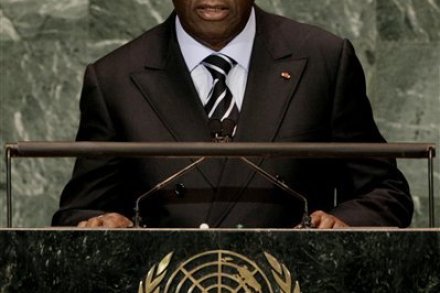
The situation in Cote D'Ivoire is heating up. It has the potential either to herald a new future for West Africa, based on democracy, regional cooperation and a rejection of ethnic mobilisation; or to showcase the continent's violent and undemocratic past. Hitherto there have been signposts pointing in both directions. On the one hand, Laurent Gbagbo is clinging on to presidential power, after having been in office for ten years on a questionable mandate. Willing to politicise the army and exploit ethnic differences, his strategy is straight out of the continent's "big man" playbook of politics. On the other hand, Alassane Ouattara, the country's rightful leader, has refrained from using playing the ethnic card.

This year’s biggest story

This year was so rich in stories - Expensesgate, the election and historic coalition, the Icelandic volcano, General McChrystal's dismissal, the Pakistani floods, Haiti's earthquake, Greece's near-collapse, the Will n' Kate engagement, Wikileaks, the Chilean miners and so on - that it is hard to pick just one story. Looking back over the year, however, I think two stories stand out - because they may herald a seismic change.  The first is, of course, the establishment of coalition. By now, the novelty of government by cross-party compromise has worn off. But, despite the gossipy complaints of a few Lib Dem ministers, a new kind of politics is being forged.

David Miliband’s options

Downing Street may  have dismissed as “complete nonsense” a newspaper report that the coalition was considering inviting David Miliband to become British ambassador to Washington. But the former foreign secretary is one of a few younger British politicians with international standing and while it would be odd to appoint him to a government job – and stranger still for him to accept -- the coalition should consider putting him forward for a number of international assignments. Potential jobs include the international community’s “high representative” in Bosnia; as a UN envoy to Yemen; or as the representative of the Friends of Democratic Pakistan.

Obama STARTs anew

Barack Obama has had a great couple of weeks. First DADT was repealed and then START was ratified by the Senate, safeguarding a major Obama foreign policy initiative In truth, both issues are peripheral to voter concerns. To them, the jobless recovery is what matters. New figures show that the unemployment rate in the US has jumped to a seven-month high of 9.8 per cent. Nor did the White House get all it wanted from Congress recently. As the Senate was debating DADT, the House of Representatives killed a provision in a defence bill to transfer detainees from Guantanamo to the US. But in politics having momentum - the Big Mo - is one of the most important, if intangible, factors. Recently, Obama could not even find Lil' Mo, Big Mo's smaller brother.