Daisy Dunn

The best food podcasts

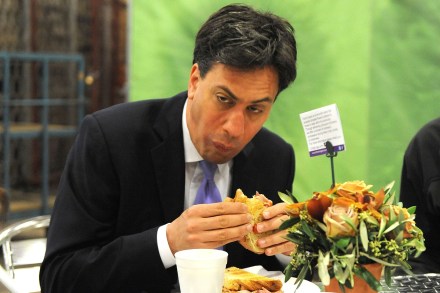
You have to hand it to Ed Miliband. After bacon sandwich-gate, he might never have eaten in public again, but there he was, wolfing down cod and chickpeas, eggs and Za’atar on the chart-topping podcast Table Manners with Jessie Ware. Presumably he thought that audio would be a fail-safe medium in which to redeem himself. No cameras, no aggressive questioning (the show is co-hosted by singer Jessie Ware and her mum Lennie), no risk. Suffice it to say he underestimated this one. An early part of the conversation, in précis, ran like this: ‘What’s your go-to dish?’, ‘I’m a recipe-box follower and a recipe follower.’ ‘Which recipe books?’, ‘That’s a good question.’ [Some minutes later.

The joy of Radio 4 Extra

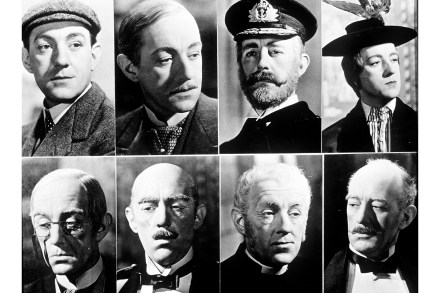
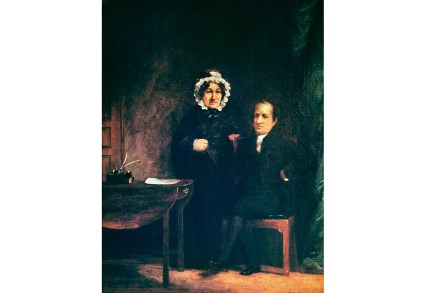
The best thing on the radio last week was, without question, Kind Hearts and Coronets. You may have missed it because it was on Radio 4 Extra, the poor, forgotten relation of the BBC’s main channels, which many regard as merely a Radio 4+1 for yesterday’s replays, when it is in fact home to the drama and comedy archive. Like the BBC4 TV channel, which is sadly ceasing commissioning, it hosts the sort of intelligent programmes people really enjoy, to the consternation of those who dismiss them as ‘old’. Fittingly, for Radio 4 Extra, Kind Hearts is all about a poor, forgotten relation who strives to reclaim his place within a family unwilling to acknowledge his existence.

Leo McKinstry, Emily Hill and Daisy Dunn

19 min listen

On this week's episode, Leo McKinstry starts by arguing that having to sell the family home to pay for social care is not an injustice. (00:50) Then, Emily Hill reads her piece. She's not looking forward to the return of hugging. (08:00) Daisy Dunn finishes the podcast by examining the underappreciated art of asparagus.

The art of the asparagus

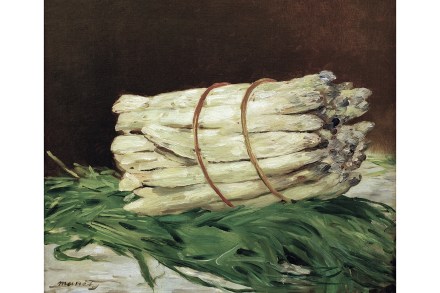
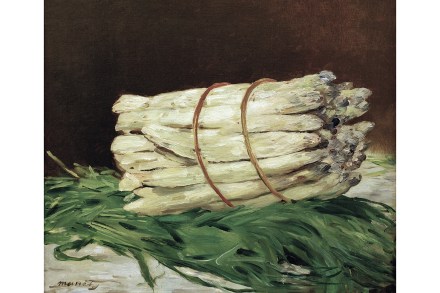
Manet’s ‘Botte d’asperges’ are probably the most famous asparagus in the world. The artist painted the delicious white- and lilac-tinged spears for the collector Charles Ephrussi in 1880 before invoicing him for 800 francs. Ephrussi was so delighted with them that he paid Manet 1,000 instead, to which Manet responded by sending a second picture. ‘One appears to have escaped your bunch,’ the painter quipped in his accompanying note. The new canvas featured a single asparagus. Manet was in the last decade of his life when he began sending small paintings of fruit and flowers to his friends.

Seldom less than gripping: Banged Up podcast reviewed

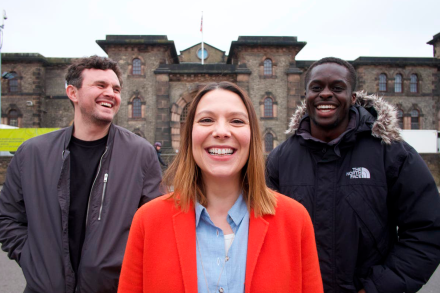
Prison-based podcast Banged Up, now in its second series, is far more uplifting — and less soapy — than its name suggests. It begins with the tacit assumption that, if you haven’t personally been incarcerated, you probably have at least a dozen questions you’d want to ask someone who had. Is the food really awful? How likely are you to be beaten up? Is there a lending library? (I’d start with the last.) Banged Up has the answers to plenty more besides. The podcast is hosted by a prison lawyer named Claire Salama and two ex-inmates, a former footballer, Mike Boateng, known as ‘Boats’, and university-educated Rob Morrison, who describes himself as ‘probably not their [prisons’] target market’.

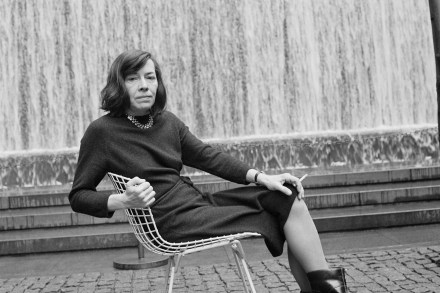
Refreshingly unfettered: LRB Podcast’s Close Readings on Patricia Highsmith

I’d forgotten what a rich and deep and characterful voice John le Carré had. Listening to author and lawyer Philippe Sands’s Archive on 4 programme on him last week, I was struck by how much more engaging it was than almost every other male voice on the radio these days. Le Carré’s weren’t simply the measured tones of a mid--century public schoolboy. There was a real spirit in his voice, something melodic, which, in a world of Nick Grimshaws and Greg Jameses, stopped me in my tracks. Le Carré’s voice was undoubtedly part of the armoury that enabled him to win people over, even ‘to manipulate crowds’.

Barack Obama will make you cringe: Renegades: Born in the USA reviewed

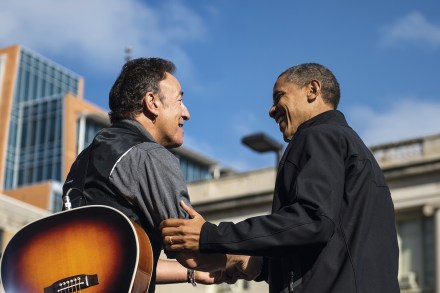
Barack Obama wants the world to know how much he loves singing. In his new podcast, which takes the form of a series of conversations with Bruce Springsteen, he’s rarely without a tune on his lips. ‘Further on up the road…/ you been laughing, pretty baby…’ A shower-singer, a bedroom warbler, an Air Force One air guitarist with an okay voice, the former president is proof that you really can be embarrassing without feeling an ounce of embarrassment. Oh, to have seen his daughters’ faces when he broke into ‘Let’s Stay Together’ in front of Al Green. The sound team at the fundraiser in Harlem urged him to do it, he tells Springsteen, but no one’s buying it.

It’s not easy running a stately home: Duchess podcast reviewed

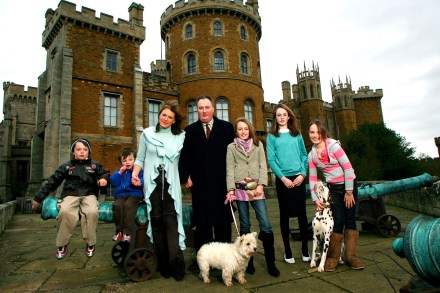
The Duchess of Rutland, Emma Manners (née Watkins), grew up on a farm in the Welsh Borders before becoming proprietress of Belvoir Castle in Leicestershire. ‘On so many levels I was ill-equipped for the job,’ she reflects in her new podcast, Duchess. ‘I so remember opening a door and hearing the butlers downstairs saying: “Have we broken her yet?”… I felt like a ball they were bouncing.’ Thirty years after coming to Belvoir — pronounced ‘Beaver’ — the Duchess is ready to talk candidly about the difficulties she and other women have faced as custodians of stately homes.

Peake practice

From our US edition

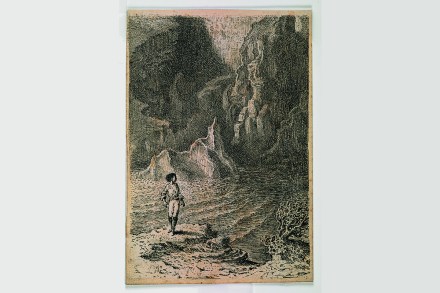
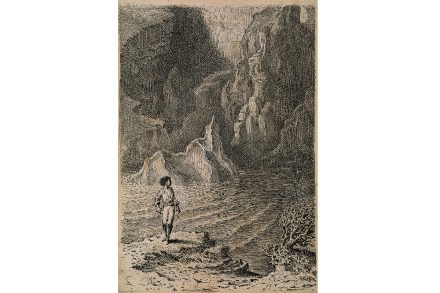
To be a good illustrator, said Mervyn Peake, it is necessary to do two things. The first is to subordinate yourself entirely to the book. The second is ‘to slide into another man’s soul’. In 1933, at the age of 22, Peake did precisely that. Relinquishing his studies at the Royal Academy Schools to move to Sark in the Channel Islands, he co-founded an artists’ colony and took to sketching fishermen and romantic, ripple-lapped coves. He put a gold hoop in his right ear, a red-lined cape over his shoulders, and grew his hair long, like Israel Hands or Long John Silver. The incredible thing was that he had yet to receive his commission to illustrate Treasure Island.

peake

Englishness vs California dreaming: Meghan and Harry’s Archewell Audio reviewed

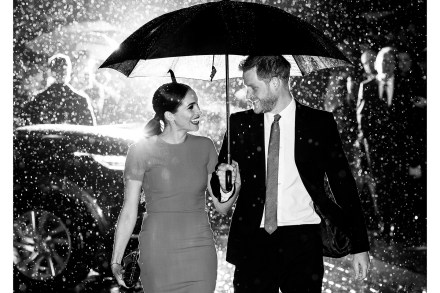
On Archewell Audio, Harry and Meghan’s new podcast, ‘love wins’, ‘change really is possible’, and ‘the courage and the creativity and the power and the possibility that’s been resting in our bones shakes loose and emerges as our new skin’. There’s no room for Christmas — the first episode dropped as a ‘Holiday Special’ — but there is for kindness, compassion and more than a few bromidic interjections of ‘So true!’ The podcast purports to ‘spotlight diverse perspectives and voices’ and ‘build community through shared experiences, powerful narratives, and universal values’.

The grumpy genius of Raymond Briggs

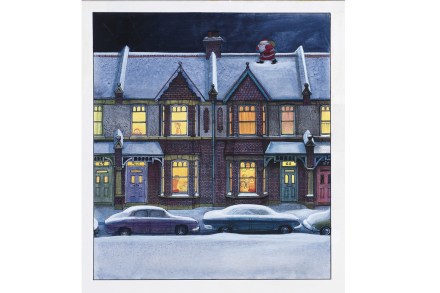
Raymond Briggs has often spoken of his annoyance at being associated with Christmas. His Snowman may fly across our screens each Christmas day, but in the book there is no Father Christmas, no sleigh, and certainly no figgy pud. The North Pole scene featuring the jolly elf was written into the story for John Coates’s TV adaptation in 1982 and struck Briggs as rather mawkish at the time. As readers and viewers of Father Christmas know, Briggs’s Papa Noël is anyway rather a grouch at this time of year. As if the cold isn’t enough for him to contend with, there are the chimneys, the tasteless presents, and, oh yes, ‘blooming Christmas’ itself.

The genius of I’m Sorry I Haven’t a Clue

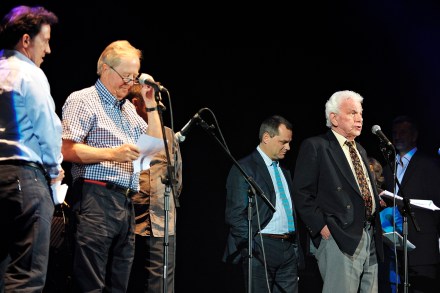
I’m Sorry I Haven’t a Clue has just been voted the greatest radio comedy of all time by Radio Times, ahead of Hancock’s Half Hour and the brilliant Round the Horne. The first two episodes of series 73 (can you believe it?) are also the last Tim Brooke-Taylor recorded before losing his life to coronavirus earlier this year. Brooke-Taylor was part of the original cast of the self-styled ‘antidote to panel games’, which first aired in 1972 with Bill Oddie, Jo Kendall and the show’s deviser Graeme Garden as fellow performers (Barry Cryer joined during the first series and Willie Rushton two years later).

The shocking story of Charles and Mary Lamb: Slightly Foxed podcast reviewed

The Slightly Foxed podcast, like the quarterly and old bookshop of the same name, is almost muskily lovely. It’s the sort of thing you can imagine listening to with a dog at your feet and whisky by your side in a draughty Mitfordesque folly. Ordinarily, you might attribute its homeliness to the fact that it is recorded around a kitchen table. But with the hosts now socially distanced across the country, and it feeling just as cosy, you realise that the atmosphere must derive from something else. In the latest episode, Philippa, Hazel and Gail were joined down the line by biographer Felicity James to discuss the early 19th-century writers Charles and Mary Lamb.

Alan Partridge should replace Jenni Murray on Woman’s Hour

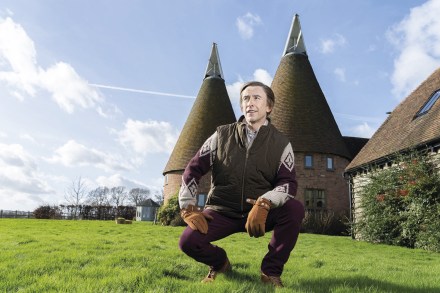
In the week Jenni Murray left Woman’s Hour, I was listening to Alan Partridge on his new podcast, From the Oasthouse, and imagining what he might have been like as her successor. As I chuckled through half a dozen episodes of awkward Norfolk frippery, it occurred to me that, short of taking him on, the BBC could do wonders for its reputation in the wake of Murray’s departure by taking a leaf out of the Partridge playbook. Partridge, played by Steve Coogan since 1991, has moved with the times. Although he hasn’t changed, his horizons have, and he is doing his best to retain his cringe-inducing record.

The gentle genius of Mervyn Peake

To be a good illustrator, said Mervyn Peake, it is necessary to do two things. The first is to subordinate yourself entirely to the book. The second is ‘to slide into another man’s soul’. In 1933, at the age of 22, Peake did precisely that. Relinquishing his studies at the Royal Academy Schools to move to Sark, in the Channel Islands, he co-founded an artists’ colony and took to sketching fishermen and romantic, ripple-lapped coves. He put a gold hoop in his right ear, a red-lined cape over his shoulders, and grew his hair long, like Israel Hands or Long John Silver. The incredible thing was that he had yet to receive his commission to illustrate Treasure Island.

The Archers is a masterclass in how not to write a monologue

If you’ve been listening to The Archers lately, you’ll know how tedious monologues can be. The BBC has received so many complaints about the stream of soliloquys that has dominated the episodes since lockdown, that Mohit Bakaya, controller of Radio 4, has been compelled to issue an apology. The new format — introduced so that the cast and crew could follow social-distancing rules — has proven especially unpopular because, as some listeners have pointed out, the producers might easily have stitched recordings together to keep the drama going. Instead, they’ve more or less dispensed with dialogue between characters in favour of a watered-down talking heads approach.

Hats (and knickers) off to the hosts: The Naked Podcast reviewed

I spent half an hour this week listening to a woman make a plaster cast of her vulva. Kat Harbourne, co-host of The Naked Podcast on BBC Sounds, opened a recent episode by buzzing her bikini trimmer over the microphone before squatting over a British Airways peanut dish. Jenny Eells, her partner in crime, stood close by offering to hold up her dress. ‘I feel a bit like a voyeur, almost,’ she said, as if surprised at herself. ‘Thanks for letting me be a part of it.’ Then the mould-maker, Phoebe, put a porridgy alginate in Kat’s dish, and Jenny thought it looked ‘tasty’. Jenny and Kat are used to seeing each other naked. Most weeks, they invite on a female guest, and encourage her to strip off with them so that they can have a chat in the nude.

The best podcasts for all your corona-gardening needs

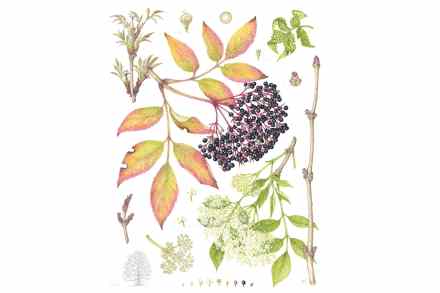
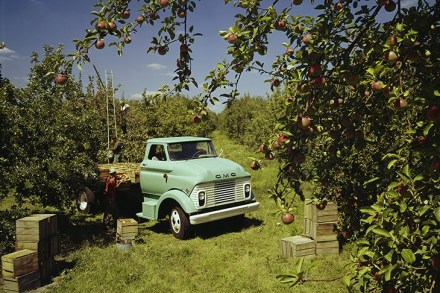
The American diet was probably at its healthiest in the second world war. Fearing interruption to supply chains, Washington launched a national Victory Gardening programme within a fortnight of Pearl Harbor, and saw two thirds of the population heed the cry to fill their backyards, rooftops and window boxes with veg. The scheme was so successful that, by 1943, home-gardeners were producing 43 per cent of all fresh food consumed. ‘Dig for Victory’, the latest episode of Gastropod, a superbly researched food and science podcast, opens with the co-hosts Cynthia Graber and Nicola Twilley rustling bags of manure as they attempt to plant tomatoes, peppers and ‘urbs’ in a tiny patch of earth in New York.

From Hogarth to Mardi Gras: the best art podcasts

If you study History of Art, people generally assume you’re a nice, conscientious, plummy-voiced girl. Sometimes, people are right. It is the only subject I can think of that requires a student to describe what is already printed on the exam sheet. ‘In the foreground of the picture is a tree — in full leaf! — and on the horizon, a tower.’ It feels a little basic. But with art history podcasts description is everything. And to do it well is a real art in itself. The presenters of the Art Newspaper’s The Week in Art podcast were superb last week in their exploration of a portrait by William Hogarth.

Adapting Wodehouse for the radio is a challenge – but the BBC has succeeded brilliantly

Everyone knows a Lord Emsworth. Mine lives south of the river and wears caterpillars in his hair and wine on his shirt and has just occasionally written for this magazine. That doesn’t much narrow it down. When you look at him, you understand a little better why P. G. Wodehouse is topping the lists of authors to read during lockdown. It’s not just that the books are funny. With an Emsworth or a Bertie Wooster you’re guaranteed that idling and dithering will land you somewhere. Even if it is in the soup. Adapted for Radio 4 this fortnight, Leave it to Psmith, the second in Wodehouse’s Blandings series, sees the dithering Earl invite a prospective thief into his home after mistaking him for a Canadian poet.