Daisy Dunn

The illiterate poet who produced the world’s greatest epic

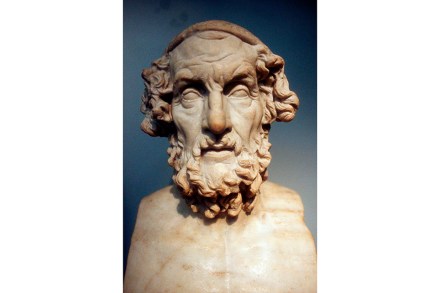
Odysseus is tossed on the sea when he notices a rock and clings to it. ‘As when an octopus is drawn out of its lair and bits of pebble get stuck in its suckers,’ says Homer, ‘so his skin was stripped from his brave hands by the rock.’ There is such elegant tricksiness in that simile. Homer still sits at the apex of western literature thanks to the beauty and influence of his verse. Robin Lane Fox has been teaching the epics for 50 years and studying them for many more. His lifelong fascination with the texts has bred a sort of feverish passion in him that makes him declare Homeric poetry to be ‘beyond us’ today (he is probably right) and without equal anywhere in the world, except perhaps in the books of Tolstoy (who is surely still inferior).

Beautiful and illuminating: Radio 4’s the Venice Conundrum reviewed          

The playwright Carlo Gozzi marvelled at ‘The spectacle of women turned into men, men turned into women, and both men and women turned into monkeys’ in 18th-century Venice, and Jan Morris, visiting in the 1950s, did likewise. It would be more than a decade before Morris went under the knife, but already he was contemplating a transition more permanent than any he observed at carnival time. The Venice Conundrum, which aired on Radio 4 on Sunday, knitted together Morris’s most famous travel book with Conundrum, the story of his sex change, completed in the 1970s. I had my doubts about how well these two works would sit together, but the dramatisation was not only beautiful, but also hugely illuminating of Morris’s psyche as a traveller caught between two worlds.

A comedy double act from John Cleese and Justin Welby: the Archbishop Interviews reviewed

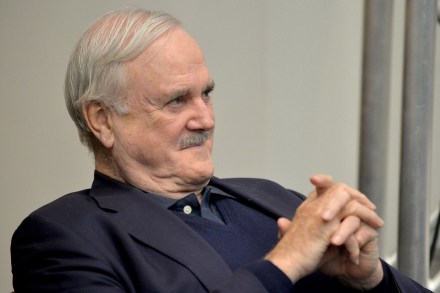
I’m listening to John Cleese talking to Justin Welby in the new series of The Archbishop Interviews when the thought occurs to me that he might unwittingly be comparing himself to Christ. The comedian has just been discussing the failure of the literal-minded to comprehend sarcasm and irony, and the inanity of tabloid headlines, when he circles back to the topic of religion. Though not a believer himself, he is troubled by literal-mindedness in the reading of scripture. ‘Christ taught in parables,’ he notes, ‘and parables are not supposed to be taken literally.’ One can almost feel another headline coming on. Cleese has been waging a war against the wokerati for years.

Perfect radio for a nation of grumblers: Radio 4’s Room 101 with Paul Merton reviewed

Welcome back to Room 101, which has returned to the radio – after nearly 30 years on TV – and reverted back to its one-to-one format with presenter Paul Merton. The programme sits comfortably within that peculiarly British corner of the landscape that champions The Archers, the Proms, Rich Tea biscuits and knitted dog coats. And its success makes sense. A nation of good-humoured grumblers is arguably more likely to be excited by a list of common grievances than by, say, an overly jubilant selection of Desert Island Discs. Why listen to someone talk about what makes them happy when you can witness a guy losing it over the incomprehensibility of parking signs? Merton indulges this demographic by channelling the spirit of I’m Sorry I Haven’t A Clue.

Prayer for the Day is the best thing to wake up to

As the owner of a radio alarm clock, I could theoretically start listening to the Today programme before I’m even awake, but I rarely do. I tell myself it’s too much for first thing; that it’s bound to put me in a bad mood with some interview or other; that Today can wait until tomorrow – or at least until I’ve had my breakfast and a blitz of the somewhat jollier Times Radio. The levée, I say in a Bertie Woosterish sort of way, demands something light. When you crave something thought-provoking but also comforting, nothing beats a few minutes of prayer But then I find myself waking up unintentionally early, switching to Radio 4 and discovering that Prayer for the Day is about to begin.

Crossing Continents is the best of the BBC

Ask a member of Generation Z where in the world they would most like to live, and chances are they will say South Korea. K-pop and kimchi have made it indisputably fashionable, and if the Instagram account of one of my Korean friends is anything to go by, life there is really quite idyllic, provided you can forget who your neighbours are. It would take the average worker more than a century to save enough money to purchase an apartment  A recent episode of Crossing Continents on Radio 4 presented a very different side of the story. John Murphy, a superbly enquiring producer and presenter, went to visit some of the residents who are suffering as a consequence of the country’s financial success. The Republic of Korea enjoyed an average of 5.

A short introduction to the philosophy of Moomin

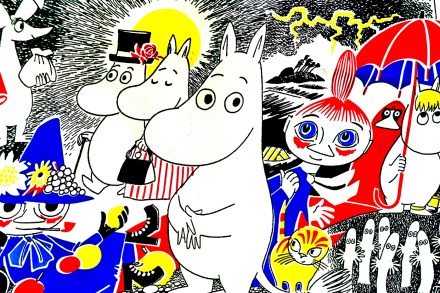
One of the lesser-known schools of modern philosophy is the Philosophy of Moomin. Like Cynicism or Epicureanism, it is difficult to pin down precisely, but subscribers speak of the importance of the individual, of liberalism and acceptance, and of the life-affirming joy of feeling. In the words of Moominpappa: ‘Just think, never to be glad or disappointed. Never to like anyone and get cross at him and forgive him. Never to sleep or feel cold, never to make a mistake and have a stomach-ache and be cured from it, never to have a birthday party, drink beer, and have a bad conscience… How terrible.

Max Jeffery, Emily Rhodes and Daisy Dunn

19 min listen

This week: Max Jeffery reads his letter from Abu Dhabi where he visited the International Defence Exhibition (00:56), Emily Rhodes discusses the tyranny of World Book Day (05:59), and Daisy Dunn tells us about the mysterious world of the Minoans (10:22).  Produced and presented by Oscar Edmondson.

Blue monkeys, bull-leaping and child sacrifice: why were the Minoans so weird?

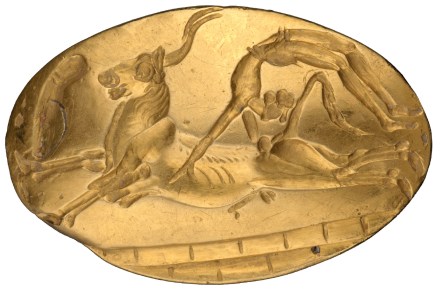
Labyrinth: Knossos, Myth & Reality at the Ashmolean Museum in Oxford does not take the idea of a labyrinth too literally. It does not lead you through galleries to dead ends, nor are you left searching, like Theseus, for a ball of thread to find your way out again. The real enigma of the exhibition revolves around the Bronze Age civilisation at its heart. The Minoans, who occupied Crete between about 3,000 and 1,100 BC, remain some of the most mystifying people ever to have been stumbled upon in modern times. It is uncertain where they came from, what they believed, how they were governed and why they chose to paint things the colours they did in their dynamic works of art. They traded widely, including with Egypt, but the direction of cultural influence is not always clear.

What a voice Plath had – stern yet somehow musical, long-vowelled, bear-like: Radio 4’s My Sylvia Plath reviewed

Can you ever truly know a poet? The question arises every time one publishes a collection that looks vaguely confessional. Is it real, we ask, or is it all persona? My Sylvia Plath, an Archive on 4 programme to mark the 60th anniversary of Plath’s death this month, presupposes that poets are to some degree unreachable. The ‘My’ belongs to Emily Berry, a contemporary poet, who knows that her Plath is different from another’s, is different from Plath’s own Plath, and so on.  Unexpectedly, given the emphasis on many Plaths and the gap between a writer and their verse, the framework of the programme is intensely personal. It comes as a shock when Berry reveals, some way in, that her own mother committed suicide when she was seven.

Butchered to make a Roman holiday: cruelty to animals in and out of the Colosseum

Did you know that the elephant was the most written about animal in the Roman world? Pyrrhus of Epirus, of victory fame, was the first to introduce it to Italy as an engine of war when he invaded in 280 BC. Roman soldiers could not decide whether it was an animal or a machine. Eventually they plumped for luca bos (‘Lucanian cow’), though the creatures came from India rather than Italian Lucania and were more inclined to trumpet than moo. And did you know that the people of Roman Cyrene in Libya were legally obliged to declare war on locusts three times a year? The swarms were so deadly that inhabitants had to employ a three-staged attack. The eggs were killed first, then the grubs, and finally the mature insects.

Is Matthew Parris the modern Plutarch? Radio 4’s Great Lives reviewed

Whenever I listen to Great Lives on Radio 4, which is often, I am reminded of the gulf between fame and achievement. How is it that some people do so much, yet remain obscure, while others seem to be carried forward with perpetual momentum after doing just one thing? A good many of the lives dissected on the programme over the years have been completely unfamiliar to me. I’ll spend the half hour puzzling over why they are not better known. Where would we be without Great Lives? There is minimal appetite in trade publishing for books about esoteric figures. And just imagine pitching a biopic of Hertha Ayrton, Eleonora Duse or Jayaben Desai to Hollywood today. Radio is probably the only place left for forgotten souls.

The Lord of Misrule and the lost spirit of Christmas past

The Lord of Misrule is surely the jolliest spirit of Christmas past. He is certainly the best named. He used to gambol through cities and courts, churchyards and dining rooms, telling jokes, performing tricks and spreading good cheer. Society shook itself upside down at his coming, so knaves played at being kings, children became miniature tyrants and noblemen misplaced their manners (an exercise in which some, admittedly, needed little assistance). His origins can be traced back to ancient Rome, where each December masters and slaves swapped places for the festival of Saturnalia and engaged in various acts of tomfoolery while gorging on food and wine. These traditions survived the advent of Christianity and found their own expression in the Church.

An author speaks out against social censorship: The Reith Lectures reviewed

‘The Age of Anxiety’, W. H. Auden’s book-length poem, has always been described as strange, and difficult. It is an eclogue, but set far from the countryside, in a bar in New York, in the middle of the second world war. It looks like a modern script on the page but metrically it sounds more like Old English. The text flits between conversation and inner thought and is steeped in Jungian philosophy, mysticism and mirrors. Puritanism has bred the assumption that ‘good people’ do not need free speech When I first read it in my twenties, I gave up on trying to understand it and simply allowed the words to wash over me. It’s an approach I recommend taking while listening to Robin Brooks’s haunting new dramatisation of the poem on Radio 3.

Manet’s Mona Lisa: Radio 4’s Moving Pictures reviewed

Elizabeth the First is a ten-part American podcast series that isn’t about Elizabeth I at all. The assumption of its producers seems to be that the Tudor monarch was all right – a bit of a trailblazer, one might say – but not really worthy of her title. The real ‘Elizabeth the First’ was actually Elizabeth Taylor. The series aims to present the actress as the first ‘influencer’ the world has ever known, even though poor old Taylor didn’t even know what Instagram was. Taylor did, however, court the media before the word ‘social’ was attached to it. And she didn’t need to take selfies because people were always shoving cameras inher face. The podcast is narrated by Katy Perry, the Californian singer who kissed a girl and liked it and then married Russell Brand.

The genius of More or Less

In a week of slim audio pickings, I spent time reacquainting myself with some of the BBC classics and can confirm that, yes, More or Less still warrants a place in that category. Like Thinking Allowed, which also drew me back, the programme works wonders with data and statistics, and benefits from having a calm and unobtrusive presenter. While most of the questions put to the stoical Tim Harford are delightfully pedantic, some have that special quality of convincing you that, while you’ve never given the topic a second thought, you are in fact deeply invested in it, and absolutely must know whether or not the thing that’s been alleged is correct.

When Lee Miller met Picasso

During the liberation of Paris in August 1944, the photographer Lee Miller made her way to Picasso’s studio on rue des Grands-Augustins, where she was greeted with a wide-eyed grin. ‘This is wonderful – the first Allied soldier I’ve seen, and it’s you!’ the artist exclaimed, reaching up to place his hand affectionately around her neck. Miller had just escaped house arrest for breaching the terms of her press accreditation by entering a combat zone. The PR office of the US Army had dispatched her – one of just four American female photographers they granted an official commission – to Saint-Malo in the mistaken belief that the fighting there was over.

The curse of Medusa: Stone Blind, by Natalie Haynes, reviewed

Natalie Haynes has been compared with Mary Renault, the historical novelist who scandalised readers in the 1950s with her unflinching portrayal of homosexual relationships in ancient Greece. While the comparison isn’t quite right – their prose styles could hardly be more different – Haynes is certainly alert to what rankles most deeply in modern society, and the ways in which these issues may shape attitudes to antiquity. In Stone Blind, her retelling of the Medusa myth, women emerge from the other side of #MeToo and reveal the gods and heroes for the dolts and sexual predators they always were. ‘I’m moving because you’re sitting so close that your hip was touching mine and I didn’t like it,’ Athene explains to Hephaestus.

Emily Maitlis tries too hard not to be teachery on her new podcast

The competition between news-led podcasts is nearing boiling point. If you tuned in to The Media Show on Radio 4 last Wednesday, you’d have felt the tension between the podcasters leading the guard: Alastair Campbell of The Rest Is Politics, Jon Sopel of The News Agents, plus his executive producer, Dino Sofos, Nosheen Iqbal of the Guardian’s Today in Focus, and Adam Boulton, who has just launched a politics show with Kate McCann on Times Radio. Kiran Moodley and Minnie Stephenson might reasonably have joined this line-up as they launch a new series of their news pod with Channel 4 this week.

Rivals Wagatha Christie for its lowbrow twists: FT’s Hot Money – Who Rules Porn? reviewed

It was recently reported that almost 8 per cent of global internet traffic is to pornographic websites. The rise of working from home may make this statistic less startling than it might have been three years ago, but still, that’s an awful lot of procrastination and, well, not much WFH. Given the dominance of the porn industry, it’s a wonder there hasn’t been an exposé of the kind produced by the Financial Times before now. The newspaper’s investigation into who lurks behind the webcams and controls this business took more than six months to complete and has now been turned into a riveting eight-part podcast series. Hot Money: Who Rules Porn? rivals Wagatha Christie for lowbrow twists.