Camilla Swift

Camilla Swift

Camilla Swift is the supplements editor of The Spectator.

If only they could vote…

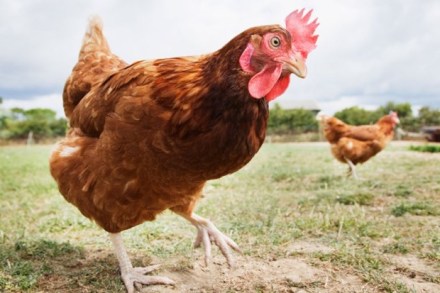
[audioplayer src="http://feeds.soundcloud.com/stream/266976520-the-spectator-podcast-the-purge-of-the-posh.mp3" title="Camilla Swift and Green MEP Keith Taylor discuss an animal lover's case for Brexit" startat=1084] Listen [/audioplayer] We British have always had a strange relationship with animals. We spend £5 billion a year on our pets and it is often said that we love our dogs more than our children (perfectly understandable, in my book). It makes sense, then, that we have some of the world’s highest animal welfare standards. Our European neighbours don’t always have quite the same attitude. If we could ask our four-legged friends how they’d vote in the EU referendum, I’m pretty sure they’d woof, miaow or moo for ‘out’.

How Jeremy Corbyn kept down the bids at this year’s big Tory fundraiser

This piece is from the new issue of Spectator Money, out on Thursday 19 May. The magazine will come free with your next copy of The Spectator, and will also be available to read online at spectator.com/money. The Conservative party’s Black and White Ball is a lavish, billionaire-laden affair. Tickets can cost up to £1,500, with guests who shell out the full £15,000 for a group of ten rewarded with the presence of a cabinet minister on their table. But even if that sounds a bit steep, selling tickets isn’t the main objective.

The RSPCA may be getting back to what it does best: animal welfare

The RSPCA over the last decade has – many would say – lost its way, bogged down in a mess of private prosecutions against honest members of the public instead of focusing on real animal welfare issues. But could the charity be about to do a U-turn? In an interview with the Telegraph their new chief executive, Jeremy Cooper, has admitted that the charity has become too political in recent years, accepting that they have ‘made mistakes in the past’, including over the badger cull and in its prosecution of hunts, and says it is ‘very unlikely’ that the charity will bring any private prosecutions against hunts in future. If the RSPCA do change their tune, it can't be anything but a good thing.

The government plans for rural broadband simply aren’t up to scratch. The least they could do is admit it

Election results day a good day to bury bad news -- who'd have thought it? Fortunately for people living in rural areas, the bad news wasn't buried as well as the government might have hoped: it turns out the Conservatives have changed their tune a little on their plans to roll out decent levels of broadband across the country by the end of this parliament. 95% of homes will receive superfast broadband by he end of this year. But around a million homes -- mainly in rural areas -- will not be receiving superfast broadband, and for those who have poor broadband service, its 'Universal Service Obligation' will require homes and businesses in the 5 per cent of areas that don't yet have fast broadband to request the service.

The anti-hunt mob have reached a new low

Last Saturday, on 2 April, 9-year-old Bonnie Armitage was killed by a kick from a horse. This tragic accident could have happened anywhere – at the yard, at a pony club camp, on a fun ride – but as it happened, it was at the closing meet of the Cotswold Hunt.  This last aspect of the accident is what so many people seem to have a problem with: people are now using her death as an excuse to reignite the hunting debate. Many of the comments – on numerous newspaper websites and on social media – are utterly vile, and don’t bear reading, let alone repeating.

A fizzy new sponsor for the world of three-day eventing

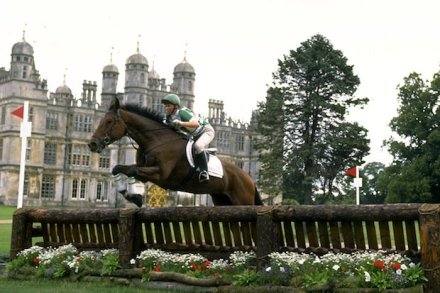
Pol Roger have a long history of sponsoring exciting, and sometimes somewhat eccentric events – from real tennis to horse racing. But the company are also staunch supporters of country sports, so it makes perfect sense for the champagne house to turn their hand to three-day eventing. This year they have decided to sponsor Burghley Horse Trials, as well as the Festival of British Eventing at Gatcombe, and they very sensibly chose to celebrate their sponsorship of these events in the Officer’s Mess of the Household Cavalry’s home in Hyde Park Barracks. Eventing might be a new sport for Pol’s portfolio, but they have two ambassadors who are perfectly placed to teach them the tricks of the trade.

Can the RSPCA’s new CEO reform the ailing charity?

The RSPCA have been in a fair pickle for a while now. It had been without a CEO for two years – after their last one, Gavin Grant, stepped down citing health reasons – until two weeks ago when they announced that Jeremy Cooper, (formerly chief executive of the charity’s ethical food label) would be taking on the role. This comes after reports at the end of last year that three candidates had pulled out, apparently due to concerns over finances, and the fact anyone in the job would be accountable to the charity’s council. Two trustees have also stepped down since September over concerns about the governance of the charity.

Can the ‘leave’ campaign convince British farmers that they’d be better off out?

As Nigel Farndale wrote in this magazine in February, leaving the EU would have a dramatic effect on British farmers and the agricultural industry. When it comes to British agriculture, the EU very much sets the rules – with regards to both regulations and funding – so a vote for Brexit would mean change, in a big way.   But what makes the EU debate even more interesting when it comes to farming is that the farming minister – George Eustice – has placed himself firmly in the ‘out’ camp. Eustice, after all, was once a Ukip candidate in the European Parliament Elections, and was Campaign Director for the No to the Euro campaign – so perhaps it was unsurprising that he would join the campaign to leave the EU as well.

Are Anders Breivik’s human rights really being contravened, or is it simply attention seeking?

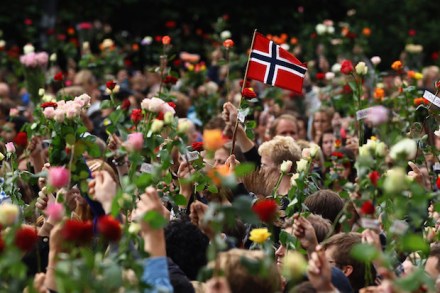
Anders Behring Breivik – the Norwegian extremist who killed 77 people in 2011 – has for the last few days been involved in a human rights trial in his prison in the south of Norway. Many would argue that, for a person in jail, he has a fairly cushy life – particularly given his crime. He is allowed to play video games, read newspapers and have access to a computer, and also has access to three cells, as well as an outside area. He has also been allowed to take university courses at the country’s main university, the University of Oslo, and took part in the prison’s Christmas gingerbread-baking competition. He is not, however, allowed to communicate with other prisoners, and his letters are all monitored and censored. So what more does he want?

The Spectator Podcast: Why political correctness is a good thing, George Osborne’s Budget, and the end of the rave

Is political correctness a good thing or a bad thing? As Simon Barnes writes in this week's magazine, he used to think that people should be free to use whatever words they wanted to, in pursuit of truth and meaning. But having a son with Down’s syndrome has changed his mind. Now, he has seen the benefits that political correctness bring to society. On this week's podcast, he and Isabel Hardman discuss whether being PC is a good thing with Tom Slater, Deputy Editor of Spiked. Yesterday's Budget held a few surprises – but not that many. What it did do, as James Forsyth argues in his column this week, was bring the political focus back to the UK again.

New Zealand

On my first night in Christchurch, I woke at 3.32 a.m. to what felt like an explosion. My bed was rocking, and a few things fell off the shelves. After my initial panic, I realised what it was: an earthquake, of course. The next question: what to do? Being an earthquake virgin, I had no idea if this was a big ’un or a small one — so I stayed put. I would listen to what was going on outside, I decided, and if people seemed to be panicking or moving, I’d join them. Fortunately the shaking soon subsided, so I resorted to Google. It was true. On Sunday 28 March, there had been a ‘rather strong’ 4.27 magnitude earthquake just outside town. Welcome to New Zealand. Given where I was, I should have worked out more quickly what was going on.

School portraits | 10 March 2016

  Sir William Borlase  Parents fight tooth and claw to make sure that their house is in the right catchment area to get into Buckinghamshire’s excellent state schools. Many of the former grammar schools — including this one, RGS High Wycombe and Wycombe High School — are now Academies, but they are no less popular or successful. This co-educational grammar is based in the leafy town of Marlow only yards from the Thames. It has its own boat club and school rowing teams regularly win national championships and compete at Henley Regatta. The academic results are superb, too: 82 per cent of last year’s A-level results were B or higher, with 75 per cent A*s or A at GCSE and a 100% A*-C pass rate.

Blackboard jungle

The world of education is a complex one. There are so many options – public schools, academies, state schools; single-sex ones and co-educational ones – that it’s no wonder people get bogged down. This supplement, kindly sponsored by Investec Wealth & Investment, aims to make things at least a little clearer. When people raise the subject of boarding schools, for example, it’s normally expensive public schools that you think of. But as Beth Noakes explains, there are also state schools that also offer boarding – although you might find the odd frog in the swimming pool. School food is changing, as Laura Freeman discovers when she visits a state primary whose chef previously worked at Ottolenghi. So are funding methods.

Why is there one rule for badgers, and another for mosquitoes?

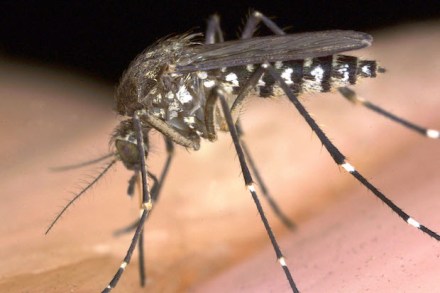
It’s unusual for a left-leaning paper to propose wiping out an entire species. Normally they’re proposing doing the exact opposite – reintroducing species that haven’t been seen there for hundreds, if not thousands, of years. But in a recent column in the Observer, Eva Wiseman decided that wiping out all mosquitoes is the best solution for humankind. Very few people like mosquitoes, that’s true enough, and there are serious and sensible reasons behind that dislike. As well as their blood-sucking tendencies, they also transmit some of the deadliest diseases on this planet – most famously malaria, but also a whole host of others, including dengue fever and the one that’s making the headlines at the moment, the Zika virus.

Finally, the world has realised that George Osborne is a hottie

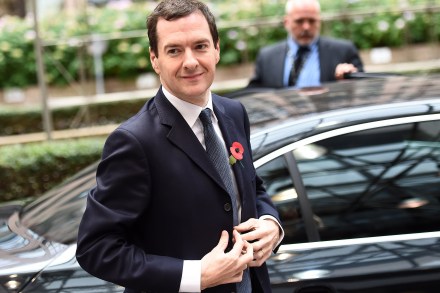
‘It's hard to think of a time when we didn't all fancy the Chancellor of the Exchequer,' begins George Osborne’s entry in this year’s ‘The Tatler List’ – the society magazine’s annual compilation of ‘the people who really matter’. This year Osborne is placed at number 4, trumped only by Princess Charlotte, Ant and Dec, and Prince George, and a full 13 places higher than the next politician on the list, Mayoral hopeful Zac Goldsmith. But is it really all that hard to remember a time when ‘we didn’t all fancy the Chancellor’? The magazine puts his attraction down to his ‘big brain, sexy hair cut, and control of the biggest bank account in the country’.

Faroe Islands: A whale of a time

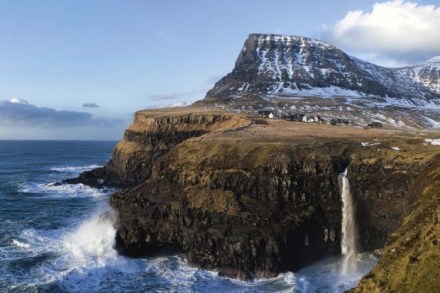
‘Have a good holiday, Camilla. Don’t kill any whales.’ That’s not the normal goodbye I get when leaving the office, but then I’m not normally off to the Faroe Islands. The country isn’t that far from the UK — in fact, we’re the nearest neighbour, with Scotland 200 miles to the south. But it’s not somewhere people know much about. If they have heard of the Faroe Islands, the one thing they know about is the ‘grindadráp’, or pilot whale-hunt, which supplies newspapers with gory photographs every year. Although I wouldn’t have been surprised to see whale on the menu (as you do in Norway), I hadn’t expected whaling to play much of a part in my trip.

Dartmoor

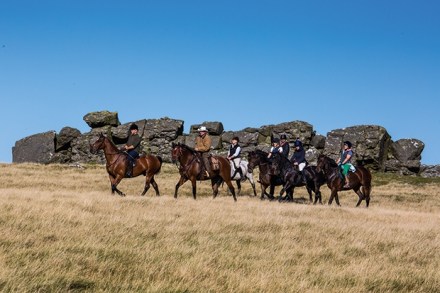
I’ll willingly admit that the moors of south-west England are not my natural territory. Mention the word ‘Dartmoor’ and my immediate thoughts are of scruffy, sturdy ponies and a giant bog. But then I boarded a train to Exeter to spend two days crossing said bog on horseback, and my whole perception changed. Yes, there were bogs (at one point my horse descended almost entirely into one — quite unnerving for those following behind) and plenty of wild ponies. But we also found standing stones that predate Stonehenge by a thousand years, spectacular granite tors breaking out of grassy hilltops, an unmarked (and allegedly haunted) grave and — most importantly — an ice-cream man mid-afternoon on Sunday, just when we were starting to flag.

The SNP don’t care about foxes. It was all a pack of lies

So, it turns out that the SNP weren’t that bothered about the plight of foxes after all. Back in July, you might remember, David Cameron was forced to backtrack on his plan for a parliamentary vote on relaxing the hunting ban, after the SNP decided to vote against any changes. This, of course, came after Nicola Sturgeon wrote in February: ‘the SNP have a long-standing position of not voting on matters that purely affect England — such as fox hunting south of the border, for example — and we stand by that.

Send in the clones

How much do you love your dog? Do you secretly wish, as he or she grows older, that you could have another just the same? I’ll bet that tens of thousands of Brits feel this way — and soon their dreams could come true. When most of us last thought about it, cloning was an off-putting and futuristic prospect. Dolly the sheep was the poster girl, and things didn’t turn out too well for her. But times change, science creeps on, and last year a Brit called Rebecca Smith had her beloved dachshund, Winnie, cloned in South Korea. The going rate for Mini-Winnie would have been £60,000, but Rebecca won a competition and so — except for the obligation to appear in a TV documentary about the process — Mini came for free.

Michelle Payne’s Melbourne Cup win is proof that women jockeys can triumph – if they’re given the opportunity

Much has been written in these pages – both by Robin Oakley and myself – about the lack of female jockeys in racing. But every single time the topic is raised, the same argument pops up: that women simply can't compete with men because they ‘aren’t strong enough’. But yesterday Michelle Payne proved them all wrong, by becoming the first ever woman to win the Melbourne Cup. What was her message to those who think female jockeys aren’t good enough? ‘Everyone else can get stuffed, because they think women aren’t strong enough, but we just beat the world.’ ‘It’s a very male-dominated sport and people think we are not strong enough and all of the rest of it ... you know what?