Camilla Swift

Camilla Swift

Camilla Swift is the supplements editor of The Spectator.

Swiss trains

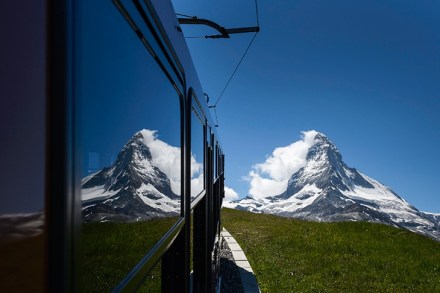
When Theresa May went off to Switzerland on a walking holiday last August, she said it was the ‘peace and quiet’ that drew her there — but I can’t help thinking there’s more to it than that. The Swiss are famous for their efficiency — and if there was ever a Brit who would appreciate things happening on time, it’s Theresa May. Yes, it is something of a cliché to say that no one does timekeeping like the Swiss. And in fact in 2014 a scandal erupted when statistics showed that only 87.5 per cent of trains arrived within three minutes of their scheduled time. Fortunately, Swiss Federal Railways managed to up its game the next year, and the crisis was over.

How the hunting community could boost Theresa May’s campaign

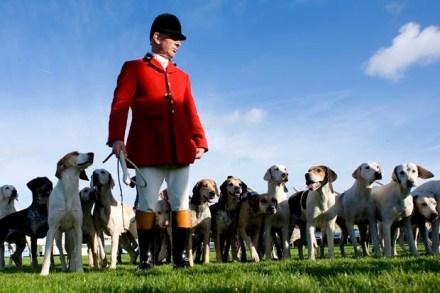
Out on the campaign trail in Leeds today, Theresa May stated that she supports fox hunting. ‘As it happens personally I have always been in favour of fox hunting and we maintain our commitment - we have had a commitment previously as a Conservative Party - to allow a free vote,' she said. The Prime Minister has consistently voted against the ban on hunting, and the general consensus has been that although she doesn’t necessarily think of it as a particularly important issue, she is supportive of the hunting community.  But it is perhaps something of a surprise that May has today come out and publicly said that she is actively in favour of fox hunting.

Welcome to the era of the boring Royals

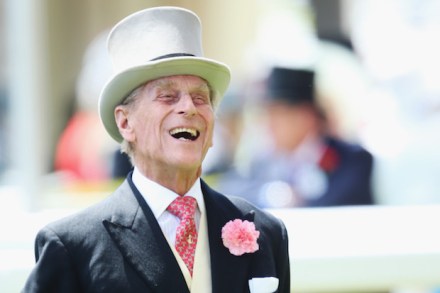
The news that Prince Philip will be retiring from his royal duties from August is a terrible blow. It’s entirely fair, of course. The Prince, after all is 95, and will be 96 by the time he retires. He has done far more than his share of Royal duties; last year he had 219 official engagements in the UK, and he’s Britain’s longest serving consort in history. But it’s still a terrible shame, because where will the fun be in the royal family without Prince Philip?  I remember nervously waiting in a queue at St. James's Palace to receive my Gold Duke of Edinburgh's award  – which was, of course, all his idea – worrying what questions he might ask and how I might be embarrassed.

How to pick a winner in today’s Grand National

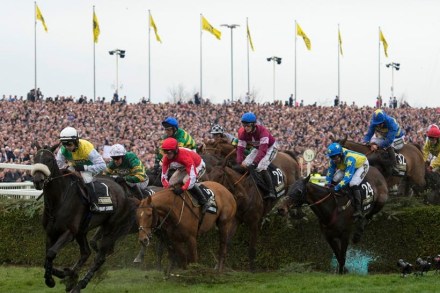
Aintree’s Grand National festival is well underway, with the ladies of Liverpool making the most of the unseasonably warm weather. It’s not just the champagne bars that will be doing well for themselves, though. The nation’s bookies also benefit hugely from today's Grand National race; it’s estimated that a quarter of the UK’s adult population will have a punt on it. The thing with the National is that with so many horses taking part, how on earth can you choose a winner? When there are 12 or so in a flat race, the probability of picking a winner is much higher. But with 40 horses to choose from, and the course so challenging, it’s a much harder task. Many people have one tried and trusted way of picking their horse. Some choose by colour.

Red Rum: the horse who saved the Grand National

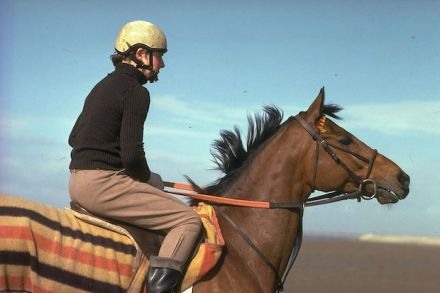
My first ever goldfish was called Red Rum. I won it (him?) at a point to point, so to a seven-year-old me, the name seemed utterly logical. I didn’t know anything about Red Rum ­– only that he was a racehorse. I did know his name however; and I don’t think I could have named many, or even any, other racehorses. That’s the power of Red Rum – arguably this country's most famous race horse – and this year marks the fortieth anniversary of his historic third win in the Grand National. He’s the only horse to ever have won the race three times, and when, aged 12, he returned to the track in 1977 for another go – having come second in ’75 and ’76 – many people thought he was too old to win. But he proved them all wrong.

Editor’s letter | 16 March 2017

One of the huge benefits of the British education system is the sheer number of alternatives on offer. But when it comes to choosing a school for your child, the choice can be overwhelming. In our cover piece on page 8, Ysenda Maxtone Graham looks at Britain’s faith primary schools, which could be a sensible option for the undecided parent. And for those who truly need expert help in deciding, on page 25 Constance Watson examines the world of ‘educational consultants’, who do all the work for you. We all hear constantly about how public school turns out smooth-talking, confident creatures (like David Cameron, for example). But on page 18 Henry Jeffreys recalls how his expensive education was no help in preparing for his disastrous job interviews.

Flock horror

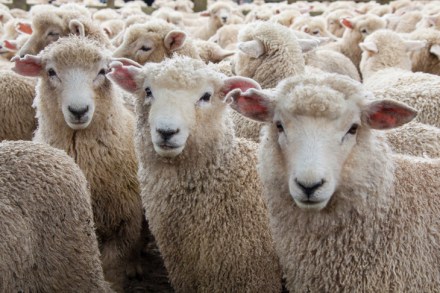
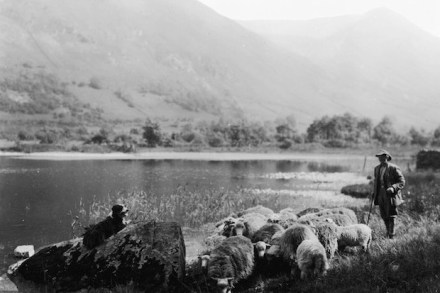
Pity the poor sheep. Every other animal has its champions. There are fox fanatics, dog obsessives, campaigners for cat welfare. Pigs, once a celebrity pet of choice, have their supporters, too. But it’s sheep who need friends right now, because they are, quite literally, under attack. My Facebook pals are mostly country types and barely a day goes by without one of them posting a picture of a sheep mauled, often fatally, by untrained, unrestrained city-dwelling dogs. Camilla Swift is joined by Ben Fogle to discuss the plight of sheep: Sheep-worrying used to be quite a minor problem but it is now getting much worse in terms of the number of incidents. The police say that up to 15,000 sheep were killed last year, which is ten times higher than previous estimates.

Tom Watson tells Marr that Labour will ‘make this country great again’

With the latest polling on voting intentions from ICM putting Labour on 27 and the Conservatives storming ahead on 42 points (the Lib Dems and Ukip are on 10 and 12 respectively), it’s no surprise that, as James Forsyth writes in this week’s magazine, the Tories are hugely confident of winning the next general election. But Labour’s Deputy Leader Tom Watson, speaking on Marr this morning, wasn’t about to give up on his party’s hopes anytime soon, stating that ‘we can certainly win a general election.’ ‘We’ve had a tough eighteen months. We had a damaging second leadership election, so we’ve got an uphill struggle ahead. The polls aren’t great for us.

Are hunt saboteurs simply out to harass people?

Boxing Day is the one day of the year when people really come out en masse to support their local hunts. Over a quarter of a million people are expected to show their support wherever the meet may be – in town centres, country pubs or the local stately home. It won’t just be hunt supporters going out, though. Twelve years after the Hunting Act, hunt saboteurs will be out in force as well. This is despite the fact that in the past two years, no registered hunts have been prosecuted under the Act. Surely, many people would argue, this means that hunts are sticking to the law, making hunt saboteurs redundant? But this doesn’t seem to be the case.

Philip Hammond and John McDonnell go head-to-head – but are we any clearer on Brexit?

This morning’s Marr show was something of a financial matter, with the Chancellor, Philip Hammond, and Shadow Chancellor John McDonnell sharing the sofa. As Andrew Marr pointed out, having the pair of Chancellors share a sofa is a ‘great tradition’, but one that had a stop put to it when George Osborne was in charge. Now the tradition has come back – but it this morning’s performance might be a good example of why Osborne chose to put a stop to it in the first place. The general consensus seems to be that McDonnell came out on top – with commenters saying that he ran rings around Hammond. Naturally, lots of the talk was about Brexit. But Hammond stayed fairly quiet on the topic, refusing to reveal the government’s negotiating cards.

National Hunt racing

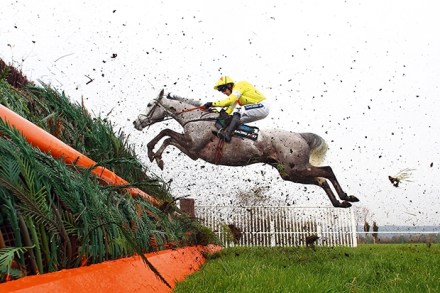
‘A more thrilling, uplifting, glorious way of living has yet to be invented,’ the jockey John Francome said of National Hunt racing. Watching last weekend’s action from Cheltenham racecourse, it was easy to see what he meant. Now is when the National Hunt — or jump — season really gets under way. The summer months are about flat racing, although these days flat racing goes on through the winter, too. There are now six all-weather racetracks in the UK; the latest, Newcastle, opened earlier this year. Of course, it’s not quite the same (floodlights are no replacement for long summer evenings), but it does enable flat horses, trainers and jockeys to stay in business all year round. For most racing aficionados, winter is about the jumps.

Why the John Lewis Christmas advert is a mess

It used to be the Coca Cola advert that signalled Christmas was on its way. Holidays were coming, and Coke would deliver joy to the world. These days, it’s the John Lewis advertisement that everyone looks forward to. There’s a running theme to these Christmas adverts. A schmaltzy song, a sickly sweet storyline (often with a few animals thrown in, just to make it that bit sweeter), and a happy, Christmassy ending. Hurrah!! This year’s, which was released today, is no different. Personally, though, I’d say that whoever came up with this advert needs a serious dose of reality – and quick.

Breach of Trust

Ever since it was founded in 1895, the National Trust has been considered a good thing. That oak tree sticker on the windscreen isn’t just a passport to some of the country’s finest heritage. It is a middle class status symbol declaring that you are cultured, a lover of the bucolic, someone who’d rather their children went out collecting tadpoles and tramping round nature reserves than staying in glued to an iPad. But the Trust, originally set up to ensure ‘the preservation for the benefit of the nation of lands and tenements of beauty or historic interest’ seems to have abandoned at least one of the laudable aims that made it so popular.

Norway never said ‘nei’ to Liam Fox

Being half-Norwegian, I can rarely find anyone in Westminster to discuss the Norwegian papers with. But Monday’s front page of the Norwegian business paper Dagens Naeringsliv has been the talk of the town. Why, because its main headline trumpeted Norway said no’ (in Norwegian, of course). The other lines clarified the story – ‘Brits wanted to collaborate on a new EU deal’, but Norway said no… ‘They didn’t get Norwegian help on Brexit’. [caption id="attachment_9646162" align="alignleft" width="302"] @SamCoatesTimes[/caption] What a dream story for those who are still in mourning over June’s referendum. It was quickly picked up by the Guardian, among others.

Editor’s Letter

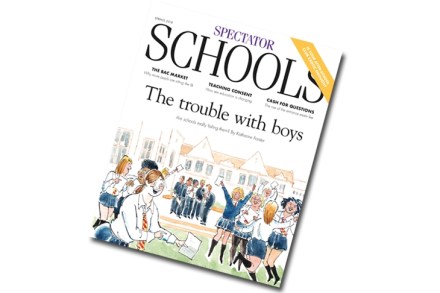
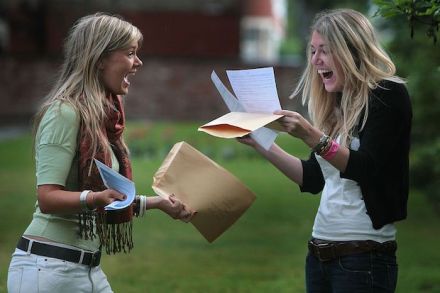
In August the papers were full of smiling pupils clutching their exam results. Now we’re in September, when children and teenagers across the country are taking the next steps in their academic lives, be that starting school, switching to a new one, or moving on to university or college. Navigating today’s education system can be mind-bogglingly complex for parents, so I hope this magazine will help to stimulate debate and shed light on new developments. For this issue we have given Spectator Schools a light facelift, introducing some new columns. In Talking Heads we meet Keith Budge, headmaster of Bedales. And in My School Trip Katy Balls tells of her drama-filled outing to Peru.

Field studies | 8 September 2016

Think back to any time you spent outside at school, and you’re most likely to recall a muddy sports field. At my school, one of the few times we were let loose into the surrounding countryside was when we took our Duke of Edinburgh’s award. Apart from that, the vast majority of our time was spent inside at our desks. Is that a good thing? The official curriculum might not factor in the great outdoors, but many schools have come to realise the benefits — both long-term and short-term — that being outside brings to their students. Traditionally, private schools have led the way in teaching youngsters about the ways of the countryside. Many state schools, however, are now following their example. Take West Rise, a state junior school just outside Eastbourne.

Equestrianism brings gender equality to the Olympics

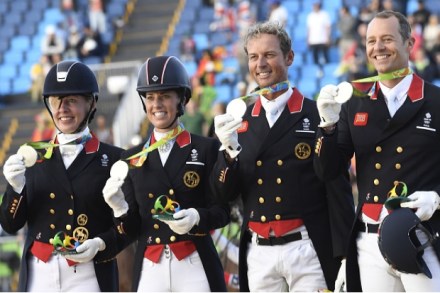
Team GB are currently resting in second position in the Olympic medals tables, with a total of 41 medals and 16 golds. This year, our team is made up of more women than ever before; the 164 women make up almost 45 per cent of the whole team. It’s strange but true, however, that apart from the mixed tennis doubles, the equestrian events are the only time you will see men and women on the same winners' podium at the Olympics. Last Wednesday the medal ceremony for the team eventing competition took place. On that podium were the French team, made up of four men, the German team, made up of three women and one man, and the Australian team, made up of four men.

Investing in the future

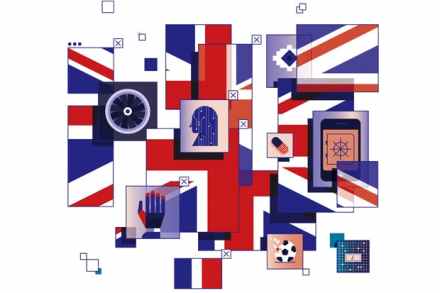
We might not have our own Silicon Valley (although we do have ‘Silicon Fen’ in Cambridgeshire and the ‘Silicon Roundabout’ in east London) but that’s not to say that Britain isn’t at the cutting edge of technology. Our expertise and ideas are the best in the world; the main challenge is encouraging UK investors to take a chance on innovative and potentially disruptive technologies. On 28 June The Spectator hosted a panel discussion at the Science Museum, kindly sponsored by BAE Systems, to look at emerging technologies and the future of British innovation.

Tales of Mr Tod

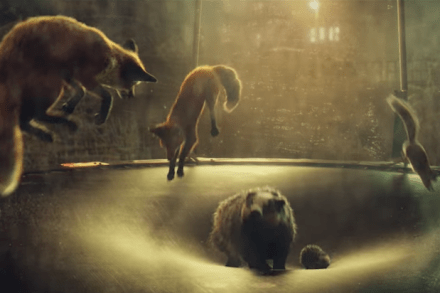
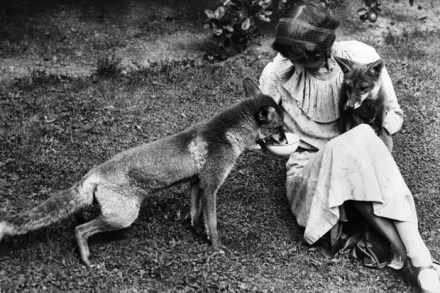
Have you ever considered tying a fox’s penis to your head? Well no, nor have I, but if you suffer from migraines, perhaps you might give it a shot. The fox, in fact, was thought to be a cure for any number of maladies in the 1600s. Fox ashes dunked in wine were recommended as a cure for asthma, their brains were thought to be useful in treating epilepsy, and making a necklace of fox testicles for a child was billed as a surefire cure for toothache. It sounds like quite the fashion statement. This book — Lucy Jones’s first — is a fascinating discussion of the history of our attitude to the fox, and if you want to know more about the red creature that wakes you at 3 a.m. with its baby-like screaming, then this volume is sure to keep you occupied for a while at least.

No, we don’t need to be in the EU to tackle environmental issues

David Cameron has been banging the anti-Brexit drum again, this time making the environmental case for staying in Europe. He has joined forces with the RSPB and the World Wildlife Fund, who have both stated that they would urge voters to stay in the EU, arguing that being in the Union has had a positive impact on the British environment; safeguarding rivers and woodlands, and forcing us to clean up our beaches. Today the Prime Minister visited Rainham Marshes, an RSPB nature reserve in Essex, and in a video from his visit he argues that since environmental issues cross national boundaries, we should work together – by staying in the EU – to tackle environmental problems. https://twitter.