Camilla Swift

Camilla Swift

Camilla Swift is the supplements editor of The Spectator.

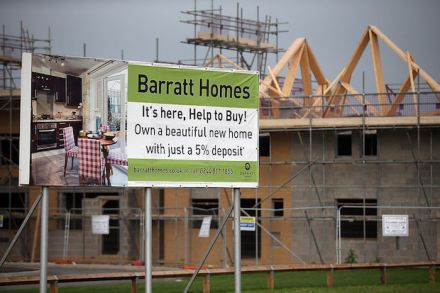
With average house prices now eight times the average wage, affordable housing remains a dream

Housing – and specifically the dearth of reasonably priced housing – is an issue that crops up again and again in the political conversation. Young people are being priced out of the housing market; even where new housing is being built, very little of it could be classed as ‘affordable’. So today’s news that the average house price is now eight times the average wage will, probably come as little surprise. House prices have been increasing exponentially over the last few decades; in 2000, the average house was 3.96 times the average income, and even since 2007 the average house price has increased by 19%. The fact that it isn’t a surprise doesn’t mean that it isn’t something we should be concerned about, however.

Are smart meters the future, whether we like them or not?

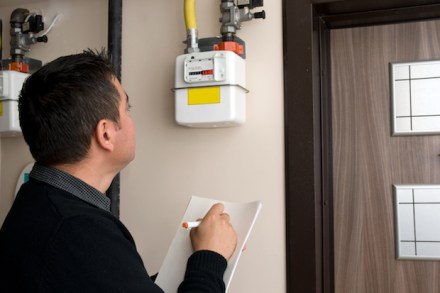
The ‘smart meter revolution’ is well and truly upon us, thanks mainly to a government campaign urging us all to have one installed in our homes. The £11bn campaign requires all energy suppliers to offer households a smart meter – which, in theory, should allow people to see exactly how much energy their house is using, and send meter readings to your energy supplier automatically – by 2020, or risk facing fines. With smart meters being offered for ‘free’ by energy suppliers, and the adverts sounding so appealing (after all, who wants to let ‘Gaz and Leccy’, as they’ve been coined in the publicity campaign, run wild in their home?), installing one might sound like a no-brainer.

If we’re all going to have to make the move to low-emissions vehicles, is now the time to do it?

How much time would you say you spent in your car per week, on average? Of course it’s something that varies hugely from person to person, but I’d put money on the fact that it’s more time than you might think. Recent research shows that the average UK driver spends 8 hours a week in their car, which works out at 18 days per year. That’s just the average, though; in the North East, ten per cent of those questioned said they spent over 20 hours per week in their car, while people in London were most likely to drive for under an hour a week. Naturally, the more time you spend in your car, the more important it is what car you choose. At the same time, if you’re spending more time in your car, this means that you’re also spending more money on fuel.

How much is your child’s schoolbag worth? The answer might surprise you

As a new school term starts, this often spells an expensive shopping list for parents. School uniforms that no longer fit, new schoolbooks and lunchboxes; research shows that the average parent spends £170 on each of their children at the start of a new school year. But although much of that spending can’t be avoided – after all, you can hardly send your child back to school with shoes that don’t fit – there is another area of the back-to-school routine where we might be missing a financial trick. Why? Well because the average child has £302 worth of gadgets in their school rucksack.

Editor’s Letter | 7 September 2017

We live in an age where technology surrounds us almost all of the time. In the Western world, smartphones are omnipresent, and information is available at the press of a button. But how is this affecting schoolchildren — and how can schools deal with both the problems and the benefits that modern technology brings? In our cover piece, Rhiannon Williams takes a look at how various schools are handling technology, and reports that a ban on smartphones may not always be the answer. While technology is playing an increasingly large part in pupils’ lives, sport is still important. William Cook says that it shouldn’t all be about elite athletes. But neither is a ‘prizes for all’ culture the right way to encourage children to enjoy PE.

Are we wise to turn our backs on cash ISAs?

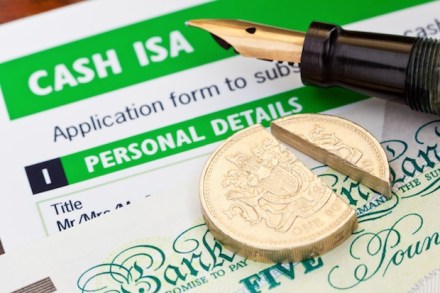
With interest rates so low, it’s no surprise to read that the amount of cash being put into ISAs has fallen dramatically in the last year. In 2015-2016, £58.7bn was paid into cash ISA accounts. In the most recent financial year, that fell by almost a third to £39.2bn. So what’s the reasoning behind the drop in cash ISA investments? James de Sausmarez, director and head of investment trusts at Janus Henderson Investors, argues that because Brits are ‘a conservative bunch’, we tend to fall back onto cash savings as being the ‘safest’ way of to look after our money. But here’s where we are going wrong; cash savings often aren’t the best option.

Hurricane Harvey could push petrol prices up to 121p a litre, and inflation to 3%

While the horrific destruction that Hurricane Harvey has left in its wake might feel like a nightmare happening miles away, we might end up feeling the after-effects in the UK as well. The RAC has warned that petrol prices could soar across the country, due to disruption at numerous US oil refineries. The hurricane affected the production of a third of the country’s oil refineries (59% of which are on its Gulf Coast), as well as restricting US oil pipelines. In total, American oil refinery output dropped by a quarter, thus increasing US demand for petrol imports, and raising prices in the UK.

Why is the National Trust hounding hunters?

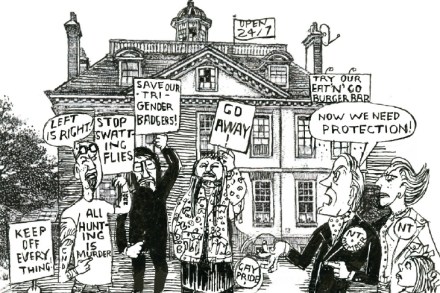
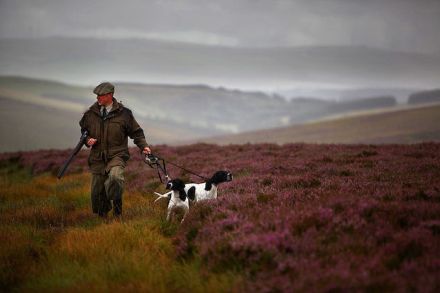
For the sound of his horn brought me from my bed/ And the cry of his hounds which he oft times led/ Peel’s ‘View, Halloo!’ could awaken the dead/ Or the fox from his lair in the morning. Back in the early 1800s, the legendary huntsman John Peel galloped all over the northern Lake District. His successors are the Blencathra Hunt, a ‘fell pack’ who hunt on foot, but the Blencathra may be the last to hunt on Peel territory. Much of the Lake District is owned by the National Trust, the UK’s largest private landowner, and at the next National Trust AGM, on 21 October, a motion is being put forward which proposes banning trail hunting on all the Trust’s land.

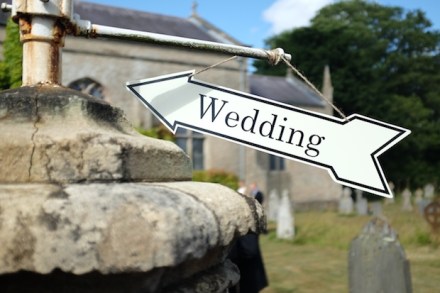
If it feels like you’re spending a fortune on going to weddings, you probably are

As happens every bank holiday, the roads were chock-a-block this weekend with people on the move – many of them heading off to weddings at opposite ends of the country. It can sometimes feel as though weddings cost a fortune; and that’s just going to them, not even having one of your own. Perhaps the reason it feels like they cost an awful lot, though, is because they do tend to be quite expensive for wedding guests. Of course, it’s lovely to be invited to a wedding, and perhaps even the engagements drinks and hen or stag do as well. But the price does tend to hit your wallet quite hard. Recent research shows that in total, Brits spend more than £87 million a year attending weddings.

How can we encourage millennials to save for their retirement?

It’s a story we’ve become used to hearing in recent years. How millennials are the sensible generation. They’ve turned their backs on alcohol and going out every single night. They smoke less than other age groups, and have fewer sexual partners. And here’s another string to add to their bow – it turns out that they are also keen to invest in their retirement, even now, when that could be fifty years away. Research released today by Royal London show that auto-enrolment in workplace pensions schemes hasn’t put off those aged 24-35 from saving for retirement. 71% of those questioned said that they decided not to opt out of their workplace pension scheme, while 8% of those questioned did initially choose to opt out but then changed their minds.

Considering retiring abroad? Don’t forget about your state pension

Retiring to a warmer, more exotic, country is something that many of us dream of doing – and sooner, rather than later. One in ten people over the age of fifty are currently considering retiring abroad, with the main reasons being a better lifestyle, a cheaper way of life and of course, better weather than the UK. Who can blame us for wanting to enjoy some sunshine in our old age? Perhaps unsurprisingly, the most popular retirement destination for Brits is still Spain, with other locations closer to home – France, Portugal, Italy and South East Europe – following close behind in the popularity stakes. But growing old abroad can quickly turn from a dream into a nightmare if you don’t plan properly.

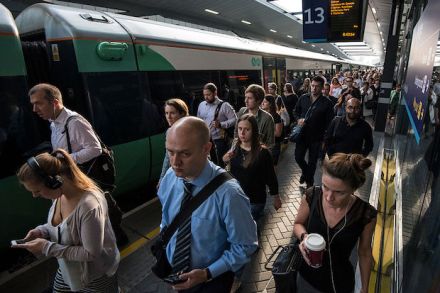
What have commuters done to deserve this price hike on their rail fares?

With the Retail Price Index figures released yesterday, commuters are up in arms at the news that rail prices are set to rise by up to 3.6% as of January. It’s not all fares that will be affected; only those that are regulated by the government – and the price increase won’t happen until the government agrees to it being implemented. But around 45% of fares in England, Scotland and Wales are regulated, including certain off-peak and standard return tickets, and most season tickets in the South East and London regions. A 3.6% increase might not sound huge if you only get the train once or twice a month. But the people that it will really affect is commuters.

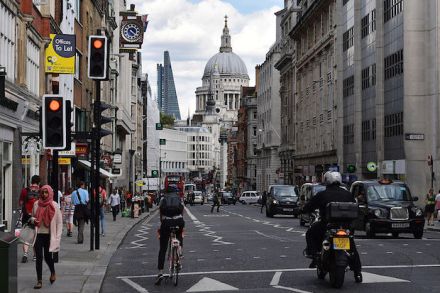
How one London junction is raking in fines of £200,000 per day

Driving in central London is a minefield at the best of times. What with the confusion of the congestion charge zone, one-way streets at every turn, cyclists all over the place and it being nigh-on impossible to park, it’s a wonder that anyone even tries to drive in London. Perhaps this is all a tactic by the Mayor to put off drivers from coming in to the capital. It does seem like a pretty good tactic, to be fair. The latest gripe is about one particular junction in Bank, from which cars are banned, and only buses and bikes are allowed to drive through. However, the rules were only changed last year, in a bid to reduce the number of accidents in that particular area. It’s not the change of rules that’s upset people, though.

Why Scotland’s rural communities need grouse shooting

Tomorrow, 12 August, is the 'Glorious Twelfth': the official start of the grouse-shooting season. This normally means plenty of tweed and guns heading north, in cars, in planes, and on the railways. This year, however, there's something of a spanner in the works. Just weeks before the start of the season, ScotRail announced that they would be banning all guns on their trains. This is despite the fact that unloaded, properly licensed firearms are allowed on trains, as long as they are carried ‘in accordance with the law’. The sticking point here, however, is the part that says ‘with prior permission of the train company’.

Would you really want to be a farmer in 2017?

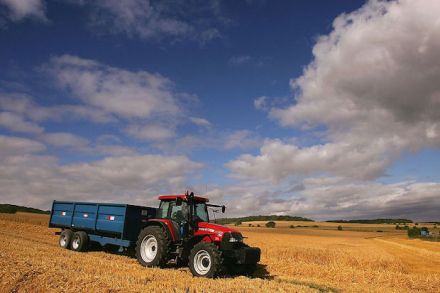
What does being ‘a farmer’ mean to you? For those that have experienced it, the job – or lifestyle, really – the answer might be early mornings, long days, and little pay. Others imagine farming to be more like living the good life. Perhaps that's the reason why a recent report, commissioned by the Prince’s Countryside Trust, revealed that twenty five per cent of adults questioned quite like the sound of giving up their day job and taking up farming instead. The economics of the profession might make them think again, however. The most startling fact from the report is the gap between the general public’s estimates of a farmer’s income, and the reality.

What does the charity sector want from Brexit? A clean break and tax freedom

When it comes to Brexit, for many organisations it seems to be all doom and gloom. Yes, plenty of individual Brexiteers are still glad that they voted to leave the European Union. But the uncertainty that still looms over the UK’s future in so many areas – trade, farming, immigration and more, means that in many sectors, Brexit is seen as a negative. There’s some good news for Leavers today, though. The Charity Finance Group (CFG), which provides support for finance professionals working in the charity sector, has published a new report entitled ‘A Brexit that works for everyone’, analysing what would be the best option for Britain’s charity sector.

How can we put an end to all these dog attacks on sheep?

This spring I wrote in the magazine about how sheep attacks were on the rise, as wayward dogs were becoming an increasing problem for farmers. Sadly, since I wrote the piece in March, the problem hasn’t got any better. Pictures of sheep that have been either mauled or killed by family pets still appear constantly on my social media feeds, and over the summer numerous dogs have had to be shot by farmers to stop them attacking their livestock. Things have got so bad in some places that in Wiltshire, for example, the National Trust has been forced to ban dogs from some of the areas it looks after close to Stonehenge.

Goodwood

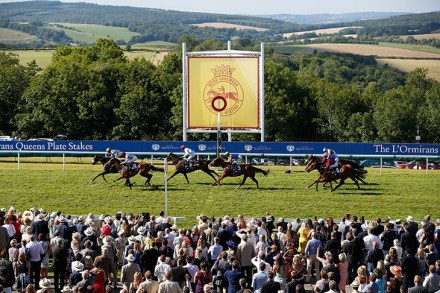
The South Downs cover 260 sq miles from Hampshire’s Itchen Valley to Eastbourne in East Sussex. Nestled near the southernmost point is Goodwood racecourse, which claims to be the most beautiful track in the world — and you can certainly see why. The downs are stunning, and from the top of the stands you can look out for miles. The course — part of the Goodwood estate — is owned by Charles Gordon-Lennox, the current Lord March and future 11th Duke of Richmond, who lives just a few hundred metres away in Goodwood House. His true passion is, admittedly, cars. He is president of the British Automobile Racing Club, and in 1998 reopened the Goodwood Motor Circuit, which had closed in 1966.

Michael Gove, ‘Green Brexit’, and what it all means for Britain’s farmers

Michael Gove’s speech this morning on his plan for a ‘Green Brexit’ is one of the first signs of what he is up to in his new role as Defra secretary. It was always a given that he would stir things up, but it remained to be seen whether his Brexit plan would be judged as a good thing or a bad thing by British famers and rural communities. So what did this morning’s speech deliver? Well, when it comes to farming, the answer is far more questions than it did answers. Of course, this was a speech to various environmental groups at the World Wildlife Fund’s headquarters, so it’s unsurprising that Gove used the opportunity to give a speech that would please his audience. He did touch on farming, though.

The European mind

The statement in the above graphic is certainly an arresting one, especially given the long-standing negotiations and tensions between Turkey and the EU. But it’s just one of the findings from a recent poll revealing what people living in the EU think about the challenges facing them. From immigration to unemployment to trade links, this supplement takes a closer look at the opinions of EU citizens, with the aid of data from the Századvég Foundation’s Project 28 survey. The Századvég Foundation was Hungary’s first conservative political think-tank, and has been conducting public opinion research and analysis since 1993.