Camilla Swift

Camilla Swift

Camilla Swift is the supplements editor of The Spectator.

Who will win this year’s Grand National?

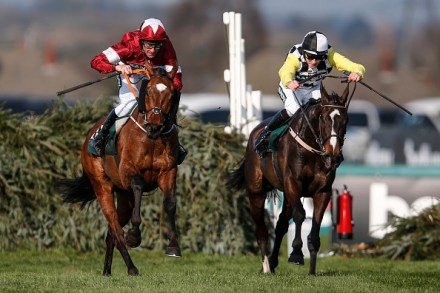
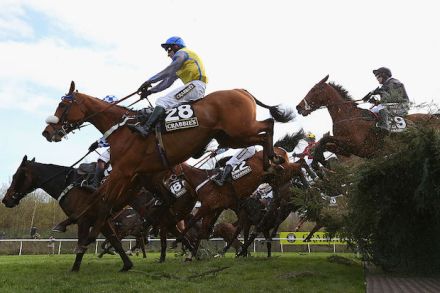
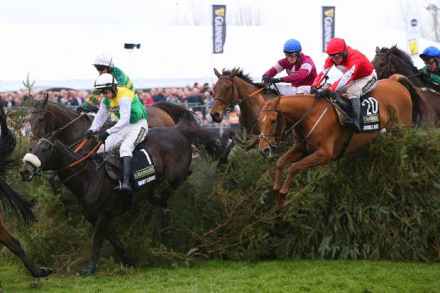
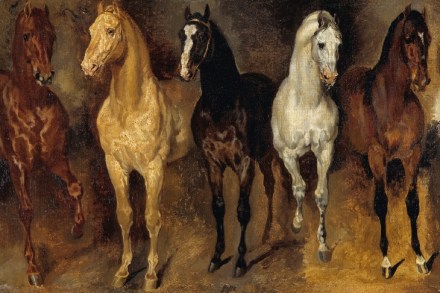
I’m sure every ‘horsey’ person has been asked the same question: ‘Who should I put my money on in the Grand National?’ No matter whether you’re a dressage rider or a four-in-hand driver, come mid-April everyone wants to hear your views on the most-watched horse race in Britain. £300 million is expected to be bet on the race itself (Saturday at 5.15pm, if you’d forgotten); the most bet on any single horse race in the world. But who is it worth putting your money on? It’s a tough call, for so many reasons. For starters, unless there are any last-minute changes, there will be 40 horses at the start line – so a sizeable field.

What might a jockey earn from riding in tomorrow’s Grand National?

This Saturday, 600 million viewers are expected to tune in to watch The Grand National. Horse racing is the second biggest spectator sport in the UK, and Aintree’s most famous race – in fact, Britain’s most famous race – will be screened in every corner of the globe. £300 million of bets will be placed on the race, and thousands of office sweepstakes organised. What about the jockeys riding round the course? It’s safe to say that being a jump jockey is one of the most dangerous jobs – or certainly one of the most injury-prone jobs – out there.

Location, location

In large cities, a school can weave itself into the fabric of its locality almost without anyone noticing it’s there. But in smaller towns and villages a school, particularly a large one, can play a much greater part in the day-to-day life of its inhabitants. In some towns and villages, the school is even the focal point. Take Peaslake in the Surrey Hills. In 1993, the village school was closed down as it was considered ‘too small’ to be viable. When a campaign by local residents and parents to keep it open failed and government funding was removed, the Peaslake Schools Trust was formed.

Editor’s Letter | 14 March 2019

What should we do with difficult students? The ones who distract everyone else in the class, and don’t care how they are punished? Some schools exclude struggling pupils because they are worried that their exams performance might drag down the class’s grades. But children have a right to an education, says Sophia Waugh, so we need to find a solution. Former teacher Hannah Glickstein agrees, but argues that new Ofsted rules have been put in place by bureaucrats with no experience of teaching. It might not be the sexiest of subjects, but it’s certainly an important one. Talking of exams, Ross Clark takes a look at the rise in unconditional offers to university. As someone who was offered one himself, he thinks that they are a terrible idea.

If you want to see equality in action, head to the Cheltenham Festival

International Women’s Day is the official appointed day on which to celebrate women’s achievements. But actually, I’d argue that the first day of the Cheltenham Festival is as good a day as any to celebrate women in racing; and there are lots of them. Women are making their names in racing, on an equal playing field with men, whether it’s International Women’s Day or Christmas Day; a Friday or a Tuesday. Go to any racing yard in the country and it’s likely that many of the staff will be female. It’s a cliché, but girls like ponies, and over half of all stable staff jobs in the UK are filled by women. But historically, racing has very much been a man’s world.

Gove is right to keep the lynx out of Northumberland

Over the few years, a battle has been quietly simmering between farming communities and a conservation organisation who want to reintroduce the Eurasian lynx to the UK. The cats have been extinct in the UK for well over a thousand years, and while farmers worry that the big cats will threaten their sheep, Lynx UK – the trust behind the plans – argue that the animals would help the economy, and cause little damage to livestock. But now Defra secretary Michael Gove has rejected a request to release six lynx into Kielder Forest, in Northumberland. The reasoning given for their decision included a lack of support from locals and major landowners, adding that the ‘socio-economic benefits of the trial were unclear’.

A beach ball

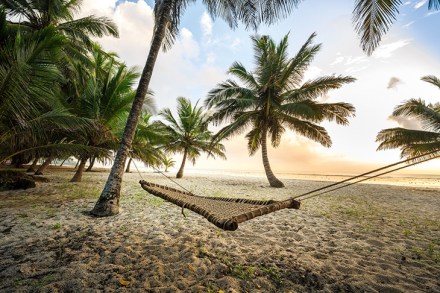
‘Watamu is my favourite place in the world,’ my friend declared when I told her where I was going for a long weekend. For her, Watamu means Christmas. Like many visitors to Hemingways and other hotels alowhang the Watamu coast, her family are loyal repeat customers, returning year after year to this little village on the Kenyan coast around 75 miles north of Mombasa. The coast has had its ups and downs. It became a popular holiday destination in the late 1960s and for several decades earned a decent income from visitors. In the 1990s and the 2000s, tourism had more of a struggle. Politics, terrorism and some well-publicised murders all played their part in putting people off.

Rise of the machines

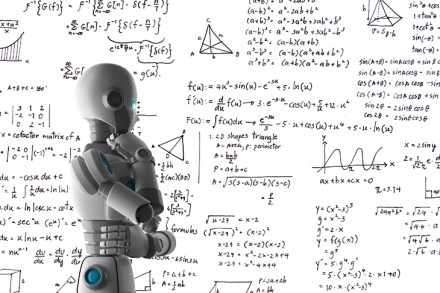
‘There is a profound mismatch between the way we are educating our young and the world we’re educating them for, and what should, and could, be happening.’ So says Sir Anthony Seldon, former headmaster of Wellington College and vice-chancellor of Buckingham University. Seldon is well known for promoting novel ideas when it comes to education. During his time at Wellington he was often in the limelight for his original style of thinking, or ‘visions for education’ as he puts it; for example, his decision to introduce mindfulness into the curriculum there. Seldon isn’t just a teacher, though. He’s also a historian and a political biographer, as well as being a regular on TV and radio, discussing education.

Share in the community

The theatre, we are told, is increasingly becoming the domain of the privately educated. The Guardian has even claimed that the working-class actor is ‘a disappearing breed’, and it’s certainly true that public school-educated actors such as Eddie Redmayne, Benedict Cumberbatch, Tom Hiddleston, Damian Lewis (the list goes on) are rarely off our screens. But what’s the reason for it? Why are our independent schools so good at churning out Bafta- (or indeed Oscar)-winning actors and actresses? A large part of it comes down to the teaching and the facilities available. Most public schools offer a school theatre, as well as full-time drama teachers, theatre managers and so on.

A model school

It would be a cliché to say that Christian Heinrich fell into his career in education. But really, there isn’t any other way of describing his route into teaching. In his final year of a degree in American literature, he returned home to nurse his sick mother. When she passed away, his old prep school headmaster asked him for a coffee. ‘He played that wonderful trick,’ explains Heinrich. ‘He said, “Oh Christian, I’m taking a Latin class, come along.” Midway through the lesson he had to take a phone call. “Christian, just finish the lesson, and then come and find me.” I duly finished things off, and that was that. ‘“When are you going to start?” he then asked.

Editor’s Letter | 6 September 2018

State or private? Years of saving every penny in a bid to scrape together enough to pay the school fees, or months of cramming to get your child a scholarship, a bursary… anything to ease the pain. Is it worth it? Fraser Nelson is going through this process, and writes about his dilemma. Charlotte Metcalf, meanwhile, tells the tale of her bid to find the best possible state school for her daughter, and how she still wonders whether she has doomed her child’s prospects by being unable to afford to go private. Elsewhere in the magazine, classics teacher Emma Park argues that children shouldn’t give up on Latin just yet (even if today’s high-achieving pupils see little point in learning for learning’s sake, rather than for exam-passing).

Have a flutter on girl power winning the Grand National

‘Any tips for the National?’ I think anyone who has even a vague connection to a horse has been asked this question over the last week, and it’s a pretty impossible one to answer. With a field of forty and some very tough obstacles to get over safely on the way, all you can really do is look at statistics. As Belinda McClung, one of the owners of last year’s National winner, One for Arthur, put it to me: ‘There isn’t as much pressure in a race like the Grand National, where there are 39 other horses; you can get brought down, fall – anything can happen.

How Friday the 13th affects peoples’ behaviour

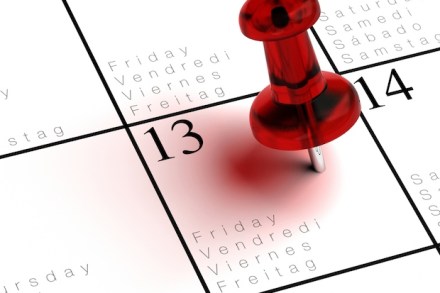
We Brits tend not to be as superstitious as those in some other countries; well at least that's what I thought. In the States, for example, it’s common practice not to have a 13th floor in hotels, for fear it might bring bad luck. No such thing would happen over here, would it? Surely we are far too sensible to worry about silly superstitions like that? But new research appears to show that we are, in fact, just as superstitious as those over the pond. Today is Friday 13th – a day that is famously unlucky, if you believe in those kinds of things, and home insurance company Policy Expert has found that people appear to change their habits when the 13th falls on a Friday, and behave in a more careful way.

Courses for horses

With the Cheltenham Festival been and gone, all eyes are on Aintree and the Grand National. These courses feature in Tom Peacock’s Remarkable Racecourses, as do other familiar names: Ascot, Epsom, Goodwood, Chantilly and so on. But this isn’t simply a rundown of the most famous racecourses in the world. It’s more a whistle-stop, round-the-world tour of racetracks that are a bit different. What’s striking is just how much a racecourse can tell you about the culture and politics of a place. Politics does occasionally come into racing — after all, the most famous of all the suffragettes’ protests happened on a racecourse.

The Tories have taken the countryside vote for granted

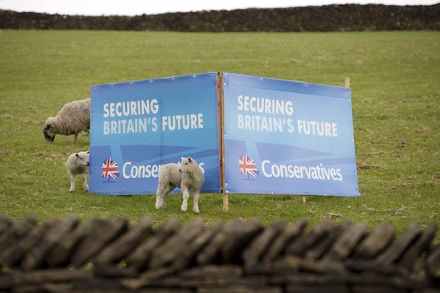
Traditionally, the Tory party have always had the support of the countryside. The hunting, shooting and fishing fraternity were solid Conservative stock – and if anyone really drove the final nail into the coffin of Labour rural vote, it was Tony Blair. The early noughties saw numerous marches through central London protesting not just about the proposed ban on hunting, but on Labour’s perceived attack on rural Britain. In fact the Countryside Alliance was formed from an amalgamation of the British Field Sports Society, the Countryside Business Group, and the Countryside Movement almost as a direct response to New Labour’s landslide victory in the 1997 General Election.

The way we live now

We hear a lot about what EU leaders think and want. But how do the people who actually live in the European Union feel about the way it operates, and how do they view the future? That’s what this supplement aims to get to grips with, with the aid of data from the Századvég Foundation’s Project 28 survey. The Századvég Foundation was established in 1993 as the first conservative think-tank in Hungary, and has been conducting public opinion research and political and social analysis ever since. Its studies cover a wide range of areas, including economic policy, foreign and security policy, demography, and youth and family policy issues.

Matrons of honour

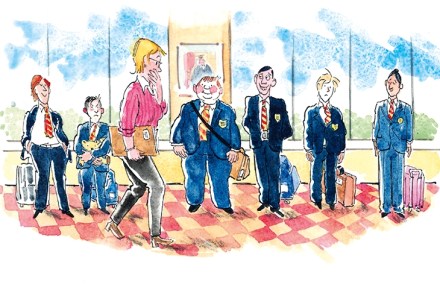
When choosing a boarding school for your child, what’s the most important thing to bear in mind? For some it will be the academic results, for others the location, the range of subjects or the variety of extra-curricular activities on offer. But for many, a big concern will be the pastoral side: who will be carrying out the parental role when your child is living away from home? At the majority of boarding schools, matrons bear most of that responsibility. ‘When you take on the responsibility of someone else’s child, it’s very daunting,’ says Rachael McGuire, who has been matron of Matheson’s House at Glenalmond College in Perthshire for 24 years, and is in charge of 40 boys aged between 13 and 18.

The school beside the sea

When you see the name Lawson in The Spectator, it would be understandable if you thought of financial or political matters. And it’s true that Tom Lawson, the headmaster of Eastbourne College, did study PPE at Oxford’s Christ Church like his father, Nigel, and his half-brother, Dominic, before him. But unlike the rest of his family — who have ‘all been journalists, all the way down’ — this Lawson decided to become a teacher. ‘There were two reasons,’ he explains. ‘Firstly I loved my subject; I was wonderfully taught, and I didn’t just want to use my PPE as a stepping stone to another job. I wanted to carry on with lifelong learning. The other reason was I quite fancied being a stand-up comedian.

Editor’s Letter | 15 March 2018

Is it the responsibility of schools to teach children about relationships and sexual consent? Or is that something parents ought to be teaching at home? This is the question Joanna Williams addresses in our opening feature. She takes a look at the changing face of sex education, and talks to some of its more evangelical exponents, as well as to a mother who has chosen to remove her daughters from sex education classes. It’s something of a controversial topic — but an undeniably interesting one. Gender neutrality is a fashionable subject these days, but Katherine Forster suggests that it’s quite harmful for boys if we pretend they learn in the same way as girls.

It pays to keep your wits about you when buying a classic car

To a classic car buff, nothing can beat the sheer joy of owning one for yourself. But is there actually any investment value in them? That’s the question Henry Jeffreys posed in the pages of Spectator Money back in 2016. It’s a difficult one to answer; he discovered that in recent years, classic cars have been so popular that they’ve harmed their own value slightly. As former Top Gear presenter Quentin Willson explained to Jeffreys, there have been ‘too many people getting involved without the requisite knowledge’. Most people who buy a classic car, however, don’t think about it in terms of its future value – although they probably do factor that into the equation.