Bruce Anderson

Bruce Anderson is The Spectator's drink critic, and was the magazine's political editor

Sanctions won’t tame Vladimir Putin’s Russia. Talking might | 24 July 2014

This article first appeared in the print edition of The Spectator magazine, dated 26 July 2014 The civilised world felt as if its heart had been touched by an icicle. Photographs of murdered children. Biogs of people like us; we could have been on that plane. We will be on similar ones, now reminded of our vulnerability to frivolous barbarians in possession of terrifying weapons. Grief and fear lead rapidly to anger: to the demand that something must be done to punish the evildoers and rescue us from insecurity. That might seem a comforting thought. It is also false comfort, for there is a basic problem. What can we do? When in doubt, think hard, in a long historical perspective. Paradoxically, that apparently arid discipline may bring real comfort.

Sanctions won’t tame Vladimir Putin’s Russia. Talking might

The civilised world felt as if its heart had been touched by an icicle. Photographs of murdered children. Biogs of people like us; we could have been on that plane. We will be on similar ones, now reminded of our vulnerability to frivolous barbarians in possession of terrifying weapons. Grief and fear lead rapidly to anger: to the demand that something must be done to punish the evildoers and rescue us from insecurity. That might seem a comforting thought. It is also false comfort, for there is a basic problem. What can we do? When in doubt, think hard, in a long historical perspective. Paradoxically, that apparently arid discipline may bring real comfort. The disintegration of empires always makes the earth tremble as it is battered by tumbling geopolitical masonry.

A toast to all bottles

Where two or three British males are gathered together, the agenda often includes a glass or two. One thing can lead on to another. To facilitate the supply of glasses, clubs are sometimes formed. These can vary in size and splendour, from the palaces of Pall Mall to the working men’s clubs where the young William Hague delivered beer and sampled the deliveries. (He was unwise to quantify his efforts. It would have been better if he had merely said that from time to time, it was not just the barrels which were rolling.) There are also clubs within clubs. A couple of us have stumbled into irregular sessions which we have called ‘the odd bottles’.

Measuring out an elegy in Burgundy

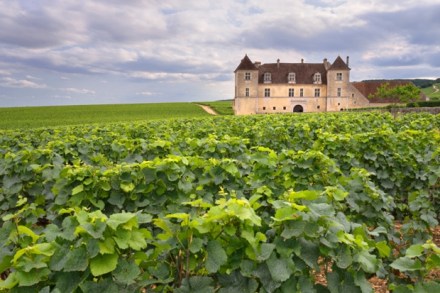
It was a sort of wake. An old friend’s father had died, and some of us were helping him and his wife deal with oddments from the paternal cellar. As he had made 91, enjoyed cantankerous good health until earlier this year, and had always taken a thoroughly unsentimental view of the human condition, there was little call for mourning: more a matter of affectionate reminiscence. The main theme was Burgundy. My chum’s wife — who used to have terrific rows with her father-in-law, which they both enjoyed — is a serious cook, in a Burgundian idiom. Her jambon persillé and coq au vin were both splendidly authentic. I have nothing against nouvelle cuisine when cooked by a master: third-rate versions are an insult to the palate and the ingredients.

The joy of Glenmorangie

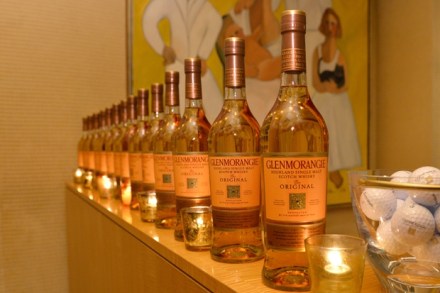
Glenmorangie is the most accessible of malt whiskies. It is a gentle, almost feminine creature, with hints of spring flowers, chardonnay, eine kleine nachtmusik, wholly different from the lowering malts of the Outer Isles. With them, there is no question of hints, let alone Mozart. A blast of peat and iodine arrives to the skirl of the pipes: a mighty dram worthy of the sea-girt rocks among which it was cradled. Both have their place. I recently helped a friend polish off his last bottle of ’63 Glenmorangie. It had gained in depth, strength and subtlety. Should you possess any, our bottle was showing no scintilla of senescence. Its owner is a Scotsman who has grown rich in the colonies and was resolutely uninterested in his treasure’s value (no doubt eye-watering).

MP recall is a populist gesture that cheapens our democracy

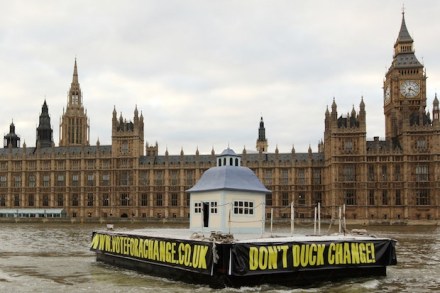
Anger is a bad counsellor. A lot of voters are angry with MPs and want to punish them. They believe that during the recent economic crisis, many MPs had only one priority: to fatten their expenses claims. Such voters have only one complaint about the proposed recall bill. They would like it to be tougher. All this is unfair, inaccurate and damaging. The vast majority of MPs - in all parties - are dedicated and diligent. They came into politics to do good. At least on the Tory side, many of them are making financial sacrifices in order to stay in Parliament. MPs are not well-paid. Moreover, if your conditions of employment require you to live in two places, one of which is London, a £2000 per month subsidy is hardly excessive.

The soul of a lurcher and the secret of a capon

A county, a house, a dog — and a bottle. Somerset: men have delved and farmed and built here for millennia, reshaping the landscape but never losing harmony with nature. There lies the dearest freshness pretty near the surface of things. My friends live in the Vale of Blackmore, good hunting country, in a prosperous farmhouse. Over the centuries, it has been added to and bashed about. The exterior isVictorian-esque, but I bet that there is medieval masonry at the core of the stouter walls. In the kitchen, there are oak beams, perfect for hanging hams and flitches of bacon. Indeed, they could be needed for a similar purpose now, because of the dog. El Awrence, a lurcher, is a splendid example of the breed, in his charm, character and relentless criminality.

Some consumer advice: do not sell your daughter for a bottle of 90-year-old port

Port, or Hermitage? This does not refer to personal consumption. I was trying to remember Meredith’s Egoist, in which one of the principal characters seeks to coerce his daughter into marriage, in order to have unlimited access to his putative son-in-law’s ancient wines. That could give rise to an interesting moral speculation. I raised the question in a club, one of the few surviving places in Britain where free speech is possible. There was a desire for further and better particulars: which wine were we talking about, and what about the daughter? Was she an easy-on-the-eye, generally obedient creature, a pleasure to have about the place, or.... Someone quoted Lord Tottering, from one of those splendid cartoons in Country Life.

A military funeral for a heroic vintage

Alas, the ’63 ports are beginning to fade. I came to that conclusion the last time I tasted a Warre’s, and the other night I was at the drinking of a Graham’s, an exemplar of that magnificent year. It was still delicious, and from the summit of a mountain there is a long descent. But the journey had begun. The passing of a great vintage deserves a grand obsequy: tolling bells, slow marches, a gun-carriage. How appropriate, therefore, that our host was not only a Grenadier but perhaps the most famous member of that illustrious regiment in recent decades. There are so many stories about Valentine Cecil, and most of them are true.

A toast to Le Roi Jen Quinze

There ought to be a new literary award: the antisocial book of the year. A dozen years ago, Claire Tomalin’s Pepys would have won the laurels by a country mile. That Christmas, everyone seemed to have been given a copy, and normally healthy eaters would arise from the lunch table after only three hours, desperate to return to Pepys. It was impossible to raise a four for bridge. Although John Campbell’s biography of Roy Jenkins is not quite so compulsive, it would take this year’s prize. Inter alia, Mr Campbell solves one of the small historical mysteries of our time. Denis Healey has always insisted that Roy was a closet homosexual. Despite his record as Chancellor, Denis has some grasp on reality. So what is going on?

It would take a heart of stone not to laugh at Bordeaux’s misfortune

The en primeur tastings have been taking place in Bordeaux, and the mood has oscillated from despair to defiance. It is like Boxer’s trip to the knackers’ in Animal Farm: one would need a heart of stone not to laugh. The greediest winemakers in the world had a terrible 2013, and there was a degree of hostility towards the British press, some of whom were accused of gloating. Surely not. The house of Pontet-Canet was said to be especially thin-skinned. Thirty years ago, it was a modest little fifth growth; I remember using it as a table wine in a Washington hotel. Now, it has soared in reputation and in self-esteem. We are used to super seconds. Pontet-Canet regards itself as a super fifth. That is unlikely to be true of its 2013s.

Secrets of Sicily

Western Sicily has been a crucible of aspiration and grandeur: the human condition at its most exalted: unsurpassable art and architecture. It started in the Greek era. Sicilian agriculture produced abundance. Trade with north Africa turned Demeter’s bounty into gold. With this wealth, Greek colonists built the temple cities of Selinunte and Agrigento, plus other glories such as the temple at Segesta. The modern traveller, seeing only harmony, might assume that the ancient inhabitants must have been uniquely blessed. In earlier generations, the best preserved temple in Agrigento was known as the Temple of Concord. This was an error. That was not its name and there never was much concord. Empedocles of Agrigento claimed that mankind was governed by the twin forces of love and strife.

What Quique Dacosta knows that Picasso didn’t

Chefs have a problem. Think of much of the best food you have ever eaten. Caviar, English native oysters, sashimi, foie gras, truffles, jamon iberico, grouse, golden plover, properly hung Scotch beef; Stilton, the great soft cheeses: all have one point in common. They require minimal intervention from the kitchen. With the assistance of one female sous-chef, even I could roast a grouse. The chef would come into his own over pudding, and indeed with Welsh rarebit, but one can understand why this does not provide enough outlet for creativity. There are always the great French bourgeois dishes, which few of us eat often enough. Navarin of lamb, blanquette de veau, suprêmes de volaille, daube de boeuf: all splendid. But they are not a new challenge to a cook.

The tragedy of Armenia (and its brandy)

It is impossible not to sympathise with Armenia. It has spent much of its history between the hammer and the anvil, trying to fend off imperial predators and usually failing. What if the Armenians had inhabited the British Isles? Apart from the savage Irish in their bogs and cabins, the main enemy would have been the French, whose malevolence could be drowned in the English Channel. With such a happy geography, Armenians would be as numerous and prosperous as we are. But neither geography nor history was benign, with one paradoxical exception. Because the Russians rescued them from the Turks, the Armenians were rarely disloyal to the Soviet Union. Even so, their grog-makers suffered. The Soviet system drove more and more people to drink, of worse and worse quality.

Toast to a young gun

Three of us, old friends, were meeting to arrange a marriage. The young couple have never actually met. Indeed, they are still unaware of one other’s existence. But it is so obviously a union endorsed by the heavens. Young Florence King has already been heralded in this column. At least since the infancy — did she have one? — of Diana, Huntress and Goddess, no four-year-old girl has ever shown so much interest in field sports. In Ireland, Florence is a bisexual name. One feels that our Florry must be a kinswoman of the immortal Flurry Knox. The bridegroom will be Charlie. At the age of seven, he climbed a tree and killed a pigeon with his bare hands. When his father regaled a club table with the story, there was general scepticism.

A spirit to warm Bruegel’s ‘Hunters in the Snow’

The ostensible subject matter is misleading, as is any conflation with his lesser relatives’ wassailing peasants and roistering village squares. But Pieter Bruegel the Elder’s work is profoundly serious. It has a formidable intellectual content, a Shakespearian emotional range: a sardonic and stoical view of the human condition. There are paintings — ‘The Triumph of Death’, ‘The Blind Leading the Blind’ — which descend from Hieronymus Bosch. There is also the marvellous ‘Fall of Icarus’. According to recent scholarship, the version we have is not a Bruegel, but a later copy. That is plausible; it looks later. Yet the composition is classic Bruegel. He would be drawn to any legend expressing the vanity of human wishes.

Our daily haggis

Give us this day our daily bread: those are also words of great culinary significance. Even if the ‘bread’ takes different forms — rice, pasta, potatoes — billions of people all over the world are following in that prayer’s footsteps. ‘Staple diet’: throughout history, most people have lived off staples, or died when they ran out. Staples stimulated cookery. Over time, though it would be fun to try, even daily caviar might pall: daily bread, somewhat sooner. So those who prepared the basics tried to spice them up. If meat or fish were available, there would be no problem, but they are expensive ingredients. Most of those at subsistence level had to make do with herbs and vegetables, plus a little meat or fish for special occasions.

Is there a clean joke for Burns Night? I asked Cecil Parkinson…

As a life, it was a scintillating spectrum of the human condition. There was hardship and suffering, as well as laughter and fun, plus a great deal of sex, mostly extra-canonical. There were large, even universal perspectives, but also a fey and complex personality which did not sit easily with coherence. That may explain why no biographer has come close to doing him justice. This was a great man, always overshadowed by a weakened constitution and by social insecurity. His high talent was recognised as soon as he was published. Had he been a less restless, more accommodating personality, he could have settled down in the library of an aristocratic house, funded by some patron happy to secure his own immortality by serving as a grub in amber.

Can Lord Heseltine save the England cricket team?

Apologies may be in order. A few weeks ago, I was advocating aid for Australia. As we had set the place up, we had a duty when this once-proud daughter house was sliding into decline. We used criminals to get the country going, which worked well. Hard, amoral characters, they built a nation in their own image. That was Australia for two centuries: hard, amoral - and good at cricket. Then everything seemed to be going wrong. Perhaps it was the southern sun's fault: melting down toughness and leaving a vacuum for decadence. It was time for the mother country to come to the rescue with fresh supplies of convicts (we have plenty). With their restorative blood-lines, the hardness might return and the Aussies should be capable of playing proper cricket again, in fifty years or so.

Drink: The great white Burgundy disaster

We agreed that it was the gravest crisis facing mankind. It has led to dashed hopes, widespread grief and a universal loss of confidence in the future. As the scientists seem powerless, the world is thrown back on superstition. If the learned have no answers, one may as well listen to old Jacques, who remembers his great uncle’s advice about coping with phylloxera. I refer, of course, to oxidisation and white Burgundy. The 1996 was supposed to be superb and long-lasting. Friends of mine finally decided that the moment had come to begin enjoying their Chassagnes, Pulignys and Chablis grands crus. Aargh.