Bruce Anderson

Bruce Anderson is The Spectator's drink critic, and was the magazine's political editor

Guinness and oysters — or beef and Haut-Brion — in deepest Ireland

We were talking about the West of Ireland and agreed that there were few greater gastronomic pleasures than a slowly and lovingly poured pint of Guinness accompanied by a generous helping of oysters, in a village restaurant overlooking the sea where peace comes dropping slow: where exertion is left to the bee-loud glade and anyone with any get up and go, got up and went several decades ago. ‘Beware too much glib romanticism,’ said one of our number. ‘You might be talking about some charming little place in Kerry, which could turn out to be a significant recruiting station for the IRA, sending plenty of young men with get up and go to go out and kill. Forget Innisfree: what about “As though to die by gunshot were/ the best play under the sun.

We celebrated a birth with a wine that will last decades

Good Saturday, 2015, stepping westward. Autumn sunshine: autumn leaves, almost comparable to New England: pumpkins everywhere, very New England. We were in Sherborne, a town famous for its abbey and castle, but well worth a proper Pevsner-guided exploration. There were obvious questions. When and how did the pumpkin take over from the turnip, ‘trick or treat’ from guising? Why is Halloween, All Souls’ Night, both holy names, associated with witchcraft and other emanations of the dark? As with Walpurgisnacht, we are in the spirit-haunted marches between early Christianity and paganism. After nightfall, we walk in deep shadow. Is that light a -turnip-bogle, as they used to say in Scotland before the era of the pumpkin?

Thanks to the rugby the Scots have a real grievance at last

The Scots do not know what to do. For once, they have a justified grievance. In recent years, this once-proud nation has been bawling and belly-aching and girning over fictitious complaints to such an extent that Wodehouse’s crack about the ray of sunshine and the Scotsman with a grievance was out of date. It seemed as if all Scotsmen had a grievance at all times. Tam o’ Shanter’s beldame nursed her wrath to keep it warm. But poor Kate could be forgiven, knowing that her blethering, blustering, drunken blellum of a husband would be getting fou with Souter Johnny. The Scottish Nationalists have neither the justification nor the fun. Now, everything is different, thanks to Craig Joubert. The match was all but won.

Manchester has marvellous wines, and it’s not finished yet

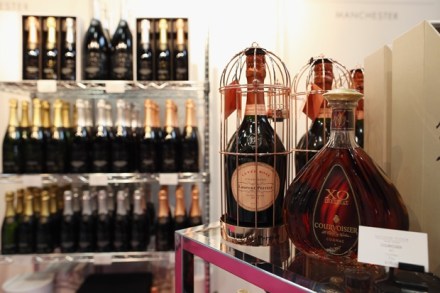
It will seem an ungrateful comment after the lunch which I am about to describe, but Manchester has some way to go. In the Midland Hotel, the principal Tory conference hotel and a grand edifice redolent of civic self-confidence from an earlier era, the northern powerhouse could sometimes be mistaken for a 40-watt light bulb. The business centre had been closed for the duration of the conference. The management person who told me this had enough nous to wilt under my incredulous stare. But it remained closed. At a bar, two girls struggled to do half of one girl’s work. Whenever anyone tried to pay by plastic, inaccuracy and chaos reigned. The girls were not to blame. Increasingly panic-stricken, they looked sweet and were obviously under-educated and under-trained.

Club mischief

When it comes to nightclubs, many have written, but none has surpassed the Perroquet in Debra Dowa. Le tout Debra Dowa was present, including Madame ‘Fifi’ Fatim Bey, the town courtesan; Prince Fyodor Krononin, the manager; and Seth, the Emperor of Azania. Tension is caused by the arrival of the Earl of Ngumo, six and a half foot of savage aristocracy, demanding raw camel’s meat for his men, some women and a bottle of gin for himself. But once he does obeisance to the Emperor, every-one relaxes. I thought about Black Mischief while giving dinner to delightful young Alex in a more conventional club in London. Youth has many enviable aspects, including the pleasure of reading Evelyn Waugh for the first time.

Stewed Siena

The Indian summer was still fending off the mists and mellow fruitfulness. But the autumn term was about to begin; the season’s changes would soon be manifest. So it was a day for anecdote and recapitulation; for telling amusing August tales, behind which lurked deeper meanings. A couple of friends had been to the Palio, as everyone should, once. I remember being surprised that several hours of mediaeval pageantry could hold one’s attention, which it certainly did: but more than once? No one would watch Psycho twice. I also remember being surprised that the young of Siena would spend weeks rehearsing: hard to imagine that happening here. The spectacle ends with a horse race: several circuits of the Piazza del Campo. It is excitable viewing.

A secluded paradise

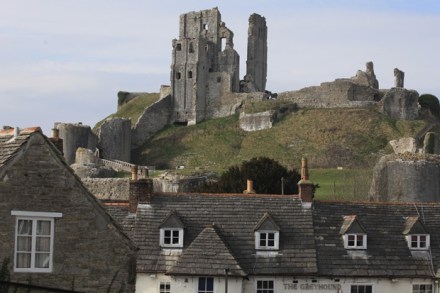
Do-orzaat. Dorset is part of L’Angleterre profonde. It is possible to find evidence of modernity, but only in limited areas. Around 120 miles from London, west Dorset and the Somerset marches are around the same distance from the 21st century, let alone the 20th. It helps that no motorway runs through the county and mobile phone reception is delightfully bad. A lot of locals believe that the great proprietors have risen up and taken counsel together against the networks: thus far, successfully. On every side, there are fine trees and calming woodland. These are not Wagner’s God-haunted woods or Tolkien’s fearsome forests. In Dorset, trees have a sweet sylvan charm, while every kitchen garden is bounteous.

In search of the platonic gazpacho

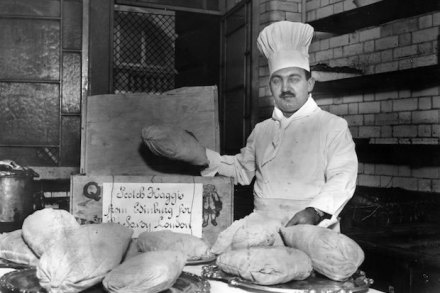
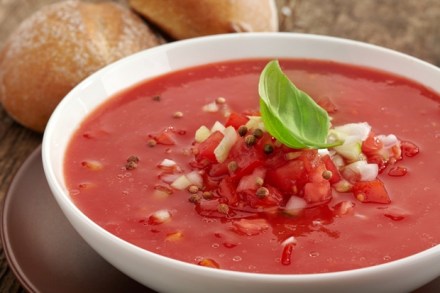
We were eating tapas and talking about Spain. Leaving caviar on one side, when jamón ibérico is at its best, there is nothing better to eat. In the Hispania restaurant, it is always at its best. Nothing could match it, although Hispania’s cured leg of beef, the anchovies, the black pudding and the blood pudding all gave their uttermost. But there was one marginal disappointment. Gazpacho is one of the world’s great dishes, and like several others — haggis is the obvious comparison — it began as a food for the poor, only using cheap and readily available ingredients. Early recipes call for only stale bread, water, olive oil — and garlic. Most modern gazpachos would include tomato, peppers and onion, but the garlic is essential.

Young guns

The Honourable Society of Odd Bottles began proceedings with a report on the activities of our junior branch. These youngsters are not yet eligible to become drinking members, but they are chosen because of their unremitting hostility to vermin and their burgeoning enthusiasm for killing game. Young Charlie, the Nimrod of his generation, has been prodigiously active. It is surprising that there is a single grey squirrel still alive in Somerset. Any rat that comes his way goes no further. He is also mightily effective against rabbits and pigeons, which he enjoys scoffing, after he has skinned or plucked them. Charlie has inherited a .410: the fifth generation of his family to use it. It is a notoriously fickle calibre, the excuse I always use when I miss with one.

Banking on wine

Great matters were trembling in the balance. The prime minister needed cash to achieve his objective and as Parliament was not sitting to vote for supply, there would have to be a loan. The PM summoned his cabinet colleagues to seek their agreement. His private secretary waited outside the cabinet room. Suddenly the door half-opened. Instead of the agreed signal, the prime minister himself said ‘Yes’. The official raced off to New Court, to see the Baron Rothschild. ‘The prime minister wants to borrow £4 million.’ ‘When?’ ‘Tomorrow.’ Rothschild picked up a muscatel grape and, after ejecting the skin, ate it. ‘What is the security?’ ‘The British government.’ ‘You can have it.

Deep Burgundy

‘There lies the dearest freshness deep down things’ — and also the dearest Frenchness. It is easy to be rude about the French governing elite; indeed, it is impossible to be polite about them. But there is a France profonde, with a deep-rooted identity, like gnarled, ancient vines. There are said to be nearly 400 French cheeses; la France profonde has at least as many capitals, where things are done in the old way, with a combination of commercial realism, ancestral piety and devotion to the terroir. You will find all that in Gevrey-Chambertin, a modest, confident and enchanting little town, in which history is now, and Burgundy.

The claret of the gods

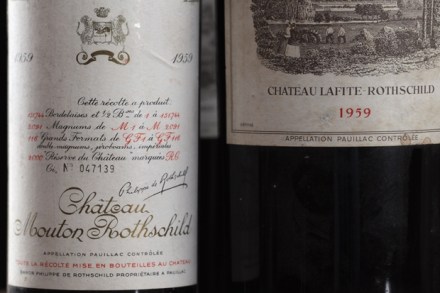
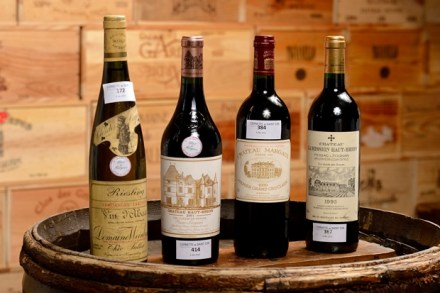
I cannot remember a jollier lunch. There are two brothers, Sebastian and Nicholas Payne, both practical epicureans. They have made a profession out of their pleasures. For many years, Sebastian was the chief buyer for the Wine Society. As he has a superb palate and is relentless in the search for good value, he is entitled to undying gratitude from tens of thousands of British wine drinkers. Nicholas has spent his career running opera companies. Sebastian knows a lot about opera, Nicholas about wine: the brothers share a cellar. We had assembled to taste some 2001 clarets, which required concentration, and rewarded it. But there was also time for opera talk. Nicholas’s vocation must require diplomatic skills.

Tony Blair’s new job shows how self-important and detached he has become

A spectre is haunting the world: the spectre of Tony Blair's ego. Mr Blair has wasted eight years pretending to solve the problems of the Middle East. He has also wasted millions of pounds, and achieved nothing. He has exposed his own total ignorance of history and his megalomaniac overestimation of his own powers. Throughout this time, he also earned large sums on the American lecture circuit, speaking to rich audiences so naive as to believe he is someone worth listening to. Rarely has shallowness been so profitable. One might have thought that his failure in the Middle East would have taught him a lesson. Not so: this man is unteachable. He also has an ego which requires constant massaging.

Claret and blues

There is a dive near St James’s which could claim to be the epicentre of international reaction. It is also a temple of pseudo--anti-intellectuality: the only club in London where chaps pretend not to have read books. Always a cheerful place, that is especially true at the moment. Its members still find it hard to believe that they survived 13 years of Labour government and had no wish to push their luck with another instalment. The late Frank Johnson once said that although the Labour party had given up on nationalising the economy, it was still determined to nationalise people. Once inside this delightful refuge from the 20th century, let alone the 21st, you are surrounded by prime candidates for nationalisation.

Let’s drink to a Tory majority

Most of my friends are still on a cloud of post-election euphoria. There is one exception: those involved with opinion-polling. They have all the conversational self-confidence of a director of the Royal Bank of Scotland, circa Christmas 2008. I have tried to cheer them up, because there are explanations for the polls’ systemic failure. Most of those involved in politics, including pollsters, are partisan and obsessive. They can remember how they voted in that Little Piddleton parish council by-election 20 years ago. Ordinary people — no, that sounds patronising — real people: that is not right either. Politicos, though odd, are real. But sensible people do not spend all their time thinking about politics. They are wondering what to have for supper, where to go on holiday.

Cameron’s great secret: he’s not a very good politician

This was a vital election. A Tory failure would have been an act of political treason. Five years ago, the UK was grovelling with the PIGS in the fiscal sty. Our public finances were in a deplorable state, the financial system was in crisis and growth had disappeared over the economic horizon. No one has paid enough tribute to Messrs Cameron and Osborne for the sang-froid they displayed in the face of such adversity, and for their success. Not only that: we have two long-term structural problems in this country, both of which Lady Thatcher sidestepped, both of which David Cameron tackled. The first is welfare. In its corrosion of morale, its sabotage of élan vital, our welfare system creates an underclass.

Spawn of the devil

There are those who claim that this column is idiosyncratic. They have seen nothing yet. I am about to mention a subject which has never previously appeared in any drink column, ever. Tapioca. That must be the acme of idiosyncrasy. I was staying with my friends Eyzie and Ro in Somerset. Especially if you have no weight issues, they are the perfect hosts, for they both love cooking. My duties are limited to bottle--opening, saucisson-slicing and, of course, supervision. They also have an abundant kitchen garden, a deep freeze full of the trophies of the game season and excellent local suppliers for all the victuals they themselves cannot provide. A long room connects the kitchen and the dining table, with a constant traffic of boys, dogs and bottles.

The boy David

I can claim a milligram of credit for David Cameron’s first star billing. In early 1991, standing in for the late John Junor on the Mail on Sunday and seeking a weekly instance of some Labour frontbencher making an eejit of himself, I inquired who was the best sniper in the Conservative Research Department. The answer was David Cameron. I phoned him and, for the next three weeks, one sheet of paper arrived with brief quotes, all of them firecrackers. Week four: the boy David is on leave, so his boss, Andrew Lansley, the then director of CRD, stands in. I receive 20 sheets of very damp squibs. Around that time, a couple of Prime Minster’s Questions did not go well for the new PM. I asked John Major if he had enough political help; he thought that he could do with more.

A taste of heaven on earth

The supermarket chains are not always blameworthy. Their missionary efforts have helped to ensure that wine drinking in Britain is much less bedevilled by social anxiety than it used to be. There was a time when Mateus rosé, God help us, exploited that in its TV ads. The boss invited home for dinner: how could the husband navigate the social minefield of serving wine? Answer, Mateus rosé. How sad. If I am ever asked about wine by someone who professes to know nothing, I always make three points. First, trust your taste buds and your nose. If the wine smells like a car engine, there is something wrong — and not with your olfactory system. Second, if you are so inclined, there is a lot of enjoyment to be had from wine lore. Third, and above all, wine drinking is fun: nunc est bibendum.

A rum encounter

For many years, the Central American republic of Guatemala had a grievance against the United Kingdom. It claimed sovereignty over British Honduras, then a colony of ours. Eventually, all that died down. Calling itself Belize, British Honduras became independent and showed no desire to join Guatemala. Opposing colonialism could earn a plaudit from the sillier sort of states at the UN. It was harder to gainsay democracy. Back in the old days, there was an amusing exchange. In pursuit of his country’s ambitions, the then Guatemalan ambassador pressed for a meeting with the then Foreign Secretary, Ernest Bevin. Bevin is said to have left school at eight. His spoken English was on a par with John Prescott’s. But there was a difference. Ernie’s locution was free of self-pity.