Bruce Anderson

Bruce Anderson is The Spectator's drink critic, and was the magazine's political editor

Bruce Anderson: Bordeaux’s negociants deserve to suffer – and they will

Our sweet enemy, France, is not always that sweet. It is tempting to respond to France’s current degringolade with cynicism and indeed schadenfreude. For a start, it should keep down prices: even claret prices. There are reports that £80 million worth of serious claret is on the high seas, returning from China. Ordered, it was never paid for. The négociants of Bordeaux were already coping with two disappointing vintages — 2011 and 2012 — plus one unspeakable one. 2013 is by all accounts the worst year since at least 1973. Various houses will not declare a vintage. Only the boldest or most foolhardy will be buying en primeur. That said, a few years ago I drank a ’73 Latour en magnum.

When the Rothschilds waged a claret class war

Claret has a commercial advantage over Burgundy. Thanks to the grandes lignes of châteaux and vintages, you know where you are. A mature and well-kept claret from a good year is unlikely to disappoint. That is why new wine drinkers, seeking certainty, are drawn to Bordeaux. Burgundy is much more complicated. Like the railway lines of the southern region, it is a cat’s cradle of cuvées, domaines and growers. For the natives, there can be advantages. Old Alphonse has half an acre next to Vosne-Romanée. Instead of putting the grapes in with his Bourgogne rouge, he bottles them separately for family and friends. Lucky them.

Posh, intolerant Nick Boles is a danger to the Conservative Party

In politics, there is a basic test of seriousness: linguistic self-discipline. You should never provide the opposition with ammunition; never say anything which could be quoted against your own party. This is doubly true if you are a minister. A few days ago, Nick Boles made one sensible point, though it was hardly a new one. For decades, the Tories have often been seen as the toffs' party, neglectful of the interests of ordinary people. Mr Boles argued that even after eight years, David Cameron has failed to put that right. There are three responses to that. First, it is an exaggeration. If Mrs Thatcher had been doing this well in the polls at this stage of a Parliament, she would have wondered what she was doing wrong.

Mineral reserves

St James’s Street is a repository of urban comfort. It contains majestic clubs, a gunsmith, a boot-maker, a barber, a cigar shop and a hatter. There are also restaurants, although the doyen is just round a corner in Jermyn Street: Wilton’s. Few if any establishments can match the quality of its seafood. It is as if the ghost of old Marks, its founder, was still on duty, to ensure no backsliding. In his day, a young aristocrat once enquired whether the smoked salmon was up to snuff. Marks looked pained. ‘I don’t know ’ow you can ask that question, my Lord. The smoked salmon ’ere is always the best that money can buy. So it should be. It’s caught by dukes and smoked by Jews.

House sherry

The Speaker was in trouble. I do not refer to Michael Martin or John Bercow, the two worst Speakers in living memory, who have fallen well beneath mere trouble, into contempt. This was Jack Weatherill, a decent man and a decent Speaker, if not a great one. Even so, his toenail clippings would have made a better Speaker than either of the afore-mentioned. But Speaker Weatherill had committed an offence of which we have all been guilty at some time or another. He had rewritten history; he had retold an anecdote to put himself in a better light. Unfortunately for him, this involved putting Norman Tebbit in a worse light. There had been a dis-agreement: I forget about what, and it is no longer relevant.

Drink: the romance of fall

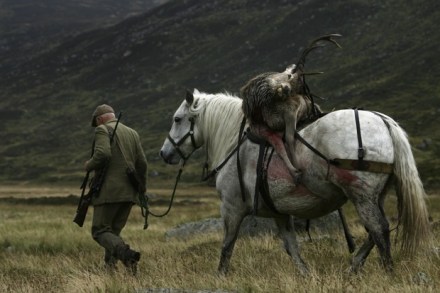
The fall: one of the few instances where American English is superior to English English. ‘Autumn’ has a comfortable charm, but ‘fall’ captures the pathos of evanescence. This might seem curious, for in New England the fall is grandiloquent. Nature is rarely so glorious, so defiant. In Glen Lyon last week, there was more of a sense of fall. When the sun shone, the greens and yellows and browns still danced: mid-autumn spring. Outside my bedroom window there was a rowan tree, with an exuberance of blood-red berries. Yet there was an aura of transience — the natural world falling gently into winter’s grasp — and the hills were swathed in mist. In a few weeks, the Glen will be ice and bleak midwinter. Our party had come to shoot stags.

Treasures from a lost domaine

René Engel must have been a wonderful man. He studied wine-making before fighting in the trenches during the first world war, and spending some time in German captivity. He then went home to run — and improve — the family domaine in Vosne-Romanée. In those days, most Burgundian growers still thought of themselves as farmers who made wine. Few aspired to the glamour enjoyed by their counterparts in Bordeaux. Their viniculture was instinctive, traditional — and sometimes improvised. Pinot Noir is not an easy grape. Left to itself, especially if there is a poor summer, it can produce a thin liquid. So the Burgundians occasionally helped it along.

Life — and death — of a Tokay

I was praying for a miracle, but it seemed unlikely. There had been one already: the bottle’s very survival. A second would qualify it for sainthood. It was an extraordinary story, almost on the scale of The Hare with Amber Eyes. Towards the end of the Napoleonic wars, a barrel of Imperial Tokay was dispatched from Trieste to St James’s St, where it was bottled by Berry Bros, in 1811. From there, a bottle went to St Petersburg, where it rested for more than a century in a well-appointed cellar. In 1917, it ought to have been delicious. Imperial Tokay is an immensely long-lived wine, well capable of making a century. But its possessors forgot the Russian grand duke’s dictum: between the revolution and the firing squad, there is always time for a bottle of champagne.

The joy of rum

Until a few years ago, I knew nothing about rum. There was the dark stuff, coveted by the pirates of Treasure Island, used by the Navy for grog on board warships and abused by Churchill in his sarcastic account of naval traditions: rum, sodomy and the lash. At least rum would be preferable to the other two. There was also white rum, usually the preserve of those too young to appreciate a decent drink, who often mixed it with Coca-Cola. Even as a child, I did not like the taste of Coke. I last drank it about 40 years ago. I was travelling by bus across Anatolia and we stopped at a village for refreshment. I would have killed for a beer, but the choice was the local water or warm Coke.

What it’s like to drink a 118-year-old wine

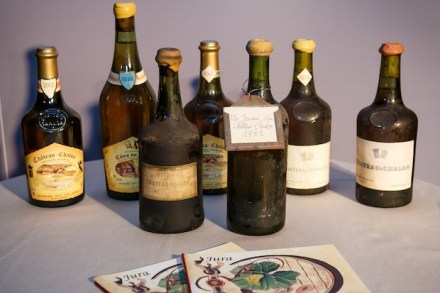
Marcher country, the Jura lies to the east of Burgundy and the contrast is marked. Burgundy: the very name is redolent of opulence. The architecture, the courtliness, the great wines: the aristocratic civilisation of Burgundy is a dance to the cornucopia of nature. Among the rocks and hills and gorges of the Jura, nature is less generous: livelihoods harder wrought. But as so often in European history, adversity has been the nursery of triumph. The Jura produces a famous wine, vin jaune. Until this week, I had hardly tasted it. That has now been rectified, in a spectacular manner. Those who try to write about wine often talk of terroir, minerality and tradition. With vin jaune, those are understatements.

Dining in style at David Cameron’s favourite Italian

It is impossible to think about any Italian region without wondering ‘What if?’ Sardinia lacks the glamour, grandeur and menace of Sicily, but it is still a fascinating exemplar of Mediterranean culture: the different historical strata stretching back to pre-history. So: what if the mediaeval rulers of Aragon had been more enduring? What if the Catholic kings had never married? There is no reason why Barcelona should have been ruled from Madrid: still less for the Sardinians to be governed by Turin. A sea-girt Aragonese kingdom, including the Languedoc, Sardinia and Sicily — that would have been a glorious flowering of civilisation and romance: Venus emerging from a scallop shell.

A peach of a mistake

Lente, lente currite noctis equi. It only seems five minutes ago that I was devoting this column to the most important intellectual problem in the western canon — the oenophile’s equivalent of the Matterhorn — which red wine to drink with grouse. But the immortal gods are relentless; Phoebus Apollo has spurred on the seasons and, once again, a shy young grouse graces my plate. To eat one so soon after the Twelfth — is this not culinary paedophilia? Should I not be on a register? Well, gentle reader, I overcame my inhibitions, especially as the succulent infant, compensating in sweetness for the grosser tastes of hanging, was accompanied by a Vosne-Romanée 2002, Premier Cru les Rouges, Dme Jean Grivot.

Enjoying South Africa’s secret French connection

One aspect of the old South Africa’s racial policies cannot be faulted. After the revocation of the Edict of Nantes, Huguenot refugees arrived at the Cape. Within a few decades, they had been culturally cleansed, abandoning the French language and becoming decent Afrikaners. If only we had possessed the foresight to do something similar in Quebec. But the immigrants were allowed to retain a legacy of their grenouille past: wine-making skills. They planted vineyards around Franschhoek and Stellenbosch, creating a great oeno-phile tradition which still flourishes. The terroirs are in achingly beautiful terrain.

When Glyndebourne is the most perfect place on earth

Glyndebourne. There is no single quintessential example of English scenery, but this is one of the finest. The landscape is  old, and verdant. There has been tillage and pasturage here for millennia, and the outcome is harmony, as if tamed nature has embraced man’s gentle mastery. On a sunny summer evening, earth has not anything to show more fair Figaro. Anyone reading the libretto might conclude that earth had not anything to show more absurd. What is this nonsense: a Feydeau farce mitigated by a bit of carpentry? There is a simple answer: the best of all comedies, apart from Shakespeare — and more easily, more continually laughter-worthy than even Love’s Labour’s Lost, A Midsummer Night’s Dream or Twelfth Night.

The greatest novel in English – and how to drink it

Which is the greatest novel in the English language? Let us review the candidates: Clarissa, Pride and Prejudice, Middlemarch, The Bostonians. The other night, someone tried to make a case for Moby-Dick. Along with Tristam Shandy and Daniel Deronda, it is one of my great unreadables. I have tried, but always jumped ship before leaving Nantucket. Clarissa: immense power — if not as much fun as Pamela — yet I have no enthusiasm for rereading it. The Bostonians: again, great power — but what about more matter with less art, and was James really writing in English? Pride and Prejudice: with Portia and Rosalind, Lizzie Bennet is one of the Three Graces, the most delicious girls in fiction (poor Portia, to think of the long slow tragedy of marriage to Bassanio).

Mourning Julia Gillard with the greatest wine ever to come out of Australia

My Australian friend was in mourning over the removal of Julia Gillard, the country’s first female prime minister. She had been everything a leftist politician ought to be: ineffectual and un-electable. I concurred; sacking Labour leaders just because they could not win an election sets a very bad example to the rest of the world. For solace, he had decanted a bottle. Something in the nonchalance with which the glass was poured aroused my suspicions, which were strengthened when the nose reached halfway across the room (he is, shall we say, well off). I sipped, savoured splendour, and speculated. ‘I think I’ve had this before, to celebrate when a girl called Mary Wakefield joined The Spectator. It wasn’t quite ready then. It is now.

When an economist turns into a winemaker

My friend Mitch Feierstein is a jolly, cheerful, life-enhancing fellow. He is emphatically not one of those economists whose purse-lipped response to any new phenomenon is ‘no good will come of this’ and who have predicted six of the past two recessions. But he is a profound pessimist. In a book he published last year, Planet Ponzi, he devotes page after relentless page to the troubles of the world economy. He depicts the West as a ship without engine or rudder, adrift on a sea of bad debt, worse paper and wholly unrealistic expectations. It is even gloomier than the voyage of the Ancient Mariner. He at least found redemption. There may be only one way out.

Taste Ranald Macdonald’s wines, and you can forgive his ancestors for allying with the Vikings

The Macdonalds of Clanranald are one of the oldest families in the world. Their lineage comfortably predates the Scotland of Shakespeare’s Macbeth. Descended from the Macdonald Lords of the Isles and sea kings of Dalriada, the Clanranalds emerge from the mists, myths and archaeology of the Dark Ages. But they were guilty of a misjudgment. Just as Robert the Bruce started life as an Anglo-Norman noble, the Macdonalds had to navigate the violent uncertainties of pre- and early medieval Scotland. They also had to reckon with the Vikings. (A Viking longship arrives at a beach, and the bosun divides the crew into three squads. ‘You lot, burning and slaughtering. You, looting and pillaging.’ Instantly, the third group complain: ‘Oh no, not raping again.

The lesson of France and Italy – the worse the country, the better the wine

Although I promise to move on to drink, forgive me for beginning with a less interesting but even more complex subject: government. It is easy to patronise the Italians. The Risorgimento was a failure (See David Gilmour’s superb The Pursuit of Italy). Since the days of Cavour’s Machiavellianism and Garibaldi’s Cav and Pag bravura, the Italian political system has suffered a steady haemorrhage of authority and prestige, with the partial exception of the Mussolini era. By the 1950s, the serious people in Italy had come to one of three conclusions. The first lot decided that the Italians were not fit to govern themselves.

The Spanish understand the pig and the sea

Spain: an easy country to enjoy; very hard, even for Spaniards, to understand. I remember a dinner party, sitting next to a girl who seemed to want to talk about what had been on television the previous night. She was pretty enough, but I feared that I was in for a long evening and a complete unmeeting of minds. Spanish, she was also dark-complexioned, so in desperation I asked for further and better particulars. She was from Andalusia, which helped to explain the duskiness, and she was the cousin of a duke, who bred fighting bulls. Oh good: something to discuss, a long way from trash TV. In 1936, the reigning Duque was only 14, but had reached manhood in courage. He set off on a horse, at the head of his tenantry, carrying an ancestral war banner, to fight for Franco and Spain and God.