Bruce Anderson

Bruce Anderson is The Spectator's drink critic, and was the magazine's political editor

Wines to toast a warrior saint

Towards the chimes at midnight, a few of us left a — respectable — establishment near Leicester Square. Eight or nine youngsters were brawling vigorously, boots and fists. 999 was dialled, and the response was admirably fast. The cops would no doubt have recorded it as just another trivial incident in the life of a British inner city. But how squalid. That day, there was a story about undergraduettes moonlighting as lap-dancers or strippers, or worse. We have suffered a loss of civilisation since Newman: most of the ‘universities’ to which those girls were accredited should never have received that status. Until the day before yesterday, they would have been called the Haltemprice Mechanics’ Institute or somesuch, and done useful work.

A dog to remember (and the wine he inspired)

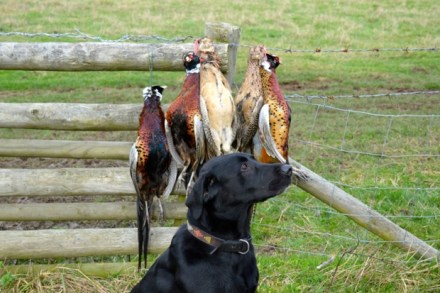
Meeting to taste wine, we started by talking about dogs. Roy Hattersley is good on the subject, which ought to be impossible. For he is opposed to shooting, and the partnership between gun and gun-dog, the dog’s tail-wagging joy as it luxuriates in its master’s approval, is one of the highest expressions of man’s commonwealth with the animal kingdom. Well, tot sententiae. But Roy understands one point. Human life is enfiladed by tragedy and the brief span of animal life is one aspect of that. In our relationship with animals, love and loss are intertwined. There was a splendid labrador called Hector, bred in Lincolnshire by Sir Brian Wyldbore-Smith. A general, he was an equally formidable Tory fund-raiser a generation ago, partly because he exploited an asset.

France, England and the tragedy of DSK

When we consider poets who perished before their day, thoughts turn to the Romantics or the war victims: Burns, Keats, Shelley: Owen, Keith Douglas. (Had both lived, Douglas would have ended up a greater poet than Owen: discuss.) But 16th-century poets had an even higher casualty rate: Surrey, Wyatt, Sidney, Southwell, Marlowe, Mark Alexander Boyd. Amidst a few immortal lines, we strain in sadness to think what might have been. In two respects, Sidney can be bracketed with Yeats. First, he really was a soldier, scholar, horseman. Second, he too coined an immortal political aperçu.

Why soldiers are the funniest people

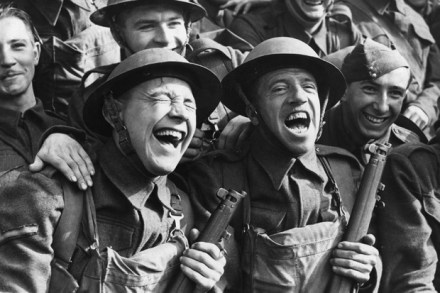
We were discussing wit. I uttered a self-evident truth which proved gratifyingly controversial. Of all the people I encounter, the soldiers are much the funniest. I took no prisoners among those who tried to disagree, merely telling them to get out more and find themselves in decent company. Military humour is an abiding delight. It may be that not every reader has read George MacDonald Fraser’s three McAuslan books (he also wrote the Flashman series and Quartered Safe Out Here, about the Burma campaign, said to be Prince Philip’s favourite book). Quartered Safe is a war memoir of the highest order, while the McAuslans put our author up there with Wodehouse.

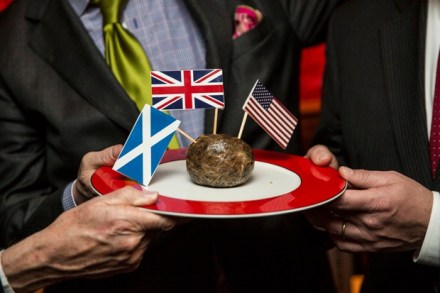
The spirit of Prohibition lives (if you’re a haggis)

It is an old adage, but still pertinent. ‘Every generalisation about India is true, and so is the opposite.’ The other night, some of us were discussing the US and wondering if the same applied. Certainly, there are lots of paradoxes. Although Americans passionately believe that they live in the land of the free, there is plenty of enthusiasm for chains. A few years ago, the state of Vermont simultaneously legalised homosexual marriage and prohibited the serving of fried eggs unless they were ‘over easy’ — i.e. bent over. There is a terrible amount of food faddism. Outside the big cities, it is hard to find cheese made with raw milk, and the coral of scallops is routinely thrown away. In some states, there are moves to ban foie gras.

The battling brilliance of Burgundy

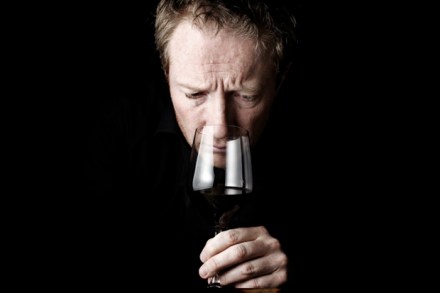
There is only one answer to the question ‘Burgundy or claret?’ ‘Yes, but never in the same glass.’ Yet I am about to make an observation which cannot be true. I think that good Burgundy sets the conversation ranging widely in a way that claret does not equal. If one was a mystic, there would be an easy explanation. Bordeaux is a fine culture; Burgundy, a transcendent civilisation, whose glories express the paradoxes of the human condition. Over the centuries, Burgundy often revelled in grandeur: equally often, relapsed into misery (consider the career of Charles le Temeraire, who came close to becoming a Burgundian Charles XII). The highest expressions of its genius nourish the illusion that man can transcend his limitations. That is indeed an illusion.

Bruce Anderson’s diary: If you want to understand the SNP, it helps to be an ex-Trot

An embarrassing confession: in the late 1960s, I was a Trotskyite. But that period of political adolescence has its uses. It made me aware of the methods employed by extremist parties such as the Scots Nats. Trots wanted to encourage ‘the workers’ to make impossible demands, including ludicrously high wage rates, in order to bring down capitalism. But the workers were too wise to fall for that, until Arthur Scargill came along. Now, the Nats are playing a similar game, discussing the terms on which they might support Ed Miliband — as if they would like a stable government in London. That is nonsense. They want confusion and chaos in London, which would inflame the English against the Scots and convince even more Scots that the Union is collapsing.

When a forgotten bottle turns out to be a treasure

I had not drunk the wine for 20 years, and nearly all the information which I thought that I had remembered turned out to be wrong. It was a Californian pinot noir. I had given friends a case in the late 1980s as a wedding present and one bottle had survived by oversight, like a Japanese warrior in the jungles of Borneo. So was it a happy oversight? The wine’s history was very Californian. In the late 1970s, two friends called Williams and Selyem started buying pinot noir grapes and making wine in a garage. To begin with, this weekend hobby may not have been an entirely legal operation: cuvée bootlegger, perhaps. But the wine’s fame grew as the friends took over vineyards in the Russian River Valley, Sonoma County.

Cognac and the Viking connection in la France profonde

The chestnut trees were still resplendent in yellow leaf along the banks of a misty autumn river on its glide through woodlands, pasture, comfortable towns — and vineyards. This was the Charente. Eighty years ago, before the lorry became dominant, it would not have been so peaceful. In those days, barges laden with barrels of Cognac made their way along this river to the coast to be shipped all over the world. Wine has been grown in Cognac for centuries and exported since the Middle Ages. But it was always inferior to the products of Bordeaux, to the south-west. Even so, its acidity and low alcohol content made it ideal for distillation once the Dutch discovered the technique. They called the result brandwejn: burnt wine, hence brandy.

Yes, torture can be justified. Here’s why

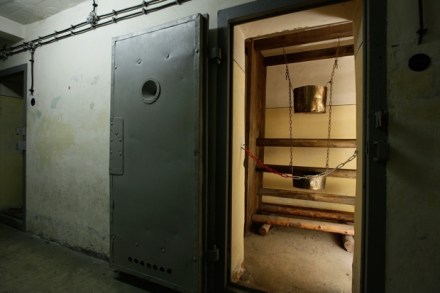
Torture is repulsive. Even on the scaffold or in front of a firing squad, a man can meet death with dignity. The torturer sets out to strip his victim of dignity, to break him, to violate not only his body but also his soul. In England, torture was outlawed in 1660, and for most of the past 350 years, that seemed to be a final verdict. Torture had been a barbarous relic of the dark ages. Anyone who suggested that it might still have a role would have been laughed to scorn; no doubt he would also have been in favour of burning witches. If only it were still that simple. But the dark ages are not over. In the Middle East, there are fanatics who seem to despise death as much as they despise the West.

The great lunchtime wine showdown

This is a tale of two lunches, sort of. The first was a classically English affair. We started with native oysters, my first of the season: everything that they should be. Then there was succulent roast pork, its crackling done to perfection. It was accompanied by the Platonic idea of Brussels sprouts. Straight from the garden, lime-green in colour, perfectly al dente: what a magnificent vegetable. There were also excellent carrots that would have shone in lesser company, and roast potatoes which I should not have eaten, plus Yorkshire pud, ditto: delicious. Eccentric with pork perhaps, but it worked. With the pig we had a Gigondas ’07 from St Cosme, a house which never fails. Having drunk it before, I opened it at breakfast. It needed every hour of breathing.

The real French embassy is a restaurant

Semper eadem. There is some basement in a Mayfair street that is forever France. It is not far from the American embassy, a strong candidate for the all-time monstrous carbuncle award. Bad enough that it should ever have been built: worse still, some ‘architects’ want to preserve it. Its menacing hideousness has made a significant contribution to the growth of anti-American sentiment in modern Britain. Only a hundred yards away, there is an unpretentious building. No disrespect to successive French ambassadors in London, who have made heroic efforts to put the best possible gloss on a failed state, but Le Gavroche has done more than diplomacy ever could to justify the ways of France to Britain and to persuade the rosbifs that they order some matters better in France.

Wine merchants might just be the happiest people in the world

A delightful girl came to see me this morning. She is helping with the research for a biography of David Cameron. Someone had told her that he was not comfortable in his own skin. There was only one reply to that: balls. I have never known anyone so much at ease with himself. That discussion made me consider the concept of bien dans sa peau. There was Cardus’s marvellous description of Emmott Robinson: ‘It was as if God had taken a piece of strong Yorkshire clay, moulded it into human form, breathed life into it and said: “Thy name is Emmott Robinson and tha shall open t’ bowling from Pavilion End’’.’ That was clearly a happy man, as long as Yorkshire were winning.

The secret kinship of good wine and good cricket

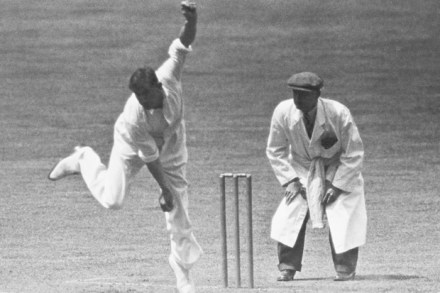
A high proportion of wine-lovers also enjoy cricket, and vice versa. This might seem natural. Anyone with an aesthetic temperament will surely find his way to two of life’s greatest pleasures. But there may also be a parallel. Wine is made of decomposed grapes. Vignerons conjure sublime flavours out of long-decayed fruit. As you sniff a good red Burgundy, there will always be a scent of the farmyard. Those who make the great pudding wines extract transcendent sweetness from grapes which are already rotting before they are picked. Cricket is a beautiful and gracious game. I still have a mental picture of a cover drive by Barry Richards. He hardly appeared to move. A gentle half pace forward, a mere flick of the wrists, and the ball was rocketing to the boundary.

Proof that the Japanese know how to make great Bordeaux

Château Lagrange, a St Julien third growth, has the largest acreage of any Bordeaux classed growth. For much of the 20th century, this was its sole claim to distinction. Under family management, it consistently failed to justify its ranking. Then the Japanese arrived. In 1983, Suntory bought Lagrange for £4 million. There were resentments. In 1987, on the floor of the stock exchange just after the Big Bang had transformed the City, a Japanese broker asked an English counterpart if he could direct him to Wedd Durlacher. This was after lunch and the Englishman was old-fashioned. ‘You lot found your way to Pearl Harbor without any help from me. You can find your own fucking way to Wedd Durlacher.

In praise of the Loire – cradle of civilisation, and wonderful wines

Rivers are the cradles of civilisation and the Loire is an outstanding example. It is one of the head-waters of modern France. By the 7th century, the region had emerged from the Dark Ages and was building on Roman traditions to lay foundations that would endure. St Martin, Clovis: we are at the beginning of a recognisably French history. War is both an expression of civilisation and its curse — but also, occasionally, its saviour. In 732, that nascent French history was in danger of eradication until one of the most important battles in European history took place at Tours, near the Loire. Charles Martel defeated a powerful invading force from Muslim Spain. If he had lost, there would have been little else to impede a Muslim advance.

The Society of Odd Bottles and the Sisterhood of the Black Pudding

The Honourable Society of Odd Bottles has been mentioned in this column before. I can report that the membership is growing. We are now comfortably into low single figures. The other night, the Bottles assembled. At present, we have no lady members, although there is no rule to prevent it. That is hardly surprising. At present, there are no rules. Nor do we usually have a Toast to the Lassies. But despite their absence, we began by discussing women. We decided that for certain purposes, females could be divided into two groups. There is the voice of duty, and of diet, constantly monitoring their menfolk’s intake. Many years ago, when I was a skinny research student, one of my chums had a wife who was a seriously good cook. She also believed in watching his weight.

Horse racing, Sancerre and escaped lobsters

A stint in dry dock — the ‘dry’ literally — has one advantage. There is time for lots of long reading. After many decades since the last opening of Middlemarch, I had forgotten how good it is. I had completely forgotten a delicious minor character, Mrs Cadwallader, who is a blend of Aunt Dahlia and Lady Circumference. A Marxist heedless of his safety might describe her as declining gentry. She would have rejected both words with scorn. In those days, many Church of England livings were bestowed on parsons such as Mr Cadwallader, who needed the money to preserve their social status. ‘The C of E was always better at ministering to the deserving ex-rich than to the indifferent poor’: discuss.

Visiting Burgundy from my hospital bed

There have been some splendid rumours about my health. According to the most exotic, I was cas-evacked from a hill in Scotland, flown to St Thomas’s by private plane and then tested positive for Chateau Lafite. The truth is more banal — and much more reprehensible. I had neglected an infected foot: what an idiot. Finally, it came out in revolt. By the time I did turn myself in to Tommy’s, I was not far from being seriously ill. That has had one advantage. I think that it put me off the booze. The medics were pumping me full of antibiotics and I was determined to co-operate. One or two rakes have offered to smuggle in a bottle of hooch; I adamantly declined. Nothing would come between me and the cure. More-over, I did not feel like a drink.

From Glyndebourne to St Thomas’s Hospital

‘Don’t you think you’re drinking too much?’ said the nurse, contemplating the array of bottles. ‘But I feel so thirsty,’ I replied. A doctor arrived and concluded that powerful intravenous antibiotics did require a lot of liquid, so that the orange juice was acceptable as well as the water. The trouble had started at Boisdale. We were having a modest lunch, to taste some new Spanish wines while working out which sherries would accompany haggis. A Palo Cortado from Gonzalez Byass won that prize. We then moved to Ranald’s cigar terrace to reaffirm the partnership between Speyside and Havana. Only problem: I was feeling increasingly wretched and it was showing. For weeks, my leg had been growing sorer.