Andrew Tettenborn

Andrew Tettenborn is a professor of law at Swansea Law School

Brexit-bashing bishops could ruin the Church of England

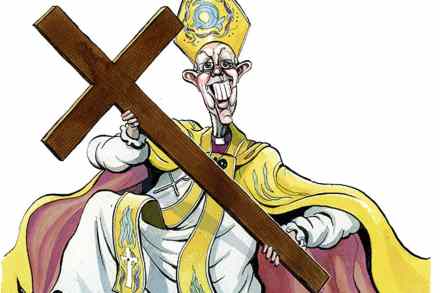
When politicians take to preaching, we feel uncomfortable. When bishops take to politics and managerialism, the sinking feeling gets worse. Now it seems we should brace ourselves for more pulpit politics: a Church of England proposal suggests that church leaders could be appointed to full-time cabinet-style roles such as 'Brexit bishop' or 'Covid bishop'. These plans should seriously concern any Anglican well-wisher. After all, why would the appointments stop at Brexit and the pandemic? Knowing the C of E, it seems a racing certainty that if these proposals come to anything others would include matters like climate change and anti-racism. What about preaching the Gospel?  Hidden within proposals for political bishops is a drastic rewriting of what bishops stand for.

Do university bigwigs really want the best for students?

We can all see that our universities are not in a good shape. They are churning out too many graduates – who probably shouldn't have gone to university in the first place – into a difficult job market. But do those in charge of them want to do anything about it? The row over a proposed government shake-up – which could limit places to those with decent GCSE grades – suggests not. Former fair access tsar Chris Millward led the backlash against the mooted plans. Appointed with great fanfare by Justine Greening in 2017 as the antidote to academic complacency, last weekend – freed from official obligations after he stepped down – he fired a broadside at the government.

The Church of England’s diversity mission has gone too far

Is the Church of England on a mission? It should be, of course. But it appears to have confused its purpose of preaching the gospel with seeking to make itself more representative. From now on, at least ten members of the House of Bishops, part of the General Synod, must be from an ethnic minority. This will help create a 'church that truly embraces people of global majority heritage at every level of its life,' says the Archbishop of York Stephen Cottrell.  But it's hard to reconcile Cottrell's words with those of Paul to the Galatians: 'There is neither Jew nor Greek, there is neither bond nor free, there is neither male nor female: for ye are all one in Christ Jesus.

A Covid amnesty won’t save Boris Johnson now

Timing is everything in politics. Partygate showed the usually sure-footed Boris at his most careless and inept, dwarfing even his run-in with the Commissioner for Standards that cost him North Shropshire last month and (one suspects) helped lose him Bury South on Wednesday. But the British electorate can be very forgiving. When it elected Boris it did not mind too much about his tendency to get things wrong on points of detail, seeing him instead as the man who saw what had to be done, was honest about it and got on with the important part of the job. At the time the scandal broke about the ‘drinks cabinet’ at No. 10, Boris could have taken advantage of this. Imagine if he had quickly admitted to having taken his finger off the pulse and let down the voters.

Nicola Sturgeon’s disturbing attack on the rule of law

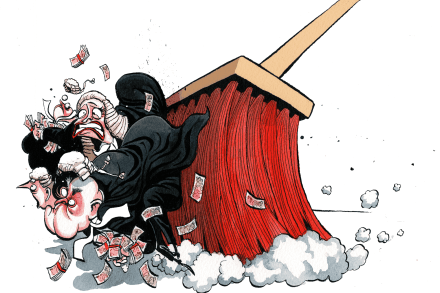
Lawyers with an awkward agenda can be a thorn in the government’s side in Scotland as much as in England. Last year, for example, they persuaded the Court of Session to refuse a green light to Nicola Sturgeon’s bright idea for a unilateral Indyref2; and in a much higher profile case a couple of years earlier convinced the same court that the SNP had unlawfully and quite unfairly botched its investigation into Alex Salmond. But the Scots legal profession is by tradition forcefully independent, if anything even more so than its English counterpart. Broadly, Scottish solicitors are regulated by the Law Society of Scotland, and advocates by the Faulty of Advocates.

Have we reached peak human rights?

After the Colston debacle, you might be forgiven for having missed the other legal story that broke this week. The European Court of Human Rights has dismissed the complaint in the Ulster 'gay cake' case, so the decision in favour of the baker will stand. In case you need reminding, seven years ago a Belfast gay rights activist called Gareth Lee asked Ashers, a high-class bakery, to produce a cake inscribed with the phrase 'Support Gay Marriage' for an event he was organising. The bakery owners refused, citing Presbyterian religious scruples, whereupon Lee sued for discrimination. He lost.

The EU is forcing Poland to choose between money or the constitution

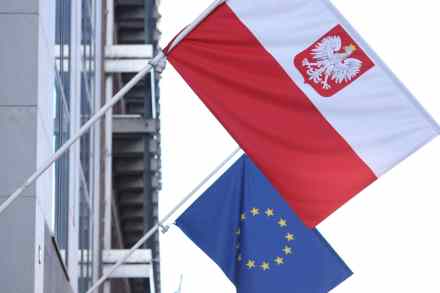
You might find it difficult, not to mention dangerous, to get to see a real meeting between an irresistible force and an immovable object. But if you’re looking for the next best experience over Christmas, you could well take a look at the ballooning legal spat between Poland and the EU. To remind you of the background, it is part of Brussels’s catechism that its law must at all times and in all places trump the law of a member State. True, the principle doesn’t appear in the treaties; but the Court of Justice, from which there is no appeal, has said so since 1963.

Harry Miller’s ‘transphobic tweets’ victory is a win for free speech

Court decisions don’t often call for three cheers, but today’s Court of Appeal determination in the Harry Miller case is an exception. Essentially the judges have told the police to rewrite the rules on recording what they see as hate incidents.  However technical this looks, this is actually an enormous blow in favour of the freedom of ordinary people to say what they want. It is also an admirable Christmas present for anyone seriously concerned with protecting free speech, not to mention a high-profile triumph for the Free Speech Union, who stood squarely behind the appeal. Fighting cases like this needs moral and financial support: and in tandem with Fair Cop, the FSU has very commendably provided both.

Julian Assange and the deep flaw in our extradition laws

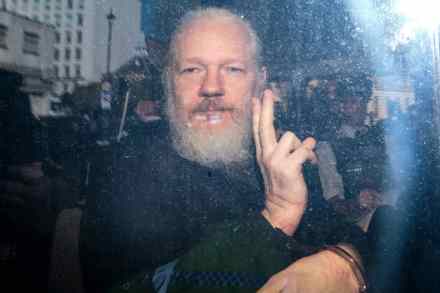
You could almost hear the rejoicing in Whitehall on Friday morning when the High Court cleared the way for Julian Assange to be extradited to the US, rejecting a plea that he was too mentally frail. The man has, after all, been a thorn in the administration’s side for 11 years: 18 months contesting his rendition to Sweden, followed by seven embarrassing years holed up in the Ecuadorian embassy, and then two-and-a-half years in Belmarsh fighting extradition to the US on espionage charges. But there is one disquieting feature. The offences he is charged with in the US are not ordinary charges of criminality, like the accusations he faced in Sweden, but are essentially state crimes: in this case espionage and the betrayal of US state secrets.

The sinister side of Meghan’s court victory

Reading the Duchess of Sussex’s press release after the Court of Appeal upheld her privacy case against the Mail on Sunday, you might be forgiven for thinking of C.S. Lewis’s Last Battle. Meghan talked of her part in the fight between right and wrong, her brave struggle against ‘deception, intimidation, and calculated attacks’, and how she was taking on a tabloid industry that conditioned people to be cruel, profited from lies and pain, and had now broken the law. Well, up to a point, Duchess. The reality was much drearier. The articles in the Mail on Sunday told no lies, and were more a comment on Meghan’s apparent insistence on blaming her father for her difficulties following her wedding.

Poland steps up its legal fight against Europe

Poland's legal wrangles with Europe show no sign of ending. Back in September, the Polish Constitutional Tribunal determined that some parts of EU law might be contrary to the country's constitution. Now the tribunal has lit another firework: doing the same in respect of the European Convention on Human Rights (the ECHR). Is this just another round in the war between the European elite and the ruling political party, the PiS (which is cordially detested in both Brussels and Strasbourg)? You'd be forgiven for thinking so. Yet this latest wrangle is much more significant, since it opens up an entirely new front.

The EU doesn’t understand Hungary and Poland

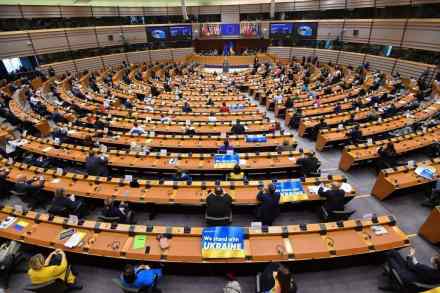
Rather like Germany with its ill-starred 'Drive to the East' in the 19th and 20th centuries, one suspects the EU is quietly regretting its keenness to absorb most of the states of eastern Europe in the early 2000s. If not, events in Poland and Hungary this week may well persuade them. For a long time, national governments in the older EU states have more or less willingly subscribed to two articles of faith: the complete supremacy of EU law over their national law, including their constitutions, and the unchallengeable power of the EU Court of Justice — not only to expound EU law but also to extend and develop it, and to determine conclusively how far the competences of the EU run. There are reasons for this surprising submissiveness.

Could the ‘Kathleen Stock’ amendment backfire?

The hounding of Kathleen Stock – who left Sussex university following a concerted campaign against her by trans rights activists – was a disgraceful indictment of freedom of speech on campus. But one remedy for preventing a repeat – the so-called 'Stock amendment' to the Higher Education (Freedom of Speech) Bill, now passing through the Commons – isn't the answer. Impetuous legislation is normally bad legislation; unless we think very carefully, we may end up with something ineffective or even counter-productive. At first glance, a simple ban on students piling in to demand the sacking or departure of professors on account of their politics or teaching might look good.

The alarming human rights ruling on freedom of speech

‘You can’t libel the dead’ is burned into the consciousness of any serious journalist or writer. It provides much-needed comfort: however tactful you have to be about the living, once someone has died you can say what you like about them without getting sued. Or can you? Seven years ago the European Court of Human Rights dropped a worrying throwaway remark that this might be unacceptable because allowing untrammelled comment about a deceased person might infringe the human rights of his family. Last week, in a disconcerting decision that seems to have gone entirely unreported in the media (you can read the official report here), that same court built on its earlier suggestion and at a stroke gave publishers a whole new worry.

Poland’s top court has finally called the EU’s bluff

For many years, the EU has posed as a kind of overbearing imperial leviathan, which insists its law has to prevail over that of the states that make it up. Now its bluff appears to have finally been called: the Polish constitutional court in Warsaw ruled yesterday that some EU laws are in conflict with the country’s constitution. Understandably, Brussels is not happy. But what can it do about it? The background to all this is a spat between Brussels and Warsaw about whether Poland’s machinery for appointing judges to its own courts is EU-compliant. Brussels says it is not, because under it judicial impartiality cannot be guaranteed. This, it says, is contrary to EU law – and it has a judgment of the EU Court of Justice to back it up.

Sturgeon is playing politics in her fight with the Supreme Court

The Supreme Court judgment striking down a couple of Acts of the Scottish parliament has been greeted with typical outrage from the SNP. Nicola Sturgeon has been busy fulminating that she is now 'unable to fully protect children’s rights'. But the First Minister shouldn't be surprised by this legal defeat: there was little chance of it going any other way. In spite of Sturgeon's fury, the two Acts in question were not actually very significant. The more high-profile one sought with much fanfare to incorporate into Scots law a treaty little-known to most of us outside the progressive establishment, the UN Convention on the Rights of the Child.

How the Tories can redeem themselves in the eyes of the self-employed

Private members’ bills don’t normally make for exciting reading. They give MPs and peers a chance to let off steam if they have a bee in their bonnet, and more importantly to lay down fairly cheap political markers. Most sink without trace, since the government through its control of the Commons legislative timetable has an effective veto. But some are worth a second look. One such is Lord Hendy’s Status of Workers Bill, which got its second reading in the Lords last Friday. Currently, businesses love the idea of designating as much of their payroll as possible as self-employed independent contractors rather than employees.

The snobbery of Roy ‘Chubby’ Brown’s critics

In a few hours' time, comedy fans in Sheffield will take to the streets in protest. Their cause? Not Brexit, or climate change, but the decision to ban Roy 'Chubby' Brown from performing a gig in the city. Chubby, who is not to everyone's taste, is best described as the North’s answer to Bernard Manning or Jim Davidson. An earthy stand-up comic from Middlesbrough, he is perfectly prepared to talk, joke and trade raillery about race, religion and sexuality in a way few other performers are. This week, after 30 years of performing in Sheffield, he was told he is no longer welcome. Sheffield City Trust, which runs various leisure sites on the local council's behalf, summarily cancelled a planned performance by him in the city’s Oval Hall next year.

The Liberal Democrats have a dangerous vision for the City of London

Liberals have always set great store by laws and declarations. It was joked about Lord Loreburn, the liberal Lord Chancellor in the years before the First World War, that if told the Germans had landed he would immediately have taken steps to obtain an interim injunction from the Chancery Division requiring an immediate withdrawal. These days something similar seems to be happening as regards the Liberal Democrats’ approach to climate change. Last Thursday Ed Davey took aim at the City, which he has decided to add to the party’s growing list of climate change villains.

A Scotsman’s home is no longer his castle

If you suggest to an English politician that your home should be your castle to use as you like, he will probably nod. Tell that to a member of the SNP ruling class in Bruntsfield or Kelvingrove, however, and they will take any such view as a challenge to be overcome. A couple of years ago, following a public consultation answered by a whacking 122 respondents, the SNP quietly changed Scottish building regulations. The new rules allow the government at a future date to order every homeowner in Scotland to install smoke detectors and other safety devices of a type dictated by it, whether they liked it or not. That date is now set for February 2022. Last week Scots householders were given their orders in the unequivocal, if bossy, style typical of the new model Scots bureaucrat.