Andrew Tettenborn

Andrew Tettenborn is a professor of law at Swansea Law School

Will Knowland, Eton and the problem with the teaching misconduct panel

When Eton master Will Knowland was sacked last year over anti-feminist views contained in a YouTube video which he refused to take down, alumni and others rightly called out Eton’s small-mindedness and intellectual conformism. If the best-endowed schools in the land can’t stomach unorthodox opinion, what hope for UK education generally? They were, of course, entirely right. But there is a further, more serious, side to the story. This week’s widely-welcomed victory by Knowland is not the end of the matter. Eton, as it was required to do when dismissing a teacher for gross misconduct, had reported the circumstances to the professional body for teachers, the Teaching Regulation Agency.

Britain’s duty to Taiwan

It’s not often that a brass plate sparks a diplomatic incident, as happened this week in Vilnius. Lithuania invited Taiwan to establish a ‘Taiwan representative office’ in the capital. Beijing told Vilnius that the name was unacceptable, and ordered the government to replace the word ‘Taiwan’ with ‘Taipei’ or ‘Taipei City’. Lithuania held its ground, whereupon Beijing withdrew its ambassador and simultaneously expelled Lithuania’s woman in Beijing. There is more to this, as you might imagine, than meets the eye. Since its election of a centre-right government last October, Lithuania has been steadily reaching out to Taipei.

Do we really need lectures from Unesco on our heritage?

You could describe the UK planning system as a giant whispering gallery where landowners, pressure groups and developers all seek to bend policy their way. One such group is Unesco, an organisation with an inveterate habit of telling the British administration what to do about particular places in Britain and threatening consequences if it is disobeyed. You may not have heard a great deal about it's behaviour: but recent events show that you should take notice of it. Under an obscure convention of 1972, the World Heritage Convention, Unesco nominates a number of world heritage sites from lists submitted by governments. There are currently about 1,000 of these; 28 are in the UK.

Lambeth’s children suffered because of the council’s war on Thatcher

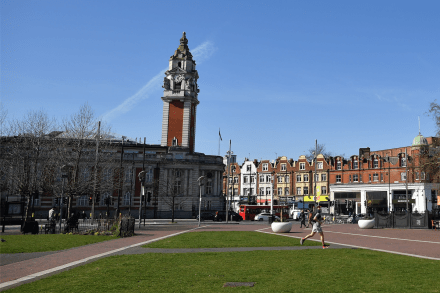
As if Rotherham, Rochdale, Telford and other places were not enough, last week we had another local authority child sex abuse scandal, this time from Lambeth. The child sex abuse inquiry’s damning report concluded that for years councillors and local authority managers in the borough were too indolent, too concerned with politics, and at times too compromised with local pressure groups, to take steps to protect some of the most vulnerable children in their care. The sufferers, as ever, were the children. Meetings, inquiries and promises to do better from Lambeth and other councils up and down the kingdom are a certainty. But it may be time for some more blue-sky thinking. True, any decent state needs to look after the young, the old and the vulnerable.

The EU’s menacing rule of law power grab

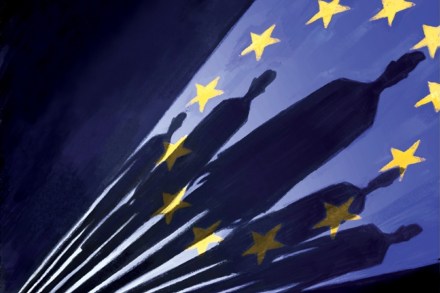
Officially the European Union may be a union of sovereign states. But its Commission increasingly has the air of an imperial chancellery, or perhaps the headquarters of some vast conglomerate giving instructions to the directors of its far-flung subsidiaries. The Commission’s annual Rule of Law report, published last week, is a case in point. It is well worth reading if you want to understand the EU mindset. Nominally a report to the European parliament and a number of central institutions, essentially it is a 30-page memo reminding the EU27 that the rule of law is part of the EU brand — and ordering member states to uphold it without any backsliding.

The EU will regret its legal onslaught against Poland

When European governments openly disobey courts, ears prick up. When two courts simultaneously contradict each other on the same day and descend into an unseemly shouting-match, all bets are off. Welcome to the mad world of Poland’s legal relations with the EU. The ruling Law and Justice Party in Poland, PiS, is cordially detested in Brussels. Its policies, which are quite popular locally, are anathema to the liberal and cosmopolitan Euro-nomenklatura. Back in 2017, PiS introduced technical changes to the terms of appointment of the Polish higher judiciary, including a disciplinary chamber with political connections armed with powers in certain cases to sanction judges.  The measures were aimed at halting corruption.

Troubles’ veterans on both sides deserve immunity from prosecution

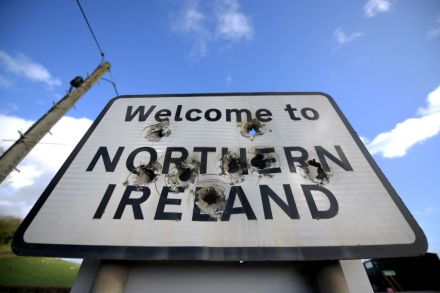
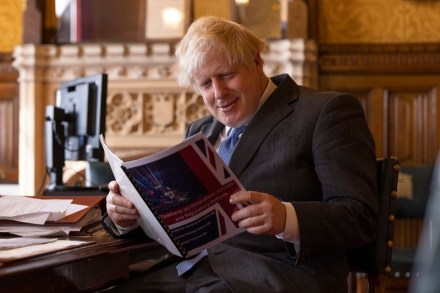
The recent decision by Boris Johnson's government to put a five-year time-bar, save in exceptional circumstances, on the prosecution of British troops for crimes committed during overseas operations, came as a welcome relief to soldiers. Those who served their country abroad now know they are effectively safe from stale prosecutions in the distant future; veterans who have long since moved on can now live in peace.  But note the word 'overseas'. Why not everywhere? The answer is easy: the Irish elephant in the room. The government feared that any attempt to time-limit prosecutions over events during the Northern Ireland Troubles would stir a hornets’ nest. It chose instead to leave those who had served in Northern Ireland exposed for ever.

Britain should resist copying the EU’s corporate responsibility law

Big corporations have a lot not to be proud of, and we certainly could do with laws to rein in some of their excesses. But that doesn’t mean that we should necessarily nod those laws through without a careful look.  A case in point is the demand made in recent days for the government to follow an EU initiative and introduce a 'corporate responsibility' law. This would require British companies to vet their entire supply chains for, among other things, human rights violations. The EU scheme in question, based on a European parliament vote in March, is what you have to look at to see just what is being asked for. Its demands are both interesting and, shall we say, not modest.

The problem with linking trade deals to human rights

Trade deals are in the air post-Brexit, but not everybody is happy. In a speech this week Frances O’Grady, the TUC General Secretary, accused the government of not taking international morality into proper account when closing such deals. She demanded the government take steps to suspend trade deals with a number of countries that, according to recent research by the TUC, had a murky record on labour standards and human rights. By failing to do this and continuing to deal with these regimes, she said, the UK would be turning its back on workers everywhere and in addition demonstrating that it could not be trusted to observe decent standards at home.

Prepare for the EU’s ‘Hamilton moment’

The EU may boast a common currency like any other state (even if nearly a third of its 27 members do not use it). It may also have, through its regulatory jurisdiction over banks and financial services, a vast say in the running of the financial system throughout the bloc: powers at least comparable to those of a federal government such as that in Canada or Australia. But there is one thing the EU has not yet managed to get: a unified tax system.  Any attempt seriously to impinge on national tax laws still requires unanimity among member states. This irks Euro-federalists.  One reason is that it draws the centre into unseemly squabbles.

Brussels has launched a full federalist assault

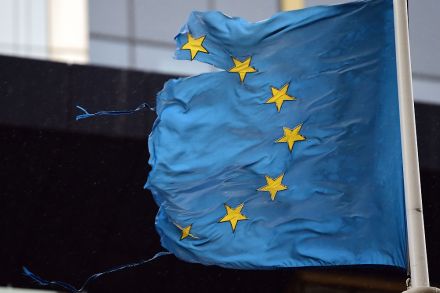
It’s not only in Northern Ireland that the EU has taken to acting like some imperial power. Last week, with international correspondents' eyes conveniently fixed on the G7, it quietly began a legal push to take over large areas of its remaining member states’ domestic affairs. On Tuesday, the Commission announced that it was suing no fewer than seven of them in the Court of Justice for breaking EU law. Czechia and Poland are accused of not allowing EU citizens generally to join national political parties, and Hungary of not accepting migrants according to Brussels’s plans. The Netherlands, Greece and Lithuania are charged with failing to have severe enough laws against hate speech and Holocaust denial.

China should be worried about the Uyghur Tribunal

There have been harrowing stories of cruelty, torture and mistreatment of Uyghurs in Xinjiang province in the news this week, coming from an official-sounding body called the Uyghur People’s Tribunal. But what is it, and what is its status? The answer may surprise you. Although its composition is highly eminent and its chairman the impeccably fair lawyer Geoffrey Nice QC, it has no official status whatsoever. True, it has formal sittings and apes much of legal procedure; true also that it will make formal findings on the question of what is going on in western China and whether it amounts to crimes against humanity or genocide. But these findings will have no more legal effect than your opinion or mine.

The EHRC is right to ditch Stonewall

The Equality and Human Rights Commission has unceremoniously dumped Stonewall – and who can blame it? Its excuse for ceasing to pay at least £2,500 a year for the privilege of being part of Stonewall’s 'diversity champions' programme was that it did not offer 'value for money'. For all the anodyne corporate-speak, it seems clear the increasing toxicity of the Stonewall brand played a big part in the decision. There was another factor in play here too. Interestingly enough, while Stonewall’s stock goes ever downwards, the outlook of the EHRC seems to be changing for the better. Getting shot of Stonewall, despite widespread acceptance of this organisation by public bodies up and down the country, is only one instance.

Pro-choice activists shouldn’t celebrate Roe v Wade

A striking curiosity of American life is that the names of legal cases can insinuate themselves into everyday dialogue. None more so, of course, than Roe v Wade, the 1973 decision where a majority-liberal Supreme Court extracted from the Constitution’s protection of life, liberty and property a constitutional right to abortion: absolute in the first trimester, qualified in the second, and, in rare cases, even in the third. In a 1992 fine-tuning exercise, the rule was re-written as a right to abortion unless and until the foetus was viable at about 24 weeks. But the principle remains. Southern and rural states always saw Roe v Wade as a liberal aberration. Three years ago, Mississippi, where public opinion remains obstinately pro-life, threw down the gauntlet.

Boris’s animal rights laws could come back to bite him

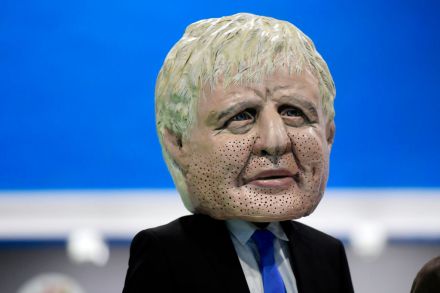
Boris Johnson wants to beef up animal rights. The new rules will include a ban on importing stuffed heads as hunting trophies, and possibly on fur as well; a mandatory microchip for every cat in the kingdom; no more exports of live animals for slaughter; a ban on keeping primates as pets; and, most bizarre of all, a law requiring government to accept that animals are sentient and feel pain and angst like the rest of us. This looks odd. There was no extensive pressure except from a small fringe for any of these measures. To most traditional conservatives, animal rights conjure up unattractive visions of young men in dirty anoraks smashing laboratory windows to rescue supposed vivisection victims.

Unesco and a revealing tale of two journalists

Bank Holiday Monday, in case you didn’t know, was also World Press Freedom Day. Unesco understandably marked the occasion. But more interesting than its official communiqué – and a great deal more informative about the way that organisation thinks – was a recent report it sponsored in support of two journalists said to be the subject of attacks on press freedom: Maria Ressa in the Philippines, and, at home, Carole Cadwalladr. The views expressed in that document are worth a closer look. Maria Ressa is a long-standing and courageous thorn in the side of the Philippines’ strongman president Rodrigo Duterte.

Priti Patel must tread carefully when lecturing police on hate crime

Any gunslinging sheriff can tell you that if you shoot from the hip you may hit the target but not quite with the precision you wanted. Priti Patel, very much a minister to draw first and ask questions later, is in much this position with her challenge to the police establishment over the weekend on its policy of recording all non-crime hate incidents. Most of what she said is spot-on; but in two respects she may have to think a little more carefully. The problem with the present police policy, as Matthew Parris trenchantly pointed out in this week’s Spectator, is that even if you never break the law it makes being rude to anyone on social media a risky business.

Sturgeon’s foreign policy power grab

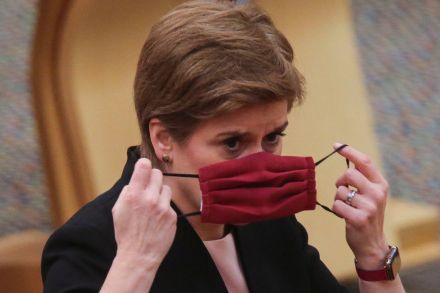
There is certainly a lot to catch the eye in the SNP’s manifesto published on Thursday. If you look you will find a promise of free bicycles and laptops for schoolchildren, a national care service, and a £33bn National Infrastructure Mission, not to mention an undertaking that there will be no income tax rises to pay for it all. Rather less expected, however, is the large proportion of the document devoted to another topic: Scottish foreign relations. Foreign relations in the context of elections to a purely regional assembly in a country where international issues are reserved for decision centrally? Absolutely. Here are a few examples.

Europe’s human rights judges are right not to ban compulsory vaccines

If you think public health authorities in England are overbearing, spare a thought for the Czechs. Parents who fail to have children vaccinated face being fined or having their offspring excluded from nurseries. Now, in a landmark ruling, the European Court of Human Rights, has backed that policy. But even critics aghast at the thought of compulsory vaccinations should welcome the court's verdict. Why? Because human rights judges should not be butting in here. The Czech law bends over backwards to accommodate welfare concerns: vaccinations are free; there are exceptions for good medical reasons; and any vaccine-generated injury is automatically compensated. Yet it was still an obvious target for human rights challenge on individualist grounds.

The problem with our hate crime laws

We have a long experience of dealing with hate crime in Britain. In 1958 nine Teddy boys armed themselves with chair legs and iron bars and set about tormenting any black men they could find in Notting Hill. They were caught and brought before Mr Justice Salmon. The judge was taking no nonsense: he sent them down for a stiff four years apiece, adding these simple words: ‘Everyone, irrespective of the colour of their skins, is entitled to walk through our streets in peace with their heads erect and free from fear.’ Yesterday’s very sensible report from the government’s Commission on Race and Ethnic Disparities showed a similar exemplary approach to the subject.