Andrew Tettenborn

Andrew Tettenborn is a professor of law at Swansea Law School

The European court has seriously overstepped over Rwanda

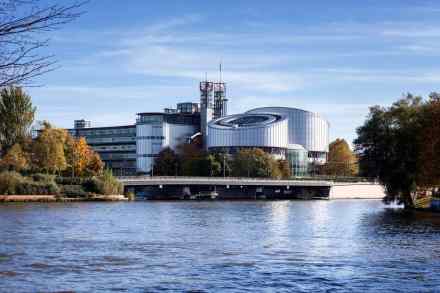
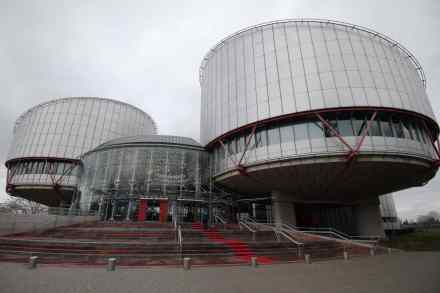
Last night’s abrupt order from the European Court of Human Rights that led to the grounding of the first Rwanda deportation flight delighted progressives everywhere. They will of course say – rather in the fashion of twentieth-century home secretaries calmly refusing to reprieve a condemned murderer – that the law is merely taking its course, and that we should be proud that the rule of law has been upheld. This sounds comforting. It is also wrong-headed. The Rwanda debacle in fact raises very serious questions about the legitimacy of the Strasbourg judges and their interference with national administrations. To remind you of the background, concerted lawfare in the English courts failed to block the flight.

Welsh Tories would be wise to split from the Conservatives

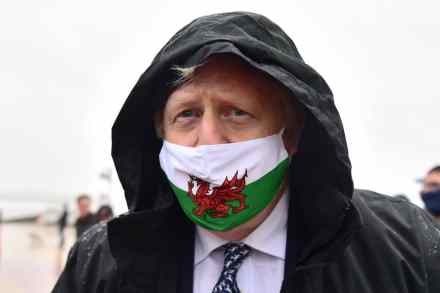
Conservatives in Wales are jumpy. Seeing Boris’s name as poisonous on the doorstep, a number of them have suggested disaffiliating from the national party and forming their own Welsh Conservatives as the party of the right west of Offa’s Dyke. Some in the central party in London are, perhaps unsurprisingly, aghast: one unnamed Tory MP has referred apocalyptically to the Balkanisation of the Conservatives. At least one very vociferously unionist Senedd member, James Evans, is also furious. They should not be worried. Why? Because the break-up of the Tory party is actually rather a forward-looking idea, beneficial in the long term to Conservatism. CCHQ should welcome this plan with open arms. For one thing, the union issue is a red herring.

How the Tories can avoid a repeat of their confidence vote conundrum

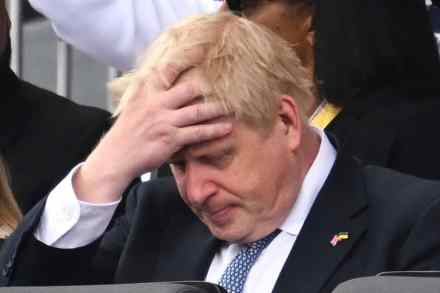
Boris Johnson insists that his victory in last night's confidence vote means he will be able to 'draw a line under issues our opponents want to talk about'. But what the result actually shows, as Boris undoubtedly knows, is that even some of those who backed him in the vote now want him gone. Why? Shortly after the debacle, Matthew Parris in the Times hit the nail on the head. One minister had, he wrote, let the cat out of the bag when he (or she) confided to him: 'He’s appalling: he’s got to go' before trooping in to vote against the no-confidence motion with gritted teeth.

In defence of MPs’ second jobs

Should MPs be allowed second jobs? In the wake of last year's Owen Paterson scandal, in which it was revealed the Tory MP had breached lobbying rules, there was a clamour to clamp down on Parliamentarians’ outside income. The Commons Standards Committee toyed with the idea of placing some restriction on the time MPs could spend on extra-Parliamentary employment, or on the amounts they earned from it. But now the Committee has decided against taking action. Voters will be unhappy, but this is a decision that should be welcomed. Why? Because outside work by politicians is not a distraction to be avoided, as some more puritanical MPs have it. More often it's something that usefully informs debate and Committee work.

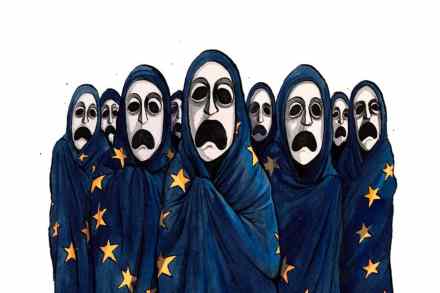
The EU is hopelessly muddled on Ukraine

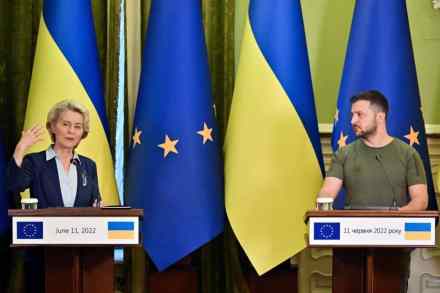
A couple of weeks ago Ursula von der Leyen portentously announced a further package of EU sanctions against Russia – the sixth, in case you had lost count. No doubt an underling immediately told Vladimir Putin. Most likely, that adviser will have been waved away; Vladimir has more important matters to think about. Much of the announcement was small beer. Putin won’t be shaking in his shoes at the thought that a few more of his top brass are being sanctioned, the odd bank removed from Swift, three broadcasters silenced in the EU, and a bar on the EU supply of corporate services like accountancy to Russian companies.

In defence of a British bill of rights

Amnesty International and Stonewall are no strangers to criticising the government. This week they've been at it again: blasting Dominic Raab's plans to make adjustments to the Human Rights Act by replacing it with a British Bill of Rights. But they are wrong to attack an approach that most Brits will realise is perfectly sensible. Raab’s plan, which was set out in the Queen's Speech yesterday, is simple. Britain will remain in the European Convention on Human Rights when it comes to international matters, but when interpreting domestic laws, it will change its emphasis slightly.

The EU is trying to bring Hungary to heel

If there was a word in Euro-speak for ‘Move on, nothing to see here,’ the EU would undoubtedly have used it in its announcement yesterday about Hungary. Brussels has formally notified Budapest that it is invoking the so-called ‘conditionality mechanism’ against it, meaning a supermajority within the EU can vote to withhold funds from a member state where there is a threat to the rule of law coupled with direct effects on the sound financial management of the EU budget or other EU financial interests. The notification itself has not been publicised; but everything, the EU says, is in order.

Could Shami Chakrabarti torpedo Priti Patel’s Rwanda bill?

Priti Patel’s reforms to the rights of asylum seekers have predictably scandalised the House of Lords. Befitting what is now effectively a club for patricians and liberals who hate Boris Johnson, it duly sent her Nationality and Borders Bill back badly mauled. The Commons excised these amendments in short order; today, the Lords will be asked to restore them. But will it do what it's supposed to? This is a dangerous moment for the government – not least because Shami Chakrabarti's proposed amendment could torpedo the whole project. This is because the most sweetly reasonable change her fix is trying to make is also the most potentially catastrophic.

The relentless march of Europe’s zombie centrists

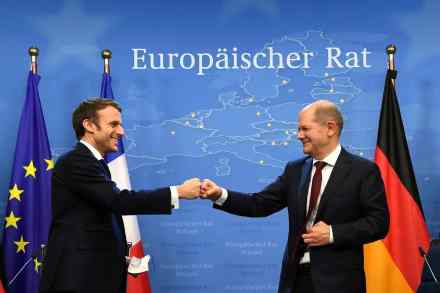
Journalists rarely had it so easy as when it came to writing up the final result of the French presidential election on Monday morning. The copy almost wrote itself: the triumph of moderation, demonstrated by a convincing win for centrist Emmanuel Macron over his far-right challenger Marine Le Pen; the clear defeat of disruptive extremist politics that might otherwise have threatened European stability; and the return to EU business as usual, with euroscepticism once again off the table and the re-establishment of a stable Franco-German axis in charge of Brussels. Easy, but ultimately unconvincing. Centrists who can be trusted not to be too radical may indeed be in power in France, as they have been in Germany since the installation of Olaf Scholz as Chancellor late last year.

The real danger Marine Le Pen poses to the EU

As the French Presidentielle hots up for the final vote on Sunday week, both Macron and Le Pen are fighting bitterly for the support of the erstwhile supporters of the left-winger Mélenchon who came a very respectable third in last Sunday’s poll. From the great and the good, who detest Le Pen, there is a concerted call to all and sundry to form an anti-far-right alliance and vote for Macron (where necessary holding their noses) so as to replicate what happened in 2017. It is fair to say that much of what is said against Le Pen is misleading. Her economic policies are if anything more Mélenchon than Macron: lowering the pension age, reducing the burden on young families, and reducing the tax on fuel.

Ukraine has exposed the EU for what it really is

Since the Ukraine conflict erupted, the EU has had a great deal to say about its sympathy for Ukraine as a brother European state. But if you look closely it has not actually done a great deal to derail Vladimir Putin’s war machine. Even the grisly discoveries at Bucha has wrought little change. Not surprisingly, the patience of some Europeans is now wearing thin. It's true that after the grim findings in recent days in newly-liberated Ukrainian towns, the EU did announce further sanctions. But for all the fanfare they were small beer. A few more banks were boycotted; the ageing Russian merchant marine was excluded from EU ports; and bars were put on imports of oil and coal.

Viktor Orbán’s victory has dashed hopes in Brussels

The scale of Viktor Orbán's victory in the Hungarian election overnight has taken even his supporters by surprise. Against many predictions, Orbán has actually improved his position: he has retained for his Fidesz party the two-thirds parliamentary majority necessary to override certain constitutional challenges to change a number of constitutional rules. Progressive opinion, in and out of Brussels, is not difficult to gauge. This is an unfair victory in a gerrymandered electoral system by someone who used an inflated media influence to trounce his opponent Péter Márki-Zay, who called for close EU co-operation and an increase in anti-Putin zeal. It shows Hungary as unconcerned with the rule of law.

Don’t prosecute Soldier F

Sometimes old grievances are best laid to rest. That was certainly the view of Tony Blair when his government issued nearly 200 ‘comfort letters’ to Irish nationalist gunmen in the wake of the Good Friday Agreement. But a decision by the Northern Ireland High Court on Wednesday will upend that principle, setting back years of compromise and reconciliation. For some time it has been all but impossible to prosecute IRA men for murders committed during the Troubles. British security forces, however, remain vulnerable, although most are now in their seventies and long retired.

Boris is right to ask for Saudi oil

War and virtue don’t mix well, especially when it comes to the dirty business of energy supplies. As soon as the Ukraine situation turned nasty the UK government quietly did a turn on winding down North Sea gas, and may possibly do the same on fracking. And, having sworn off Russian hydrocarbons, Boris is now looking for urgent supplies. In doing so he is talking to some pretty doubtful regimes. Yesterday he visited Saudi Arabia and Abu Dhabi; he has also put out feelers to Qatar. Opposition parties have made hay. In Scotland, opposition to North Sea gas and ‘extreme fossil fuel ideology’ has come from both Nicola Sturgeon and her delightfully titled ‘minister for zero carbon buildings, active travel and tenants’ rights’, Patrick Harvie.

Why is the EU attacking Poland and Hungary in a crisis?

With Russian bombs harassing Kiev and Kharkiv, the two unsung heroes of Europe have been Poland and Hungary. With very little notice, they have between them welcomed, fed and accommodated well over a million refugees from Ukraine. This they have done gladly and without complaint. Yesterday the European parliament passed a ponderous 2,500-word resolution devoted to Poland and Hungary. An appreciation, perhaps, or even a vote of thanks? Not exactly. It was actually a call for the EU to take steps as soon as possible to block payment of EU budget and Covid recovery funds to both countries, and criticising Brussels for not having started the process earlier. Why?

Ukraine should think twice before joining the EU

Volodymyr Zelensky certainly made big waves when he addressed the European parliament. In the ensuing debate last week, many MEPs made emotional calls for the EU to show its solidarity with Ukraine by accepting its application made a couple of days earlier for full EU membership. So did those outside: nine Baltic and eastern European states immediately supported the project, and Poland, the EU member with most in common with Ukraine and hitherto the most generous to its refugees, called bluntly for membership to be not only granted but fast-tracked. However, the fires of enthusiasm were quickly and unceremoniously doused by Brussels, with Germany and the Netherlands pouring cold water on the plan.

The Putin apologists of the European parliament

Never underestimate Vladimir Putin, and certainly never underestimate his advisers. Well before the first Russian rockets exploded in metropolitan Kiev, he had achieved a major foreign policy success by sabotaging the EU’s ability to present a united front against him. Ever since the days of Gerhard Schroeder, Russia had deftly weaponised German politicians’ commitment to Ostpolitik and German people’s desire for a comfortable bourgeois life, and this undoubtedly paid off. Before the invasion the EU’s paymaster was less than enthusiastic about sanctions when reminded of the sunk costs of Nord Stream 2 and its short-sighted but temporarily lucrative decision to depend both on Russian gas and the profits it made by selling the machinery to extract it.

Why Boris is right to resist calls for tougher sanctions on Russia

Did Boris Johnson fail to put his money where his mouth is when it came to hitting Russia with sanctions? The Prime Minister's critics think so: they argue that the targeting of five Russian banks and three oligarchs as a response to Putin's invasion of Ukraine was too little, too late. These cries came not only from Labour, and from the Green party's Caroline Lucas (who scandalously accused the PM, without a shred of evidence, of wanting to appease would-be Tory donors), but from his own side. Tory backbencher Iain Duncan-Smith demanded a more general blacklisting of Russian banks and plutocrats, while his party colleague Nickie Aiken went so far as to suggest forcibly expelling oligarchs’ children from English fee-paying schools.

Will Nadhim Zahawi win his fight against ‘the Blob’?

Nadhim Zahawi’s recent reminder to schools to keep their teaching politically neutral seems like common sense. The Education Secretary pointed to existing laws to show that while uncritical promotion of BLM ideology or climate activism to children wasn't acceptable, controversial matters could still be taught with proper balance. But there were still predictable howls of protest from the usual quarters.  Hope not Hate accused the government of obsessing about 'culture wars'. Amnesty International complained of a sinister chilling effect on classroom speech on current affairs and children’s loss of 'safe spaces'.

The human rights clampdown on free speech

On Wednesday, in a decision that ought to get a good deal more attention than it will, our Supreme Court said that it was unacceptable that the press should be allowed to tell us that someone is being investigated by the police. It confirmed that someone in that position, an international businessman being investigated over alleged serious irregularities and frauds, had rightly been awarded a five-figure sum in damages from Bloomberg when it entirely truthfully pointed out that fact. Known only as ZXC, the man, said their Lordships, had a reasonable expectation of keeping disreputable matters like that quiet, even if they became known.