Andrew Tettenborn

Andrew Tettenborn is a professor of law at Swansea Law School

How the Tories can avoid falling into Sadiq Khan’s Ulez trap

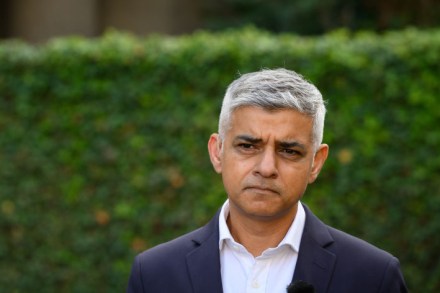
Sadiq Khan has an inveterate desire to show Londoners who is boss: the mayor’s latest wheeze is an expansion of London’s Ultra Low Emission Zone (Ulez). Khan is seeking to roll out Ulez to all of London’s boroughs from August – along the leafy lanes of Surrey, Kent, Essex and Hertfordshire.  Aside from ostentatious green zealotry, it’s difficult to see any convincing argument in favour of doing so. These areas already have sparser public transport than the rest of London. Charging hard-pressed residents who are unable to afford a fancy car £12.50 a day for the privilege of driving to the station to catch a sustainable train is a slap in the face. It could also backfire by encouraging them to do the whole run by car.

Penny Mordaunt is wrong to lecture the Church of England on gay marriage

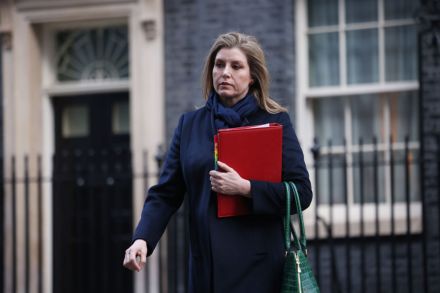
On Sunday, the Leader of the House Penny Mordaunt wrote an open letter to the Bishop of Portsmouth (where her constituency is). In it she called on him to vote to ‘back reform’ and, as demanded by a coterie of radical bishops, change forever the Anglican stance on same-sex marriage. Today the Church of England has partially rejected that demand, and will not allow clergy to conduct same-sex ceremonies, although it is proposing to allow 'prayers' and 'blessings' for same-sex couples in civil partnerships. Mordaunt’s intervention was perfectly legitimate, you might think.

Ron DeSantis is the Republican party’s best hope

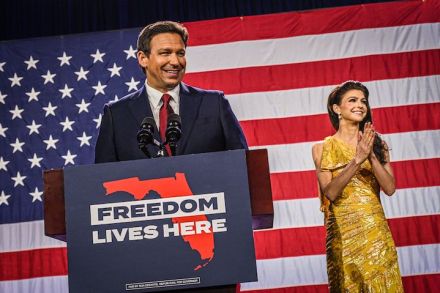
Florida governor Ron DeSantis is shaping up as the GOP’s best hope for next year’s US presidential election. Large parts of his popular appeal are his open attack on (now fairly well-established) left-wing infiltration in education and to some extent in commerce, and his expressed intention to make Florida the state ‘where woke goes to die’. Hitherto his success has been limited. But recently there have been signs that he may be learning from his mistakes. His troubles started with a failure to grasp that a direct legal attack on left-wing influence, however electorally popular, was likely to be doomed.

The decline of traditional university study is no bad thing

University vice-chancellors will find some uncomfortable reading in their New Year in-tray today. Last month the chairman of accountancy giant PwC pointed out that more and more middle-class teenagers are walking away from old-style university studies and embracing degree apprenticeships and other forms of on-the-job learning. Already the number of those taking up degree apprenticeship is nearing 10 per cent of university admissions, and this figure is still set to grow. Although many such apprenticeships boast an element of university involvement and some even a qualification called a ‘degree’, their emphasis is quite different. Learning happens predominantly by working; the academy is not the centre of the process, but merely a cog in the wheel.

Is Eric Zemmour’s court defeat something to celebrate?

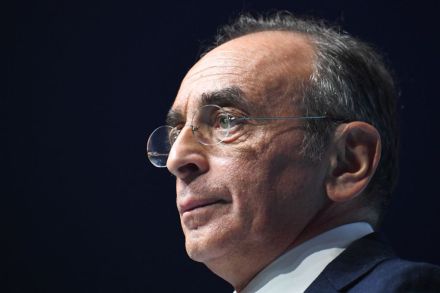
Éric Zemmour is an old-style reactionary France-first politician, a little in the mould of the interwar Charles Maurras. Though unceremoniously blindsided by Marine Le Pen in the 2022 Présidentielles, he should not be written off yet. But this week Zemmour suffered a setback: the European Court of Human Rights rejected his appeal over a conviction for ‘inciting discrimination and religious hatred’ for comments targeting French Muslims. Zemmour's opponents are celebrating – but the verdict suggests the Strasbourg court can be selective in the rights it chooses to back, and those it doesn't.

Could Britain pull out of Europe’s human rights treaty?

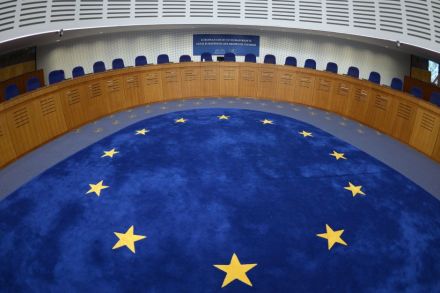
Just as Brexit began with a few harmless-looking chips at what looked like an impregnable concrete wall, something similar may be happening with Britain’s attachment to the European Convention on Human Rights.  The latest episode was yesterday’s ten-minute rule bill from the Tory MP for Stoke-on-Trent North, Jonathan Gullis. His Asylum Seekers (Removal to Safe Countries) Bill was nothing if not direct. Put bluntly, his plan would seek to avoid a repeat of the Rwanda debacle earlier this year by allowing asylum seekers to be flown to Africa, despite any orders from Strasbourg to the contrary. Like nearly all other ten-minute rule bills, everyone accepted this one was entirely quixotic.

Abortion clinic buffer zones are a step towards the end of free speech

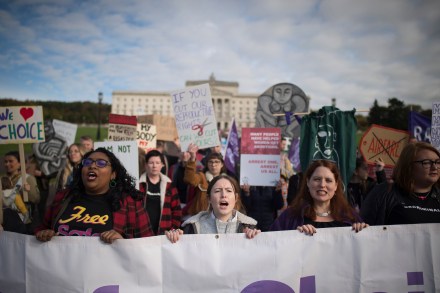
There is nothing like abortion to make feelings run high. Termination of pregnancy has been lawful in Northern Ireland since 2020: this year, however, the Legislative Assembly in Belfast turned the screw and passed a further, remarkably authoritarian, Bill. This makes it illegal – anywhere within 100 metres of an abortion clinic – not only to impede access to it, but to do any act ’with the intent of, or reckless as to whether it has the effect of, influencing’ any visitor. In effect, this is the creation of large public zones where, on pain of a £500 fine, no-one is allowed to talk about abortion, hand out leaflets, or even silently pray.

The EU’s bid to control Hungary may backfire

To anyone looking in from the outside, the ongoing argument between Budapest and Brussels over EU subsidies, which flared up again this week, looks both drearily legalistic and eye-glazingly boring. However, as often happens with the EU and its member states in eastern Europe, there is a good deal more to all this than meets the eye. At issue is a tad over €13 billion: €7.5 billion in ‘cohesion funds’ (i.e. regular subsidies to help out poorer states) and €5.8 billion in Covid recovery funds. Both would normally have gone to Hungary without serious question. However, these are not normal times.

The Tories should defend free speech, not neglect it

The government’s Online Safety Bill is coming to look more and more like some ghastly juridical juggernaut: a vessel grimly unstoppable, even if no-one quite knows where it is heading or where they want it to go. The latest changes to the Bill, announced this week, look very much like an attempt to make the best of a bad job. They leave untouched the provisions of the legislation aimed at safeguarding the young, but slightly relax it as regards others. The aim is the awkward one of placating three disparate constituencies: child protection activists, those desperate to be seen to be doing their bit to bridle Big Tech, and those who value free speech online. And they are a mixed bag. The good news first.

New Zealand’s Supreme Court is playing a foolish game of politics

If you are still trying to come to grips with our Supreme Court’s delicate relation with the politics of Scottish independence, spare a thought for the people of New Zealand. Their courts have just dived headfirst into the political pool with no such hesitation as affects our justices. The result is not encouraging. Three years ago, numerous schoolchildren in New Zealand took part in a series of Greta Thunberg-inspired school strikes. Shortly after that, a youth organisation called Make it 16 was formed to agitate for a voting age of 16 rather than 18. Its argument was that if youngsters are likely to be affected by such matters as climate change, they should get a formal say in dealing with them.

Rishi Sunak should consider levelling down HS2

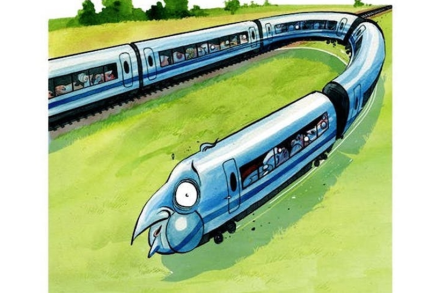
If you’re after a lesson in how to lose friends and alienate people, look no further than the government’s cack-handed approach to improving transport in the Red Wall. Last week Grant Shapps announced insouciantly to any northerner who was listening that there was not ‘much point’ (his words) in an important part of the Northern Powerhouse rail project, namely a section of brand-new track covering much of the route between Manchester and Leeds. Although this would have slashed journey times between the west and east coasts at Liverpool and Hull, given the region a source of pride and put Bradford firmly on the rail map, he thought it simpler to put in some improvements on the existing, but already fairly congested, tracks between Leeds and Manchester.

Poland wants reparations from Germany

If you think British politics is cracked, spare a thought for Europe. A spat between Germany and Poland is rapidly developing into a full-scale row involving not only those countries but the EU as a whole. Just a couple of weeks ago, Polish foreign minister Zbigniew Rau of the ruling PiS (Law and Justice) party handed an explosive diplomatic note to his German equivalent, Annalena Baerbock, on a visit to Warsaw to discuss security. In it was a formal legal demand that Berlin pay a cool €1.3 trillion in reparations for damage done to the Polish state during world war two. Ms Baerbock instantly made it clear that in the view of the German government the issue of reparations for events 80 years ago was long closed and it did not owe a cent. How will all this end?

How Liz Truss can wrongfoot Labour over human rights

Liz Truss's government has taken a deserved pasting in the polls for its slapdash economics, but all is not lost for the Tories: the party is doing a good job of holding the line on some of its more enlightened social policies – not least on ensuring freedom of speech. Justice Secretary Brandon Lewis's appearance at a fringe event yesterday was understandably overshadowed by other events. But his comments are too important to go unnoticed. Lewis told a Policy Exchange meeting he intended to fashion free speech laws to make clear there was a right to say what one thought, even if it offended others.

Is the EU’s crackdown on Hungary a bluff?

Brussels appeared to be finally getting serious with a rogue member state this week. A couple of days ago it announced that it would use its power – which it obtained last year – to withhold €7.5 billion (approximately £6.4 billion) from Hungary unless Viktor Orbán’s Fidesz government cleaned up its act on corruption. The EU, it is fair to say, has a point. Like a number of other eastern European countries, Hungary is not known for the trustworthiness of its officials, or for its scrupulous avoidance of nepotism and favouritism in awarding state contracts. Nevertheless, as is often the case with EU affairs, outward appearances can be misleading. The reality is a good deal murkier. But it is also rather more interesting.

The EU is hoping to catch Liz Truss on the backfoot over Brexit

A vital part of gamesmanship, according to the British author Stephen Potter, is to disconcert your opponent before they have joined the game. True to form, gamesmanship has already begun in earnest on one matter likely to be high up in Liz Truss’s pending in-tray: the Northern Ireland Protocol negotiations. It comes both from the EU and from Irish nationalists. The Protocol is that part of the EU withdrawal arrangement aimed at preserving the integrity of the EU single market, despite the existence of open borders between the UK and Ulster and Ulster and the Republic.

Is university good value for money?

Opinion polls these days don’t normally raise more then passing interest. But there are always exceptions worth a second look. One such was a YouGov survey out on Wednesday on what people thought about university finance. The big question was whether they believed nearly £30,000 for three years at college was good value for money. Among graduates, many of whom will have paid these fees, the answer (by a margin of well over two to one) was clear. They didn’t. For good measure, nearly half of the graduates polled thought most degrees actually left them worse off overall, against just over a third who thought they led to financial benefits. Many, no doubt, will draw a predictable conclusion.

Britain doesn’t need a public holiday to remember the slave trade

A fair number of episodes in the history of this country are frankly best forgotten. The last thing to do with them, one might have thought, would be to memorialise them with bank holidays. Giving people in Britain a day off to mark, say, Cromwell’s harrying of Ireland in the 17th century, or the starting of the Boer War in the interest of corporate capital in the 19th, would at the very least raise eyebrows. Yet yesterday, on Unesco’s International Day for the Remembrance of the Slave Trade, black studies academic Kehinde Andrews suggested exactly this in respect of one such event: namely, our involvement in slavery. There was, he said, ‘really nothing more important to Britain’s development.

The EU’s bullying behaviour over the Horizon programme

You wouldn’t normally electrify the world with a press release detailing a formal UK legal demand for discussions and possible arbitration about non-admission to Horizon Europe, a EU-led scientific research programme which in all probability most people will never have heard of. But, as you may have gathered from recent news reports, there is more to this episode than meets the eye. It actually tells us a fair amount about the Brexit process, and perhaps more about the EU. Set up in 2021 by the EU with a budget of €95.5 billion to be spent over seven years, Horizon Europe is a kind of super Euro-research council: an institution dedicated to promoting and funding high-powered international scientific research with public money.

How Hungary and Poland could shatter the EU’s power

Is the EU about to shatter? There is increasing talk of it after the bloc’s well-publicised difficulties with Poland and Hungary in the last week or so. This is almost certainly premature: nevertheless, the events are significant, and even if they do not break the EU they could precipitate some profound changes. For some time, undeclared guerrilla war has subsisted between the EU and its two maverick eastern members. Both face multiple court complaints from Brussels about what it sees as rule of law issues and they see as their internal affairs. Hungary is facing allegations of infringement of media freedom and LGBT rights, Poland on stated threats to judicial independence and the supremacy of EU law.

The problem with Justin Welby’s environmentalism

There is an excellent religious case to be made for environmentalism. Roger Scruton ten years ago made the point that a ‘natural piety’ is inherent in most of us. Scruton argued this was a call to be responsible for the environment and urged us to love the earth and not to exploit it. This argument sweetly slips into theological terms. The earth is not there to satisfy as many of our crass secular desires as possible ,it is there to give us – and very importantly our descendants – the opportunity to be closer to God, be this moral, aesthetic or otherwise. Justin Welby, nominal head of the Anglican communion, is undoubtedly on board with environmentalism. He made this clear in a keynote speech on Sunday at the Lambeth Conference.