Andrew Tettenborn

Andrew Tettenborn is a professor of law at Swansea Law School

Clive Myrie, the BBC and the trouble with Ofcom

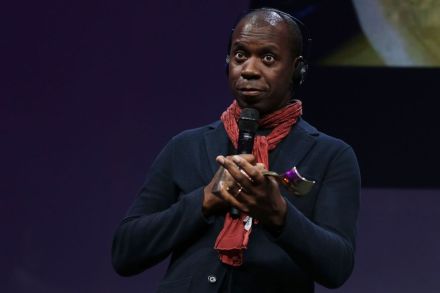
Ofcom’s tight grip on current affairs broadcasts has been likened by some observers to a choking collar. Clive Myrie, one of the BBC’s most decent and best educated correspondents, disagrees. But Myrie's robust defence of Ofcom's role, which he put forward in the inaugural Harold Evans Memorial Lecture this week, should trouble anyone concerned with preserving free speech on air. https://www.youtube.com/watch?v=VucKN2112eU Myrie took a simple line: to compare the US and UK broadcasting landscapes. In the US there is not, and under the First Amendment probably could not be, any regulation of how news is presented.

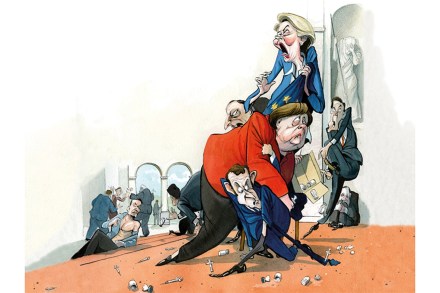
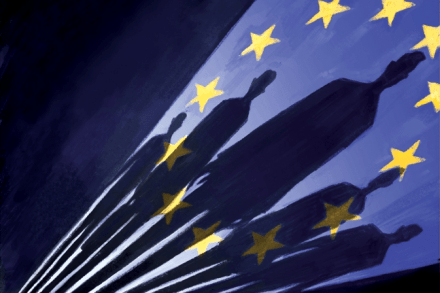
The EU is sliding into a United States of Europe

When a proposed constitution for the EU was mooted in 2005, many in the UK and elsewhere in the bloc smelt a rat. This looked like a bid to shoehorn national governments into a nascent United States of Europe. The French and the Dutch agreed: and being constitutionally guaranteed a referendum on the matter, both took the obvious step and voted the scheme down. No matter. As we now know, the proposal was re-packaged in almost the same form as a consolidation measure called the Lisbon Treaty. It is now part of the EU treaty system. The Cassandras were, of course, absolutely right. The EU was indeed playing a long federalist game. The point is nicely made by a decision of the EU’s Court of Justice this week.

Meghan Markle and the trouble with human rights law

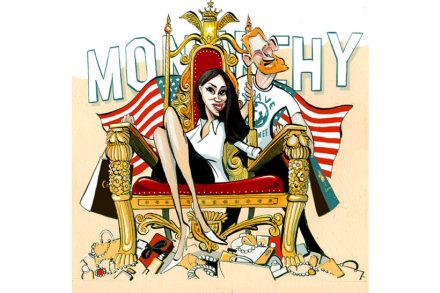
Meghan Markle hailed her victory in a high court privacy case as a 'comprehensive win' over the Mail on Sunday’s 'illegal and dehumanising practices'. But is that right? If you dig beneath the headlines and read the judge's ruling, it becomes clear that her victory has much to do with a burgeoning expansion of privacy rights based on human rights law. This change in the law has taken place with little fanfare and the victim – the press – generate little sympathy. Yet it is something that should worry any supporter of free speech. Until about twenty years ago, the English courts were pretty robust about celebrities’ privacy suits, then known as actions for breach of confidence.

The SNP may never recover from its bungled Hate Crime Bill

The SNP has, until recently, looked unassailable. But amidst the drama surrounding the Alex Salmond inquiry, could a backlash to one of the party's headline policy proposals sink the unsinkable? Opposition to the SNP's proposed hate speech law is clearly growing. The Holyrood government assumed that pushing through the hate speech component of its Hate Crime and Public Order Bill, published in April 2020, would be plain sailing. It would probably attract the middle-class progressives who traditionally supported the SNP; it also looked fairly easy to sell to ordinary Scots as a technical updating of the law inspired by a carefully-drafted official report from a Court of Session judge.

UCL’s bizarre eugenics apology

Covid aside, how should we sum up the last twelve months? The Year of the Abject Apology fits rather neatly. The past year has witnessed cringing confessions by all sorts of institutions to prior complicity in slavery, colonialism or exploitation in some form or another.  University College London is the latest institution to apologise, saying sorry because scientist and polymath Francis Galton, the 'father of eugenics', researched the subject while at UCL in the nineteenth century. Galton also left the university money in 1911, to found a professorship in eugenics. This whole episode in UCL's history would normally have been decently buried.

Does Britain really need more hate crime laws?

Free speech requires a leap of faith: a belief that even if bad speech does harm, the good done by allowing people to say what they think clearly outweighs it. You either have that faith or you do not. Unfortunately it seems that the Law Commission does not, at least if a recent document it brought out on hate crime and hate speech is anything to go by. In England, laws governing hate speech – which make it criminal to say offensive things to particular groups – are fairly limited in scope. You must not say or publish anything threatening, abusive or insulting which is aimed at stirring up racial hatred, or which is likely to do so; and you must not say or publish anything threatening with the intent of fomenting hatred based on religion or sexual orientation. That is it.