Ameer Kotecha

Ameer Kotecha is CEO of the Centre for Government Reform. He was formerly a senior diplomat, serving as the head of the British consulate in Russia 2023-25. He is the author of Queen Elizabeth II’s official Platinum Jubilee Cookbook (Bloomsbury).

All hail the microwave!

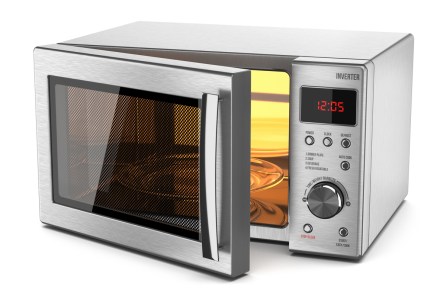
Marco Pierre White may have earned a reputation as the tousle-haired kitchen bad boy who once made Gordon Ramsay cry, but these days he spends his mornings rather more quietly, enjoying his kippers. Yet in his retirement, he can still cause controversy. He recently told a podcast how he cooks his kippers. ‘On a plate, paint it with butter, wrap in cling film, in the microwave, two to two and a half minutes.’ A microwave? Really, Marco?! Yes. As far as kippers go, his reasoning is spot on. ‘Most people put them under the grill, which intensifies the salt’. Meanwhile, boiling them – jugged kippers – washes away the flavour. In fact, there’s nothing wrong with a microwave. As Marco put it, the haters need to ‘take off the blinkers’.

Spare me the truffle takeover

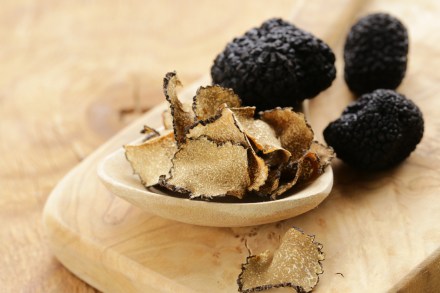
I remember, vividly, when working at Raymond Blanc’s Michelin-starred Le Manoir, the moment the truffles were delivered. A frisson went round the kitchen staff as the napkin covering the precious morsels was dramatically whipped off. Physically inspecting the gnarled, knobbly nuggets was a right reserved for head chef alone. As a lowly pot-washer, I was confined to the back, neck craned for a glimpse. So I am not blind to the excitement and sheer theatre of the treasured truffle. I even like them. But why on earth have they taken over every restaurant menu, as plentiful as lashings of ‘EV’ olive oil and flaky sea salt? 2018-19 was when the truffle takeover first got going on the London restaurant scene. Then the rot quickly set in.

25 years on, no one compares to the Two Fat Ladies

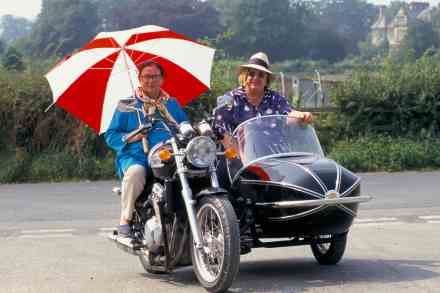
They were loud, vivacious and gloriously un-PC.  Sometimes they seemed to be learning how to cook as they went, barely one step ahead of the viewer. It didn’t matter. If anything, it only made the BBC's Two Fat Ladies more watchable. And 25 years on – the last of the two dozen episodes pairing Jennifer Paterson and Clarissa Dickson Wright aired on 28 September 1999 – I miss terribly their jaunty style of cooking, glass in hand. I don’t think I’m alone. Spectacularly and unexpectedly successful in their lifetimes – 70 million worldwide watched their programme over its four-year run, including many in the US – the internet has allowed them to find fresh admirers since their death.

Why now is the time to visit Aldeburgh

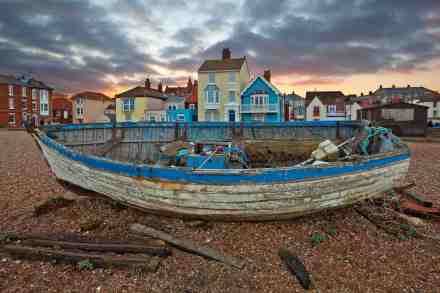
I have been reading Ronald Blythe’s Next to Nature which came out in October, just a few months before the great man’s death aged 100. And so a weekend holiday in Suffolk was calling to me. I went to Aldeburgh, on the coast, north of the river Alde. The town appears to be thriving – full of bustling cafés and London money. It is fashionable and chic. In many respects it is a world away from Blythe’s Akenfield. But there is much here to charm you. I lingered by a wonderful second-hand bookshop, Reed Books 4, its window display with Peter Kent’s Fortifications of East Anglia, George Ewart Evans’s The Farm and Village and Hugh Barrett’s recounting of a rural Suffolk morning in Early to Rise. Is this what Scruton meant by oikophilia? Here was heart-warming local pride.

The art of the pocket square

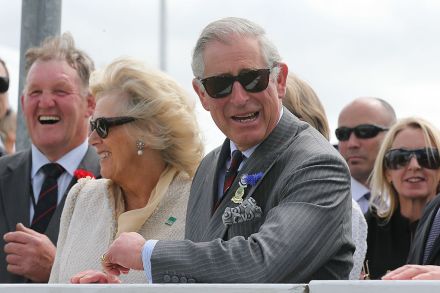
When imagining a monarch’s wardrobe, what comes to mind? With the late Queen, it was bold-coloured dresses (as she famously said, ‘I have to be seen to be believed’), elaborate hats, silk headscarves and those black Launer handbags. Our new King is no less a style icon. For him it’s well-tailored double-breasted suits from Anderson & Sheppard (probably well-worn, for His Majesty is a great advocate of make do and mend – the suit he wore to Harry and Meghan’s wedding was 34 years old), Turnbull & Asser shirts, hats from Lock & Co. and probably the odd tartan kilt. But it is his collection of pocket squares that I would be most interested to see if ever allowed a peek into the King’s cupboard.

In celebration of street parties

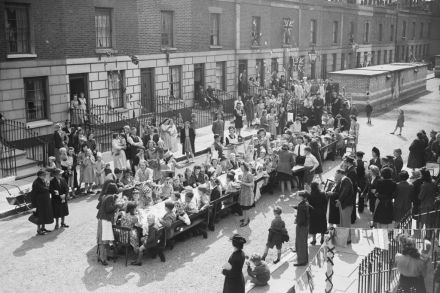
There is something very equalising about a street party. At one gathering I attended last year on a central London mews, a trust fund baby peered nervously out from his living room window before deciding to emerge, carrying two bottles of champagne and a flower vase filled with a tumultuous mess of a Platinum Jubilee trifle. When the lemonade for the Pimm’s ran out, the champagne was mixed in instead. He didn’t seem to mind. It’s good for us British to be thrust into these social settings. I get the impression that some of the Mediterranean peoples do this sort of thing every weekend: long balmy evenings help I suppose. But we are less accustomed to letting strangers in on our mealtime rituals.

Why the coronation matters

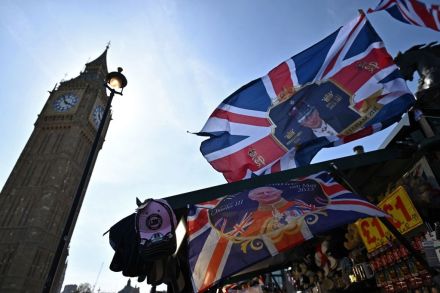
At one level, asking why the coronation matters is to slightly miss the point. Living as we do in a constitutional monarchy, the coronation doesn’t need to make a case for itself. It is simply an indispensable part, primarily in symbolic terms, of the installation of our new head of state. But setting aside for a moment its constitutional and religious significance, the coronation is important for another reason. Unlike almost every other nation state, the UK does not have an official national day. The patron saint days of the respective countries of the UK, of course, are celebrated to varying degrees ­– though St George’s Day far less so than the others.

How to celebrate the coronation weekend

Lots of things seem to get described as ‘once in a lifetime’ experiences nowadays, but for many of us the coronation really will be just that. So, how to make the most of the historic long weekend? Clock off from work at a reasonable time on Friday and while getting dressed into your glad rags pour yourself a glass of English sparkling wine. Nyetimber and Hattingley Valley both have appealing coronation edition cuvées. Have some friends over – as with Christmas or new year, I think the tantalising eve of the big day is always the most fun time for a party. Serve some nibbles, such as Tyrrells's coronation chicken crisps, and a Jack Russell cake from the Waitrose coronation collection (at £24.99 their Leckford Estate Brut is also worth getting as a good-value English sparkling).

The timeless rules of youth

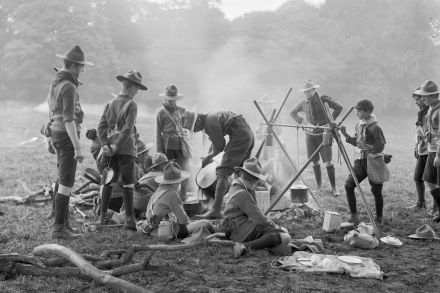
Every so often, one stumbles across some long-forgotten text that could have been written yesterday. It’s a reminder that often the answers to today’s problems lie in the past. I had one of those moments when I read Lord Baden-Powell’s Rovering to Success. Recently I had another such moment reading about Kurt Hahn’s Six Declines of Modern Youth. He wrote of a widespread decline of self-discipline, a dislocation from the world and a weakened tradition of craftsmanship. All this, and more, rings true. And, God knows, we need to find solutions. Kurt Hahn is not exactly unknown: the German-born educator who later settled in Scotland was the late Duke of Edinburgh’s headmaster at Gordonstoun which Hahn founded together with Lawrence Holt.

Why bother cooking?

In a world of ultra-convenience, I think making the argument for home cooking is important. Because a lifestyle of takeaway delivery apps, ready meals or eating out every day is not a recipe for health and happiness, no matter how easy the modern world makes it.   One of the downsides of the cult of the ‘foodie’ is that it can make food and cooking more intimidating than they need to be. If you’re a Londoner, invite friends over for a dinner of lasagne and garlic bread and you’ll have one guest asking if the pasta is fresh or dried and the other telling you to try roasting the garlic for 24 hours in a low oven next time to unleash its inner umami. It’s enough to put anyone off.

Save our sweet shops

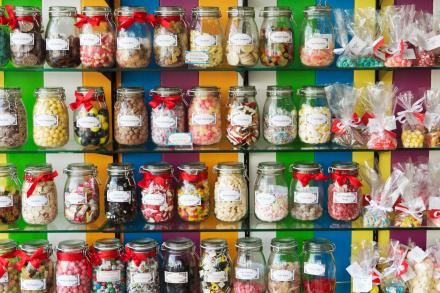
There are only so many times I can watch Lord Sugar swivelling in his chair and reusing put-downs from three seasons ago before enough’s enough, so I’ve dropped in and out of the latest series of The Apprentice. But one contestant that has caught my eye is Victoria Goulbourne, the flight attendant turned online sweet shop owner (note: not sweat shop, despite what one unfortunate online review might say) from Merseyside. And while I pass no judgment on her business acumen, it did get me thinking: what a miserable thing an online sweet shop must be. Victoria’s company markets itself as the ‘UK’s most Instagrammable pick ’n’ mix'. Quite apart from why sweets that belong in your gob needs to be camera-friendly, it was the selection that left me wondering.

Why you should write poetry

In a recent Low Life column, Jeremy Clarke referred to Edward Thomas and his writing of 16 poems in just 20 days. Similarly, practically all of the poems that made Wilfred Owen famous were composed in a few months (and when he was still in his twenties). It has been the same for many of our greatest poets. This prompts a few reactions: one is undoubtedly a sense of inferiority. But another is the thrill of possibility. It doesn’t matter if you’ve produced nothing of any literary merit in your life to date: a sudden burst of inspiration over a few weeks could be all you need. This is something almost unique to creative pursuits – you won’t be making any breakthroughs in nuclear fission outside of your nine to five – and it is particularly true of poetry.

The charm of crumpets

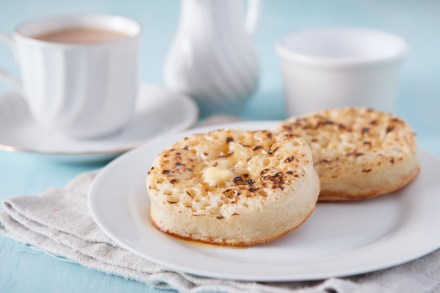
At this time of year, it is pancakes and hot cross buns that are meant to enjoy a moment in the spotlight. I shall not begrudge them that. But my heart really belongs to the crumpet. They are the epitome of the simple pleasure, and an economical choice in a cost-of-living crisis. There may have been much alarm about reports at the weekend that prices have more than doubled in the past year – but a six-pack of crumpets (sourdough no less) can still be had for 39p at Lidl or 42p at Aldi. It’s 90p if you want to go luxe with Warburtons. Never was so much breakfast cheer available to so many for so little. And it seems I'm not alone in feeling this way – sales of crumpets in the UK are up 10 per cent in the past 12 months.

In defence of February

Everyone has their own most loved and hated months. While for Chaucer, Browning and others April was a time of joyful rebirth, it was of course for Eliot ‘the cruellest month’. Still, February tends to get a bad rap from everybody. It manages to be both the shortest and longest month of the year. In theory the days are getting longer, and yet the darkness of the previous night and the next morning blur, making for a grim nocturnal existence. It doesn’t matter if you’re a night owl or a morning lark, in February you’re commuting from work in the dark. Still, better than midwinter isn’t it? Hardly. The glamorous, festive part of the season is a mulled wine-blurred distant memory.

10 Scotch whiskies to try on Burns Night

Burns Night always feels like a particularly well-timed celebration. Hot on the heels of ‘Blue Monday’ – supposedly the most miserable day of the year – it’s certainly nice to have a reason to get merry. It also happens to be the perfect refutation to those killjoys determined to make Dry January the new Lent.  ‘O thou, my muse! guid auld Scotch drink!’ So wrote Robert Burns in the winter of 1785 in his ode 'Scotch Drink'. The Scottish bard’s love of the stuff is no surprise and no Burns Night celebration is complete without a few drams.

The power of the royal Christmas message

Today, shortly before 3 p.m., there will be a collective heave as backsides – weighed down from turkey and roast potatoes – are prised from dining chairs and plonked on to sofas to tune into the King’s speech. So I very much hope. For the royal Christmas broadcast is important, and this year’s of course marks a new era. This afternoon our televisions will bring us not only the first Christmas message from the new King, but indeed the first from any King. For while the tradition of the Christmas message began in 1932 under King George V, the first Christmas broadcast to be televised was not until 1957, and that of course was by Queen Elizabeth II.

The King’s speech

Christmas dinner is the meal we love to hate

Many of the elements of the Christmas spread have more detractors than admirers. Turkey can seem an undistinguished bird thrust into an undeserved limelight: bland and unwieldy, it’s a far cry from a rich goose or even a regular, moist chicken. Carrots and parsnips – uninspiring. Bread sauce resembles the gruel ladled out to Oliver Twist. Christmas pudding – dense and gluey. And Brussels sprouts, well, enough said. Every year, Christmas dinner-haters crawl out of the woodwork to air their disgust at the traditional meal and find themselves given a surprisingly sympathetic hearing. A 2020 YouGov poll indicated that only around half of us, for example, consider turkey part of our ideal Christmas dinner (it hardly needs saying that for Gen Z the figure is even lower).

What should be on your Christmas cheeseboard?

No overindulgent gourmand worth his salt fails to own a stilton scoop. Mine has a bone handle and Mappin & Webb silver plate. It has an ingenious contraption to release the cylindrical pellet of cheese: a bit like those retro ice cream scoops that, with a little squeeze, crack like a whip, the metal slicing under ice as vicious as a mousetrap. My stilton scoop is gentler. One releases the mouldy blue at one’s own pace, until it falls sensuously on to the plate. It is used just once a year, at Christmas, like the cookie-cutter and the nut-cracker. Why this extended detour about a kitchen utensil? Because one cannot talk about cheese at Christmas without talking of stilton.

What makes the perfect pub?

From Geoffrey Chaucer’s Tabard and Martin Amis’s Black Cross to Thomas Hardy’s Buck's Head Inn, literature is as replete with pubs as are villages and high streets up and down the land. It is no surprise. They are atmospheric settings for a plot, and places of inspiration and contemplation besides; many authors have written their novels while sitting within them. Above all, they are one of the essential stitches in the fabric of British life. In the words of Hilaire Belloc: ‘But when you have lost your inns, drown your empty selves – for you will have lost the last of England.’ Before my father came to this country in 1971 from East Africa, he read that the British socialised in pubs.

Best of British: Christmas gifts for under £20

Christmas shopping has its challenges at the best of times. Oxford Street crowds and high street tat; Black Friday generating more excitement than a White Christmas. And this year will, for many, be more challenging than ever. Who needs the Grinch when the cost-of-living monster threatens to steal Christmas? When looking to keep down the cost of presents, gravitating towards well-known British heritage brands might seem counterintuitive. The ‘big box’ instinct sometimes kicks in: the bigger the package the more expensive it’ll look under the tree, we reason. And many of us are guilty of buying presents that are more gimmicky and flashy than genuinely likely to get good use.