Ameer Kotecha

Ameer Kotecha is CEO of the Centre for Government Reform. He was formerly a senior diplomat, serving as the head of the British consulate in Russia 2023-25. He is the author of Queen Elizabeth II’s official Platinum Jubilee Cookbook (Bloomsbury).

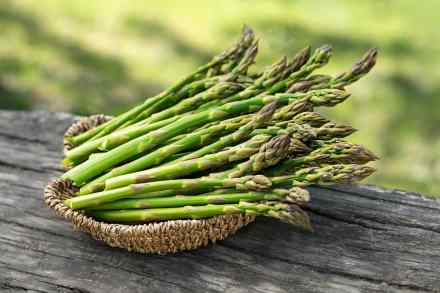
How to make the most of asparagus

It is hard to think of a vegetable which is as eagerly anticipated as that of home-grown asparagus. Partly it is because the season is so short: St George’s Day traditionally marks the start of the season which typically lasts for just eight weeks. Absence makes the heart grow fonder and, so long as we resist the temptations of year-round flown-in asparagus from foreign climes, the arrival of the first spears of this vegetable grown on home soil is as exciting a moment as any in the culinary calendar. There are occasional disruptions to nature’s rhythm: last year frosts ruined large parts of the British crop forcing supermarkets to stock asparagus from abroad.

With Ameer Kotecha

20 min listen

Ameer Kotecha is a British diplomat, pop-up chef and food writer. His first cookbook the Platinum Jubilee Cookbook, in which he chronicles 70 recipes related to the Royals, Diplomacy and the Commonwealth comes out on April 28th. He has also launched alongside Fortnum & Mason's the Platinum Pudding competition, which hopes to discover the next best British dessert. On the podcast, Ameer talks to Lara and Liv about how his childhood was the perfect blend of British food with Indian influences, how he ran a school-wide campaign for seconds and how in all of his years as a diplomat, he has never been offered a Ferrero Rocher. For more recipes and recommendations, sign up to The Spectator’s free monthly food and drink email, The Take Away, at spectator.

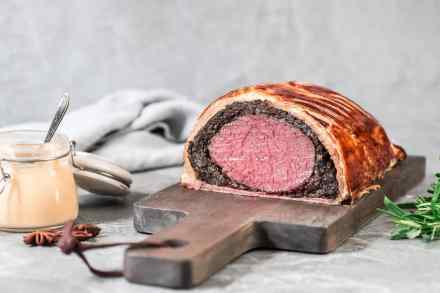
In praise of British beef

Beef is one of our proudest national exports. Though showcasing British beef to the world has at times had its challenges, one story raises a smile: as a result of BSE, British beef was banned in France during Lord Jay’s tenure as our ambassador in Paris. He and his wife Sylvia made a principle of serving only British ingredients at ambassadorial functions wherever possible – and, as a result, they felt they could not serve beef at all. As I recount in my forthcoming book, they did, however, have one triumph. Lord Jay recalled: 'Just as the ban was beginning to be lifted the French said that British beef could be imported to the great agricultural show at SIAL, provided that when the show was over the British beef was either burned or taken to the British Embassy.

How to roast Easter lamb

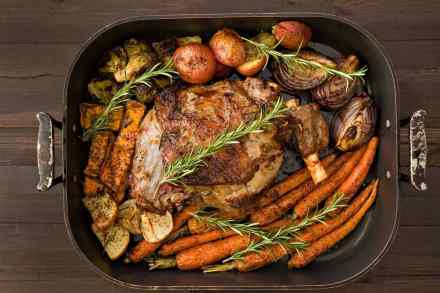
Easter is almost upon us and with it comes the mouth-watering prospect of roast lamb. It has become increasingly fashionable in recent years to eschew the leg and do a slow-cooked, meltingly tender shoulder of lamb for a Sunday roast. Rightly so, for the shoulder meat is rich and delicious, but when it comes to Easter there is something suitably grand and evocative of the new season about a whole leg brought to the table, pink in the middle and surrounded by spring veg. Rubbing it all over with olive oil, sea salt, garlic and rosemary is a classic preparation – adding some lemon zest too gives a welcome freshness.

How to eat well for less

Inflation is (if you’ll excuse the pun) biting. So how can you keep down the cost of the weekly shop and get maximum bang for your buck in the kitchen without compromising? I have always shopped by the yellow sticker and the discount aisle. When I first started getting creative in the kitchen as an early teen, I wanted to try searing scallops and practice filleting Dover sole, French-trim a rack of lamb, and prepare artichoke hearts – and none of that comes cheap. So, I went to the supermarket an hour before closing and bought from the man in the hairnet who I knew and who I liked to think knew me: I took home whatever was most reduced from the fresh counter and then tried to work out how to cook it.

How the Michelin Guide went green

Michelin, alone within the hospitality industry, possesses the ability to provoke elation or tears in professional chefs. If you thought the victims on the receiving end of an expletive-laden tirade from Gordon Ramsay were a sorry sight, just imagine the faces of the poor broken chefs who lose one of their coveted Michelin stars. Some may claim that they are an outdated measure of excellence and that they do not give a jot about them — the enfant terrible of the British restaurant scene, Marco Pierre White, even famously returned his, citing the crippling pressure they brought— but Michelin retains the power to reduce grown men to sobbing infants with one sprinkling of their stardust.

How to cook with wild garlic

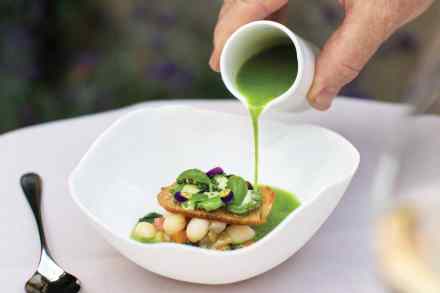
In British cooking we have traditionally had a complicated relationship with garlic. Let the french use it to their hearts’ content: fine in a Toulouse but no thank you in a Cumberland. Suggestive of this wariness is wild garlic’s many names – ‘devil's garlic’, ‘gypsy's onions’ and ‘stinking Jenny’ amongst others. But in recent years British cooks have taken to wild garlic with unabashed relish (and indeed it makes rather a good one, as seen here). Food always tastes better having foraged or hunted for it yourself and so it is with wild garlic. The leaves appear in March and you will find them throughout spring but they are best picked early in the season.

How to spruce up your spice rack

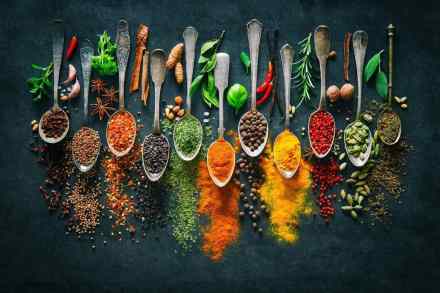
They sparked the Crusades, built Venice, and spurred European colonialism. In many ways, spices and the spice routes along which they were traded, made the modern world. And how many other ingredients can make that claim? Not avocadoes, not goji berries, not truffle, no matter how fashionable. No, when it comes to historical importance, spices are in a league of their own. In medieval times black pepper was so valuable it was used as a currency, and worth its weight in gold. As an excitable Rick Stein explained on his journey around India in 2013, unscrupulous merchants in days gone by would cunningly cut the valuable pepper with mustard husks and even chimney sweepings to increase their takings.

The unstoppable rise of ‘bowl food’

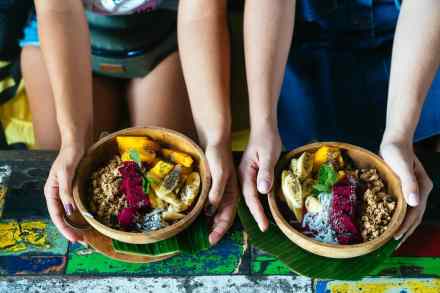
Poke House last week opened four new restaurant sites in London. It is just the start of a fishy influx with the Californian-inspired poke bowl chain planning to open 15 London sites and 65 UK sites over the next year. It is little surprise; where West Coast America goes London soon follows. But the huge popularity of poke bowls has been entrenched for several years. In 2015 the LAist publication was already writing that 'The Poke Bowl Craze Is Getting Out Of Hand'. Six years on, poke’s staying power seems beyond doubt. Poke, for the uninitiated, means 'to slice or cut' in Hawaiian and consists of pieces of raw, marinated fish – usually tuna – that is tossed over rice and topped with vegetables and various vaguely-Asian sauces.

The secret to great bagels

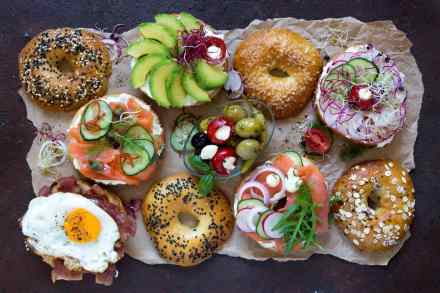
Everyone should have a catering trick to easily host a large party. As Jeffrey Archer once told me, while pointing out Oxford landmarks as if it were his university rather than mine, he was famous for his legendary Shepherd’s pie and Krug champagne Christmas soirées. I have my own party formula: ‘Bagels and Booze’. I am passionate about East London bagels. So is everyone these days. It is perhaps the result of influence from across the Pond, bringing New York cool to our doughy daily sustenance. As a family we’ve been frequenting Brick Lane Beigel Bake for over 25 years. I was too young to comprehend much of London’s geography in those early visits. But I remember that whenever we came anywhere near East London the clamour for bagels would start.

The joy of Chicken Tikka Masala Pie

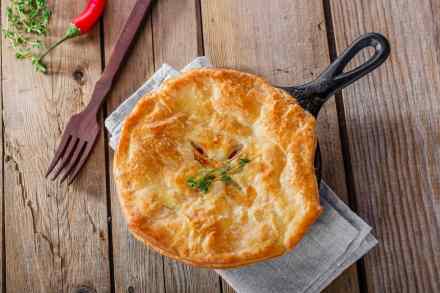
At this time of year, nothing beats a cosy tavern with steamed up windows, a roaring fire and hearty food. ‘Gastropubs’ have come under some justified criticism over the years: trying too hard to be restaurants and with prices to match, pricing out their former loyal clientele. Too many regular pubs meanwhile are happy to serve microwaved food or, as is the fashion nowadays, mediocre Thai cuisine. Pub or gastropub, the most successful food offerings at a good watering hole are often the pies. With any luck there will be options: picnic pies with hot water crust pastry (Crystelle from Bake Off recently produced a good-looking curried chicken and potato terrine pie) and the likes of shepherd’s pie topped with buttery mash.

The fireside dishes to feast on this bonfire night: from baked apples to nachos

There’s never been a better year to celebrate Bonfire Night. Late night, outdoor, responsible fun to enjoy now that there’s precious little else to do after 10 p.m. Plus it’s surely therapeutic to remind ourselves that while things are currently a little tough going and hosting a dinner party in your home is an act of high treason, the country had its fair share of problems in 1605 too. Round-the-fire cooking isn’t the same as barbeque cooking: utensils are at a minimum; heat control is down to a wing and a prayer. This is ‘chuck it near the heat and pray the kids won’t go hungry’ cooking. So here are six things to try on 5th November, when you can’t face another toasted marshmallow.

Cheat’s Penda: a Diwali dish with a British twist

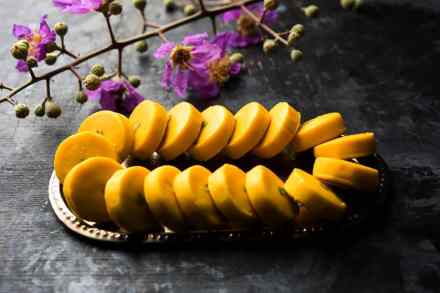
Diwali is synonymous with fireworks and candles (diwas) – it is after all the ‘festival of lights’ – but sweet morsels of sugar and spice are almost as important a part of the festivities. Just as Christmas is a time when restraint rightly crumbles in the face of mince pies and lashings of brandy butter, so Diwali is an occasion for pendas, burfis, ladoos and other sweet largesse. Most of these sweets have in common plenty of ghee (clarified butter) and goor (unrefined jaggery), as well as lots of spice (cardamom and saffron are particularly ubiquitous) and often nuts. As delicious as it all sounds, Indian sweets often suffer from a bad reputation, in particular for being tooth-achingly sweet.

A foodie’s guide to game season

If the brimming hedgerows were not enough to sate your taste buds this autumn, then it's time to turn your attention to game season. As I’ve written, game is not only delicious but sustainable and healthy too. Indeed, venison is higher in protein and lower in fat than any other meat. It's not for nothing that the British Association for Shooting and Conservation (BASC) are in conversations with NHS leadership to explore getting ‘boil in the bag’ game to rural hospitals to nourish inpatients. Game is also extremely varied. Poultry can sometimes get boring: chicken is too ubiquitous, duck too fatty to eat often, and no-one really likes turkey except once a year for nostalgia’s sake.

How to spice up winter soup

There are few things as good as soup for comfort and warmth. Though, with the very notable exception of Heinz tomato, I find ready-made soups invariably dull. The fresh counter ones are even worse than the tinned: bland, gloopy, surprisingly calorific and expensive for what is, after all, liquid food. When it comes to soup, I go for one of two approaches. When I need instant warmth and salty satisfaction I’ll have a mug of broth— Bovril beef tea, miso soup from a sachet, or even just a crumbled veggie stock cube in boiling water. And when I want a real meal, something nutritious and filling, I’ll make a proper blended soup.

The secret to making egg-fried rice

Getting a takeaway doesn’t quite mean what it used to. The choice used to be between a pizza, ‘an Indian’ or ‘a Chinese’, and was reserved as a Friday night treat, to be eaten out the box while flopped on the sofa watching Cilla Black’s Blind Date. Nowadays one is as likely to order a truffle risotto as a Pizza Hut combo deal. Furthermore, many millennials and Gen Z-ers seem to have no qualms ordering takeaway several times a week, carefully transposing the slow-cooked beef Massaman curry onto bone china so they can pretend (to themselves or their Instagram followers) that it’s home-cooked – honest. But all these new trends give the old-school takeaway options a somewhat nostalgic appeal.

How to make Bhanda – the Indian-African fusion dish ideal for autumn

African politicians often have a playful turn of phrase. The former president of Zambia, Levy Mwanawasa, was dubbed 'the cabbage' by his political opponents. There is nothing to suggest that the founding president of Malawi, Hastings Banda, was called 'the kidney bean' by the political opposition but he could’ve been. For banda/bhanda is the word for the kidney bean in the Malawian language of chichewa. Many culinary cultures vaunt their prowess with the kidney bean; it is of course a prized ingredient in Mexican and Cajun cuisine too. But prepared in the Indian-African manner, as a spicy curry-like stew and served with basmati rice ('bhat', in the Gujarati language of western India), it is wonderful: as warming and satisfying as a chilli, and perfect autumnal food.

Curry can be guilt-free (if you know how to make it)

Two of the misconceptions surrounding curry that it consistently struggles to shrug off are one, that it is unhealthy, and two, that it is difficult to make at home. I’ve always found both perplexing. Turks and Persians must be similarly bemused given the reputation of their archetypal food, the kebab. Yes the late night version, carved from a rotating trunk of greasy lamb with a mini chainsaw and then covered in garlic mayo, is a calorific car crash. But kebab as it was meant to be – meat simply grilled over charcoal and served with rice and salad – is perfectly healthy every day food. And yes a curry house korma is fattening, even before you add in the three poppadoms and pints.

In defence of curry

When a dear friend recently was clearing out her dad’s house following his death, she uncovered a tin of ancient Harrods’ Madras Curry Powder – several decades old and emblazoned for some reason with the name 'Ameer' on the front. This sort of attic find is considered an offending item nowadays, if the recent ‘curry is racist’ furore is to be believed. Madras curry powder is an essential ingredient of Anglo-Indian cuisine. Indeed, the flavouring is as much a part of British cuisine as Worcestershire sauce and English mustard. And it is, happily, still labelled 'Madras' – the imperial name for the city of Chennai –  when bought today. 'Chennai curry powder' doesn’t quite have the same ring to it.

Food, glorious food: the rise of the culinary mini break

After a fraught summer of changing restrictions, it seems likely that staycaytioning is here to, er, stay. The good news for food-lovers is that Britain is now home to a growing number of boutique breaks that are centred around eating. Our weather may be unpredictable but the top-notch dishes at these destinations will more than compensate for even the wettest of weekends. So here is a guide to the best all in-house foodie staycations – from Michelin-starred manors to wholesome working farms – all with fabulous food and drink on offer within a postprandial stagger to the bedroom.