Alexander Larman

Alexander Larman is an author and the US books editor of The Spectator.

Don’t bring back Frasier

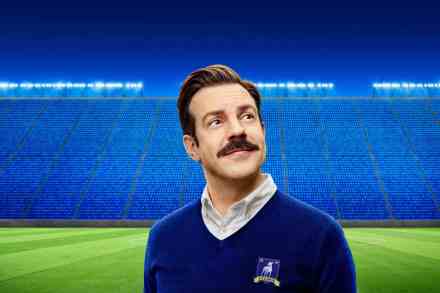
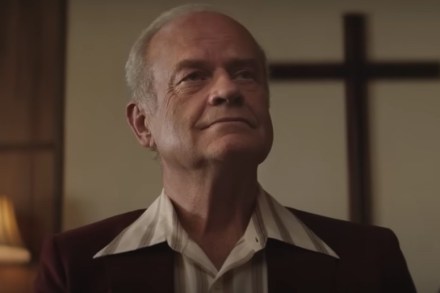
At the end of the Frasier theme song, its star Kelsey Grammer always sang the words: 'Frasier has left the building!' And when the show finished in 2004, it felt as if Frasier, Niles, Daphne, Martin, Roz and the rest had indeed left the building. In truth, the popular programme did not end in glory. Ever since Niles and Daphne had become a couple, ending its greatest running joke, there was a sense of past glories being retrodden. By the time Daphne’s siblings appeared with the strangest 'British' accents ever known, it was hard to avoid the feeling that Frasier’s departure was past due.

Why Avatar 2 has confounded the critics

The pundits called it long ago: Avatar 2: The Way of Water was going to be a flop. They did allow that betting against the so-called ‘king of the world’ James Cameron was rash – after all, Titanic and the first Avatar film overcame almost hysterically negative buzz in order to become box office behemoths. But there were too many reasons why the latest Avatar was going to fail. Nobody remembered the first film, they said. It wasn’t meme-able, they warned. Sam Worthington, its supposed star, was a nobody. There were too many blue people in it. The first film had had the novelty of 3D, but that was now a completely defunct format, popular only in China. People had moved on.

Is Prince Harry blackmailing his family?

For all of the noise that Prince Harry has made over the past few days (weeks, months, and years) about his loathing of the British media, he knows – or has been made aware by his publishers – of the necessity of sitting down with journalists in order to promote his book. And so it is that, yielding to the entreaties of publicity, he has been interviewed by the estimable Bryony Gordon for the Telegraph. It’s an interesting feature, full of colour and anecdote, and demonstrates, as if it needed to, that the rebellious prince remains a source of endless fascination to everyone in his former home country.

The grand return of Pamela Anderson

From our US edition

The recent Golden Globe awards saw the Hulu miniseries Pam & Tommy, a fictionalized account of the theft of Pamela Anderson and Tommy Lee’s notorious sex tape, lose out to The White Lotus. It wasn’t much of a surprise. Whether or not you thought the second series of The White Lotus was a worthy successor to the first, it was still much-discussed water-cooler television in a way that Pam & Tommy simply wasn’t. Yet perhaps there was another consideration at play. 2023 marks the grand return of Pamela Anderson — if, of course, she ever went away. She refused to cooperate with the production of the miniseries, and it’s now clear she didn’t want it to interfere with her own ambitions.

The Royal silence over Prince Harry can’t go on

Even Prince Harry's critics must concede that his memoir Spare has been an enormous success. The book is the UK’s fastest-selling nonfiction book ever: 400,000 copies flew off the shelves on its first day. The Duke of Sussex’s recent blitzkrieg of high-profile publicity opportunities, on both sides of the Atlantic, leaves little doubt that he is, at least for now, the most famous man in the world. Not bad for a self-described ‘spare’. But there is one group of high-profile people whose thoughts are both eagerly sought and, for the time being, withheld: the Royal Family.

Prince Harry’s Spare ends with a whimper not a bang

The epigraph for Spare, Prince Harry’s frenziedly awaited memoir, is from William Faulkner’s Requiem for a Nun. It states simply ‘The past is never dead. It’s not even past.’ As a gesture of authorial intent, it’s a bold one. It suggests from the outset that this is not going to be some backwards-gazing book, but instead that it is going to be fully engaged with the present. Given the fact that Spare’s publication has dominated headlines for days, it’s not an inaccurate statement. Yet – how best to put it? – Harry has never struck most of us as the kind of man who habitually quotes Faulkner.

Prince Harry’s ITV interview shows why there won’t be a royal reconciliation

It’s fair to say that last night’s ITV interview – imaginatively entitled Harry: The Interview - between Prince Harry and his long-standing friend, the journalist Tom Bradby, has been overshadowed by the chaotic leak of Harry’s autobiography Spare. Given the sheer wealth of revelations in the book, what should have been a revelatory teaser for its publication tomorrow has now become almost anti-climatic. Nonetheless, ITV has done an excellent job of teasing snippets from the encounter between the Duke of Sussex and Brady, and anticipation has been rife for the 90-minute show.

Books to look out for in 2023

After a fair-to-middling 2022, it’s not unreasonable to hope that 2023 will see several stars burn brightly in the literary firmament. Whether what promises to be the most talked-about book of the year, Prince Harry’s Spare (out tomorrow with Bantam), is included in this number remains to be seen. On the plus side, the Prince has the estimable J.R. Moehringer as his ghostwriter; on the negative side is the fact that his every public appearance over the past few years has been so combative that we might expect little more than a 416-page exercise in score-settling. More reliable pleasures await. Pamela Anderson’s memoir Love, Pamela (Headline, January) should be a revelatory and fascinating dive beyond the usual bimbo clichés.

Lady Chatterley’s Lover in an era of free speech

From our US edition

"Sexual intercourse began in nineteen sixty-three… between the end of the Chatterley ban and the Beatles’ first LP." So wrote Philip Larkin in his much-quoted poem "Annus Mirabilis." Sixty years later, while the Beatles’ Please Please Me is not entirely synonymous with matters sexual, there is still a fascination with DH Lawrence’s most famous book, Lady Chatterley’s Lover. It remains both a boundary-pushing erotic landmark and, now that the controversy behind it has long passed, a deeply affecting novel that is both romantic and Romantic in its reach.

The war between the Windsors hits a new low

It was inevitable, with a book as highly anticipated as Prince Harry’s memoir Spare, that there would be a leak of its contents ahead of its release next week. Given the Duke of Sussex’s antipathy towards his family, it is fitting that the newspaper that landed this exclusive is the republican-leaning Guardian. Nonetheless, it is something of a marmalade-dropper to see the headline ‘Prince Harry details physical attack by brother William in new book.’ We might have thought we have heard all the details of the acrimonious relationship between the two royal siblings before: clearly, there is still more to come. The accusation is an unedifying one.

The books to watch out for in 2023

From our US edition

After a fair-to-middling 2022, it’s not unreasonable to hope that 2023 will see several stars burn brightly in the literary firmament. Whether what promises to be the most talked-about book of the year, Prince Harry’s Spare (Random House, January), is included in this number remains to be seen. On the plus side, the prince has the estimable J.R. Moehringer as his ghostwriter; on the negative side is the fact that his every public appearance over the past few years has been so combative that we might expect little more than a 416-page exercise in score-settling. More reliable pleasures await. Pamela Anderson’s memoir Love, Pamela (HarperCollins, January) should be a revelatory and fascinating dive beyond the usual bimbo clichés.

What is Prince Harry’s latest sulk trying to achieve?

A new year, a new grudge. Or, at least, a new expression of an old one, which is pretty much all that we’ve heard from the Duke and Duchess of Sussex over the past few years. Yet after the interminable six hours of score-settling that Netflix punished us with last month in the form of Harry and Meghan, the forthcoming publication of Prince Harry’s hugely anticipated (in some circles, anyway) memoir Spare is being promoted with two major interviews, one in Britain and one in the United States. Based on the previews that have been released, they promise to be every bit as attention-grabbing – or attention-seeking – as everything else that Harry has been involved with recently.

The King has inherited his mother’s sense of duty

For the first King’s speech since 1951, the King might have been forgiven for striking a downbeat note in his inaugural address to the nation. After all, this year has seen the death of his mother, his continuing estrangement from his publicity-hungry younger son, and, for good measure, the fulfilment of his long-held desire to expel the not-so-grand old Duke of York from public life. Yet the speech – which was recorded on 13 December from the Quire of St George’s Chapel in Windsor, conveniently between the two instalments of the Netflix series in which Harry and Meghan did their best to humiliate the Royal Family – was far from the miserable or score-settling homily that many might have expected.

The King’s speech

The publishing mega-merger that wasn’t

From our US edition

If you sit down and talk to an author for any length of time, you will hear gripes. (Writers will never be confused with the sunniest of people on this planet.) About the visibility of their books; about the size of their advances; about their sales, relative to their other titles and to their peers; about publicity campaigns; about cover designs. There will be a lot of gripes, and if you are cornered by an author in a bar, or at a party, you might be advised to make your excuses and flee. But if you have some sympathy for this much-maligned breed, it may occur to you that the basis of their complaints ultimately comes down to a simple lack of appreciation by their publishers: those all-powerful entities that have the power to make or break careers at the touch of a button.

publishing

Elon Musk will have the last laugh

It ended, as many things do these days, with a poll. Apparently on a whim, Elon Musk, while attending the World Cup final in Qatar on 18 December, tweeted: ‘Should I step down as head of Twitter? I will abide by the results of this poll.’ Seventeen-and-a-half million people voted, and nearly sixty per cent demonstrated their belief that, yes, the days of the Musk regime on Twitter should come to an ignominious end. Given that Musk’s schtick on the social media platform has been to offer democracy to its users – all the while making sure that he remains in charge – it appears to be a binding obligation, and the business pages (and stock market) have reacted to the poll’s result as if it is hard news.

Do Harry and Meghan really think they’ve done nothing wrong?

Not for the first time, it was Jeremy Clarkson’s fault. The weekend news, which began with a forensic dissection of the fallout from the six unrelenting hours of the Netflix series Harry and Meghan, was soon dominated by Clarkson’s extraordinary column in the Sun, in which he wrote of the Duchess of Sussex: ‘I hate her. Not like I hate Nicola Sturgeon or Rose West. I hate her on a cellular level.’ He went on to suggest that: ‘At night, I’m unable to sleep as I lie there, grinding my teeth and dreaming of the day when she is made to parade naked through the streets of every town in Britain while the crowds chant, “Shame!” and throw lumps of excrement at her.

barbie

Why has Barbie been made?

From our US edition

In 1997, the Swedish pop act Aqua released a novelty single which combined being hugely popular with being even more irritating. Entitled “Barbie Girl,” it was a helium-voiced ode to the wonders of the famous Mattel creation, dusted with just enough ironic detachment to allow the musical connoisseur to believe that they were savoring a joke, while giving the unreconstructed pop lovers everything they could hope for. The lyrics are especially lamentable: the chorus declares “I'm a Barbie girl, in the Barbie world/ Life in plastic, it's fantastic/ You can brush my hair, undress me everywhere/ Imagination, life is your creation.” It was successful for a while, sold a huge number of copies and can, very occasionally, still be heard on the radio.

His Dark Materials is the perfect Christmas viewing

When you’re sitting on the sofa in the week ahead, stupefied into submission by food and alcohol and relatives and God knows what else, you’ll be tempted to watch something that will divert you from the gluttony. And, yes, the likes of Elf, It’s A Wonderful Life and Love Actually are all available, as they were last year. But maybe you’ll want to watch something that is not just entertaining but that makes the viewer think. Something that also has a provocative religious theme that is, if not quite the three wise men and the star of Bethlehem, as relevant this time of year as it ever is. Step forward the third series of His Dark Materials, all eight episodes of which became available on BBC iPlayer last night.

Harry and Meghan’s Netflix show is worse than the Royals could ever imagine

At the end of the sixth episode of the interminable, grotesquely self-indulgent wallow in self-pity and score-settling that constitutes Netflix's Harry and Meghan, a single thought dominates: we’ve been had. After all the months of hype and expectation, building up to a frenzy over the past few weeks – with every trailer for the show being scrutinised as if it was going to reveal some dark secret – the final judgement on this deeply unimpressive, prurient series has to be that it is nothing more than a cynical exercise in presenting a deeply partisan account of two obviously troubled and unhappy people’s lives: their truth, if you will.

Angelo Badalamenti, the maestro of mystery

From our US edition

Every film composer hopes that they will have at least one piece of music that they will always be synonymous with. (Some greedy bastards, such as John Williams and Hans Zimmer, have loads.) Whether it’s Henry Mancini’s Pink Panther theme, John Barry’s James Bond epics or, more recently, Howard Shore’s Lord of the Rings majesty, it’s a wonderful thing to have elevated a film or television series single-handedly with one’s scoring. And so it has proved with Angelo Badalamenti, who has died at the age of eighty-five.

angelo badalamenti