Alexander Larman

Alexander Larman is an author and the US books editor of The Spectator.

Harry and Meghan have stepped up their war on the Windsors

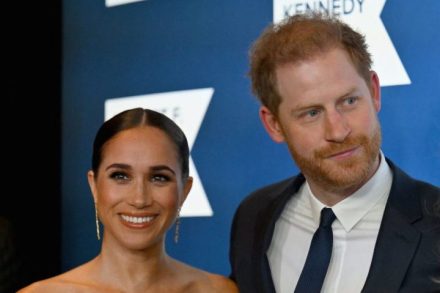
The first part of the Harry and Meghan show on Netflix was something of a let down. Over three tedious hours, there was a lot of sentiment and half-veiled digs at the Royal Family, as well as some philosophising about racism and Brexit, but millions of viewers got to the end of the third hour and sighed as one: ‘Is that it?’  Expectations were not high that the second instalment, coming to Netflix this Thursday, was going to live up to the advance hype. But it appears a nasty surprise is in store, at least for the Royal Family. Much of the explosive material that has been teased to viewers for months is now, finally, going to be let out into the open. It looks every bit as dramatic as watchers of this particular saga might have wished for. https://www.youtube.com/watch?

Is Taylor Swift doomed as a filmmaker?

From our US edition

Any moment now, I expect Taylor Swift to announce a presidential bid, probably for 2028. By then, she’ll have done everything else that someone in the entertainment industry could reasonably be expected to have done. Endless hit records and awards? Check. High-profile spats with leading industry figures who have invariably come off worse? Absolutely. And, next up, her cinematic debut, a yet-untitled project that she will both write and direct? Not long to wait now. The announcement a few days ago that Swift will direct a feature for Searchlight Pictures based on her own screenplay caused much excitement, with appropriate genuflection accompanying the press release.

Taylor Swift attends the "All Too Well" premiere at AMC Lincoln Square on November 12, 2021 in New York. (Photo by ANGELA WEISS/AFP via Getty Images)

Harry and Meghan’s Netflix show is a tedious, narcissistic wallow

The opening scenes of the eagerly anticipated – or keenly dreaded – Netflix series Harry & Meghan set out the couple’s stall. ‘This is a first-hand account of Harry & Meghan’s story, and told with never before seen personal archive… all interviews were completed by August 2022.’ This hint – that nothing was affected by the Queen’s death – is then compounded by the next statement. ‘Members of the Royal Family declined to comment on the content within this series.’ The promise is clear; this is going to be explosive. Well, it isn’t. Not so far, anyway. Instead, over a near-interminable first three hours, the viewer endures a mixture of the same biographical material that we’ve all seen a thousand times before.

Kirstie Alley, the woman left out in the cold

From our US edition

Towards the end of her life, the Cheers and Look Who’s Talking star Kirstie Alley, who has died of cancer at seventy-one, did something that made her a pariah among her Hollywood associates: she tweeted support for Donald Trump. On October 17, 2020, Alley wrote, "I’m voting for @realDonaldTrump because he’s NOT a politician. I voted for him 4 years ago for this reason and shall vote for him again for this reason. He gets things done quickly and he will turn the economy around quickly. There you have it folks there you have it." The public response was swift and merciless. Writer and director Judd Apatow remarked, "Shelley Long was way funnier than you"; the actress Patricia Arquette announced, "Well my vote for Biden canceled yours out. I have done my civic duty of the day.

Indiana Jones and the absurdity of Hollywood de-ageing

This week, in homes across the land, there is one guarantee: somewhere, someone will be watching one of the Indiana Jones films, and it’ll likely be the first or the third in the series. Raiders of the Lost Ark and Indiana Jones and the Last Crusade are little less than perfect seasonal comfort food: witty, exciting, stuffed full of indelible characters and unforgettable set-piece action scenes. These films stand as those rare pictures that, however many times you watch them, continue to be fabulously entertaining. The others in the franchise – Temple of Doom and Kingdom of the Crystal Skull – are less effective, and the latter has become a byword for mediocrity.

A tale of two royal couples taking on America

When the incendiary story about Lady Susan Hussey’s ill-judged remarks broke this week, a detail that many were quick to spot was that Lady Hussey had been the person responsible for giving the Duchess of Sussex ‘protocol lessons’ when she first became part of the Royal Family. Defenders of Meghan Markle (who do exist, if not in any great quantity in Britain) seized upon this information. They have been trumpeting, ‘Of course, this is what that poor woman had to put up with! If people are as ignorant and rude as Lady Hussey, no wonder she accused the Royal Family and its members of racism! She called them out!

Bob Dylan’s curious book signing controversy

From our US edition

The times, they are a-changing. For the past six decades, Bob Dylan has been one of the most enigmatic artists in American music, whose every public utterance has been pored over by his admirers and detractors alike. But one thing that Dylan has never been is a man who threw it all away: reputationally speaking, at any rate. Yet things at last have changed. In a simple twist of fate that Dylan surely never could have predicted, he has become embroiled in — of all things — a controversy over signed books. Dylan's most recent publication, The Philosophy of Modern Song, was released in a deluxe limited edition, retailing at $599 apiece.

The unbelievable narcissism of Harry and Meghan’s Netflix documentary

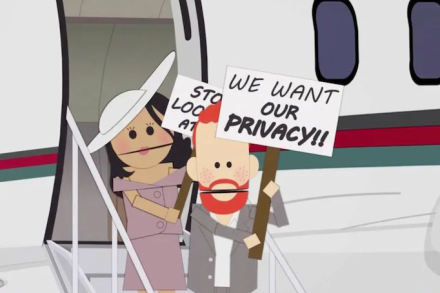
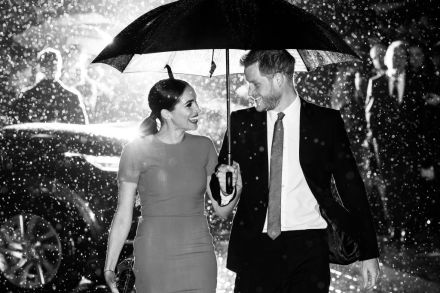
‘Why did you want to make this documentary?’ That is the question – over portentous piano chords – that begins the trailer for the next instalment in the apparently endless Sussex saga, Harry and Meghan. The answers that the viewer might supply: publicity-seeking on a grand scale; unbelievable narcissism– are not uttered. Instead, over stylised black and white photographs of the duo kissing, being crazily in love and every inch the perfect couple, Harry replies, with becoming grimness, ‘No one sees what’s happening behind closed doors.’ Cue pictures of Meghan apparently in tears looking at her phone; the Royal Family aloof and cold; and a million photographers, their cameras thrust priapically aloft. Oh, the drama.

The generation gap over J.K. Rowling

From our US edition

I’ve often thought that a candid fly-on-the-wall documentary about the production of the Harry Potter films would be considerably more entertaining than any of the lackluster pictures themselves (Alfonso Cuaron’s excellent Prisoner of Azkaban duly excepted). Alan Rickman’s recent diaries suggest that the sets were unhappy, frantic places where actors were seldom allowed to create memorable characters and where the focus on the juvenile performers meant that one of the finest British ensemble casts ever assembled often functioned as little more than expensive set-dressing. Yet more than a decade after the final film, the actors continue to command headlines, some of which is thanks to Harry Potter creator J.K. Rowling’s views on the trans issue.

Lady Hussey’s resignation and the pressure to reform Buckingham Palace

It’s a story that sounds as if it could have come from half a century ago, rather than today. Ngozi Fulani, the head of the London-based domestic and sexual abuse charity Sistah Space, was at Buckingham Palace yesterday for a reception hosted by the Queen Consort, with the stated aim of stamping out ‘a global pandemic of violence against women.’ A noble cause, but unfortunately Ms Fulani encountered a member of the Buckingham Palace household staff, who, in Ms Fulani’s recounting, firstly moved her hair aside to see her name badge, and then asked her when she was from.  ‘We’re based in Hackney.’ According to Fulani, the aide persisted. ‘No, what part of Africa are you from?

How to tour London like a royal

From our US edition

The next time you arrive at London’s Heathrow Airport, you might be forgiven for wanting a welcome fit for a king. Yet under the now nearly three-month-old reign of King Charles III, there is a persistent rumor that Buckingham Palace, that symbol of the British monarchy since its acquisition by America’s favorite monarch George III in 1763, is going to pass out of private hands and into public ones. There has been talk of its being turned into a giant permanent art gallery and museum, showing off treasures from the Royal Collection Trust. There's even chatter of — and I can hear the gasps from here — its being transformed into a five-star hotel. You, too, can pay an exorbitant amount of money to sleep where kings and queens have trod.

Why is there no great Thanksgiving movie?

From our US edition

In about a month’s time, one of the most boring conversations in social media discourse will begin (assuming Elon Musk hasn’t taken Twitter away from us out of pique). "X is a Christmas film." "X is not a Christmas film." And so on, as keyboard warriors angrily debate whether the eclectic likes of Die Hard, Lethal Weapon and Love, Actually qualify for this designation, as purists claim on endless Reddit threads that a Christmas movie can only be so-called if the plot and events are entirely driven by the festive season itself. Even for those of us who would argue that Die Hard and It’s A Wonderful Life make the perfect Christmas double bill — wider designations of the term be damned — there is considerably less debate as to what makes a Thanksgiving film.

bowie

David Bowie is bigger than ever

From our US edition

On Sunday, November 10, 1991, the band Tin Machine played a gig at Brixton Academy in south London. Brixton then was far from the gentrified area it has become; it remained a hotbed of simmering social and racial unrest. The notorious riots of a decade before were still a recent memory, and those who ventured to the Academy did so in the knowledge that fights and aggravation were highly likely, especially after alcohol had been consumed. But if on-street scuffles were a price that gig-goers had to pay to see their musical idols, the world of Tin Machine was a much less happy one. At the beginning of the Nineties, David Bowie had to consider, for the first time since the success of the single “Space Oddity” in 1969, that he might be a spent force.

Happy birthday Martin Scorsese, the Don of movies

From our US edition

Later this week, probably the world’s greatest living film director will celebrate his eightieth birthday. However he celebrates — whether in the company of friends and family in his no doubt opulent Manhattan home, or working on his eagerly awaited new film Killers of the Flower Moon — Martin Scorsese can reach his milestone age in the confidence that his position in cinematic history is assured forever. For a man so steeped in the art and practice of filmmaking — and who has made several excellent documentaries about movies — it must be intensely gratifying for Scorsese to be aware that he is that rarest of persons, a living legend, whose contributions to film will live forever.

Harry and Andrew are out in the cold

King Charles has announced, to mark his 74th birthday, that he will be asking Parliament to amend the Regency Act to increase the number of counsellors of state who can conduct official public business while the monarch is overseas or otherwise indisposed. He has asked that it now include his sister, Princess Anne, the Princess Royal, and his younger brother, Prince Edward, the splendidly named Earl of Wessex and Forfar. It represents a generous spirited recognition of the services that Anne and Edward have undertaken for decades, often with little gratitude or reward: springtime for the Princess and Prince. It is, however, very much winter for two existing counsellors of state, namely Prince Harry and Prince Andrew.

Warning: this book may make you like Bono

From our US edition

There is a famous (and, I fear, apocryphal) story about Bono at his most messianic at a U2 gig in the early part of this century. Pausing between songs, he clicked his fingers meaningfully. After doing this a few times, he said, with utmost gravity, “Every time I do this, a child in Africa dies of starvation.” Most of the audience nodded in sympathy, but one man in the front row had a better response. “Well stop fucking doing it then!” Bono’s response was not recorded, but the finger-clicking soon disappeared from his repertoire of stadium show gimmicks. It is reasonably easy to see why Bono — and, by extension, U2 — are so reviled.

bono

The afterlife of a painting: Molly & the Captain, by Anthony Quinn, reviewed

Novels about art are often strange, vain affairs. After all, writing about artists, especially fictional ones, can seem like a strained exercise in trying to yoke together two irreconcilable mediums. It is to Anthony Quinn’s credit that his ninth novel, Molly & the Captain, not only succeeds admirably as a centuries-spanning account of the influence and afterlife of the eponymous painting, but manages to say illuminating things about creativity, love and family dynamics in the process. The book is divided into three sections. The first, ‘Merrymounts’, is the shortest, and is written in an 18th-century literary pastiche style that initially jars but soon enthrals.

A subtly mournful Crown lands in the post-Elizabeth era

From our US edition

Nobody ever expects Peter Morgan’s royal soap opera The Crown to deliver unfettered accuracy, but even by its own standards, the fifth series has taken a battering in the British press. Former prime ministers John Major and Tony Blair — both of whom are depicted this time round — have come forward to denounce the scenes in which they appear as "injurious and untrue" (Major) and "complete and utter rubbish" (Blair). There has even been pressure on Netflix, as yet unbowed to, for each episode to feature a disclaimer stating that it is a work of fiction. The cynical might argue that politicians and actors — step forward, Dame Judi Dench — savaging a streaming service’s flagship show is the best imaginable publicity for it.

Elections are always better in the movies

From our US edition

As the midterm elections loom, there is the usual excitable commentary about what it all means. Every voter will have their own heroes and villains, the dashing white knight and the looming bogeyman. The complexities of the wider sociopolitical issues at hand will be subsumed to simple questions: will the results encourage Trump to run in 2024? Is this curtains for Kamala’s presidential ambitions? These are, of course, over-simplifications of difficult and nuanced issues. This is why the movies have inevitably dealt better with the drama (and farce) of fictitious — or at least fictionally disguised — election campaigns.

Paul Newman was and wasn’t the nicest of men

From our US edition

My favorite Paul Newman performance is his final on-screen one, as mob boss John Rooney in Sam Mendes’s Road to Perdition. It’s a good, not great, film, which is a disappointment given its phenomenal cast and to-die-for Conrad Hall cinematography. But there’s something unique in Newman’s contained performance as a man of infinite complexity, someone as comfortable playing a piano duet with his surrogate son as breathing portentously of his profession, "This is the life we chose, the life we lead. And there is only one guarantee: none of us will see heaven.