Alexander Larman

Alexander Larman is an author and the US books editor of The Spectator.

Free expression after the Rushdie attack

From our US edition

In an interview with Stern magazine at the end of July, Sir Salman Rushdie was asked about the current circumstances of his life. Given that this is a question that he has faced since 1989, Rushdie might have been expected to respond with boredom, even irritation — as, understandably, he has done in other public conversations, when the subject of the fatwa that he has been under for nearly three and a half decades has been raised by an inquisitive or prurient journalist — but he responded with reasonably good cheer. Describing his everyday existence as “very normal,” he even ventured a light-hearted remark, saying, “A fatwa is a serious thing. Luckily we didn’t have the internet back then. The Iranians had to send the fatwa to the mosques by fax.

Rushdie
queen elizabeth ii

Queen Elizabeth II made a difference — to Britain and the world

From our US edition

“The Queen is dead, boys, and it’s so lonely on a limb.” So the ever-provocative Morrissey sang on the title track of the Smiths’ 1986 album. At the time, his wishes were regarded as little more than republican throat-clearing, shot through with satirical wit. In the same song, he imagined an unlikely encounter with the Queen, who remarks caustically, “Eh, I know you, and you cannot sing.” Some of his detractors might agree. But now, thirty-six years on, the Queen really is dead. Queen Elizabeth II, the longest-reigning monarch in British history, died on September 8, 2022 at the age of ninety-six. The second Elizabethan age — one that surpassed the first for both achievement and longevity — has come to an end.

Is Will Smith too toxic to be taken seriously?

After 9/11, American comedians found themselves in a tricky situation. Make fun of any of the usual standbys of their trade – politicians, authority figures, Rudy Giuliani, anyone who wore a badge for a living – and they were liable to be shouted down in an angry chorus of: 'Too soon!' Yet if all the jokes they could tell were sanitised and tame, their reputations would decline in an instant. It was a bold comic who tried to argue that telling jokes was a natural human response to disaster; many audiences simply refused to find things funny. Will Smith now finds himself in a similar position. The one-time Fresh Prince of Bel-Air has been a Hollywood pariah since he assaulted Chris Rock on stage at the Oscars in March.

Meghan makes it all about herself, again

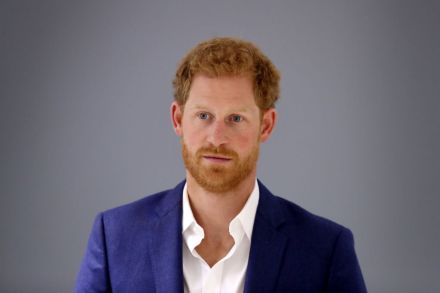
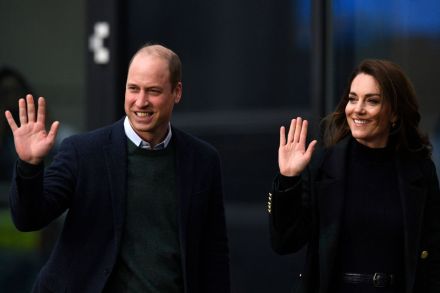
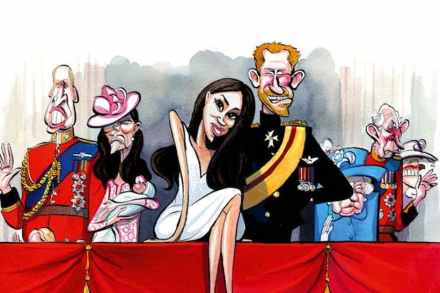
Since the Queen’s death last month, the Duchess of Sussex has found it hard to maintain her usual vice-like grip on the world media’s attention. Rumours have swirled that relations between her and Prince Harry and the now-Prince and Princess of Wales are yet to improve — despite the surface show of amiability that was demonstrated over the mourning period. There has been the sense that Meghan has been relegated to second fiddle: a state of affairs that this particular prima donna is reluctant to accept. This week has spelt a comeback of sorts. Photographs have been released of the Duke and Duchess, taken by Misan Harriman, when the Duke made his indifferently received speech at the One Young World conference in Manchester.

Hilary Mantel — a death before her time

From our US edition

When the Queen died a fortnight ago, it was widely speculated that the perfect writer to describe both her death and its aftermath was Hilary Mantel, but now that will never be. Mantel died from a stroke yesterday at the age of 70, leaving behind a unique legacy in transatlantic literature not merely as someone whose weighty novels about royalty in the Tudor era have sold millions, but as an acute chronicler of our own time, too. Not for nothing is her most controversial short story, The Assassination of Margaret Thatcher, a subversive account of what might have happened if a woman she felt "boiling detestation" for had been killed in 1983.

Ken Burns’s angry new film

From our US edition

There is probably no American documentary filmmaker more respected than Ken Burns. From his landmark 1990 series about the Civil War to his most recent work that has explored everyone and everything from Ernest Hemingway to country music, Burns has established himself as a fearless chronicler of stories that illuminate the nation’s history, sometimes in ways that viewers might find uncomfortable. His 2005 documentary about the African-American boxing champion Jack Johnson, Unforgiveable Blackness, was a fine example of the filmmaker turning his gaze on a subject that many might have preferred be left obscure, and it won him an Emmy for Outstanding Directing as a result — one of fifteen that he and his films have won to date.

Woody Allen’s non-retirement retirement

From our US edition

Even if you ignore the endless controversies associated with him, it is undeniably true that Woody Allen has lost his touch. With the partial exceptions of Midnight in Paris and Blue Jasmine, the director has not made a good film since the early '90s. The last few pictures he's made — Rifkin’s Festival, A Rainy Day In New York, and the like — have been seen by so few people that they seem more like self-indulgent home movies than commercial works. Therefore, it comes as no surprise that, announcing his fiftieth film, the Paris-set crime thriller Wasp 22, Allen, at the age of 86, also allegedly said that he expects it will be his last picture. He told the Spanish newspaper La Vanguardia, "My idea, in principle, is not to make more movies and focus on writing.

Why Harry has been allowed to wear his military uniform

P.G. Wodehouse once wrote that ‘it is never difficult to distinguish between a Scotsman with a grievance and a ray of sunshine.’ Much the same might be said of Prince Harry, whose ability to bear grudges – and to make it clear, publicly, why he is doing so – has been displayed with remarkable consistency over the past couple of years. When he isn’t suing the British government for not allowing him to bring his own private security to the country of his birth, he’s railing against the iniquities of his family to Oprah Winfrey or giving angry public speeches in which he denounces whatever ills he has found in society.

The enduring brilliance of Mad Men

If you were one of the many millions who watched Top Gun: Maverick this year, it may have been a pleasant surprise to see Jon Hamm in the (admittedly thankless) role of Vice Admiral Simpson, who has to look stern and angry at the various transgressions committed by Tom Cruise’s protagonist. Hamm has been cornering the market in these sorts of roles thanks to his appearance of square-jawed rectitude. He is a natural fit for FBI agents, police detectives, and, indeed, vice admirals. But it was a different kind of vice altogether that he followed in his best-known and most beloved role, that of the dynamically charismatic – yet entirely fraudulent – Don Draper, advertising executive extraordinaire in Matthew Weiner’s cult series Mad Men, which was first broadcast 15 years ago.

Remembering Jean-Luc Godard, one of the great film directors of our time

From our US edition

The death of French director Jean-Luc Godard, at the age of 91, is probably doomed to not get its due because of the saturation media coverage of Elizabeth II. That said, it should be noted that admirers of Godard and ardent royalists probably occupy a relatively small space on a Venn diagram, and, once the funeral obsequies for the Queen have passed, the legacy of one of France’s most innovative and influential — if also infuriating — filmmakers might be taken as seriously as it deserves.

The glorious rebirth of Brendan Fraser

From our US edition

At this year’s Venice Film Festival, it was widely agreed that the best male performance was given by none other than Brendan Fraser in the new Darren Aronofsky film, The Whale. Based on a play by Samuel D. Hunter — who also wrote the screenplay — it has nothing to do with Moby-Dick or any other watery protagonist. The title instead refers to Fraser’s character Charlie, a 600-pound middle-aged man who is determinedly eating himself to death, even as his family and friends attempt to break through the walls of pain that he has meticulously constructed for himself. The film itself has received mixed reviews, with some critics praising it and others describing it as manipulative and cheap.

Queen Elizabeth II, our remarkable monarch

Queen Elizabeth II, who has died at the age of 96, was the longest-serving British monarch. From the uncertain beginnings of her reign, acceding to the throne at the age of 25 after the unexpectedly early death of her father George VI in 1952, to final years troubled by public outrage displayed towards her son Andrew and grandson Harry, she came extraordinarily far, both as a monarch and as a human being. Her Majesty single-handedly transformed an increasingly moribund institution in the process. It is a testament to the Queen’s success in her role that republicanism has not had any serious discussion in British intellectual or social life in the past seven decades.

The Harry ‘n’ Meghan circus shows no sign of coming to an end

It seemed fitting that, for her return to Britain, Meghan Markle was joined at the One Young World summit in Manchester by none other than Sir Bob Geldof. The presence – on a Monday, no less – of the Boomtown Rats hitmaker-turned-all-purpose humanitarian was designed to show the worthy company that the Duchess of Sussex keeps these days. But it also ran the risk of suggesting that she, too, is in danger of repeating her single greatest hit all too often. Does Meghan still have a loyal audience, or is her schtick in danger of wearing thin? She decided to be emollient.

The Rings of Power just might turn Tolkien in his grave

From our US edition

By now, you’ve probably heard about Amazon’s new mega-series, aka "Jeff Bezos’s answer to Game of Thrones." There is probably no property more beloved in fantasy circles than JRR Tolkien’s Lord of the Rings trilogy, superbly filmed by Peter Jackson at the beginning of the millennium. But Hollywood — and its latest cousin, streaming television — finds itself unable to let go where there is the prospect of a hit. So first we had the endlessly protracted and deeply boring Hobbit series, and now we have Amazon’s new venture into Tolkien’s universe, the grandiosely titled Lord of the Rings: The Rings of Power.

T.S. Eliot’s The Waste Land at 100

From our US edition

In the United States a century ago, a single poet dominated the literary sphere. He was not only the recipient of the first ever Pulitzer Prize for Poetry — which he would win twice more during the course of an internationally distinguished career — but would be nominated for the Nobel Prize for Literature on four separate occasions. He was beloved by presidents, described by one admirer as “more artful than Hardy and more coy than Frost” and found himself one of the bestselling writers in America. His reputation seemed assured forever.

waste land

‘Oxford or Cambridge?’: the vacation edition

From our US edition

"Oxford or Cambridge?" No, it isn’t just shorthand for which of Britain’s most famous universities you attended — or were rejected from. It’s also a question about your taste in weekend vacation spots. Oxford is an urban, bustling city, full of multiculturalism, wide-eyed gangs of tourists and a literary heritage that’s long since tipped over into cliché. Think Alice in Wonderland, C.S. Lewis, J.R.R. Tolkien, even — God help us — Harry Potter, claimed for posterity because of its use of Christ Church as a filming location. But its Eastern cousin — decidedly not Cambridge, Massachusetts — is a very different proposition.

The ongoing farce of Ezra Miller

From our US edition

If Warner Brothers’ expensive superhero film The Flash is released next summer — and does not follow the fate of this year’s Batgirl, which has been summarily canceled — it will be fascinating to watch what the publicity circus does with its leading man. Or, to be more exact, leading human, as its star Ezra Miller has dismissed conventional ideas of being pigeonholed as anything conventional. They declared in 2018 that, “Queer just means no, I don't do that. I don't identify as a man. I don't identify as a woman. I barely identify as a human.” It is perhaps not a long path from these statements to Miller’s recent announcement that they are finally attempting to put their wildly chaotic life in some sort of order.

ezra miller

The attack on Salman Rushdie is an ominous warning

From our US edition

The news coming from New York State that the author Salman Rushdie has been stabbed onstage is both frightening and grim. It is frightening because, without full details of how seriously injured Rushdie has been, it is tempting to fear the worst. Media reports initially suggested that Rushdie was well enough to walk off stage, but the news that he has been transported by air ambulance to a hospital after being stabbed in the neck suggests his injuries are severe. It is grim because any violence being done to a public figure is abhorrent, but in the case of Rushdie, it is almost inevitable that this particular incident has been occasioned by one of the most notorious cause celébrès that has ever been seen in the publishing world, namely the publication of The Satanic Verses in 1988.

The Sandman is a confused disappointment

From our US edition

The author Neil Gaiman is one of the comparatively few writers who really understands how to use social media. Not only does he have nearly 3 million followers under the handle @neilhimself, his bio self-deprecatingly insists he will "eventually grow up and get a proper job," though "until then, he will keep making things up and writing them down." Gaiman is a prolific tweeter, interacting with his millions of admirers in a joyful and unpretentious way. I once had an edifying conversation with him around the time that my biography of Lord Rochester, Blazing Star, was published. Gaiman is a fully paid-up Rochester aficionado, and was gracious and generous with his time and appreciation.

Why do films get canceled?

From our US edition

Although it’s not exactly my cinematic bag, I understand why people were looking forward to Batgirl. It is a superhero film (as so many are these days), but with a potentially interesting female lead, namely Barbara Gordon, aka "Batgirl," the daughter of Commissioner Gordon, Batman’s ally. The film attracted a starry cast, including J.K. Simmons as Gordon, Brendan Fraser as the sociopathic antagonist Ted Carson, aka "Firefly," and Michael Keaton gamely reprising his Batman role. It cost $90 million, was directed by the filmmakers responsible for the surprisingly entertaining Bad Boys For Life, and might have been expected to be a modest box office hit: at the very least, it should have provided a couple hours of undemanding entertainment.