Alexander Larman

Alexander Larman is an author and the US books editor of The Spectator.

Bored of the Rings: the Tolkien industry has gone far enough

From our UK edition

In 1969, Henry Beard and Douglas Kenney, future founders of National Lampoon, published a satirical takedown of J.R.R. Tolkien’s Lord of the Rings, entitled Bored of the Rings. It holds up remarkably well today as a closely observed parody of Tolkien’s more windy stylistic tics. One critic, David Bratman, remarked: 'Those parodists wrought better than they knew. I think it is highly significant how close Tolkien came to inadvertently writing the parody version of his own novel – and how completely, in the end, he managed to avoid it.

Why does a new Tolkien biography remain elusive?

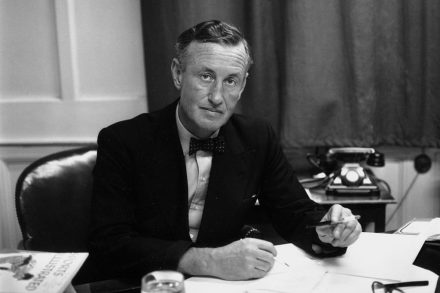
Last year’s big-budget, much talked-about television series, Amazon’s The Lord of the Rings: The Rings of Power, had a somewhat unlikely figure as its presiding genius. For one thing, he has been dead half a century this year, and for another, he was a mild-mannered Oxford don with a particular scholarly interest in Anglo-Saxon and Old Norse literature. His reputation rests on four novels published during his lifetime, which have not only been bestsellers since their publications in 1937, 1954 and 1955, but continue to attract millions of readers, who are unusually ardent in their appreciation.

tolkien

Why King Charles shouldn’t meet Ursula von der Leyen

From our UK edition

Is it wise for King Charles to get dragged into the Brexit deal row? European Commission president Ursula von der Leyen is in Windsor today to sign off on an agreement over post-Brexit trade arrangements for Northern Ireland. Afterwards, von der Leyen will meet the King for tea at Windsor Castle. Such a meeting – at a time of political tension – is a mistake. That the monarch should be above the trivial concerns of everyday politics is one of the most closely-observed rules of the British constitution. Her Majesty the Queen used this as a guiding principle throughout her many years on the throne.

Stop turning dead authors into sex symbols

From our UK edition

'As Gregor Samsa awoke one morning from uneasy dreams he found himself transformed in his bed into a TikTok sensation.' This is not – blessedly – how Franz Kafka’s The Metamorphosis begins. But almost exactly a century after his death, the Bohemian writer would be astonished to find that not only had his friend and literary executor Max Brod disobeyed his instructions and published works of his that included The Trial and The Castle, but that he had become, of all things, a social media sensation. It was reported recently that Kafka has become the unlikeliest of sex symbols.

Why don’t Harry and Meghan sue South Park?

From our UK edition

The Duke and Duchess of Sussex are hardly averse to taking matters to court. From their privacy tussles with the Mail on Sunday to the recent revelation that the taxpayer has forked out £300,000 over Prince Harry’s High Court challenge to the Home Office about his security arrangements when visiting the UK (he wanted to pay for police protection for his family, but was informed that the British police were not available for private hire, like taxis), the couple appear to regard legal action as a regrettable necessity that will ensure ‘their truth’ comes out into the world. Yet now, at last, they seem to have reached their limit.

Prince Andrew will never learn his lesson

From our UK edition

As the Princess of Wales draws plaudits for appearing at last night’s BAFTA awards in a subtly reused Alexander McQueen dress, and the Duke and Duchess of Sussex continue to keep the world guessing as to whether they will appear at the Coronation in less than three months, the younger members of the Royal Family are the ones who seem to have momentum behind them. Yet Prince Andrew is not to be outdone – even if the attention that he receives may not always be welcome. Not only was it recently announced that he would – flatteringly – be played by Rufus Sewell in a forthcoming dramatisation of his notorious 2019 Newsnight interview, but it has been suggested that he will lose his £249,000 annual allowance as from April.

Reading Roald Dahl in a dystopian world

It is a trope of dystopian literature that once-beloved works are censored beyond recognition by blank-faced apparatchiks, removing apparently subversive or dangerous content at the behest of the state. As ever in our brave new world, reality has come to imitate fantasy, with Roald Dahl the latest author to face that most implacable of nemeses: changing social attitudes. It has been revealed by the Daily Telegraph that Dahl’s books — published in the United States by Penguin Young Readers Group, and Puffin in the United Kingdom — have been quietly but systematically edited to make them more "acceptable" for a 2023 readership. These changes, of which there are hundreds across Dahl’s canon, fundamentally alter some of the most beloved children’s titles ever written.

Why hasn’t the Scream franchise been killed off?

From our UK edition

In December 1996, audiences lining up to see a teen horror picture starring Drew Barrymore, from the director of A Nightmare on Elm Street, got the shock of their lives. Not only was Barrymore, the best-known actor in the film, murdered in the first 15 minutes, but the opening set-piece was arguably the most shocking moment in movies since Janet Leigh had met a grisly end in the shower in Psycho. As Barrymore is stalked, first by telephone and then in person, by a sinister masked killer, the tension and horror build to virtually unbearable levels before its horrific climax. The rest of the film lived up to its opening, but for sheer, never-to-be-forgotten chutzpah, the beginning of Scream is indelible.

The glorious rise of the superhero anti-vaxxer

Marvel is releasing its latest extravaganza, Ant-Man and the Wasp: Quantumania, this weekend. Although early reviews have been largely negative and suggest the film is overwrought, it will inevitably make a huge amount of money and begin Marvel’s so-called "Phase 5" in high-profile fashion. Which is why it’s crucial for the publicity machine that its star Evangeline Lilly’s views on the anti-vaxxing debate do not overshadow the film’s more straightforward themes of good, evil and quantumania. Unfortunately, real-world issues are more complex than Marvel might like them to be. Lilly has enjoyed a successful career in films such as The Hobbit and in shows including Lost, and her appearances in the Ant-Man pictures were, until the advent of Covid, entirely uncontroversial.

How Pink Floyd drama erupted over global politics

The author and lyricist Polly Samson did not mince her words earlier this month when she attacked the musician Roger Waters on Twitter. She described him as “anti-Semitic to your rotten core. Also a Putin apologist and a lying, thieving, hypocritical, tax-avoiding, lip-synching, misogynistic, sick-with-envy, megalomaniac.” She ended with “Enough of your nonsense.” Not only did her husband, Pink Floyd singer and guitarist David Gilmour, retweet her attack on his former bandmate, he added, “Every word demonstrably true.” Waters’s response was to tweet, with appropriate pomposity, “Roger Waters is aware of the incendiary and wildly inaccurate comments made about him on Twitter by Polly Samson which he rejects utterly.

Cunk on Earth perfectly satirizes our era of idiocy

Before the beginning of February, American viewers may have been forgiven for not knowing who Philomena Cunk was. The actress who plays her, Diane Morgan, was familiar enough thanks to her appearances in Ricky Gervais’ After Life and brief cameos in the Charlie Brooker-scripted Death to 2020 and Death to 2021. The one, the only, Philomena Cunk, however, remained a British phenomenon, much like Marmite and poor dentistry. Yet Netflix, recognizing the universal brilliance of the Cunk character, stepped in to co-produce her new series, Cunk on Earth, with the BBC. It aired to an appreciative Britain last September — now the United States has the great privilege of seeing Cunk unleashed. For the uninitiated, the set-up is simple but endlessly effective.

Philomena Cunk

I would cross the country to avoid seeing an M. Night Shyamalan film

Like most of the world, I saw M. Night Shyamalan’s very fine ghost story The Sixth Sense when it came out in 1999. It’s a blessing that it was released in pre-social media days, because its central twist would have been spoiled in minutes. Yet even without the shock value occasioned by its splashy central revelation, the film is still a haunting (no pun intended) piece of work, a Kubrickian exercise in restraint where the horrors are genuinely terrifying on the few occasions that the movie moves out of its comfort zone of chilly reflection. The then-twenty-nine-year-old director clearly had a glittering career ahead of him. I looked forward to his next film eagerly. Two and a half decades on, I would happily cross the country to avoid seeing another film by Shyamalan.

Armie Hammer and cancel culture’s diminishing power

When someone compiles the history of 21st-century Hollywood, the section devoted to Armie Hammer will be one of the most bizarre. “Handsome leading man, came to prominence playing twins in The Social Network, a film about a forgotten invention known as Facebook. Most of the films he was subsequently cast in flopped, despite often being quite good. Amidst allegations of sexual assault and worse, it was then revealed that he had a cannibalism fetish, and that was the end of his acting career.” Yet canceled Hollywood figures often refuse to stay canceled these days.

Prince Harry will regret invading his privacy with his ‘Spare’ sex scene

From our UK edition

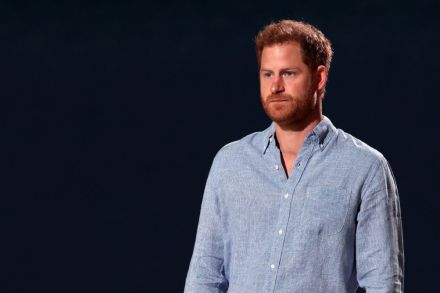
What a pity that memoirs don’t qualify for the Bad Sex in Literature prize. If they did, the description of how Prince Harry lost his virginity in Spare would surely qualify. That sordid tale has already passed into the annals of the least sexy writing about sex imaginable, with an older woman treating the young prince like ‘a young stallion’, before parting by 'smack(ing) (Harry's) rump and sen(ding) (him) off to graze'. The description of who the anonymous woman is duly sparked a media frenzy. There were rumours it was Liz Hurley, promptly denied. The woman's identity became nearly as discussed as the Duke’s latest outburst against his family.

Is the world ready for a Harry and Meghan rom com?

From our UK edition

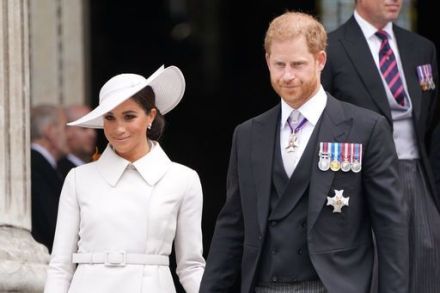
Those of us unlucky enough to have suffered through the six interminable hours of the Netflix Harry and Meghan series might now be regarding further updates from the less-than-dynamic duo with the same excitement that a dental patient looks forward to a round of root canal. But because the Sussexes have signed a multi-year deal with the streaming service in 2020, Netflix remains determined to get its money’s worth, and has decided what Harry and Meghan’s next venture with them should be: romantic comedies. A source at the company has informed the Daily Telegraph that ‘There will be more of a heavy focus on fictional, scripted content. It will be rom coms, feel-good and light-hearted programmes.

What is the point of the DC superhero films?

Say what you like about the Marvel Cinematic Universe (or the MCU, for short) — and I do, frequently — but you can’t deny that it has a grim efficiency. The MCU impressively herds tens of millions of unsuspecting moviegoers into theaters to watch the latest incomprehensible special effects behemoth, with a wildly overqualified and suitably embarrassed cast. As I write this, the latest installment to threaten audiences is Ant-Man and the Wasp: Quantumania. Now I don’t know what Quantumania is, and I will be perfectly happy to never find out. But as the previous film, Ant-Man and the Wasp (the titles lack a certain finesse), made more than $600 million at the box office, I accept I might be in the minority.

Is Amazon wasting Phoebe Waller-Bridge’s talents?

From our UK edition

The Tomb Raider franchise seems to have been a graveyard for oddly overqualified people. Angelina Jolie played the character of Lara Croft twice after winning an Oscar, and subsequently Alicia Vikander gave the English aristocrat-turned-global adventurer a go. Neither left much of a mark – which is why it is all the more surprising that Fleabag creator and star Phoebe Waller-Bridge is to write the scripts for a new Amazon series based on the video game. It has been wryly observed that, despite her heroics in the forthcoming Indiana Jones film, Waller-Bridge herself is not expected to play Lara Croft. That’s a disappointment for those of us who would enjoy a mixture of arch smirks to the camera and jokes about kinky sex from the globe-trotting, shorts-clad daredevil.

How King Charles can solve his Prince Harry coronation conundrum

From our UK edition

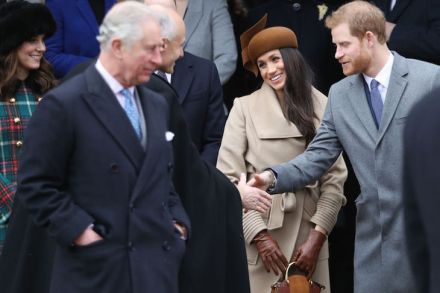
Most men in their seventies, if they had to attend an arduous public event, would hope that their younger son’s presence would be the last thing they had to worry about. They might assume their offspring would be on hand to attend to their ageing parent; to offer comfort and support when required, and to discreetly deal with any difficulties that arose during the course of the day. That their child would be the greatest cause of the angst they might feel about the ceremony is not, in virtually every imaginable case, a woe that most people could ever consider. For King Charles, alas, what’s going on with Prince Harry is probably most of what he thinks about these days.

Bathtime pictures won’t save Prince Andrew

From our UK edition

As the furore about Prince Harry and Spare finally shows some signs of dying down – the book’s second week sales dropped 82 per cent, albeit with a wildly impressive 82,538 copies sold – it is time, once again, for his uncle to take centre stage. It seems as if the beleaguered and not-so-grand Duke of York has been involved in one scandal after another recently, and this week has been no exception. Firstly, it has been made clear by King Charles that his disgraced brother can have no further official dealings with Buckingham Palace.

The art of the royal memoir

By the time you read this piece, Prince Harry’s autobiography Spare will have been published in the United States. The question of whether it’s any good will be decided swiftly by the newspaper and online literary critics, but we in the monthly magazine trade have, alas, been denied the opportunity to see it before our publication deadlines. Under normal circumstances, this would bode very badly indeed. As with films that are not screened for critics beforehand — “because we want the audience to discover the magic for themselves” — books that have very tight publication schedules and are embargoed to the hilt are usually seen as flops-in-prospect.

spare