Culture

Culture

The good, the bad and the ugly in books, exhibitions, cinema, TV, dance, music, podcasts and theatre.

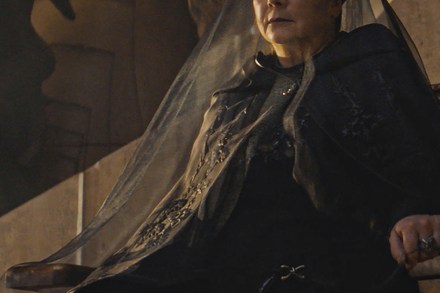
Dune: Prophecy is much worse than you will believe possible

Television

Do you remember that nagging sense of mild disappointment as you sat through Dune 2? You’d been impressed by Dune: bit of a recondite plot if you hadn’t read the book but great to look at, with an austere art-house aesthetic, like Star Wars for people with an IQ. But then the sequel sold out. It turned a minor character from the book into the heroine of a stereotypical Hollywood romance, which not even the excitement of the sandworm-riding scenes could quite redeem. No disrespect to Brian Aldiss,but I think of ‘Brian’as a sort of joke name Anyway its latest screen incarnation, Dune: Prophecy, is worse, much worse.

We’re wrong to mock Do They Know It’s Christmas?

Television

‘I hope we passed the audition,’ said an alarmingly youthful Bob Geldof at one point in The Making of Do They Know It’s Christmas? He was, of course, quoting John Lennon from the 1969 Beatles rooftop concert: an appropriate reference in the circumstances – because this documentary was a kind of Get Back for the Smash Hits generation. Like a far shorter version of Peter Jackson’s film of the Beatles at work, it mixed footage we’d seen before with stuff locked away in the vaults for decades. It was also equally unafraid of longueurs, equally determined to accentuate the positive and equally likely to warm the flintiest of hearts.

How did Wolf Hall escape the attentions of the BBC’s diversity commissars?

Television

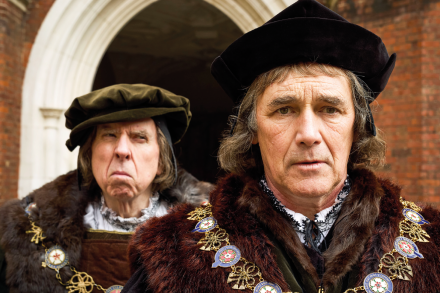
Wolf Hall is one of the few remaining jewels in the BBC’s tarnished crown. Presumably that’s why it was allowed to get off relatively lightly from the attentions of the Beeb’s resident diversity commissars. Yes, I recognise that I may be a terrible reactionary, completely out of tune with the times. But I think I speak for quite a few of us when I say that I was grateful in the first episode to notice only two discreet gestures towards anachronistic casting: one lady in waiting and one member of the king’s council. It seemed to strike an acceptable balance between verifiable historical incident and dramatic licence As I keep saying, whatever you think about ‘representation’, what matters far more in period drama is authenticity.

Top tosh: The Diplomat reviewed

Television

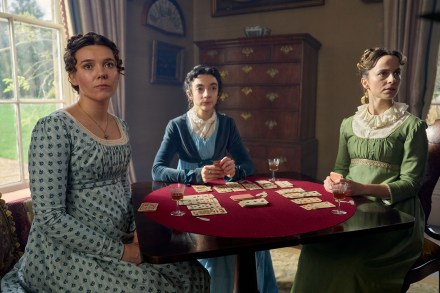
The Diplomat bears the same relationship to 21st-century ambassadorial geopolitics as Bridgerton does to the salons and social mores of early 19th-century England. The latter is Jane Austen as reimagined by a wannabe Jilly Cooper with a first-class degree in historical revisionism; the former is a bit like what The West Wing might have been if it had been written by Dan Brown and those behind the classic, early 1980s husband-and-wife mystery drama Hart to Hart. But I’m not sure this is necessarily a bad thing. A lot of chattering-class types have been glued to The Diplomat since the first season when it started last year and have been recommending it as one of those series you just have to watch.

Spy-drama porn: Sky’s The Day of the Jackal reviewed

Television

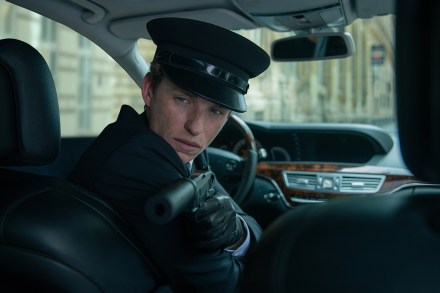
All the previewers have been drooling lasciviously over The Day of the Jackal reboot and, having seen the first three episodes, I quite understand why. This is coffee-table spy-drama porn perfectly calculated to satisfy all manner of lurid and exotic tastes. There’s sniper-rifle-assembly porn; foreign-property porn (the Jackal’s gorgeous mountain retreat near Cadiz with a to-die-for infinity pool); fashion-nostalgia porn (especially the brown suede jacket worn with a red neckerchief in homage to the original, starring Edward Fox); far-right German politician’s head exploding in a pink mist as the heavy calibre sniper round reaches the end of its remarkable, unprecedented two-and-a-half-mile trajectory porn.

A bit of a mess: Channel 4’s Generation Z reviewed

Television

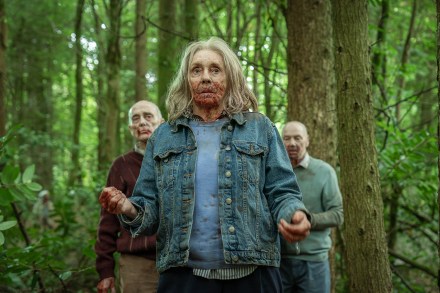
In the second of this week’s two episodes of Generation Z (Sunday and Monday), a teenage girl called Finn wondered why her friend Kelly was so distracted and tearful. As a well-informed type, Finn applied the principle of Occam’s razor and decided that Kelly must be pregnant. In this case, though, the simplest explanation definitely wasn’t the right one. What was ailing Kelly was that her nan had tried to stab her with a large kitchen knife prior to feasting on her flesh – until a male schoolfriend turned up, shot her nan with a crossbow and hid the body in the woods. Residents of the retirement home are also rampaging through the woods, chomping on cockapoos In some British towns, all this might have been something of a one-off.

You’ll even hate the cat: Disclaimer, on Apple TV+, reviewed

Television

Sometimes spoilers can be your friend. For example, I have just cheated and looked up on the internet the shocking final plot twist in Disclaimer and now I have been relieved of a massive burden. No longer need I watch any more episodes of this weird, creepy, pretentious, contrived and prurient series just to see how it ends.

A hit – but please don’t pretend it’s feminist: Disney+’s Rivals reviewed

Television

For most of my adult life, clever, well-read, feminist women have told me how much they love Jilly Cooper. It therefore came as a bit of shock when I finally tried her novels for myself and found what they contained. There is, for example, no mistaking Jilly’s scorn for women who are fat and/or hairy, her belief that all female unhappiness can be cured by a damn good rogering, and the idea that not only is it fair enough for middle-aged blokes to lech after teenage girls, but that teenage girls rather like it when they do. (I was also slightly disconcerted by her favourite word for female genitalia – which, by way of a big clue, is the surname of the 41st and 43rd US presidents.

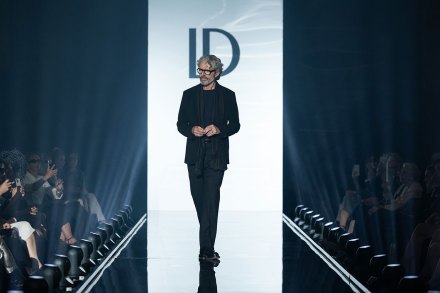
A fashion series made by people who hate fashion: Apple TV+’s La Maison reviewed

Television

I’m a bit disappointed – déçu, as we Francophiles like to say – with La Maison. When French TV drama is good it can be very, very good, as we saw with Spiral, Les Revenants, and, maybe the best series ever made about spies, Le Bureau. But La Maison is not in their league. This is a shame because its milieu is not one that has been explored that often in TV serials – and it’s something that a French production really ought to have handled brilliantly: haute couture. Judging by the fancy Parisian settings and general patina of Succession-style luxe, it hasn’t been short of a reasonable budget. What lets it down is that it appears to have no real love for or understanding of its subject matter. This is a fashion series made by people who hate fashion.

Have today’s TV dramatists completely given up on plausibility?

Television

In advance, Ludwig sounded as if it was aimed squarely at the Inspector Morse market. Set among spires of impeccable dreaminess (in a cunning twist, those of Cambridge), it has a main character who solves crimes and cryptic crosswords with equal efficiency. Once the series began, though, it was clear that its sights were set a little lower than that. Instead, the show seems content to take its place as the latest proof that plausibility is out of fashion in TV drama these days. (In my last column I reviewed Nightsleeper, which had no time for it at all.) One reason this detective feels like the traditional fish out of water, for example, is that he’s not a police detective.

Like The Joker, but less pretentious: The Penguin reviewed

Television

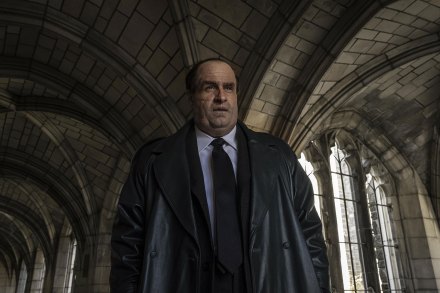
Doctor Who fans may remember that after the show’s triumphant return in the early 2000s, we found out that showrunner Russell T. Davies had agreed with BBC mandarins to rid the franchise of some of its more unwieldy elements in order to make it palatable to casual viewers. Gotham City has long been the perfect backdrop for old-fashioned noir, and the city is on fine fettle here Watching the debut episode of The Penguin, HBO’s new crime series (available on Sky Atlantic), based on a popular Batman villain, I suspected a similar game was at play. The series might be visibly set in the Batman universe, but it’s also very much detached from the nerdiness that emanates from DC Comics. Think the film adaptation of The Joker, only much less pretentious.

More Airplane! than Speed: Nightsleeper reviewed

Television

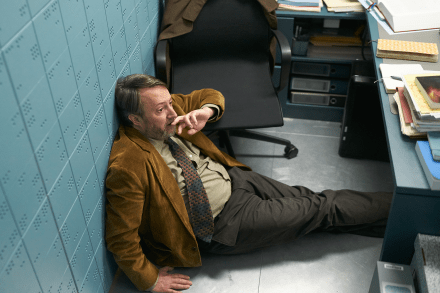
Earlier this year, ITV brought us Red Eye, a six-part drama set mainly on an overnight plane from London to Beijing. Displaying a heroic indifference to plausibility, the show was an increasingly deranged mash-up of every thriller convention known to man – while still posing (when it remembered to) as a thoughtful exploration of realpolitik. By the end, it was all so daft that the biggest influence no longer seemed to be Speed, but Airplane! Funnily enough, this week’s Nightsleeper was much the same thing – only this time on an overnight train from Glasgow to London. The first sign that the passengers wouldn’t get a restful sleep before Euston came when a mysterious beeping device with lots of wires was discovered in the guardroom floor.

Easy-on-the-eye tosh: Netflix’s The Perfect Couple reviewed

Television

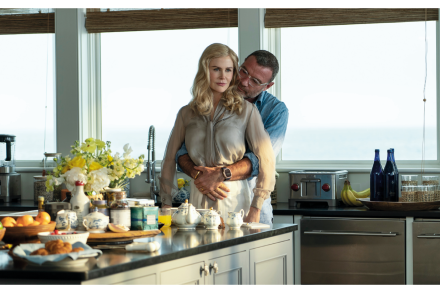
The Perfect Couple is an exemplar of that genre sometimes cynically known as ‘poverty programming’: dramas that train all of us non-billionaire folk to be content with our miserable lot by showing us that even if we did have lots more money we’d actually really hate it. They’re all secretly messed up, treacherous and unfaithful, riddled with hatred, and popping pills It’s set on Nantucket Island, where the streets are cobbled and the old-moneyed families gather every summer to polish their bijou antique rowing boats at their beachside mansions which, I just checked, cost around £15 million.

Sick, cynical and irresistible: Netflix’s Kaos reviewed

Television

Kaos is a new Netflix gods-and-monsters black-comedy blockbuster that will scorch your screen and fry your brain like a thunderbolt from Zeus. It’s sick, cynical, brutal and very, very dark but it’s so well acted, ingeniously plotted, moving, inventive, funny and addictive that I fear resistance may be futile. Playboy Poseidon hangs out on his superyacht servicing his mistress – and sister, and brother’s wife Written by Charlie Covell, it’s like Succession relocated to a parallel modern world in which the ancient Greek gods still rule over us, ruthlessly pursuing their peculiar ends with a characteristically Olympian disregard for the pain and misery their shenanigans inflict on us worthless mortals. These gods are excruciatingly spoilt, selfish and capricious.

Must-watch TV: Apple TV+’s Pachinko reviewed

Television

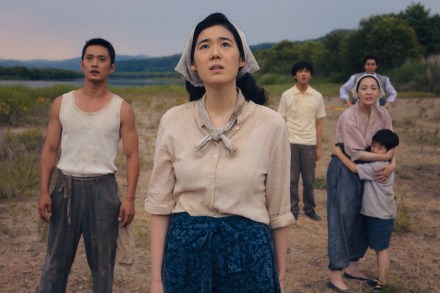
Pachinko is like an extended version of the Monty Python ‘Four Yorkshiremen’ sketch (‘I used to have to get out of shoebox at midnight, lick road clean, eat a couple of bits of coal gravel’) relocated to mostly 20th-century Japan and Korea. There’s so much misery it makes Angela’s Ashes look like Pollyanna. And there’s so little by way of laughter or a redemptive pay off you might be tempted to end it all like one of the numerous doomed characters do – off camera, fortunately – in the almost relentlessly catastrophe-laden season one.

Why are these dead-eyed K-pop groups represented as some kind of ideal?

Television

On Saturday, Made in Korea: The K-pop Experience began by hailing K-pop as ‘the multi-billion-pound music that’s taken the world by storm’. Unusually, this wasn’t TV hype. Last year, nine of the world’s ten bestselling albums were by Korean acts (the sole westerner being Taylor Swift). Even odder for people over 40, according to such reliable sources as Richard Osman on The Rest is Entertainment podcast and my children, South Korea has replaced America as the cultural centre of the Earth for many British teenagers. Korean youngsters are trained for pop stardom on an industrial scale But this global domination hasn’t come about by chance. Korean youngsters are trained for pop stardom on an industrial scale.

About as edgy as Banksy: Joe Rogan’s Netflix special reviewed

Television

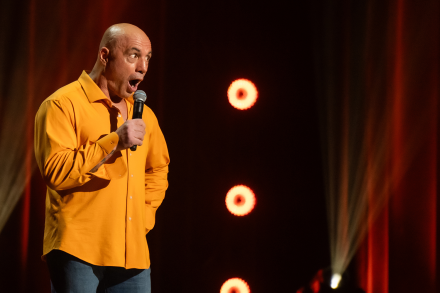
My resolution this summer was to see how far into the Olympics I could get without watching an event. It’s harder than you think. Especially when you’ve got kids calling constantly from the sitting room: ‘Dad, Dad, it’s Romania vs Burkina Faso in the finals of the women’s beach volleyball and there’s been a tremendous upset…’ Rogan is marketed as an edgy alternative to the mainstream media. He is about as edgy as Banksy I jest. I actually do know what happened in the finals of the women’s beach volleyball. It was the first thing I watched because that was what was on when I walked into the room and broke my duck. Italy beat the long-standing champions the United States, which delighted me enormously.

Ambitious, bold and confusing: BBC4’s Corridors of Power – Should America Police the World? reviewed

Television

Narrated by Meryl Streep, Corridors of Power: Should America Police the World? announced the scale of its ambition straight away. Before the opening titles, we’d already heard from Hillary Clinton, Colin Powell, Madeleine Albright and the late Henry Kissinger. We’d also seen the lines drawn up as to how its bold subtitle might be answered. It is an authentically confusing programme, where any firm moral position doesn’t stay firm for long As Clinton put it, in 1945 a question emerged whose implications would dominate post-war US foreign policy: ‘Why didn’t we do more to try to prevent the transport of the Jews?’ The immediate response was the heartfelt yet potentially glib declaration: ‘Never again.’ But what would that actually mean in practice?

Netflix has massacred The Decameron

Television

Unless you did English A-level and shoehorned a mention of it into your Chaucer paper to try to get extra marks, you probably haven’t even heard of Boccaccio’s The Decameron, let alone read it. Which no doubt partly explains Netflix’s decision to give it the Bridgerton treatment: no one, anywhere, is liable to complain about their most cherished classic being massacred. I had to look up who was responsible for this atrocity of a show, so I could check who to hate But massacred it has been. Just as Bridgerton drives a coach and horses – or bulldozer with flashing rave lights and klaxons, more like – through anything that might remotely have resembled Jane Austen’s England, so this Netflix ‘adaptation’ does for 14th-century Florence.

Clear, thorough and gripping: BBC2’s Horizon – The Battle to Beat Malaria

Television

If you transcribed the narrator’s script in almost any episode of Horizon, you’d notice something striking: an awful lot of the phrases would end with a colon, and for one obvious reason: to play a neat trick on the viewers: that of making them keen to hear what comes next. (You get the idea.) Monday’s programme therefore began by explaining that the mosquito is ‘the target of one of medical science’s greatest quests: the battle to save millions of lives and end a scourge that has shaped human history: malaria’.

Am I slightly psychopathic to be so obsessed with gangster TV?

Television

Most of my favourite TV shows seem to involve gangsters in one way or another: The Sopranos, Breaking Bad, Top Boy, The Offer (that brilliant series on Paramount+ about the making of The Godfather), series two of The White Lotus, Suburra, Gomorrah; even, you could argue, Game of Thrones (cod-medieval fantasy gangsters with dragons) and Succession (gangsters who don’t need to use guns). It’s the first thing in ages where I’ve been salivating to watch the next episode Perhaps there’s something lightly psychopathic about being so allured by a genre which celebrates relentless, brutal killing, where the forces of law and order and civilisation are the enemy, and where the business model is to get stupidly rich at the expense of the desperately poor, addicted and hopeless.

Utterly bog-standard: BBC2’s The Turkish Detective reviewed

Television

A partly subtitled show set in Istanbul might sound like a brave departure for a BBC Sunday night crime drama. But in fact, if you strip away The Turkish Detective’s minarets and bazaars (not hard given that they supply somewhat perfunctory local colour), what remains is, according to taste, either reassuringly familiar or utterly bog-standard. The series began with Mehmet Suleyman (Ethan Kai) leaving his job at the Metropolitan Police to take up fish-out-of-water duties in the city of his birth. Waiting for him at Istanbul airport was what at first seemed like a straightforward comedy foreigner, much given to muttering the words ‘very good, very good’ and driving like a maniac while smoking a lot.

If you can stand the stress, The Bear is still possibly the best thing on TV

Television

The Bear has been called ‘the most stressful thing on TV’ and I think that’s probably a fair description. It’s set in a Chicago restaurant and – as has become de rigueur in all films and TV series about restaurants – the kitchen scenes are invariably fraught, jerkily shot, uptight, pent-up, explosive, inflammable, past boiling point, chaotic, horrific and generally conducive to the prevailing notion that while war might be hell it’s an absolute picnic when compared to being a chef. It’s also, if you can bear the stress part, possibly the best thing on TV. At least it has been for the first two series, which have built on that ‘cuisine is hell’ cliché to create a strong, character-driven drama that is often rich, rewarding, moving and surprising.

Can Douglas Is Cancelled hold its nerve?

Television

Like many sitcoms, W1A featured a middle-aged man convinced that he’s the only sane person left in the world. Usually, of course, this merely goes to show how delusional the bloke is – but the subversive twist here was that Ian Fletcher, the BBC’s head of values, seemed to be right. Playing Ian, Hugh Bonneville therefore spent much of his screentime radiating a bemused dismay at the madness around him. The only question is whether the show will hold its nerve or whether Douglas will prove toxic after all Now, as the main character in the comedy drama Douglas Is Cancelled, Bonneville is at it again.

Why you should never watch sci-fi series on streaming channels

Television

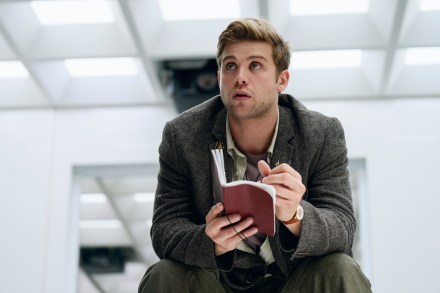
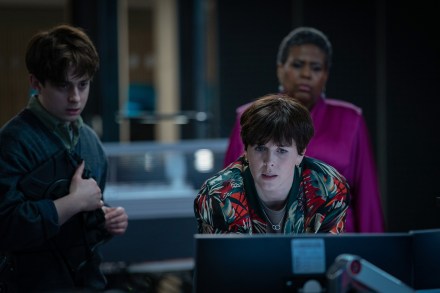
Jason Dessen, the hero (and, as you’ll discover shortly, anti-hero) of Apple TV’s latest sci-fi caper Dark Matter, is a physics professor at a second-rate university in Chicago. You can tell he’s not that good at his job because he introduces the concept of Schrödinger’s cat (surely the only interesting bit in the entirety of physics) five minutes before the end of a lecture. ‘Oh and the cat dies,’ he says to the uninterested students as they file hurriedly out of class. With no time constraint, sci-fi series on streaming channels can keep spinning you along for all eternity Still, at least he’s happy. His teenage son might have been genetically engineered to fit the phrase ‘but he’s a great kid’ and his hot wife Daniela is beyond perfect.

When piracy meets protest

Television

Sometimes there are advantages to being ill-informed. Knowing embarrassingly little about why 30 Greenpeace activists were jailed in Russia in 2013, or the wilder assertions made by the broadcaster Alex Jones (emphatically not the woman from The One Show) meant that two documentaries this week unfolded for me like the twistiest – if not necessarily the most plausible – of thrillers. Twenty-four per cent of Americans still doubt that the Sandy Hook massacre even happened Then again, in my slight defence, such ignorance seemed to be what both programmes were assuming – because, unlike many documentaries, they didn’t summarise or give away the story they were about to tell.

How a TikTok dance craze turned into a brainwashing cult

Television

Because you don’t – I hope – use TikTok you will never have heard of the Wilking sisters. But back in the day (2020) they were huge, their homemade videos of dance routines performed at their suburban Michigan home attracting 127 million views. A year later, it all turned sour. Dancing for the Devil: The 7M TikTok Cult opens with one half of the sibling duo, Melanie, talking tearfully about her terrible loss. You think at first that Miranda has died. But no, it’s almost worse, for Miranda has become a living ghost – still present on social media, but dead to her family and friends, and unrecognisable from the girl-next-door she used to be. She has been sucked into a religious cult called the Shekinah Church.

I worry Romesh Ranganathan might not have enough work

Television

Let’s say, for the purposes of this joke, that I was recently staying in a hotel and kept hearing through the wall a voice shouting, ‘Yes! Yes! Yes!’ At first I assumed it was someone having sex – but I later found out that the next-door room was occupied by Romesh Ranganathan’s agent. This year’s Comic Relief featured a W1A sketch where one of the gags was about how Ranganathan now presents everything on television. But the truth is, apart from that sketch, his only TV gigs so far this year have been presenting The Weakest Link, presenting the Baftas, co-presenting Rob & Romesh Vs…, co-writing and starring in the sitcom Avoidance as well as guest appearances on QI and Would I Lie to You?.

BBC1’s new Rebus is the kind of TV detective they just don’t make any more

Television

Imagine a new series of Morse in which the real-ale-quaffing, jag-driving opera buff is turned into a speed-snorting mod on a pimped up Lambretta. Or – this one I’d actually like to see – jeune Poirot, featuring a clean-shaven habitué of fin-de-siècle Brussels absinthe dives. This may give you an inkling as to how upset one or two Rebus fans are about the Edinburgh detective’s latest TV incarnation. Confusingly titled Rebus – as opposed to, say, Punk Rebus or Wee Rebussie – the series depicts a protagonist quite a bit younger than his former TV incarnations, grumpy, dishevelled Ken Stott and a mite-too-smooth John Hannah.