Culture

Culture

The good, the bad and the ugly in books, exhibitions, cinema, TV, dance, music, podcasts and theatre.

It should be illegal for TV baddies to profit from their psychopathic acts

Television

I’m about to give away the opening scene of the latest gangsters-are-cool drama MobLand. Don’t worry. It won’t spoil anything. By the end of this review you won’t want to watch even a moment of this dog’s breakfast of an atrocity of charmless, witless, misbegotten, amoral tripe anyway. So we’re in a basement with Tom Hardy, playing his usual amiably ruthless hard-man character. This time he’s called Harry Da Souza and he’s the chief fixer for a London-based Irish crime family called the Harrigans. On this occasion, Da Souza is mediating between two lower-tier rival gangs, whom he has orders to make apologise to one another. After much tense negotiation, the gang leaders agree to shake hands but refuse to apologise.

Good lawyers make for bad TV

Television

Given that TV cameras aren’t allowed to film British criminal trials, Channel 4’s new documentary series Barristers: Fighting for Justice is a courtroom drama without the courtroom. As for the drama bit, the programme does its excitable and occasionally successful best – but isn’t always backed up by its own participants, who on the whole are a serious and disappointingly discreet bunch. All of them, you imagine, would have plenty of cracking tales to tell after a few drinks. As things stand, however, they stick firmly to no-shit-Sherlock generalisations. ‘What I do is present the defence case on behalf of my client,’ said one in Tuesday’s episode. ‘It’s very important that innocent people aren’t convicted,’ argued another.

Surprisingly good: Amazon Prime’s Last One Laughing reviewed

Television

‘What will it take to make Richard Ayoade laugh?’ If you find this question about as enticing as ‘Whose turn is it to deworm the cat?’ or ‘What is Keir Starmer’s favourite plant-based ready meal?’ I really don’t blame you. But still if you watch Last One Laughing (Amazon Prime), I think you might change your mind. The idea of this reality series is to confine ten comedians for six hours in a Big Brother-style enclosure and ban them, on pain of expulsion, from being amused by one another’s jokes. One misplaced smirk gets you a yellow card; the next ill-judged titter and you’re out on your ear. The winner, as per the title, is the last one laughing.

How fun is it being part of an Amazonian tribe? 

Television

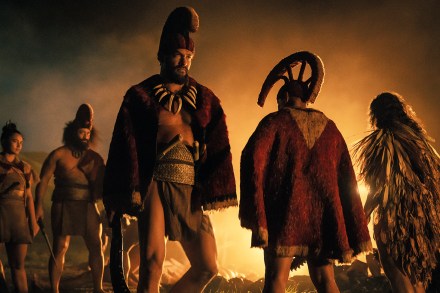
Tribe with Bruce Parry ran for three fondly remembered series in the mid-2000s. Now, upgraded to Tribe with Bruce Parry, it’s back, still championing traditional ways of life – including that of a TV presenter who lives among remote peoples, takes loads of drugs with them and marvels at their closeness to nature. Sunday’s episode featured some other age-old practices, too. Parry, for example, duly travelled up an Amazon tributary to a village where the locals were initially suspicious of ‘the white man’. He then won them over by mucking in with the chores and eating plenty of insects and grubs. His companions this time were the Waimaha, who live in the Colombian rainforest, communing with its spirits.

Dope Thief is a cut above your usual inner-city crime-drama porn

Television

I really had no interest in watching Dope Thief. It’s another of those crime dramas set in a bleak-looking city – possibly there are some pretty parts of Philadelphia but we only get to see the bad bits – where everyone seems to be on welfare or a drug dealer, or both, everything looks washed out, grimy and grey, and where you could die horribly any second. And I get quite enough of all this on my increasingly rare trips to London. But I was desperate. I’ve finished the second season of Severance (very good; definitely worth the effort); White Lotus will only see you through one night a week; season three of Reacher is so dismal it doesn’t even qualify as ‘so bad it’s good’. So I needed something else and the online reviews for Dope Thief looked decent.

Netflix’s Adolescence is seriously flawed

Television

Bradley Walsh: Egypt’s Cosmic Code may sound like a pitch by Alan Partridge – but, impressively, the programme itself manages to be even odder than its title. Naturally, Tuesday’s opening episode began with Bradley emphasising that his interest in Ancient Egypt long predates his signing of the contract for the show. Indeed, it was back when he was an apprentice at Rolls-Royce that he first realised ‘whoever built the pyramids, it certainly wasn’t the Ancient Egyptians 4,500 years ago’. Sharing his scorn for this discredited idea was Tony McMahon, an ‘investigative historian’ who showed up now and again to say bonkers things in an authoritative and sonorous manner.

I’m warming to Meghan Markle – only joking

Television

You know that urge when you’ve got friends coming for the weekend and you just have to spend the previous week putting together all the essentials for a successful stay: personalised bags of truffle-flavoured popcorn and pretzel nibbles for their bedside; hand-blended, sensually curated bath salts; layer cake flavoured with honey from your private hives; etc? Well, if you’ve never had that urge, I’ve got some disappointing news: With Love, Meghan may not be the programme for you. Wait, no, actually, it might yet. But not for pleasurable reasons. Only for car crash-TV reasons. It’s like the lifestyle-TV equivalent of one of those rare public appearances by Mark Zuckerberg where he pretends he is not a robot.

Anjelica Huston is comprehensively upstaged in the BBC’s new Agatha Christie

Television

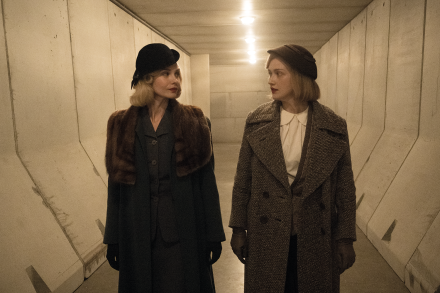
Coincidentally, two of this week’s big new dramas began with a fourth wall-busting declaration of their narrative methods. At the start of Towards Zero, BBC1’s latest Agatha Christie adaptation, a man we later discovered to be a lawyer addressed the camera. ‘I like a good detective story,’ he told us. ‘But they begin in the wrong place. They begin with the murder’ – which should instead ‘come at the end of a long chain of cause and effect’. Get Millie Black opened with a voice-over explaining that ‘This is just another story about Jamaica… But like all stories in this country, it’s a ghost story’. As it transpired, both programmes followed their own prescripts – but in one case, with distinctly mixed results.

I think I’ve found the perfect TV series

Television

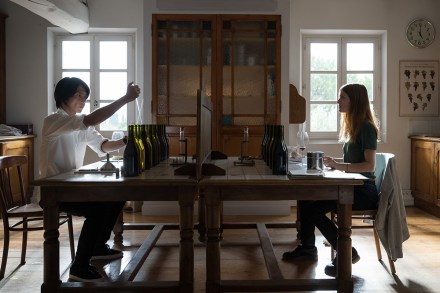
Drops of God is one of those gems of purest ray serene that cable TV prefers to keep hidden in its deep unfathomed caves because it thinks you want something more lowbrow. Try finding it by accident: you won’t. When I looked for it on Apple – which doesn’t have all that many shows – I had laboriously to type in its name. It wasn’t offered to me in the recommendations. If I hadn’t been tipped off by my friends Candy and Diarmuid, I would never have seen it. I had been lamenting, as I often do, the dearth of stuff to watch on TV that doesn’t put you through the emotional wringer.

The White Lotus is off to a shaky start

Television

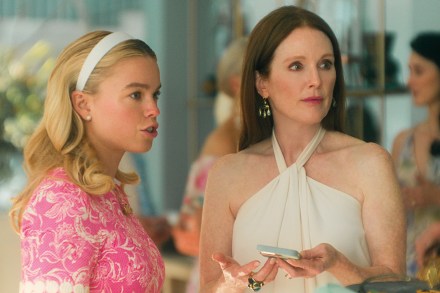
The White Lotus, now back for a third series, could perhaps be best described as Death in Paradise for posh people. Most obviously, this is because its plots revolve around murders in an idyllic location – only with a far bigger budget, a much starrier cast and several episodes per story. But there’s also the fact that it follows the same pattern every time. So it was that season three began this week, rather like its predecessors, with some lovely scenery, a dead body and a caption reading ‘One week earlier’. After that, we duly watched a bunch of rich, good-looking Americans arriving at a luxury White Lotus resort where they were welcomed by the resolutely smiling staff and a nervous manager, before gazing round and marvelling at the beauty of it all.

Is work really more fun than fun?

Television

Wouldn’t it be marvellous if instead of going to work every day we could contract out the tedium to avatars of whose daytime activities we could remain blissfully unaware? This, in essence, is the premise of the dystopian drama Severance, but I’m not sure it’s a fantasy many of us actually nurture. Noël Coward once said: ‘Work is more fun than fun.’ And though I wouldn’t push it quite that far – it would be true only if you were a huntsman or a Master of Fox Hounds – I think most of us would be pretty bereft without the adrenaline buzz of deadlines, the thrill of office flirtations, the rapier play of banter, the juice of gossip and the creativity of fiddling your expenses and getting one over on your fatuous, irritating, know-nothing superiors.

Stately, sly and well-mannered: BBC1’s Miss Austen reviewed

Television

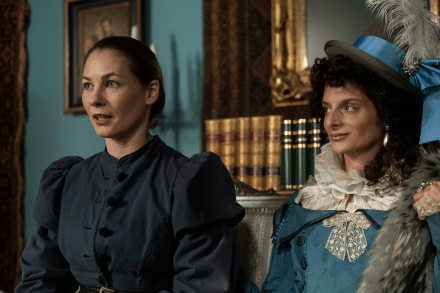
It is a truth universally acknowledged that lazy journalists begin every piece about Jane Austen with the words ‘It is a truth universally acknowledged’, so I’ll fight the temptation. In any case, the Miss Austen at the centre of BBC1’s new Sunday-night drama isn’t Jane, but her beloved sister Cassandra, best known for destroying most of Jane’s letters. Given that this has rendered our knowledge of the woman’s biography tantalisingly sketchy, Cassandra has attracted her fair share of resentment from Janeites. But rather cunningly, Miss Austen both exonerates her and takes full advantage of the sketchiness: high-mindedly questioning our entitlement to snoop into Jane’s private life, while feeling free to speculate on what that private life might have been.

Not a complete waste of time: Netflix’s La Palma reviewed 

Television

Netflix is the television equivalent of pasta and ready-made pesto: a slightly desperate but acceptable enough stand-by when you’ve got home late, you haven’t time to prepare anything more nutritious and at least it fills the gap without too much pain or fuss. It is an adamantine rule of television that foreign-language dramas are always superior La Palma is classic Netflix. You wouldn’t necessarily rave about it to your friends. But if, as I do, you have one of those wives who gets really pissed off if there’s not a programme ready and waiting to be viewed while supper’s still hot and, in a panic, you click on La Palma, you won’t feel at the end of the final episode like your time has been totally wasted. This is due, in part, to the location.

Certainly intriguing: Apple TV+’s Prime Target reviewed

Television

Needless to say, there have been any number of thrillers that rely on what Alfred Hitchcock called a MacGuffin: something, however random, that the goodies have to find before the baddies do. Less common are those where the MacGuffin is the mathematical formula for prime numbers – which is where Apple TV+’s latest show comes in. His first thought on seeing a 204 bus was that 2042 is the sum of three consecutive cubes Prime Target began in ‘Baghdad, Iraq’ – and therefore in a bustling market. Or at least it bustled until a large gas explosion opened up a hole in the ground leading to a spectacular medieval chamber. For a while, the chamber went unexplained as we cut to ‘Cambridge, England’ – and therefore to eight strapping young men rowing on the river.

Irritating but watchable: American Primeval reviewed

Television

American Primeval should really be called Two Incredibly Annoying Women In The Wild West. Yes, the first title is more clickbaity, whetting the prurient viewer’s appetite for the savage, primitive violence that splatters over every other scene. But the second is more accurate. Not since Lily Dale in Trollope’s Chronicles of Barsetshire have I rooted so fervently for the protagonist to meet a sticky end as I have with this series’ two feisty heroines. The Wild West depicted in American Primeval is grotesquely, mindlessly violent One, Sara Rowell (Betty Gilpin), is a mother on the run from the law.

Playing Nice is beautifully done – but they miscalculated the opening scene

Television

There must have been a time when slow-burn psychological thrillers didn’t start with a scene of high drama followed by a caption that reads ‘Three months earlier’ – but if so, it’s getting hard to remember it. The latest programme to deploy the tactic was Playing Nice, which began with James Norton running towards the sea screaming ‘Theo!’ as a child’s body bobbed, face-down, in the waves. He was next seen, post-caption, laughing with his pre-school son in various picturesque Cornish locations while using the word ‘buddy’ a lot. Not to be outdone in the great-parent stakes, his wife also piled on the cuddles for little Theo. Before long, Miles had developed the habit of glowering menacingly when nobody was watching This idyll, however, didn’t last long.

No one will convince me that Keira Knightley can fight: Black Doves reviewed

Television

If your heart sinks at the prospect of a thriller series starring Keira Knightley as a highly trained undercover agent with unfeasible martial skills, join the club. The reason I was drawn to Black Doves was when I realised it had been written by that master of tongue-in-cheek, ultraviolent, popcorn TV, Joe Barton (Giri/Haji). However disappointing Knightley might be, I thought, Barton’s mordant humour, surreal imagination and sassy dialogue would more than ease the pain.

Leavisites should stay away: Sky’s Bad Tidings reviewed

Television

Reviewing Sky’s The Heist before Christmas last year, I suggested that all feature-length festive television dramas begin with credits announcing a starry cast and end with a redeemed protagonist gazing up at some suddenly falling snow. Reviewing Sky’s Bad Tidings this year, I can rather smugly report that there’s no need to revise my theory. But just in case that isn’t enough television tradition to be going on with, here we also get that other Yuletide stand-by: the characters’ plans for the big day go hideously wrong, yet they still end up having the Best Christmas Ever. Viewed pleasantly drunk, I concede, Bad Tidings might just hit the spot The two main stars are Lee Mack and the man with a serious claim to be the breakout celebrity of 2024.

Dune: Prophecy is much worse than you will believe possible

Television

Do you remember that nagging sense of mild disappointment as you sat through Dune 2? You’d been impressed by Dune: bit of a recondite plot if you hadn’t read the book but great to look at, with an austere art-house aesthetic, like Star Wars for people with an IQ. But then the sequel sold out. It turned a minor character from the book into the heroine of a stereotypical Hollywood romance, which not even the excitement of the sandworm-riding scenes could quite redeem. No disrespect to Brian Aldiss,but I think of ‘Brian’as a sort of joke name Anyway its latest screen incarnation, Dune: Prophecy, is worse, much worse.

We’re wrong to mock Do They Know It’s Christmas?

Television

‘I hope we passed the audition,’ said an alarmingly youthful Bob Geldof at one point in The Making of Do They Know It’s Christmas? He was, of course, quoting John Lennon from the 1969 Beatles rooftop concert: an appropriate reference in the circumstances – because this documentary was a kind of Get Back for the Smash Hits generation. Like a far shorter version of Peter Jackson’s film of the Beatles at work, it mixed footage we’d seen before with stuff locked away in the vaults for decades. It was also equally unafraid of longueurs, equally determined to accentuate the positive and equally likely to warm the flintiest of hearts.

How did Wolf Hall escape the attentions of the BBC’s diversity commissars?

Television

Wolf Hall is one of the few remaining jewels in the BBC’s tarnished crown. Presumably that’s why it was allowed to get off relatively lightly from the attentions of the Beeb’s resident diversity commissars. Yes, I recognise that I may be a terrible reactionary, completely out of tune with the times. But I think I speak for quite a few of us when I say that I was grateful in the first episode to notice only two discreet gestures towards anachronistic casting: one lady in waiting and one member of the king’s council. It seemed to strike an acceptable balance between verifiable historical incident and dramatic licence As I keep saying, whatever you think about ‘representation’, what matters far more in period drama is authenticity.

Top tosh: The Diplomat reviewed

Television

The Diplomat bears the same relationship to 21st-century ambassadorial geopolitics as Bridgerton does to the salons and social mores of early 19th-century England. The latter is Jane Austen as reimagined by a wannabe Jilly Cooper with a first-class degree in historical revisionism; the former is a bit like what The West Wing might have been if it had been written by Dan Brown and those behind the classic, early 1980s husband-and-wife mystery drama Hart to Hart. But I’m not sure this is necessarily a bad thing. A lot of chattering-class types have been glued to The Diplomat since the first season when it started last year and have been recommending it as one of those series you just have to watch.

Spy-drama porn: Sky’s The Day of the Jackal reviewed

Television

All the previewers have been drooling lasciviously over The Day of the Jackal reboot and, having seen the first three episodes, I quite understand why. This is coffee-table spy-drama porn perfectly calculated to satisfy all manner of lurid and exotic tastes. There’s sniper-rifle-assembly porn; foreign-property porn (the Jackal’s gorgeous mountain retreat near Cadiz with a to-die-for infinity pool); fashion-nostalgia porn (especially the brown suede jacket worn with a red neckerchief in homage to the original, starring Edward Fox); far-right German politician’s head exploding in a pink mist as the heavy calibre sniper round reaches the end of its remarkable, unprecedented two-and-a-half-mile trajectory porn.

A bit of a mess: Channel 4’s Generation Z reviewed

Television

In the second of this week’s two episodes of Generation Z (Sunday and Monday), a teenage girl called Finn wondered why her friend Kelly was so distracted and tearful. As a well-informed type, Finn applied the principle of Occam’s razor and decided that Kelly must be pregnant. In this case, though, the simplest explanation definitely wasn’t the right one. What was ailing Kelly was that her nan had tried to stab her with a large kitchen knife prior to feasting on her flesh – until a male schoolfriend turned up, shot her nan with a crossbow and hid the body in the woods. Residents of the retirement home are also rampaging through the woods, chomping on cockapoos In some British towns, all this might have been something of a one-off.

You’ll even hate the cat: Disclaimer, on Apple TV+, reviewed

Television

Sometimes spoilers can be your friend. For example, I have just cheated and looked up on the internet the shocking final plot twist in Disclaimer and now I have been relieved of a massive burden. No longer need I watch any more episodes of this weird, creepy, pretentious, contrived and prurient series just to see how it ends.

A hit – but please don’t pretend it’s feminist: Disney+’s Rivals reviewed

Television

For most of my adult life, clever, well-read, feminist women have told me how much they love Jilly Cooper. It therefore came as a bit of shock when I finally tried her novels for myself and found what they contained. There is, for example, no mistaking Jilly’s scorn for women who are fat and/or hairy, her belief that all female unhappiness can be cured by a damn good rogering, and the idea that not only is it fair enough for middle-aged blokes to lech after teenage girls, but that teenage girls rather like it when they do. (I was also slightly disconcerted by her favourite word for female genitalia – which, by way of a big clue, is the surname of the 41st and 43rd US presidents.

A fashion series made by people who hate fashion: Apple TV+’s La Maison reviewed

Television

I’m a bit disappointed – déçu, as we Francophiles like to say – with La Maison. When French TV drama is good it can be very, very good, as we saw with Spiral, Les Revenants, and, maybe the best series ever made about spies, Le Bureau. But La Maison is not in their league. This is a shame because its milieu is not one that has been explored that often in TV serials – and it’s something that a French production really ought to have handled brilliantly: haute couture. Judging by the fancy Parisian settings and general patina of Succession-style luxe, it hasn’t been short of a reasonable budget. What lets it down is that it appears to have no real love for or understanding of its subject matter. This is a fashion series made by people who hate fashion.

Have today’s TV dramatists completely given up on plausibility?

Television

In advance, Ludwig sounded as if it was aimed squarely at the Inspector Morse market. Set among spires of impeccable dreaminess (in a cunning twist, those of Cambridge), it has a main character who solves crimes and cryptic crosswords with equal efficiency. Once the series began, though, it was clear that its sights were set a little lower than that. Instead, the show seems content to take its place as the latest proof that plausibility is out of fashion in TV drama these days. (In my last column I reviewed Nightsleeper, which had no time for it at all.) One reason this detective feels like the traditional fish out of water, for example, is that he’s not a police detective.

Like The Joker, but less pretentious: The Penguin reviewed

Television

Doctor Who fans may remember that after the show’s triumphant return in the early 2000s, we found out that showrunner Russell T. Davies had agreed with BBC mandarins to rid the franchise of some of its more unwieldy elements in order to make it palatable to casual viewers. Gotham City has long been the perfect backdrop for old-fashioned noir, and the city is on fine fettle here Watching the debut episode of The Penguin, HBO’s new crime series (available on Sky Atlantic), based on a popular Batman villain, I suspected a similar game was at play. The series might be visibly set in the Batman universe, but it’s also very much detached from the nerdiness that emanates from DC Comics. Think the film adaptation of The Joker, only much less pretentious.