Culture

Culture

The good, the bad and the ugly in books, exhibitions, cinema, TV, dance, music, podcasts and theatre.

Why has it all gone wrong for The Night Manager?

Television

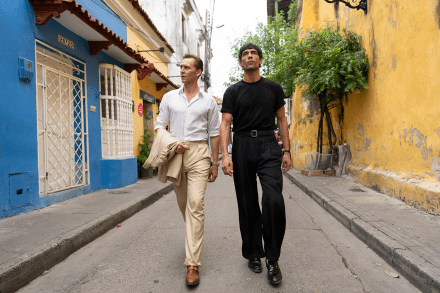
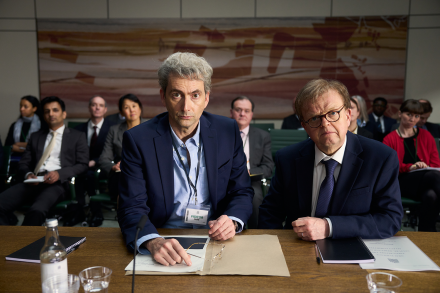
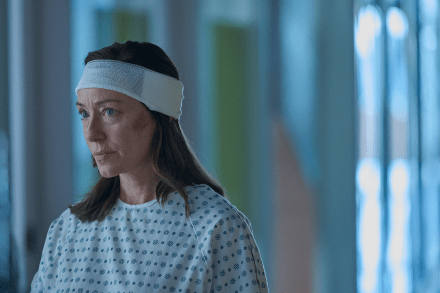
The Night Manager is finally back after ten years with three major drawbacks: no Elizabeth Debicki for the sex scenes; no Tom Hollander for the comedy scenes; and no Hugh Laurie for the evil-kingpin-in-his-toothsome-mountaintop-lair scenes, I nearly claimed. But only because at the very beginning of the new season the Laurie character’s grizzled body is identified by Olivia Colman (in her most irritating performance ever, as a dowdy but capable MI6 officer with a gratingly suburban accent). And I didn’t want to spoil the coming plot twist in case any of you were foolish enough to have fallen for this blatant case of Chekhov’s misidentified corpse.

Lucy Worsley’s sleuthing is rather impressive

Television

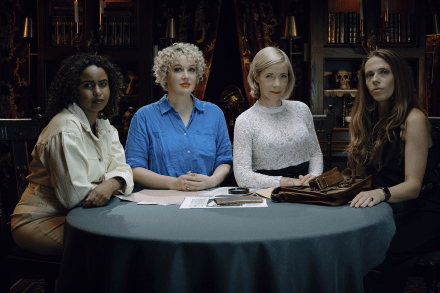
Lucy Worsley’s Victorian Murder Club opened with its presenter unexpectedly channelling that gravelly voiced bloke who used to do all those film trailers beginning ‘In a world…’. ‘The London Thames,’ she intoned as gruffly and menacingly as she could, ‘winding silently through the capital. But in Victorian times...’ dramatic pause ‘...it had a sinister side.’ She then introduced ‘a story that has haunted me since I first heard it’ – possibly, you couldn’t help thinking, from a TV producer keen to find her another true-crime project. In the late 1880s, a serial killer dismembered several women while also taunting the police and never being found.

Enough with torture-porn TV

Television

Has anyone got to the end of Malice yet? I’m halfway through – at the time of writing, anyway – and am dearly hoping that I might bump into someone at a party who will blurt out all the plot details and spare me the misery of having to sit it out to the bitter end. The Fawn thinks I’m being a wuss, grumbling that I never used to be this squeamish about gory, psychologically harrowing torture-porn TV. Maybe so, but the older I get, the more I wonder: what am I actually gaining by spending six hours on a sofa writhing my way through a horrid story about a made-up psychopath doing terrible things to a made-up family and their made-up pets? Wouldn’t I be better just re-reading Anna Karenina?

The cardinals spill the beans on the conclave 

Television

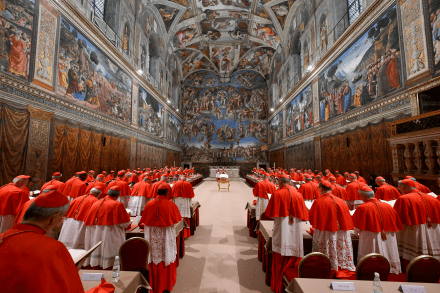
Secrets of the Conclave seemed rather optimistically titled, given that everybody at this year’s papal election had made a solemn vow before God not to divulge any. But, while we duly heard nothing about backstage politicking – apart from regular assurances that none took place – this respectful and quietly charming documentary did succeed in humanising the strange process of picking a new pope, and even in supplying a few gentle revelations. It transpires, for example, that Catholic cardinals suffer from the same anxiety about phonelessness as the rest of us, with the requirement to hand in their mobiles before entering the Sistine Chapel initially causing feelings of slight panic.

The Beast in Me is surprisingly addictive

Television

The Beast in Me is one of those ‘taut psychological thrillers’ that everyone talks about in the office. This might sound disparaging – as it is, obviously – but I have to admit that, having succumbed in desperation (because, as usual, there is so little else on), I did find the show pretty addictive and unusually satisfying. What makes it stand out is that it doesn’t go for the obvious. Yes, its heroine – played by Claire Danes – is feisty, talented and capable. But she’s also whiny, uptight and really quite unsympathetic, as perhaps screenwriter Gabe Rotter intended when he gave her the weirdly repellant name Aggie Wiggs.

Gothic lives matter: BBC2’s Civilisations reviewed

Television

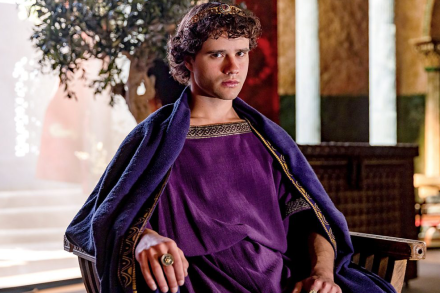
Anybody growing weary of the debate surrounding the BBC’s unexamined assumptions and biases about modern politics might have expected to find some relief in a scholarly documentary about the sack of Rome in AD 410. Sad to say, though, the first episode of Civilisations: Rise and Fall offered very little of it. Of course, it’s not unusual for history programmes to want to prove that the people in the past were Just Like Us. But in this case the parallels drawn/rather desperately imposed were a particularly uncanny fit with those same pesky assumptions and biases.

Pluribus is a mess

Television

Pluribus is another drama set in the dystopian future. But on this occasion the integrity of the entire human race depends not on someone ordinary and likeable who could almost be you, but on a bolshie, misanthropic middle-aged lesbian called Carol. Carol (Rhea Seehorn from Better Call Saul) is so grumpy that when in flashback we see her wife Helen treating her to an expensive jaunt to a romantic ice hotel in Scandinavia, she refuses to snuggle beneath the fur bedspread, sip designer vodka and gaze at the Northern Lights above. Instead, all she wants to notice is that sitting on a bed made of blocks of ice makes her want to pee. But now Helen is gone and Carol is one of only 12 people in the entire world who remain normal.

Bleak but gripping: Channel 4’s Trespasses reviewed

Television

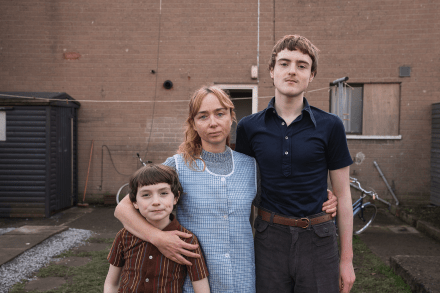
Yeats famously summarised Ireland in the four words, ‘Great hatred, little room’. But, as Louise Kennedy’s 2022 debut novel Trespasses showed, in 1970s Northern Ireland the hatred had grown even greater and the room even littler. Channel 4’s faithful adaptation began – as it would continue over its four parts this week – with the suffocating omnipresence of sectarianism. As 24-year-old Cushla (Lola Petticrew) drove through her small town, everything she saw screamed Catholicism or Protestantism: the graffiti, the flags, the ash on children’s foreheads at the start of Lent. By night, Cushla worked in a bar where the punters were either nervously or aggressively aware of each other’s religion.

Film and TV are run by satanists

Television

I once came up with a brilliant idea for a children’s Sunday-evening TV series. It would follow the adventures of young Jesus in Britain, circa AD 16, and his rich, tin-trading great uncle Joseph of Arimathea. There’d be dragons and giants and lots demonic figures, all trying to kill the boy Messiah before He achieved his true purpose. And young Jesus would continually be constrained from using any of His real powers because it was all a secret and His time had not yet come. If you’re clever, you can probably guess the title. But it’s never going to get made because a) I haven’t written it and b) the film and TV worlds are run by satanists. Not literal satanists, perhaps. Well, not all of them.

The joy of Mortimer and Whitehouse: Gone Fishing

Television

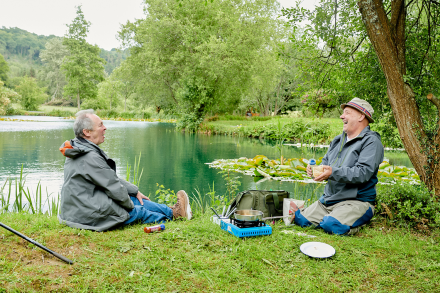
If you didn’t already know that Down Cemetery Road was based on a novel Mick Herron wrote before the Slough House series – later adapted into TV’s Slow Horses – it mightn’t be too difficult to guess. After all, main character Zoë Boehm (Emma Thompson, no less) is a cynical sixty-something with a dodgy hygiene regime, who works in a ferociously shabby office and communicates mainly through the medium of the heartless yet undeniably funny wisecrack – but who nonetheless shouldn’t be underestimated by the arse-covering intelligence services she’s up against. She is, in other words, a female version of Slow Horses’ Jackson Lamb (also played by an Oscar-winning Brit).

A great comedy about a terrible sport

Television

I’m trying to think of things I’m less interested in than American football. The plant-based food section? Taking up my GP’s offer of a free Covid booster? Ed Miliband’s nostril depilation regime? No, apart from maybe baseball, I can’t think of anything so soul-crushingly tedious as a rigged game where men in shoulder pads and portcullised helmets shout numbers, bash into one another, then wait half an hour while the referee decides whether or not they’re allowed to throw a spinny ball and maybe one day end up being Taylor Swift’s latest boyfriend.

Is there anything menopausal women can’t do?

Television

Is there anything menopausal women can’t do (on television)? Last Sunday, as a couple of them were still working on the daring theft of a Salvador Dali painting in ITV1’s Frauds, BBC1 launched Riot Women in which five others form a punk band. Meanwhile, two regular features of British TV remain actresses lamenting the lack of older women starring in drama series – and older women starring in drama series. Virtually all these shows also recall the headline from the American satirical magazine The Onion: ‘Women empowered by whatever a woman does.’ And that’s certainly true of Riot Women, written by Sally Wainwright (Happy Valley, Gentleman Jack etc.) and therefore set in the Calder Valley, with the author’s message never hard to detect.

Excruciating: Netflix’s House of Guinness reviewed

Television

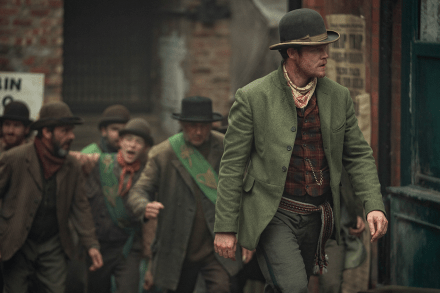
First the surprising news: not a single one of the four Guinness siblings in 1868 Dublin is black; and only 25 per cent of them – surely a record for Netflix – is gay. Now the bad: despite these oversights, House of Guinness remains very recognisably the work of Steven Knight, the Peaky Blinders screenwriter who once set a drama in 1919 Birmingham and said to himself: ‘I know just what this period needs to make it more echt: a cameo appearance by dub poet Benjamin Zephaniah.’ As a Brummie (more or less), I loathed Peaky Blinders.

The death of cinéma vérité

Television

Oh, how we lived. Or, how we thought we lived. Despite the numerous criticisms levelled at the BBC on a daily basis, the BBC Archive YouTube channel is one aspect of its work that cannot be faulted. It is a fascinating collection of broadcast material going back many decades, a portal into Britain’s past presented in film grain-soaked HD. A sobering reminder of what the BBC once was – and what it no longer dares to be. Much of it is made up of documentaries, many aspects of which will be peculiar to millennials and Gen Z. The form is strange: long, single-camera shots of people talking in living environments. Bathrooms, kitchens, workplaces, streets. Living spaces are as they would be on any day of the week. Workplace neon, living-room lamps. Light and shade.

Every line in the new Alan Partridge is perfect

Television

By now, viewers of TV thrillers are no strangers to a baffling prologue – but this week brought a particularly extreme example. Nine Bodies in a Mexican Morgue opened with shots of a desert, a cactus, an animal skull nailed to a cross and a moustachioed man driving a battered pick-up truck with a Virgin Mary on the dashboard. So we were definitely in Mexico. For a while, however, that was about all that was clear, as the words ‘Day Nine’ flashed up and the truck’s unidentified female passenger spied on a dilapidated military base through binoculars.

Mr Bates this isn’t: The Hack reviewed

Television

As we know, when terrestrial television has a big new hit these days, its response – once it’s got over the surprise – is to serve up a variation on the same formula. In the case of The Hack, the hit that inspired it is clearly Mr Bates vs the Post Office, as another real-life plucky underdog takes on a shadowy, powerful cabal – this time over phone-hacking – and struggles to get the story heard. In the first episode, the formula remained strong, but the variation bit fell somewhere between the unnecessary and the badly misguided. The episode opened with a voice-over urging us to imagine a country where ‘people believe they are living in a democracy’, when in fact they’re ‘being abused by a treacherous combination of press, police and politicians’.

The makers of Doc don’t seem to trust the show

Television

The drama series Doc began with the most literal of bangs. While the screen remained black, the sound-effects team knocked themselves out by creating a spectacular crashing noise. When the lights came on, we saw a smashed-up car containing ‘a female, unresponsive’. By the time she did respond – one major brain operation and seven seconds of the show later – it was apparent to the doctors that there was something high-concept wrong with her. As her colleagues at Minneapolis’s Westside hospital, they knew she was right to say her name was Amy Larsen, but her answers about her children’s ages, her current job status and the name of the president were all eight years out of date. Amy had forgotten everything between 2016 and the present day.

Netflix’s Hostage is an act of cultural aggression

Television

Apart from hunting, one of the very few consolations of the end of summer is that telly stops being quite so dire. But that moment hasn’t quite arrived yet – as you can tell from the fact that I’m reviewing Hostage. There’s so much that is annoying about Hostage that I don’t know quite where to begin. But let’s start with its cloth-eared use of the word ‘abducted’. Suppose you were the prime minister (Suranne Jones) and your implausible Médicins Sans Frontières husband Alex (Ashley Thomas) had been kidnapped by a masked terror group in French Guiana and you had to brief your teenage daughter on what had happened, which verb would you use: the formal, uptight, Latinate, police-procedural one or the normal spoken-English one?

Another Traitors rip-off – and it might be even better than the original: Channel 4’s The Inheritance reviewed

Television

Another week, another show striving desperately to become the new Traitors. So it is that The Inheritance brings a group of disparate people together in a very big house, gives them tasks that win them money and invites them to pretend to cooperate while secretly behaving treacherously. In fact, about the only surprising thing about it is that it’s pretty good. It’s also, I think, pretty knowing: aware of its possible absurdity, often quite camp, yet still going about its business with a face set resolutely to po. The premise is that the very big house’s owner has died, leaving a rather implausible will that requires 13 strangers to compete for her money by collecting stuff and betraying each other.

The brilliance of BBC Alba

Television

During lockdown, a friend and I moved into a flat that had a difficult relationship with the TV aerial. Ineptitude and laziness combined to ensure that the only channels we were able to watch were BBC ones via the iPlayer app. So most nights – if there was no live sport – we found that our entertainment was at the behest of the state broadcaster. And what a drag it was. Every time, we’d reject the populist crap on BBC1, the parochial crap on BBC2, the braindead crap on BBC3, the boring crap on BBC4, the insane crap on BBC News, the wrist-slashing crap on BBC Parliament. And then we’d get to the end of the nav bar, to see one option left, and my flatmate would put on a Scottish accent and say: ‘Alreet, what’s on Alba?

Alien: Earth is wantonly disrespectful to the canon

Television

I once spent a delightful weekend in Madrid with the co-producer of Alien. His name was David Giler (now dead, sadly, I’ve just discovered) and he’d hit upon the bizarre idea of trying to get my anti-eco-lunacy book Watermelons made into a Hollywood movie. The film project never came off but I did learn an important lesson in our time together, hanging out in nice restaurants and pretending to work: if you want a happy life cushioned from financial care, the secret is to wangle yourself percentage points of a successful franchise. Another example of this is Franc Roddam, with whom I once spent an even stranger weekend in Accra, Ghana. Roddam devised the format for the MasterChef concept and has been sitting pretty ever since.

I love how awful My Oxford Year is

Television

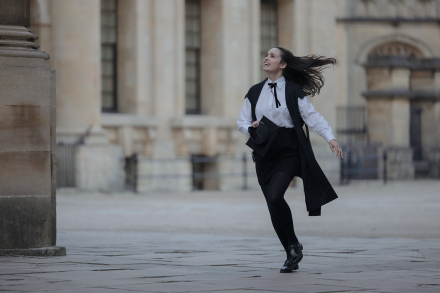
The punters are saying My Oxford Year is a disaster. ‘Predictable, uninspiring and laughable,’ complains some meanie on Rotten Tomatoes. But they’re missing the point. My Oxford Year may be a work of accidental genius, but it’s a work of genius nonetheless. You will squirm, you will laugh derisively, you will cringe. By the end, though, you will be forced to admit that you secretly enjoyed every moment, for this is the very examplar of a so-bad-it’s-good masterpiece. You know it’s going to be awful from the very first frame: a still representing the bookshelf of our handsome, clever and poor heroine Anna De La Vega (Sofia Carson) who has come up to Oxford to spend a year doing an MA in Victorian poetry prior to taking up a job at Goldman Sachs.

Worth watching for Momoa’s gibbous-moon buttocks alone

Television

If you enjoyed Apocalypto – that long but exciting Mel Gibson movie about natives being chased through the jungle with (supposedly) ancient Mayan dialogue – then you’ll probably like Chief of War, which is much the same, only in Hawaiian. Like Apocalypto, it even has sailing ships appearing mysteriously from Europe with crews that serve the role of dei ex machina, rescuing endangered native protagonists at key moments. This time our based-on-a-true-story hero is Ka’iana, the 18th-century Maui chieftain who succeeded in uniting the four warring island kingdoms (Oahu, Maui, Molokai and Lanai) and turned them into the kingdom of Hawaii.

The demise of South Park

Television

President Trump has a very small willy. His boyfriend is Satan. He’s a con man who will sue you for billions on the flimsiest of pretexts but will probably settle for a few hundred million. If this is your idea of cutting-edge satire then you are going to love the new season of South Park, which includes a number of scenes of Trump stripping off in his White House bedroom and trying to interest the devil in his minuscule appendage. But if I were Paramount+ and I’d just signed a $1.5 billion deal for the exclusive five-year rights to South Park, I think I’d be feeling a bit shortchanged by the première of the show’s 27th season. Sure, you could argue that South Park was always this way: the first episode (in 1997) was, after all, titled ‘Cartman Gets An Anal Probe’.

The NHS is to blame for Bonnie Blue

Television

Channel 4’s documentary begins as the ‘adult content creator’ Bonnie Blue (real name: Tia Billinger, 26, Derbyshire) prepares to beat the world record of men shagged in 12 hours. Spoiler: she beats it, raising the bar to 1,057, though she was a bit nervous that no one would show up. You might wish to see her cry – because you despise her, or because you need some sign she’s human – but the worst she suffers is a nasty flu. It does somewhat clarify things to discover that Bonnie Blue had been an NHS financial recruiter Bonnie Blue was prohibited from selling the tape on OnlyFans – the porn website where, until recently, she was making more than £1 million a month – because it’s considered an ‘extreme challenge’.

The power of BBC’s The Narrow Road to the Deep North 

Television

It’s been a good week for fans of TV dramas that are set partly in Syria, feature poetry-lovers confronting extreme violence, like to keep their viewers in the dark (sometimes literally) and have main characters with Australian accents (sometimes accidentally). But there are also significant differences between the two examples on display – with The Narrow Road to the Deep North the much more sombre and The Veil the considerably more bonkers. Adapted from Richard Flanagan’s Booker-winner, The Narrow Road began in Syria in 1941. Through what would prove the programme’s characteristic murk, a group of Australian soldiers led by one Dorrigo Evans could just about be seen rescuing a young boy and joshing about the respective size of their penises.

Turgid, vacuous, portentous: The Sandman reviewed

Television

One of the great things about getting older is no longer feeling under any obligation to try to like stuff you were doomed never to like. Steely Dan, Dickens, Stravinsky, Henry James, George Eliot, Wagner, the Grateful Dead, Robin Williams, the collected films of Wes Anderson and Tim Burton, Graham Greene, the Clash, The Young Ones, Seinfeld, Emily Dickinson – obviously I could go on. I don’t like them; I never did like them; but the difference between then and now is that now I know I’m right, whereas then I thought it might be a personal deficiency. Also fairly high on my ‘No’ list would be superhero comics, superhero movies and late-1980s graphic novels, including the excessively fawned-upon Watchmen.

How to holiday White Lotus-style: Billionaire Playground reviewed

Television

Today’s television is notably fond of presenting us with very rich people to both despise and wish we lived like. As well as high-end dramas like Succession and The White Lotus (a programme that’s caused a huge rise in bookings for the resorts where its characters’ dreadfulness is filmed), there are any number of documentaries in which the bling’s the thing. Netflix, for example, has a genre called ‘Lavish Reality Lifestyles’ that consists of 38 different shows. In a mildly cunning twist, Billion Dollar Playground makes some of the staff who wait on the wealthy a kind of audience surrogate: mixing enthusiastic wonder at all that money can bring with beady-eyed disdain for the sense of entitlement displayed by those it brings it to.

The Simpsons may be genius – but it’s also evil

Television

Marge Simpson is dead. But does anyone care? I’ve written loads of pieces over the years about the genius of The Simpsons – how extraordinarily prescient it is (most famously when, in 2000, it predicted a Trump presidency), how delightful the subplots are, how it works on so many levels – but I’m now beginning to suspect that all along it was a honeytrap designed to seduce you and your children into screen zombiedom. Obviously I don’t want to push the ‘TV is bad for you’ argument too hard because I might be out of a job.