Culture

Culture

The good, the bad and the ugly in books, exhibitions, cinema, TV, dance, music, podcasts and theatre.

Much of the mysteriousness is inadvertent: ITV’s The Reunion reviewed

Television

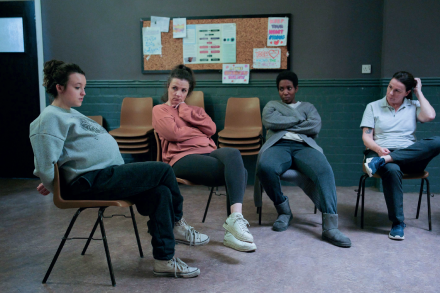
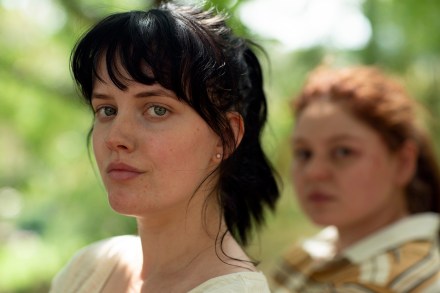
The Reunion opened in 1997 with some young people being carefree: a fact they obligingly signalled by zipping around the South of France helmetless on motorcycles while laughing a lot. Love appeared to be in the air as well – given that they consisted of two couples: the men in charge of driving (different times), the girls holding them tightly around the waist. But then matters took a darker turn as a voice-over intoned that ‘memory is a false friend’ and we sometimes ‘create our own truth’. And with that, we cut to present-day London where, despite its taste for banalities, the voice-over turned out to belong to a respected author called Thomas Degalais – duly seen signing books for a queue of grateful fans.

A welcome antidote to UK crime drama: Netflix’s Kohrra reviewed

Television

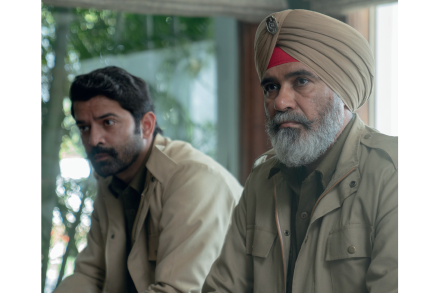
It has been quite some time since I’ve been able to bear watching UK crime drama. All right, I do cheat occasionally with series like the one featuring the delightfully grumpy, chain-smoking Cormoran Strike, but on the whole I can’t stand the mix of predictability and implausibility: all the goodies will be female and/or ethnic; the murderer will always be white, middle class and male; no one ever gets arrested for misgendering someone on Twitter because in the parallel universe of cop TV the police still actually think it’s their job to solve crimes. So, your options are either to watch classic episodes of The Sweeney or to find a cop series from one of those countries where the old values still prevail. India, for example.

University Challenge deserves Amol Rajan

Television

I wish I could say that Bamber Gascoigne would be turning in his grave at what has happened to University Challenge. But unfortunately, I understand from people who knew the Eton, Cambridge, Yale and Grenadier Guards historian, playwright, critic, polymath millionaire and scion of the upper classes that he chose to compensate for his privilege by embracing progressive causes. So, chances are, the shade of Bamber is thrilled to bits at seeing his old quizmaster’s seat occupied by someone who drops his aitches and pronounces ‘h’ where it should be aspirated and landed a mere 2.2 from hearty, insufficiently medieval Downing. Bambi’s successor Jeremy Paxman probably isn’t too bothered either.

Historically dishonest: Netflix’s Eldorado – Everything the Nazis Hate reviewed

Television

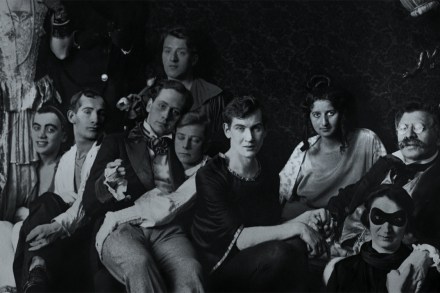
If you don’t subscribe to every last detail of the LGBTQ+ agenda, then basically you are a Nazi. This was the subtle message of Eldorado, a documentary that pretended to inform us about the real-life background sexual milieu to Cabaret and Babylon Berlin, but was really much more interested in promoting its political view that Weimar Germany with its sexual promiscuity, rampant drug use and anything-goes view on ‘gender’ represented some kind of paradise on Earth which we should seek to emulate. A voice-over told us what to think: ‘They feel intimidated by this rapid change. The pace of change is a source of frustration to just about everybody. If you’re a radical, then change is happening much too slowly for you.

Too in thrall to today’s dogmas: ITV1’s A Spy Among Friends reviewed

Television

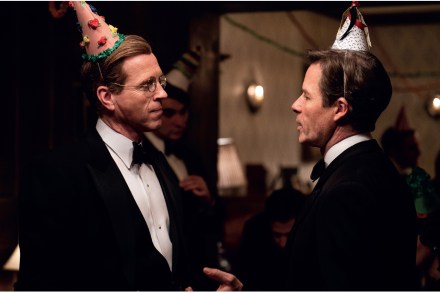
In 2014, Ben Macintyre presented a BBC2 documentary based on his book A Spy Among Friends: Kim Philby and the Great Betrayal. The programme managed to shed new light on a familiar but still irresistible story by concentrating on Philby’s relationship with his old chum – and fellow Cambridge man – Nicholas Elliott. Elliott was sent in 1963 by the Secret Intelligence Service (SIS) to question Philby in Beirut where Philby had become the Observer’s foreign correspondent after a long and successful career betraying his countrymen to the Soviets. Elliott did elicit some sort of confession, but a few days later, Philby absconded to Moscow.

Ugly, mechanical, soulless: Apple TV+’s Hijack reviewed

Television

Idris Elba would have made a perfect James Bond. Not the James Bond that we knew and loved when he was played by wry, capable Sean Connery or playful, tongue-in-cheek Roger Moore. But he definitely ought to have been a shoo-in for the horror show that the Bond franchise has become: dour, humourless, pumped up, ponderous, portentous, joyless… In his latest vehicle, Elba plays high-level negotiator Sam Nelson, an ordinary man yet possessed of a very particular set of skills.

Time to take your meds, Kanye

Television

No one does agonising quite like Mobeen Azhar. In several BBC documentaries now, he’s set his face to pensive, gone off on an earnest quest to investigate a touchy subject and reached his conclusions only after the most extravagant of brow-furrowing. There is, however, a perhaps unexpected twist: the resulting programmes are rather good, creating the impression – or even reflecting the reality – of a man determined to get to the often dark heart of the matter. For a while, it did look as if the programme’s main appeal might be as a comedy of liberal discomfiture In the past, Azhar has applied his methods to such issues as the long-standing effect of the Satanic Verses controversy and why British Muslims joined Isis.

Netflix has struck gold: Tour de France: Unchained reviewed

Television

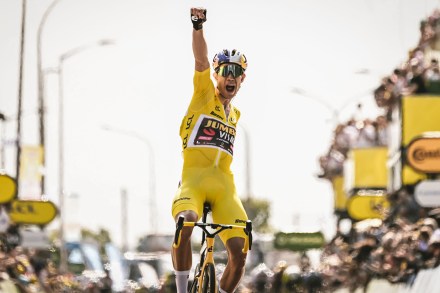
I’m ideologically opposed to bicycles for all the obvious reasons: they don’t have lovely big nostrils which you can blow across gently or stroke inside to feel the soft, delicate skin; they can’t jump hedges; and the kit you’re expected to wear on them is quite hideous – not a smart, black, 18th-century-looking coat but vile, garish, deeply unflattering and unsexy Lycra. Still, after watching a few episodes of Tour de France: Unchained, I’ve softened my position slightly. Say what you like about those infuriating, car-impeding, road-hogging cyclists but the ones who participate in the big international races don’t half have some balls. (Three actually, if the stories I hear about the effects of those uncomfy saddles are correct.

One of the best (if not the jolliest) TV dramas of 2023: BBC1’s Best Interests reviewed

Television

In the opening minutes of Best Interests (Monday and Tuesday), an estranged middle-aged couple made their separate ways to court, pausing outside it to look at each other with a mixture of furious reproach and overwhelming regret. From there we cut to a scene that perhaps overdid the evocation of Happier Times as the same pair laughed endlessly together on a train, before nipping off to the toilet for a spot of giggly conjugal naughtiness. Once they got home and picked up their two daughters from a neighbour, they soon showed what terrific and loving parents they were too – not least to 11-year-old Marnie, whose muscular dystrophy meant she needed especial care.

Gratuitously twisty, turny nonsense: Sky Max’s Poker Face reviewed

Television

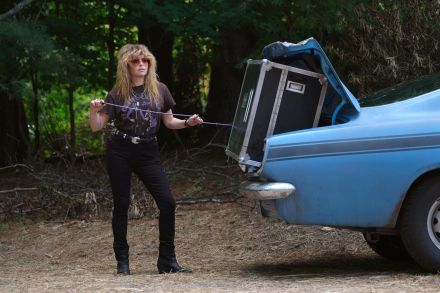
Imagine if you had the power always to tell whether or not someone was lying. You’d have it made, wouldn’t you? The intelligence services would be queuing up to employ you for interrogations; top law firms would pay you top dollar to act as their adviser; you’d win gazillions in all the poker championships; you’d never buy a dodgy second-hand car, not that you’d need to with all that money you’d have. Admittedly, though, your life and adventures would make for a very boring TV series because everything would be so easy. Hence the tortured premise of Rian Johnson’s Poker Face, in which we are invited to believe that our heroine, Charlie Cale (Natasha Lyonne), has blown her skills spectacularly.

Wonderfully naturalistic and intriguingly odd: BBC2’s The Gallows Pole reviewed

Television

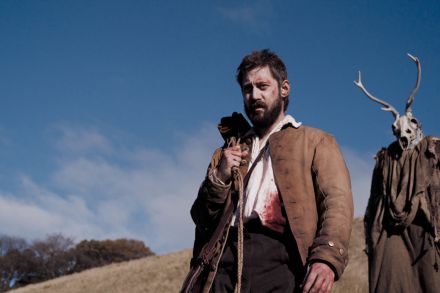
In advance, The Gallows Pole: This Valley Will Rise was touted as a radical departure for director Shane Meadows. After all, he made his name with the film This Is England and its three rightly acclaimed TV sequels, about a group of working-class folks struggling to survive against the heartless backdrop of that reliable old enemy: Thatcher’s Britain. Now, he’s giving us a costume drama set in 18th-century Yorkshire. In fact, though, it didn’t take long to realise that Meadows’s departure mightn’t be as radical as advertised – because the programme could easily have been entitled This Was England.

Spooky, classy dystopian sci-fi: Apple TV+’s Silo reviewed

Television

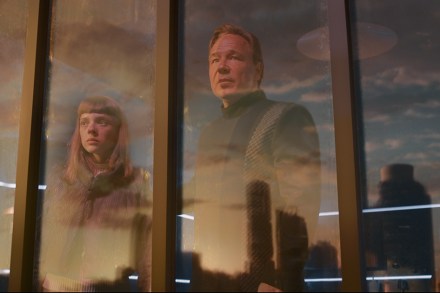
Back once more to our favourite unhappy place: the dystopian future. And yet again it seems that the authorities have been lying to us about the true nature of reality. This time – in Silo – the lie concerns the nature of the world outside the enormous silo in which our heroes and about 10,000 other survivors have been hiding for the past 100-odd years since some nameless apocalypse. Is it really as dangerous as the Powers That Be say? Or is this an illusion, maintained over a century of relentless official propaganda, designed to keep the enclosed populace frightened and in check? Silo began life in 2011 as a self-published short story by Hugh Howey – called Wool, not Silo – which he put out through Amazon’s Kindle Direct.

Watching Queen Cleopatra felt like witnessing the death of scholarship

Television

The most controversial aspect of Netflix’s new drama-documentary Queen Cleopatra – not least in Egypt – was the casting of a black actress, Adele James, in the title role. After all, one of the few things that seems certain about Cleopatra’s early life is that she was a Macedonian Greek. Luckily, though, the show had a powerful counterargument to this awkward and Eurocentric fact. As the African-American professor Shelley P. Haley put it with a QED-style flourish, back when she was girl, her beloved (if uneducated) grandmother once said to her: ‘I don’t care what they tell you in school, Cleopatra was black.

Despite the lack of sex, stick with it: Paramount Plus’s Fatal Attraction reviewed

Television

With the current taste for remakes of erotic-thriller movies of the 1980s and ’90s, these are certainly good times for TV intimacy co-ordinators. Just two weeks ago, we had Netflix’s Obsession. Now Paramount+ has come to the slightly weird party, turning the daddy of them all, Fatal Attraction, into an eight-part series. In the original film, you may remember, high-flying married lawyer Dan Gallagher had an ill-advised weekend fling with Alex Forrest, who didn’t take him ending it terribly well. Instead she posed such an unhinged single-female threat to the nuclear family (and its pet rabbit) that cinema audiences famously cheered when Dan’s wife Beth did the decent thing and shot the mad cow dead.

Purest fantasy but you’ll love it: Tetris reviewed

Television

Tetris is a righteously entertaining movie about the stampede to secure the rights from within the Soviet Union to what would become the world’s bestselling video game. The question you’re going to be asking yourself time and again – especially during the Lada-ZiL chase scene through the streets of Moscow in which our heroes try to elude the hatchet-faced KGB agents – is: ‘How much of this is true?’ And the honest answer is: ‘Not very much, actually.

Boring is as good as this erotic drama gets: Netflix’s Obsession reviewed

Television

It is, of course, traditional for film and TV reviewers to demonstrate their steely high-mindedness by claiming that anything describing itself as ‘erotic’ is in fact deeply boring. Unfortunately, faced with Netflix’s four-part Obsession, the b-word is hard to avoid – the twist in this case being that boring was as good as the series got. The rest of the time it alternated between the inept, the infuriating and the utterly mystifying – and not just because you could never fathom what on earth the characters thought they were up do. How, for instance, did so much money and talent get wasted on a show that the people involved with must surely have realised was terrible?

One of the best things you’ll see on TV this year: Netflix’s War Sailor reviewed

Television

War Sailor (Krigsseileren), a three-part drama on Netflix about the Norwegian merchant navy in the second world war, is one of the best things you’ll see on TV this year. But I doubt many other critics are going to rave about it or even notice it, for some of the very same reasons that I think make it so cherishable: it’s meandering, episodic, understated and made in Norway, with subtitles. Originally released last year as a feature film for the international category of the Oscars (where it was overshadowed by the more in-your-face All Quiet On the Western Front), War Sailor is the most expensive Norwegian movie ever made. But there’s nothing showy or obviously big budget about it.

Felt like the product of a night in the pub: BBC1’s Great Expectations reviewed

Television

By now a genuinely radical way to turn a Victorian novel into a TV drama would be to take that novel and turn it into a TV drama. But while we wait for someone to do it, Great Expectations stays true to the current ideals of junking large parts of the source material and infecting what remains with the neuroses of our own age – thereby demonstrating once again the strange modern neediness to believe in our superiority to all those benighted bigots who came before us. (Please tell us we’re the best people who ever lived! Please!) Or rather, it takes those ideals to new heights that are either infuriating or hilarious depending on your mood. https://www.youtube.com/watch?

Succession works because the writers don’t care about the boring business storylines

Television

I have a theory that many great artists’ strength is a product of their weakness. The flaw of the relentlessly frivolous creator of Succession Jesse Armstrong, for example, is that he is very easily bored by grown-up subjects such as big business, finance, corporate structure, legal affairs or anything involving depth and seriousness. Which ought, you might think, to pose a major problem for someone constructing an epic drama – loosely based on the Murdoch family – about the struggle for succession in a global media empire. But Armstrong’s saving grace is this: most viewers are not interested in such tedium either.

Makes a change to see such reassuringly competent policemen: ITV1’s Grace reviewed

Television

Sunday-night dramas on the two main terrestrial channels definitely aren’t what they used to be. Not so long ago, you could bid farewell to the weekend with a reliable cocktail of lovely scenery, eccentric but good-natured rustics and plots carefully designed to warm the cockles. Now we have The Gold on BBC1 providing a meticulous analysis of recent economic history – while on ITV1 the new series of Grace began with an episode that hinged on one simple question asked early on: ‘What kind of sick mind dresses up in a full latex bodysuit and assaults his victims with a dildo?’ The programme is based on the bestselling novels by Peter James, whose avowed fondness for Brighton coppers extends to being a patron of the Sussex Police Charitable Trust.

What a gloriously easy living Chris Rock makes from his comedy

Television

Chris Rock was paid $20 million for his 70-minute Netflix special, so by my reckoning his riff on whether or not the royal family are racist must have made him more than a million quid. Was it worth the money? Well, I enjoyed it but I’m not sure how well it will translate here, in precis, with all the swearing removed. At that altitude, bodies get frozen to three times their normal weight Rock begins by pointing up the absurdity of Meghan Markle (winner of the ‘lightskin lottery’, he says) complaining to Oprah: ‘I didn’t know how racist they were.’ ‘It’s the royal family!’ expostulates Rock. ‘They’re the OGs [Original Gangstas] of racism. They’re the Sugarnill Gang of racism.

Watch some liars claim that youth and beauty don’t go together

Television

Back in 1990, Grandpa from The Simpsons wrote a letter of protest to TV-makers. ‘I am disgusted with the way old people are depicted on television,’ he told them. ‘We are not all vibrant, fun-loving sex maniacs. Many of us are bitter, resentful individuals who remember the good old days.’ Thirty-three years on, it’s a protest that continues to fall on deaf ears, as we saw once again in the first part of Kathy Burke: Growing Up (Wednesday). The starting point was Kathy’s own 58th birthday, which had clearly come as rather a shock to her – and, given her take-no-nonsense (polite version) spikiness, you might have thought that the programme would dispense with the customary platitudes and wishful thinking in favour of something funnier and more candid.

In defence of the fabrications of reality TV

Television

My new favourite tennis player, just ahead of Novak Djokovic, is Nick Kyrgios. Up until recently I’d barely heard of him and what little I knew – his massive, sweary, on-court tantrums – did not inspire much enthusiasm. But then I watched Break Point and realised that here was exactly the kind of man I’d like to be myself: someone so talented at what he does that he puts in no preparation and little practice; who prefers chilling with his mates and his family to the grinding tedium of work; who loathes rules and formality and won’t be told what to do; and who, despite all these self-generated handicaps, is still capable of pulling off the occasional stunt that proves his critics spectacularly wrong. https://www.youtube.com/watch?

Riveting and titillating: BBC2’s Parole reviewed

Television

There’s a distinct and rather cunning whiff of cakeism about the new documentary series Parole. On the one hand, it can convincingly pass itself off as a sombre BBC2 exploration of the British justice system. On the other, it offers us an undeniably enjoyable, reality TV-style opportunity to compare our opinions with those of the experts. Who doesn’t welcome the chance to indulge in some serious – or even titillating – armchair psychology? Monday’s opening episode began with some solid statistical captions stating that 16,000 UK prisoners are considered for parole every year, that 4,000 are granted it and that each decision is made by a small panel drawn from the 346 members of the Parole Board.

What I love about Netflix’s Kleo is that it’s so damned German

Television

I was almost tempted not to watch Kleo because it sounded like so many things I’d seen before: beautiful ex-Stasi assassin, mysteriously imprisoned for nameless crimes, suddenly out of a job after the fall of the Berlin Wall, takes brutal revenge on all who betrayed her. It’s reminiscent not just of everything from La Femme Nikita, Kick-Ass and Kill Bill to the ghastly, grisly Killing Eve, but of any number of hitmen-out-of-retirement dramas (most recently The Old Man), plus every revenge yarn from the Count of Monte Cristo onwards, all seasoned with a delicate hint of Deutschland 83. But the thing about TV, you realise, is that originality is overrated, not to mention all but impossible. What matters is the detail, the tone, the handling.

Sky’s Funny Woman is no laughing matter

Television

Nick Hornby’s 2014 novel Funny Girl was both a heartfelt defence and a convincing example of what popular entertainment can achieve. Telling the story of Barbara Parker, a fictional 1960s TV star, it took a stern line on highbrows who prize the punishing over the pleasurable, while delivering a lot of pleasure itself. My only reservation was that Hornby was a little too obviously smitten with his heroine: a ‘quick-witted, unpretentious, high-spirited, funny, curvy, clever, beautiful blonde’, whose attitudes occasionally seemed to owe a suspicious amount to contemporary feminism.

Classy but constrained by its video game origins: Sky’s The Last of Us reviewed

Television

The Last of Us is widely being hailed as the best video game adaptation ever. Maybe. But it’s still a video game adaptation. On one of the early levels, for example, you have to escape from a zombie apocalypse that has broken out in Houston, with your truck and your guns, being careful also to avoid the military authorities who will shoot you on sight. Later, your mission is to climb through some sewers, up a ladder and into the hidden entrance of an apartment complex to retrieve the car battery you need to effect your escape from the dystopian hellhole that is post-apocalypse Boston. Instead of a virus, the deadly, world-changing threat is a fungus.

A ‘look at these funny people’ doc that could have been presented by any TV hack: Grayson Perry’s Full English reviewed

Television

For around a decade now, Grayson Perry has been making reliably thoughtful and entertaining documentary series about such things as class, contemporary masculinity and modern secular rituals. (All a lot more fun than they sound, I promise.) Equipped with an infectious Sid James laugh and an impressive commitment to affability, he’s demonstrated a willingness to listen to opposing views, even to the extent of allowing his mind to be changed. He’s then turned his findings into both a convincing thesis and an art exhibition of some kind. So what’s gone wrong in Grayson Perry’s Full English? The main problem, I think, was inadvertently laid bare right at the start of Thursday’s opening episode.

Heist drama with a novelty spin that isn’t very novel: Netflix’s Kaleidoscope reviewed

Television

Kaleidoscope is a fairly routine eight-part heist drama with a supposed novelty spin: apart from the beginning and the end, you can view the episodes in any order, meaning that each viewer has a slightly different experience. If I sound mildly sceptical, it’s because the novelty isn’t actually that novel. B.S. Johnson got there 54 years earlier with his 1969 novel-in-a-box The Unfortunates, an account of a football match in which the chapters were loose bound so that they could be shuffled and read in whatever order you wished. A few years ago, I bought a rare first edition from Simon Finch which I thought would become very valuable but hasn’t because price is subject to demand and frankly there isn’t much demand for experimental 1960s novelists of whom hardly anyone has heard.