Culture

Culture

The good, the bad and the ugly in books, exhibitions, cinema, TV, dance, music, podcasts and theatre.

Eco-loons on the march

Television

Only this morning I got an email from an evidently very bright 17-year-old at a certain nameless public school. ‘I’m so sick of having to study “environmental ethics” for hours on end, being split into “study groups”, and making lovely colourful mind-maps for presentations; the syllabus is infantile, and I feel increasingly infantilised by my relativist, happy-clappy and downright incompetent teachers,’ he wrote. Amen, brother. I’m not sure who I feel sorrier for: the poor kids being force-fed this drivel; or the poor parents who probably imagined that for the price of £30,000 a year they’d bought the right not to have their beloved ones indoctrinated with all this specious eco-propaganda.

Our island story | 11 February 2012

Television

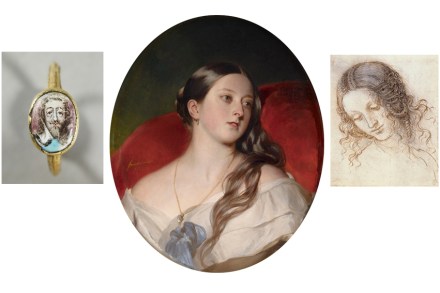
Desmond Shawe-Taylor, Surveyor of the Queen’s Pictures, on a radio programme that tells the history of the monarchy through 50 objects in the Royal Collection A History of the World in 100 Objects managed to squeeze the great paradigm shifts of anthropology into the interval between the roadworks sign and the all-clear, spiriting away traffic cones with remote customs and belief systems. What could follow something so confidently global if not an examination of our own strange customs and belief systems — some introspective anthropology?

Welsh, single and sex mad

Television

There’s lots of comedy about, but it’s not what Americans call ‘water-cooler’ comedy, shows that get people talking at work the next day. No Hancock or Monty Python or Fast Show or The Office. In the old days, pre-video recorders, pre-repeats on freeview, we had to find excuses to stay at home when we were invited out and didn’t want to miss a show. ‘Oh, gosh, I’m so sorry, I see my uncle is to be hanged that night.’ Nowadays we can’t pretend. On the other hand, there is less to enjoy, less to talk about. Do you know anyone at work who is watching Stella (Sky One, Friday)? Ruth Jones, the ferocious Nessa in Gavin and Stacey, plays a single mother in the Welsh valleys, which sounds depressing but isn’t.

Cooked-up tension

Television

Masterchef (BBC1) is a total waste of life — and I should know, because I’m addicted to it. It came to me suddenly and I’m still not sure how it happened. All I know is that one year I was like: ‘Masterchef. Ah, yes, it’s that foodie programme Loyd Grossman presents, which critics always call things like “Moaasterchoif” and “Mxxrgrghstrchrrxff” to show how amusing they can be about the presenter’s pronunciation.’ And the next I was: ‘Noo! Noo! No way was cloudberry coulis on calf’s brain carpaccio an ejection offence! That boy’s got talent. You should have got rid of the woman with her crappy tarte au citron...

Alien world

Television

My grandfather served in the trenches, but he declined to talk about it. I suppose the horrors had been insupportable. If he had lived day and night with those memories, it might have destroyed the life he built up at home, as a headmaster in a mill town near Manchester. Recently one of his pupils, now very old herself, wrote to me and recalled that he was fair, but very firm. ‘He caned me a few times!’ she wrote, yet seems to have regarded him highly. It opened a window into an alien world, in which a thoroughly decent, respected man might cane a young girl, both regarding it as his duty. That is one of the problems that is always going to hover over Birdsong (BBC1, Sunday), Sebastian Faulks’s endlessly popular novel.

Adult viewing | 21 January 2012

Television

How in God’s name did Jonathan Meades ever get a job presenting TV programmes? I ask in the spirit of surprised delight rather than disgust, for Meades is that rare almost to the point of nonexistent phenomenon: the presenter who doesn’t treat you like a subnormal child or so irritate you with his incredibly infuriating mannerisms that you want him immediately executed with one of those bolt guns they use on cattle. Which isn’t to say Meades doesn’t have his drawbacks. His work reminds me a bit of my old tutor Peter Conrad’s: it’s so dense and intense and packed with ideas that one page of writing — or TV minute — is equivalent to about 30 of anyone else’s. So it’s not what you’d call relaxing.

Dickens on screen…

Television

Nobody is going to be excused Dickens in his bicentennial year. This is good news for television people, since Dickens wrote his novels in the form of screenplays. He worked closely with his illustrators, making sure the scene they drew was exactly what he had in mind. He even acted out the roles as he wrote them, so the family would hear Fagin, or Pecksniff, or Squeers booming from his study as he worked. Someone pointed out in the Arena documentary, Dickens on Film (BBC4, Tuesday), that it is impossible to overact any of those characters, as clips of W.C. Fields and Bob Hoskins in the role of Micawber proved.

Sleuth at work

Television

One of my resolutions this year is to make a lot more money. But how? In fact, I’ve noticed recently, it’s very simple: all you have to do is take a popular character with enormous worldwide brand recognition (e.g., King Arthur, James Bond, Sherlock Holmes) and shamelessly reinvent him for the youth demographic. So, for example, you dress up Dracula in Abercrombie & Fitch, emphasise the sublimated but not consummated sex angle, throw in a werewolf to complete the platonic love triangle, and suddenly you’re Stephenie Meyer selling trillions to pubescents.

Watching brief

Television

The most watched programme on television this past year was the royal wedding, which is hardly surprising, since we had the day off to watch it. Bagehot said that royalty was the institution that ‘riveted’ the nation, by which he meant bound together rather than fascinated. However, strange as it may seem, most people in the UK weren’t sufficiently fascinated, or bound together, to see the ceremony — they were republicans, too young, having a day out, were on the street in London, or just didn’t care. Some 26 million were in front of their sets, only 3 million more than watched in the US, where the coverage started at 6 a.m. East Coast on a normal weekday.

Victory to the vicar

Television

My prize for the best thing on TV this year goes to the comedy Rev (BBC2, Thursdays). I know Simon Hoggart disagrees with me on this  — he finds it all a bit predictable. But in the spirit of Christmas I should like to point out that Simon is a wine-soaked pinko Guardianista who hasn’t a clue what he’s talking about, whereas I am world-famous for being right about everything, so there. Why is Rev so good? Let us count the ways. Its alpha and omega — as with all the best sitcoms — is character. Apart from Perry and Croft’s various masterpieces and The Simpsons, I’m hard pushed to think of any other TV comedy with quite so extensive a cast of well-drawn, plausible, compelling major and minor characters.

Disappearing lords

Television

‘I don’t like him looking daft,’ growls Alastair Campbell to the camera as Bafta-winning documentary film-maker Molly Dineen shadows Tony Blair for the 1997 party election broadcast. The warning is clear. Forty hours of footage became a mere ten minutes of spin, but it’s testament to Dineen’s rapport with the member for Sedgefield that despite its brevity the film was described by the late New Labour strategist Philip Gould as ‘probably our most effective broadcast’. Twenty-five years after her acclaimed debut Home from the Hill, Dineen’s collected works now fill three double DVDs.

Sage advice

Television

To the Manor Reborn (BBC1, Thursday) is undoubtedly one of the most brilliant programmes in the history of television. But then I’m biased for the Rat is in it, and what a splendid, handsome and talented young fellow he has turned out to be. If you looked very carefully about halfway through episode one, you’ll have caught him standing facing interior designer Russell Sage, holding a sheet of wallpaper or something. And then later, you’ll have caught him again being told by Sage to remember something he’d forgotten. Superb! The boy is a natural, he’ll go far, and as his proud stepfather I shall accept nothing less than the highest offers for his services.

Out of kilter

Television

Can a critic simply be wrong, in the way that a mathematician who said that 3x3=10 would be wrong? I’m beginning to wonder, since I am the only person I’ve read who thought Ricky Gervais’s Life’s Too Short was not vile but terrific and The Killing II (BBC4, Saturday) all right, though far from the work of genius others believe. I never quite caught the first series of The Killing on BBC4, though I have tried. I do have the box set, and one day I might even watch it. Mind you, suspicions were aroused when the main talking point seemed to be the heroine’s knitwear. ‘Say what you like about the plot moving like an arthritic snail, but that Faroe Islands sweater really caught the eye!

A girdle too far

Television

Fact: in 1963, air travel was so new and exciting that the awed gasps of the passengers as the plane took flight frequently drowned out the noise of the jet engines. Fact: in 1963, air travel was so comfortable that passengers emerged from long-haul flights even more refreshed, relaxed and cheerful than when they boarded the plane. Instead of taking their suits to the dry cleaners, canny travellers of the day would often just take a plane journey instead, knowing that their clothes would emerge at the end more pressed and immaculate than before. Fact: in 1963, every woman looked and dressed like Jackie Kennedy, especially air stewardesses, all of whom could have doubled as models because they were just so hot.

Ritual humiliation

Television

Ricky Gervais’s latest sitcom, Life’s Too Short (BBC2, Thursday), is really a series of sketches on his favourite themes — failure, rejection, self-delusion and humiliation. I gather from friends of friends that at UCL he was often teased, not always pleasantly, for not fitting in with the right gang. Exclusion of one kind or another and the desperate need to fit in is another constant topic. You may remember the scene in Extras in which he and his friends are turfed out of the VIP area in a club to make way for David Bowie, who then makes things more horrible by improvising a song about what a pathetic and useless person Gervais’s character is.

Padding out

Television

One of the useful things about having teen and near-teenage kids is discovering what the vulgar masses watch. Last week, for example, during half-term, I got to see two hugely popular programmes which I would probably never have bothered watching on my own: Undercover Boss USA (Channel 4, Wednesday) and The X Factor (ITV, Saturday, Sunday). Yes, I suppose it is a terrible indictment of my lackadaisical attitude that it has taken me till now to watch a full episode of the most talked about programme on TV. Thing is, though, I’ve been right all along. The X Factor just isn’t as good as University Challenge. Or The Simpsons. Or South Park. Or even, frankly, Downton Abbey.

Et tu, Hugh?

Television

Hugh Fearnley-Whittingstall thinks it’s time we all went veggie (River Cottage Veg; Channel 4, Sunday). Coming from a man whose favourite dish is human placenta marinaded in fruit-bat extract, who slaughters his own pigs with a pocket knife and dances naked in their gore as he turns them into 2,058 varieties of artisanal black pudding, and who recently confessed he wouldn’t mind eating the odd puppy if push came to shove, I suppose this is something we should take quite seriously. Personally, I feel betrayed. As betrayed as I felt all those years ago when my most heavy-duty smoking friend Ewen gave up fags, which was so unfair because I’d been relying on him to die of lung cancer, not me. ‘Et tu, Hugh?’ it made me think. Because I like my meat, an awful lot.

Care in the community

Television

‘We all need to rendezvous every week. It keeps us all as a community,’ said Jane Copsey on the In Touch anniversary programme (produced by Cheryl Gabriel). The Radio 4 magazine for the blind and partially sighted has been around for 50 years dispensing advice and encouragement, hope and cheer. Nowadays it’s been cut to just 20 minutes, but at least it’s still in its Tuesday-evening slot, where it’s been scheduled for decades. Copsey was arguing for the survival of the programme, even though there’s now an online equivalent, called Ouch!

Critics’ choice

Television

I caught an intriguing session at the Cheltenham literary festival, titled ‘Secrets of the TV Critics’. As it happened, the main secret seemed to be that some of them liked a drink while they watched the box. In the distant days before advance DVDs and internet previews, one critic of the Daily Express used to sit in front of an entire evening’s television with a bottle of whisky. At 10.45 he would phone the copytakers and dictate what he thought. At least he was duplicating the experience of most viewers, which is more than we critics do now.

Nice Mr Fry

Television

Whenever I find myself dreaming about how awful things would be under a red/green dictatorship — increasingly often, these days — the one person who gives me a glimmer of hope that I might get out of the hell alive is Stephen Fry. He’s a leftie, of course — but, like Frank Field and Kate Hoey, he’s the right kind of leftie. Even when appointed Minister for Culture in the new regime, as he inevitably would be, you just know that he wouldn’t indulge in either the gloating triumphalism or bullying sadism of his fellow Nomenklatura. It would be more a case of: ‘Yes, my dear, dear chap. How perfectly awful for you to be caught on the wrong side of history.

Tale of the unexpected | 1 October 2011

Television

I imagine there is software that helps you write biopics for television. First you pick the childhood from a drop-down menu, selecting [poor but respectable] [very poor] [so poor that all your belongings will fit into a single wheelbarrow which your mother pushes from a grim slum to the nearby hell-hole]. Father deserts family [yes] [no]. Star is determined to make it big but [is sent from one agent to another with mocking laughter in their ears] [meets an impresario who is sceptical at first then turns incredulously to accompanist and says, ‘My God, she’s got something!’]. Then there are the other staples which must be included by law. The trip to the Glasgow Empire, where the previous act has had fruit thrown at them.

How to behave

Television

‘I don’t suppose the war will leave any of us alone by the time it’s done,’ prophesied one of the characters in the new series of Downton Abbey. Oh, dear, I’m sure she’s right. So I wonder which will be the character who comes back with shellshock, which one with no legs, and which one a hero. For the last, I’m guessing Matthew Crawley, the worthy but slightly dull heir to the worthy but slightly dull Earldom of Grantham. That would be nice: then, after many travails and obstacles, cold, aloof (but really quite hot) Lady Mary will get to realise in the final episode that, yes, of course, he was the man for her all along. At the big wedding the redoubtable Dowager Countess (Maggie Smith) will say something very funny and acerbic.

Rebellious Prommers

Television

The Promenaders have excelled themselves this year. I thought initially they were slightly more docile and slightly less dotty than usual, but no. Not only at the Last Night, but also at the Israel Philharmonic Prom on 1 September, they found their voice — so strongly that the BBC actually suspended the broadcast of the latter. One Prommer told me the atmosphere that night was verging on the violent. The members of the Israel Philharmonic must have wondered what had hit them. With this concert they were concluding a lengthy worldwide tour, which had passed without a murmur. Suddenly, in the Albert Hall, every piece they played was interrupted with raucous singing, the Webern Passacaglia, for example, with the ‘Ode to Joy’.

Out of sight

Television

There are some things television can do which no other medium can manage. Take one of those little-noticed programmes, Hidden Paintings on BBC4. It’s presented by Laurence Llewelyn-Bowen, the chap with the King Charles spaniel hair, who used to do Changing Rooms, in which people found parts of their house redecorated while they were away, causing them to fly into a rage. The theme is fine works of art which for various reasons aren’t on public view. This week LLB considered David Inshaw, still with us, whose two best-known paintings are both hidden. One, ‘Our Days Were a Joy’, shows an enigmatic young woman in a graveyard. The technique is a beguiling cross between pointillism and photography.

Money for nothing

Television

When future historians sift through the wreckage of Western Civilisation to try to find out where it all went wrong, I do hope they chance upon at least one episode of The World’s Strictest Parents (BBC3) and one of Deal or No Deal (Channel 4). The World’s Strictest Parents is another TV variant on the Lad’s Army/Wife Swap theme. Unruly, selfish, vile teenagers are sent from their grotesquely overindulging middle-class British homes to far-flungplaces, there to spend two weeks under the kind of old-fashioned parenting regimes where they still uphold traditions like family meals, respect, discipline and a strict moratorium on dope, booze and the wearing of nipple rings. They return transformed.

The odd couple | 3 September 2011

Television

Years ago I did some charity gig with Will Self, a sort of Desert Island Books. He had chosen a Raymond Chandler, and I remarked on the similarities between Chandler and P.G. Wodehouse. Both were educated at Dulwich College, both were wonderfully stylish and stylised writers, both were masters of the dazzlingly witty, totally unexpected metaphor. Will Self favoured me with the de haut en bas curled lip familiar from television. There was no comparison, he said. Wodehouse wrote about a discredited imperialist age; Chandler by contrast tackled the gritty reality of life on the mean streets of LA — or words to that effect. He was wrong.

Edge of darkness

Television

I’ve got this idea for a book, when I get the time, called Everything You Know Is Wrong. Its job will be to attack all the idiot received ideas of our age — what my father-in-law calls ‘notions’. High on the list of candidates, most definitely, is the commonly held belief (especially among stand-up comics) that Bill Hicks was the greatest comedian who ever lived. I’ve got this idea for a book, when I get the time, called Everything You Know Is Wrong. Its job will be to attack all the idiot received ideas of our age — what my father-in-law calls ‘notions’. High on the list of candidates, most definitely, is the commonly held belief (especially among stand-up comics) that Bill Hicks was the greatest comedian who ever lived.

Let them eat cake

Television

Prince Charles turned up on TV again this week, in Britain’s Hidden Heritage (BBC1, Sunday), wandering round a country house in Scotland that he had helped to restore. Prince Charles turned up on TV again this week, in Britain’s Hidden Heritage (BBC1, Sunday), wandering round a country house in Scotland that he had helped to restore. He was interviewed by Paul Martin, best known as the presenter of Flog It!, in which he gets aerated by an auction for a Georgian silver salt cellar, or a set of cigarette cards. For some reason, presenters who would sink their fangs into a politician, no matter how important, are reduced to quivering lapdogs by royalty.

Simon Hoggart: Chilean Miners

Television

Angus Macqueen is a film-maker whose CV includes The Death of Yugoslavia, Gulag, Cocaine and a slightly odd period commissioning the likes of The Secret Millionaire as Channel 4’s head of documentaries. These days, happily, he’s back making his own stuff — and BBC2’s Chilean Miners: 17 Days Buried Alive was another gem. Commentary was kept to a minimum and the reconstructions were nicely restrained, leaving the heart of Friday’s programme filled by gripping interviews with six of the miners themselves. These proved to be a varied lot, from Mario ‘Perry’ Sepúlveda, a family-loving Jehovah’s Witness, to Samuel Ávalos, a cheerfully foul-mouthed former street-kid, who praised mining as the best way to sweat off a hangover.