Culture

Culture

The good, the bad and the ugly in books, exhibitions, cinema, TV, dance, music, podcasts and theatre.

Good cop, bad cop | 23 March 2016

Television

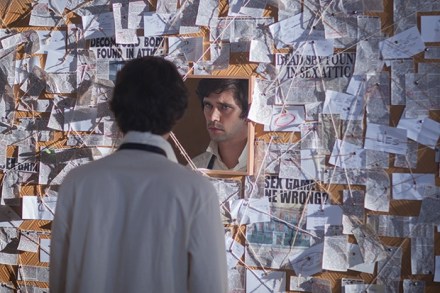
Which is better, British TV drama or American? A couple of years ago, merely asking the question would have had the hipsters chortling into their obscure US box sets — and even now a strange cultural cringe seems to persist. Nonetheless, I’d suggest, British television drama these days really is in the midst of an era that will have commentators in 20 years’ time routinely (if a bit unimaginatively) reaching for the adjective ‘golden’. Already in 2016 we’ve had War and Peace, Murder, The Night Manager and Happy Valley — and that’s before the hugely welcome return of Line of Duty (BBC2), Jed Mercurio’s riveting thriller about a police anti-corruption unit.

Greedy greenies

Television

‘We have a problem. Yes. At the wind farm.’ Any conspiracy thriller with lines like that has definitely got my vote. Possibly most of you are unaware of this, because it’s not something I talk about often, but I happen to be not too fond of the things I call bat-chomping, bird-slicing eco-crucifixes — nor of the charlatans, crooks, liars and parasites who make their living out of them. Indeed, whenever I try to think of an industry that’s worse than wind farms I keep coming unstuck. At least landmines serve a useful purpose for force protection; at least Albanian prostitutes make a few men very happy.

Just what the doctor ordered

Television

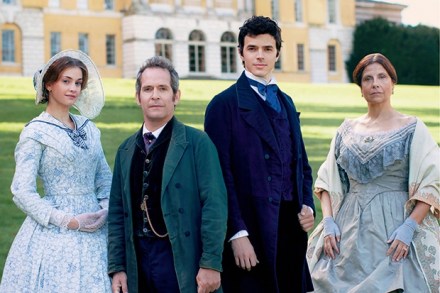
Every now and then, a costume drama comes along that’s so daringly unconventional as to make us re-examine our whole idea of what the form can achieve. ITV’s Doctor Thorne, though, isn’t one of them. Instead, Julian Fellowes’s adaptation of Anthony Trollope observes the usual rules with almost pathological fidelity. Extras dance gamely in ballrooms, scheming matriarchs stand in the way of sweet young lovers and characters express deep fury with the words, ‘Good day to you, madam.’ In the first scene, we even had a handy refresher on the genre’s use of hats as a social signifier. (Basically, toppers for the toffs, peaks for the proles.

Northern exposure | 3 March 2016

Television

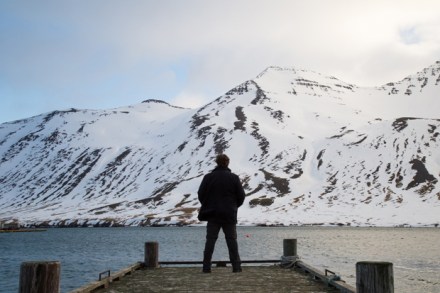
Some things I have learned about Iceland after watching six episodes of Trapped (BBC4, Saturdays). 1. They seem to feel much the same way towards the Danes as the Irish or the Scots do towards the English. 2. Some typical Icelandic first names: Andri, Ásgeir, Dagný, Hjörtur, Hrafn, Þórhildur. But even if you did Anglo-Saxon at university and know what a ‘thorn’ looks like, they’re still pronounced nothing like they’re spelt. 3. They drink more coffee than booze, even at night. Only tourists, millionaires and politicians can afford alcohol. 4. If it weren’t for the excitement provided by the swimming-pool, the kids in remote Icelandic towns would die of boredom. 5. Everyone in Reykjavik is poncy, effete, synthetic.

Night moves

Television

The Night Manager (BBC1, Sunday) announced its intentions immediately, when the opening credits lovingly combined weapons and luxury items. ‘Blimey,’ we were clearly intended to think, ‘it’s a bit like James Bond.’ True, the main character works — at this stage, anyway — in the hotel trade rather than as a secret agent. Yet, when it comes to dress sense, being irresistible to the ladies and alternating between looking suave and enigmatically purposeful, Jonathan Pine (Tom Hiddleston) has little to learn from the great man himself. Pine was first seen heading to work in 2011 through an uprising in Cairo where dozens of extras were demanding the overthrow of President Mubarak.

Marty’s way

Television

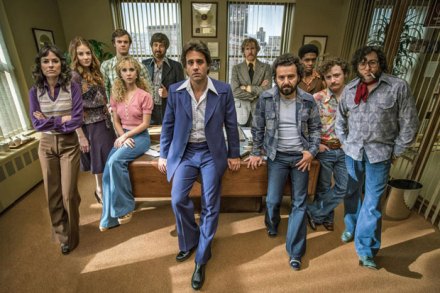
Vinyl (Sky Atlantic) — the much-anticipated series, co-produced by Martin Scorsese and Mick Jagger, about the 1970s New York record industry — began on Monday with a two-hour episode directed by Scorsese himself. The result was, as you’d expect, an exhilarating watch. So why did it also create an undeniable feeling of slight disappointment? One reason, I suppose, could just be that modern TV viewers are spoiled rotten. So many American dramas since The Sopranos have shown such a miraculous mixture of breadth and depth that the problem is no longer believing how ambitious television can be, but simply keeping up with them all. (More bloody golden eggs? Why can’t these people leave us alone to read a book?

In excess

Television

Judging from its website, Hebden Bridge’s tourist office considers the fact that BBC1’s Happy Valley is filmed in the town something of a selling point. Personally, I can’t see why. (Perhaps points of especial tourist interest might include the cellar where Sergeant Catherine Cawood was almost battered to death, or the caravan site where drug dealers fed heroin to the teenage girl they’d kidnapped and raped.) And now that it’s back for a second series, viewers of Sally Wainwright’s Bafta-winning drama are still unlikely to confuse Hebden Bridge with, say, Chipping Norton. In Tuesday’s opening scene Catherine (Sarah Lancashire) filled in her sister on the events of her day.

Weekend world

Television

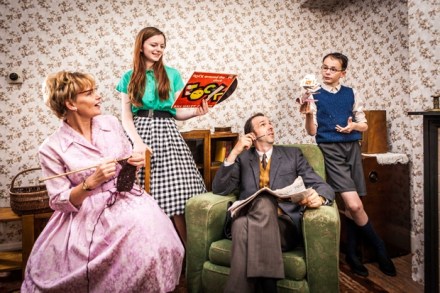
When the time comes to make programmes looking back on the 2010s, I wonder which aspects of life today will seem the weirdest. Quinoa? The fact that we were expected to be ‘passionate’ about our jobs? Being so overexcited by new technology that we constantly stared at phones? Or maybe it’ll just be how many almost identical TV series looking back on previous decades we used to watch: the kind where a family dresses up in period costume and lives for a while like people from previous eras, carefully ticking off the signifiers as they go. (Space hoppers and Chopper bikes for the Seventies, Rubik’s Cubes and shoulder pads for the Eighties.

An inconvenient truth | 28 January 2016

Television

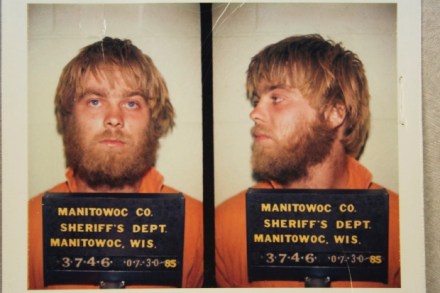
On the face of it, the Netflix documentary serial Making a Murderer should only take up ten hours of your life. Judging from my experience, though, its ten episodes will prove so overwhelmingly riveting that you’re going to need at least two more days to scour the internet in an obsessive quest for every scrap of information about the Steven Avery case — and several evenings to discuss it with any fellow viewers you can find. If the fuss about the series has so far passed you by (and if it has, it probably won’t for much longer), you may have to trust me that the story it tells — through such unspectacular old-school methods as assiduously researched footage, talking heads and the occasional caption — is from real life.

Class of ’83

Television

No one remembers this now but there really was a period, not so long ago, when the Eighties were universally reviled as the ‘decade that style forgot’. For a time it got so bad that none of us survivors could even bear to look at old photos of ourselves: mullets, feather cuts, Limahl-style bleaching, pastels, legwarmers, unflattering suits so boxy they made you look broader than you were tall... But try telling this to the kids today and they won’t believe you. The Eighties, as far as they’re concerned, are so achingly, incredibly, bleeding-edge cool that there’s no way their parents could possibly have lived through them and, ‘Oh, by the way, Dad, do you mind if I take that old jacket of yours back to school?

Compliance order

Television

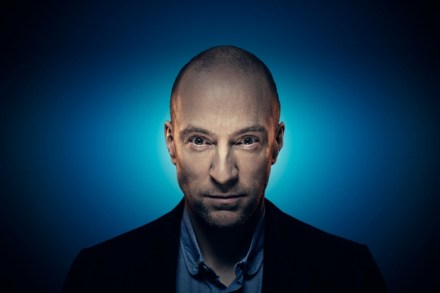
Never a man tortured by self-doubt, Derren Brown introduced his latest special Pushed to the Edge (Channel 4, Tuesday) as a fascinating psychological experiment about the dangers of ‘social compliance’ — our willingness to do what authority figures ask, however morally dubious. In fact, much of what followed was a weird, and itself rather morally dubious, mix of Candid Camera, Fawlty Towers and something pretty close to entrapment. But from time to time, it also proved, annoyingly enough, a fascinating psychological experiment about the dangers of social compliance. The central aim was fairly straightforward: to see if a member of the public could be persuaded to shove a stranger off a high roof.

Coming up for air | 7 January 2016

Television

Gosh what a breath of fresh air was Andrew Davies’s War & Peace adaptation (BBC1, Sundays) after all the stale rubbish that was on over Christmas. There were times when the yuletide TV tedium got so bad that I considered preparing us all a Jonestown-style punchbowl. That way, we would never have had to endure Walliams and Friend nor the special time-travel edition of what everyone is now rightly calling Shitlock. Sherlock has a terminal case of Doctor Who disease. That is, it has become so knowing, so self-referential, so — ugh! — meta that it no longer feels under any obligation to put in the hard yards needed to surprise and delight anyone who isn’t already a committed fanboi.

Losing the plot | 31 December 2015

Television

On the face of it, ITV’s Peter & Wendy sounded like a perfect family offering for Boxing Day: an adaptation of J.M. Barrie’s novel, with a framing story about how much Peter Pan can still mean to children today. In fact, though, the programme suffered from one serious flaw for any Boxing Day entertainment — if you were slightly drunk, slightly hungover or both, it was almost impossible to understand. Then again, I suspect that even the most weirdly sober of viewers might have struggled with a drama that never seemed to know the difference between the intriguingly suggestive and the utterly baffling. The opening sequence played to one of its undoubted strengths, with an introductory cameo from Stanley Tucci’s Captain Hook.

Was my article the inspiration for this brilliant BBC dramatisation?

Television

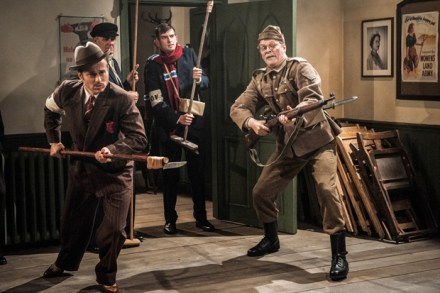
The two things I hate most about Christmas are a) Advertland showing me how sparkly and joyous my home and bright-eyed kids are at this time of year, and b) the Doctor Who Xmas special telling me that if only I can open my heart and put cynicism aside, then I too can enjoy a mash-up of Dickens, C.S. Lewis and the Brothers Grimm, where daleks with tinsel round their guns exterminate the spirit of Scrooge as laughing children come pouring from the Ice Queen’s dungeon and something nice happens on a London housing estate. Or similar. That’s what was so great about We’re Doomed! The Dad’s Army Story (BBC2, 22 December).

Beyond a joke | 3 December 2015

Television

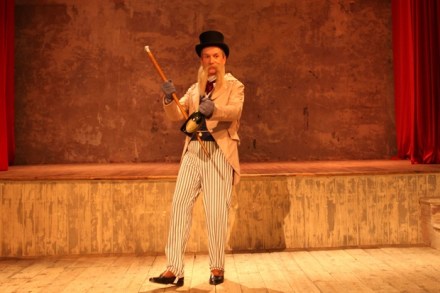
Let’s start this week with a joke: ‘You know Mrs Kelly? Do you know Mrs Kelly? Her husband’s that little stout man, always on the corner of the street in a greasy waistcoat. You must know Mrs Kelly. Well, of course if you don’t, you don’t, but I thought you did, because I thought everybody knew Mrs Kelly.’ No, I can’t claim my sides are entirely split either. Yet, according to the first episode of What a Performance! Pioneers of Popular Entertainment (BBC4, Thursday), this sort of material by the Victorian music-hall star Dan Leno marked the birth of stand-up comedy as we know and are perhaps overburdened by it today. The series’ stated aim is to explore mass entertainment from the days before television.

I’m a Celebrity is like The Simpsons: good if you’re thick; even better if you’re not

Television

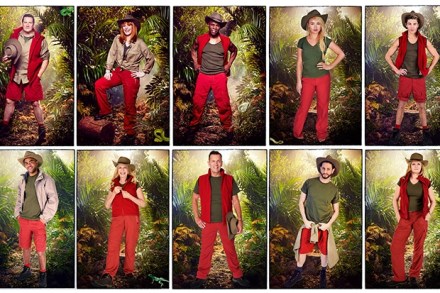
The best bit in I’m A Celebrity... Get Me Out Of Here! (ITV) will be when the prisoners finally revolt and turn on their evil captors, Ant and Dec. The sparky Geordie comedy duo will be imprisoned in a semi-submerged, rat-infested cage like the one in The Deer Hunter, fed on a diet of liquidised kangaroo bottom and wombat testicle, and released only to participate in a series of amusing challenges, such as a recreation of the Lemmiwinks episode from South Park, involving two giant funnels, a bunch of inserted eucalyptus leaves and a pair of ravening koalas. Though it hasn’t happened yet I’m going to keep watching every night, just in case. I wish it weren’t so. It’s such a terrible waste of life.

The man who wouldn’t be king

Television

Not that long ago the BBC trumpeted a new Stakhanovite project to big up the arts in its many and various hues. And praise be, this it is jolly well doing with all sorts of dad rock docs, homages to painters and poets, while Sralan Yentob (as he surely ought at the very least to be, and soon) continues to knock frock-coated on doors like a highly remunerated person from Porlock. Before multichannels and multi-platforms, great arts coverage was (if memory serves) done without much song and dance. Lest we forget, Yentob was once a progenitor of Arena. Long the haven of burgeoning filmmakers such as Mary Harron, James Marsh and some bloke called Scorsese, Arena is 40 this month and it’s still the best.

Spying and potting

Television

The main problem with being a TV critic, I’ve noticed over the years, is that you have to watch so much TV. It’s not that I’m against it in principle: I like my evening’s televisual soma as much as the next shattered wage slave with no life. But the reality is that you end up doing stuff like I found myself doing on this Monday night just gone — cringing at pert male arses heaving up and down in a sensitive gay love scene in some moody new BBC spy drama that is going to be occupying our screens for the next five weeks. Why?

Why most four-year-olds deserve to be sectioned

Television

The first episode of Let Us Entertain You (BBC2, Wednesday) definitely couldn’t be accused of lacking a central thesis. Presenter Dominic Sandbrook began by arguing that, since its industrial heyday, Britain has changed from a country that manufactures and exports things into one that, just as successfully, manufactures and exports popular culture. He then continued to argue it, approximately every five minutes, for the rest of the programme. By way of proof, Sandbrook presented a fairly random collection of postwar Britain’s greatest hits, which served both as examples and as opportunities for some nifty wordplay designed to hammer the point home still further.

DVF worship

Television

Girl is back for half-term so I’ve been able to watch nothing but crap on TV this week. Some of you will say, ‘Oh come on! You pay the bills, so you get to control the remote.’ But that’s not how things work when you’ve got a teenage girl at home. Especially not one whose ankle you have been responsible for breaking. So crap, I’m afraid, is what I’m going to have to review. Not, it must be said, that the crap has all been crap. House of DVF (E! Online), for example. I’ve mentioned it before and the reason I’m mentioning it again is the matchless insights it offers into the strange and terrifying world of womankind.

The Last Kingdom is BBC2’s solemnly cheesy answer to Game of Thrones

Television

The opening caption for The Last Kingdom (BBC2, Thursday) read ‘Kingdom of Northumbria, North of England, 866 AD’. In fact, though, an equally accurate piece of scene-setting might have been ‘Britain, Saturday teatime, the 1970s’. The series, based on the novels by Bernard Cornwell, has been described in advance as the BBC’s answer to Game of Thrones — and, as various thesps in furs and long beards began to attack each other with swords, it wasn’t hard to see why. Yet, apart perhaps from the level of the violence, the programme’s real roots seem to belong to less sophisticated (and less expensive) shows than that: the kind set firmly in the period known as ‘yore’ and that many of us will dimly remember from our childhoods.

Hunted blows a fresh breeze through the stale world of reality TV

Television

Television used to employ entertainers to entertain the public. Back then you could count the channels on the fingers of one hand and still have a thumb left over to stick aloft in praise of the nightly parade of talent. That was decades ago, before every housing estate in the land pointed supplicatory dishes at the cosmos, which beamed back numberless multi-channels devoted to cooking and/or shopping, golfing and/or shagging. It’s all changed. Now television employs the public to entertain the public. It’s cheaper. So we have talent shows, reality shows, aspirational have-a-go shows from which contestants are expelled one at a time. It is always gripping to find out which members of the public can sing/sell/bake exceedingly good cakes.

Was BBC1’s Rooney hagiography more scripted reality than documentary?

Television

Close to the Edge (BBC4, Tuesday) feels very much like an idea conceived during a particularly good night in the BBC bar. Why not take the ‘scripted reality’ methods of such youth hits as The Only Way Is Essex and apply them to a group of over-65s living in Bournemouth? So it is that the chosen oldies are given one main characteristic each, and required to act out events from their own lives — events that might or might not have happened if the cameras weren’t there. Or as Tuesday’s opening caption rather optimistically put it, ‘Some of the scenes have been constructed purely for your enjoyment.’ Which scenes these were, the programme didn’t of course specify.

Independents’ day

Television

I really hadn’t meant to write a postscript to last week’s column on my dark Supertramp past. But then along came a TV programme which reminded me: I WAS cool once. It happened after Oxford when I became, almost simultaneously, both an acid-house freak and an indie kid. And BBC4’s three-part special — Music For Misfits: The Story of Indie (Friday) — captured quite brilliantly what it was like to live in that golden era of floppy fringes, black Levis, obscure music, psychotropic substances and DM boots. Watching it, I knew just how it must have been for combat veterans watching The World at War in 1973. Same distance in time from the actual event; same sense of disbelieving unreality: ‘I was there, man. At least, I think I was.

Talk of the devil | 24 September 2015

Television

For years, Ian Fleming was famously self-deprecating about the James Bond books. (‘I have a rule of not looking back,’ he once said. ‘Otherwise I’d wonder, “How could I write such piffle?”’) Towards the end of his life, though, he finally produced an essay in their defence — proudly pointing out, among other things, that however fantastical the plots may become, they’re always carefully rooted in a world recognisable as our own. Of course, this is not something that can necessarily be said of all the Bond films — but it certainly applies to ITV’s new three-part thriller Midwinter of the Spirit (Wednesday), based on the novel by Phil Rickman. It also explains why the programme already feels so promising.

Socialist Cluedo

Television

What a load of manipulative, hysterical tosh is An Inspector Calls. It wasn’t a work with which I was familiar till I saw the latest TV adaptation. Now, of course, I see exactly why the luvvies — see, for example, Stephen Daldry’s highly acclaimed early 1990s National Theatre revival — adore it so. It confirms everything they think they know about the world: rich people bad, heartless, oppressive; poor people the long-suffering and saintly salt of the earth. In case you’ve not had the pleasure, J.B. Priestley’s play is like a socialist game of Cluedo: a lovely innocent young working-class woman has died and the toffs all dunnit.

Cock and bull

Television

It’s hard to know whether the actor James Norton was being naive or disingenuous when he claimed in publicity interviews for BBC1’s Lady Chatterley’s Lover that ‘We are no longer shocked that people have sex.’ Either way, the tabloids soon proved him wrong. Days before the programme went out, the Sun had duly worked itself up into a state of delighted outrage about a TV drama that was apparently ‘so steamy it borders on porn’. In the event, this proved an exaggeration wild enough to suggest that none of the journalists involved had seen the programme —or, less likely, any porn.

Lifting the veil

Television

Finally I realise why women are so pissed off. It all goes back to the first codified laws — circa 2,400 bc — when rules like this were invented by men: ‘If a woman speaks out of turn then her teeth will be smashed by a brick.’ Before that, apparently, women lived on a pretty equal footing with their future male oppressors.

Will he was

Television

In 2011, the Daily Mail carried a long story about how the Queen’s cousin Prince William of Gloucester, who died in a plane crash aged 30, had been Prince Charles’s boyhood idol. (Our own Prince William, it claimed, was named after him.) In passing, it tactfully informed us that William’s ex-girlfriend Zsuzsi Starkloff ‘no longer wishes to be reminded of her lost love’. Well, the good news is that Zsuzsi has certainly changed her mind since. The following year she gave the Mail an interview describing their relationship in some detail. And on Thursday, she appeared in The Other Prince William: Secret History to tell all over again what Channel 4 unblushingly called ‘the untold story’ of their time together.