Culture

Culture

The good, the bad and the ugly in books, exhibitions, cinema, TV, dance, music, podcasts and theatre.

Monkey business | 15 November 2018

Television

The opening episode of BBC1’s Dynasties — the new Attenborough-fronted series from the Natural History Unit — introduced us to ‘a territory ruled by a strong and determined leader: an alpha male known as David’. Despite what you might think, though, this wasn’t a reference to the Natural History Unit itself, but to a troop of chimps in Senegal, whose power struggles unfolded on Sunday in an almost Shakespearean way. As ever, Sir David started by demonstrating that he can still handle a spot of location shooting, in this case bellowing a few lines from a jeep speeding across the African savannah. But after that, he was again content simply to supply an authoritative voice-over and the occasional joke.

Failed state

Television

I wonder if Wisconsin has any idea what an international embarrassment it has become? By rights it ought to be an unexceptionable place, little more than the quirky answer to the occasional trivia question: ‘Where is the Badger State?’; ‘Whose state governor shares a name with the singer of “The Sun Ain’t Gonna Shine (Anymore)?”’; ‘Which US state makes more Swiss cheese than Switzerland?’ Sadly for this unassuming Great Lakes state — pop.

Her dark materials | 1 November 2018

Television

The Little Drummer Girl (BBC1, Sunday) is the new John le Carré adaptation from the production company that brought us The Night Manager. It’s also directed by Park Chan-wook from South Korea, a man generally referred to by film buffs as an ‘auteur’. All of which may be just as well, because with a less distinguished pedigree, the first episode might possibly have seemed a bit corny. The opening section, for example, featured the impeccably complicated delivery of a Palestinian bomb to the Bonn residence of a Jewish attaché in 1979, and would, I’m fairly sure, have proved exciting enough without being cunningly overlaid by a series of loudly ticking clocks.

Bad blood

Television

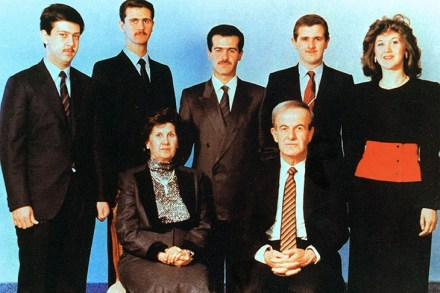
‘How did this mild-mannered eye doctor end up killing hundreds of thousands of people?’ someone wondered about Bashar al-Assad in BBC2’s extraordinary three-part documentary A Dangerous Dynasty: House of Assad (BBC2, Saturday). It’s a question we’ve all occasionally pondered as the Syrian body count rose — 500,000 thus far — and as six million refugees fled the country. The answer is so lurid and complex that it could have come from one of Shakespeare’s tragedies. Chinless, studious, polite Bashar was never meant to become president of Syria. His thuggish military officer father Hafez, who seized power in 1970, had earmarked the job for his dashing equestrian soldier son Bassel.

Novel gazing

Television

At the beginning of Barneys, Books and Bust Ups: 50 Years of the Booker Prize (BBC4), Kirsty Wark’s voiceover promised us ‘a tale of fierce rivalries, bruised egos and, most importantly of all, countless brilliant books’. In the event, though — as the title perhaps suggested — those countless brilliant books proved rather less important to the programme than Kirsty’s edifying words had led us to believe. At one point, it noted in passing that Midnight’s Children is a very good novel. At another, it lamented the melancholy fact that Booker ‘voting intrigue and judges’ fallings-out’ have sometimes overshadowed ‘the books themselves’.

Get woke, go broke

Television

You won’t be aware of this because the BBC has been keeping it very quiet. But the new Doctor Who is — wait for it — a woman! Let me say straight away that Jodie Whittaker is a delight. Opening as the new Doctor is never easy — all that tiresome establishing rigmarole you have to go through along the lines of ‘I’m feeling all funny. Almost like I’m a completely different actor but in the same body. What can it be? Who am I? Has anyone watching at home worked it out yet?’ But already we like her. Yes, at the moment she’s still a bit of a mishmash of previous Doctors but this will change as she grows into the role.

Mother’s ruin

Television

It’s a radical thought I know, but I sometimes wonder what it would be like if a new TV thriller began by carefully introducing the characters and basic situation, before proceeding chronologically from there. In the meantime, though, there’s BBC1’s The Cry, which didn’t just start with the traditional blizzard of time-shifts, but continued like that for the next hour. In one of the more prolonged of Sunday’s many opening scenes — it lasted at least 60 seconds — main character Joanna (Jenna Coleman) explained to an unseen listener that ‘that’s when this began, with two faces’.

High five

Television

What a load of utter tripe Bodyguard (BBC1, Sundays) was. Admittedly, I came to it late having missed all the sex scenes with Keeley Hawes and Robb Stark, which may have dazzled me in the way they seem to have dazzled many impressionable viewers. Sex scenes in TV drama are a bit like the chaff used by fighters to distract radar-guided missiles. You’re so busy feeling simultaneously awkward and embarrassed and half-titillated, covering your eyes with your fingers, wishing your other half wasn’t watching with you because then it would be proper porn and you could enjoy it, that you sometimes forget to notice what convoluted, implausible tosh the surrounding drama is. That, I seem to recall, was how I managed to waste at least three hours of my life last year on Apple Tree Yard.

What Phoebe did next

Television

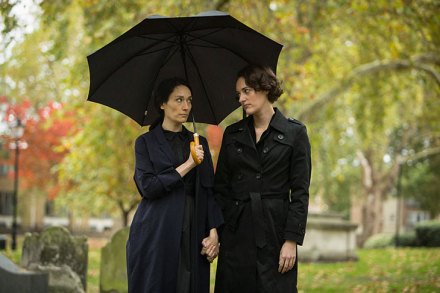
After the all-conquering success of Fleabag — her brilliant dark comedy about a smart but rudderless young woman in London — Phoebe Waller-Bridge could presumably have done whatever she wanted for her next TV project. And what she wanted to do next, it now turns out, is very odd indeed. Killing Eve (BBC1, Saturday) — which Waller-Bridge has adapted from a novel by Luke Jennings but doesn’t appear in — has its moments of recognisably ordinary life. But not many. Near the beginning, for example, Eve Polastri (Sandra Oh) woke with a Saturday-morning hangover and unwelcome memories of her karaoke performance the night before.

Go West | 13 September 2018

Television

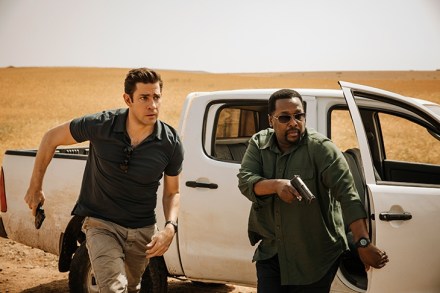
This week’s guilty pleasure is Tom Clancy’s Jack Ryan (Amazon Prime). It’s trash, of course, but very well done, high-octane, watchable trash. And if you want to feel better about your lowbrow tastes, make sure you read the finger-wagging critique by one Sonia Saraiya in Vanity Fair first. ‘Jack Ryan feels like a machine designed to turn us all into the sort of viewers who disappear smiling down jingoistic Fox News rabbit holes,’ she says, enticingly. And: ‘Both its protagonist and its plot are based on the foundational, unquestioned notion that American-military might — the best-funded killing infrastructure in human history — is helping to save the world.

Let’s talk about sex | 6 September 2018

Television

This week was bad news for fans of good television drama series — mainly because there’s now three more of the things to keep up with if you don’t want to feel left out of office conversations. The one that stirred up the most advance media excitement was Wanderlust (BBC1, Tuesday), on the traditional grounds that it promised to be unusually explicit about sex. And in that, it certainly didn’t disappoint. The first episode began with a flurry of masturbation (not a phrase I can remember using in a TV column before). First, Joy, a middle-aged therapist, slipped a hand beneath the morning bedclothes — until her teenage son came in to ask where his shoes were.

Shark treatment

Television

All the good non-fiction things that were ever on TV — from Kenneth Clark’s Civilisation to David Attenborough’s Planet Earth (the bits where he’s not proselytising about climate doom, I mean), from Andrew Graham-Dixon’s arty jaunts to Italy to Jonathan Meades’s bizarro forays into architecture, from The World at War to all those more recent war porn documentaries narrated by Sam West, from Werner Herzog’s Little Dieter Needs To Fly to Louis Theroux doing a number on Jimmy Savile — have one thing in common: they were all made by middle-aged men. Middle-aged men are the business.

Rubbish on TV

Television

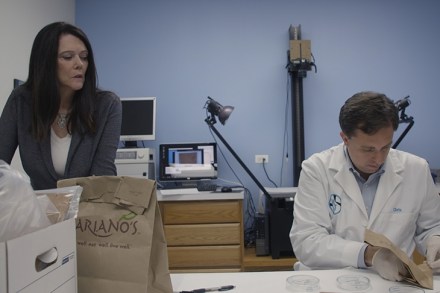
Not the most beguiling of titles, I admit, but The Secret Life of Landfill: A Rubbish History (BBC4, Thursday) was a genuine eye-opener. The programme began with Dr George McGavin proudly announcing that ‘What we’re about to do has never been attempted on television before’: a claim that it’s usually best to treat with some scepticism, but that here seemed hard to deny. Certainly, I can’t remember another TV documentary in which the presenters spent 90 minutes digging through (non-metaphorical) rubbish. At first, the mood was one of rather determined excitement.

His dark materials | 16 August 2018

Television

Apparently there’s a new ‘character’ on University Challenge. I wouldn’t know. Last year, I vowed never again to raise my blood pressure by exposing myself to its new, gender-balanced questions: ‘Your starter for ten: which composer of Serenade for My Cat, rated by her father as the equal of Bach’s Goldberg Variations…’ Don’t know. Don’t care. You bastards ruined it, just like you ruined Sanpellegrino and Lucozade. Same applies, now I think about it, to all the other programmes on the BBC.

Medical examination

Television

Surprising I know, but judging from The Foreign Doctors Are Coming (Channel 4, Tuesday), Britain mightn’t be such a bad place after all. The programme followed a group of medics from non-EU countries whose dream is to work for the NHS, but who first had to pass a practical exam in Manchester known, for reasons left unexplained, as PLAB 2. ‘When I landed in Britain it felt like a breath of freedom,’ said a young Pakistani woman. ‘People here are helpful,’ declared Ahmed from Egypt as he walked the Manchester streets. ‘I see you have no problem with other cultures.

Top Trump

Television

The thing I most regret having failed ever to ask brave, haunted, wise Sean O’Callaghan when I last saw him at a friend’s book launch was ‘So tell me about Shergar.’ It has long been known, of course, that the legendary racehorse — one of the five greatest in the last century, according to Lester Piggott who rode him to victory in the Irish Derby — was kidnapped in 1983 by the IRA and never seen thereafter. What I didn’t realise, till after O’Callaghan died last year, was that the ex-IRA man is the only insider ever to have gone on the record as to his fate. Turns out that poor Shergar was executed within hours.

Full circle

Television

After just one episode, The Bletchley Circle: San Francisco (ITV, Wednesday) seems certain to stand out from the crowd. In an age when most television dramas range from the perfectly fine to the extremely good, it already looks like a proper old-fashioned stinker. Admittedly, one of its more obvious problems is bang up-to-date: by adhering so spinelessly to the mantra of ‘women and black people good, white men bad’, the programme not only creates an overwhelmingly dreary sense of déjà vu, it also deprives itself of any possibility of genuine dramatic tension. But there are plenty of more traditional flaws too, including such classics as wooden dialogue, leaden humour and a plot of impressively po-faced preposterousness.

Bearers of bad news

Television

When President Trump refused to take a question from a CNN reporter at the Chequers press conference last week, I imagine a lot of British viewers thought —as Theresa May clearly did — that he was being graceless, capricious and anti-freedom of speech. But I think we’re in danger of underestimating the extent to which the media landscape has changed in the past few years. Gone are the days — if they ever existed — when political interviewers were dispassionate seekers-after-truth on a mission to get the best out of their subjects. Now, it’s mostly activism-driven, the aim being to advance your preferred narrative while showing up your ideological opponents in as unflattering a light as possible.

Between a rock and a hard place

Television

According to the opening captions in Picnic at Hanging Rock (BBC2, Wednesday), ‘the infamous events’ it depicts ‘began whena mysterious widow purchased a mansion out in the Australian bush’. The first few scenes, set in the late 19th century, were then dedicated to proving quite how mysterious she was: Hester Appleyard (Natalie Dormer) wasn’t merely veiled, but also filmed largely from behind and — just to be on the safe side — in the dark. What she might not be, though, is a widow. As she explored her new house, her voice-over dropped a series of dark hints that her mourning dress was a cunning disguise — and that she was in hiding from someone or other after doing somethingor other.

The great escape

Television

Even though I don’t watch much football I love the World Cup because it’s my passport to total freedom. I can nip off to the pub, slob indoors on a sunny Sunday afternoon, leave supper before we’ve finished eating, let alone before the dishes are done. And where normally that kind of behaviour would at the very least get me a dirty look, during World Cup season it actually gets me brownie points. Why? Because it’s a sign that I’m being a Good Dad. It worked in the old days with the Rat. And now it works with Boy. Mothers are absolutely potty for their sons and will look fondly on any activity that makes them content.

Coming up Trumps

Television

Back when his country was controlled by the USSR, the Czech writer Milan Kundera pointed out that ‘Union of Soviet Socialist Republics’ was ‘four words, four lies’. It’s a strike rate that even the current US president has yet to match. Nonetheless, at one stage in Reporting Trump’s First Year: The Fourth Estate (BBC2, Sunday) we did see him pull off an impressive three-sentences, three-lies sequence in a speech about — inevitably — the mainstream media, including the New York Times. ‘They have no “sources”,’ said Trump baldly. ‘They just make ’em up. They are the enemy of the people.

Hell on earth

Television

There were 1,500 punters in the audience when Eagles of Death Metal played their fatal gig at the Bataclan theatre in Paris in November 2015. By midnight, every one of those fans would either be dead, bereaved, in hospital with gunshot wounds or so traumatised that the horror would haunt the rest of their lives. But obviously none of them knew this when they woke up on that sunny autumn morning (though it was a Friday 13th). One remembers that his first thought that day was to make sure he wore some nice trousers. Another recalls being puzzled when his father — ‘a typical Chilean dad’ — embraced him, asked him anxiously where he was going that night (‘I’m 23!’) and then said what now sounds eerily prophetic: ‘No one can steal your soul.

Unintelligent design

Television

On Wednesday, BBC Four made an unexpectedly strong case that the human body is a bit rubbish. Our ill-designed spines, for example, guarantee that many of us will suffer from chronic back pain. Our joints wear out long before we do. Our skin even gets damaged by sunlight. So what can be done about it? Obviously the answer is not much — but that didn’t prevent Can Science Make Me Perfect? With Alice Roberts from pretending to give it a go. The premise was that Roberts would draw on other, less incompetently constructed life forms to create an improved version of herself — the way she’d be if evolution hadn’t cocked things up so badly. As befits someone whose name appears in programme titles, Roberts clearly relished her God-like role.

Unholy land

Television

‘The rule in our household is: if a TV series hasn’t got subtitles, it’s not worth watching,’ a friend told me the other day. Once this approach would have been both extremely limiting and insufferably pompous. In the era of Netflix and Amazon Prime, though, it makes a lot of sense. There’s something about English-speaking TV — especially if it’s made in the US — that tends towards disappointment. Obviously there have been exceptions: The Sopranos; Band of Brothers; Breaking Bad; Game of Thrones. But too often, what’s missing is that shard of ice in the creative heart that drama needs if it’s to be truly exceptional. American drama is a slobbering puppy dog.

Fresh and wild | 31 May 2018

Television

I recently came across a theory of the American poet Delmore Schwartz’s that Hamlet only makes sense if you assume from the beginning that all the characters are drunk. Given Schwartz’s own fondness for booze, this idea perhaps smacks of drunken hyperbole itself. But it certainly sprang to mind while watching BBC2’s King Lear (Monday), where Anthony Hopkins spent quite a lot of the first half swigging enthusiastically from a hipflask.

Notes on a scandal | 24 May 2018

Television

Every time a friend succeeds, I die a little, so you can imagine how sickened I was by the magisterial TV adaptation of John Preston’s A Very English Scandal (BBC1, Sundays). I’ve known Preston for years. It’s himI have to thank for the compendious collection of CDs rotting in my attic, from the ten years or so I spent working under him (he was the arts editor) as the Sunday Telegraph’s rock critic. But though I’ve hugely enjoyed all his quirky, low-key, sardonically amused novels — loosely on the theme of ‘quiet desperation is the English way’ —I never imagined he’d luck out quite so spectacularly as he has with this truly splendid all-star production. Script: Russell T.

Sins of the father | 17 May 2018

Television

Warning: if you haven’t seen it yet, the first episode of the much-anticipated Patrick Melrose (Sky Atlantic, Sunday) contains scenes of drug-taking. Further warning: it contains an awful lot of them. The series is adapted from the five justly celebrated autobiographical novels by Edward St Aubyn, which trace the long-term effects on Patrick of an upper-class childhood in which his psychotic father intersperses horrifying emotional cruelty with regular bouts of rape. By his early twenties, Patrick is a full-blown drug addict, and even when he marries and settles down, what he settles down to is mostly depression and alcoholism. All of which might make the books sound punishingly grim.

Question time | 10 May 2018

Television

Twenty years after it first appeared, Who Wants To Be A Millionaire? is back for a brief, week-long anniversary run on ITV —with only a few small amendments to the near-perfect original formula. Along with 50/50, Ask the Audience and Phone a Friend, you also get the option to Ask the Host. Given that the presenter is now Jeremy Clarkson (replacing Chris Tarrant) this is an option as risky as it is amusing. As Clarkson cheerfully explained in the first show: ‘If it’s 1970s prog rock I’ll probably know the answer. If it’s anything other than that I probably won’t.’ The first contestant to test this theory was flummoxed by a question about which county cricket club is based at the Oval.

Partners in crime

Television

It’s not every day that a television screenwriter is threatened with a trial for sedition, but G.F. Newman was after his series Law & Order aired on BBC2 in 1978. ‘The political fallout was enormous and there was a move to try and get me prosecuted by Sir Eldon Griffiths and a gang of MPs, but it didn’t go anywhere,’ Newman remembers. ‘It would have been a wonderful case had it done so.’ Law & Order rocked the boat by doing the unthinkable, so much so that BBC director-general Sir Ian Trethowan was hauled over the coals by the Home Office minister John Harris (later Lord Harris).