Culture

Culture

The good, the bad and the ugly in books, exhibitions, cinema, TV, dance, music, podcasts and theatre.

Loose ends

Television

On Sunday night, Holliday Grainger was on two terrestrial channels at the same time playing a possibly smitten sidekick of a gruff but kindly detective with a beard. Even so, she needn’t worry too much about getting typecast. In BBC1’s Strike, she continued as the immaculately turned-out, London-dwelling Robin, who uses such traditional sleuthing methods as Google searches. On Channel 4, not only was she dressed in rags, with a spectacular facial scar and a weird hairdo, she was also living in an unnamed dystopian city, where her detective work relied on a handy capacity to read minds. This was the first and highly promising episode of Electric Dreams, which has set itself the ambitious task of adapting ten sci-fi stories by Philip K.

Rockies horror show

Television

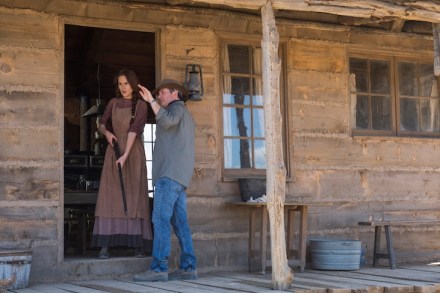
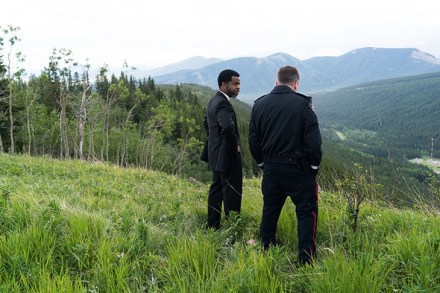
Tin Star, the latest Sky Atlantic drama, has a comfortingly familiar premise: Jim Worth (Tim Roth), an ex-detective from London with an alcohol problem, heads out to rural Canada with his family to start a new life only to find himself embroiled in crime, violence and personal tragedy far worse than anything back home. It begins well. There’s a lovely establishing scene where Roth walks down the street with his new Canadian sheriff’s badge and everyone greets him, as people presumably do in sleepy Canadian Rockies towns like Little Big Bear, where everyone’s got time for one another. In the police station, his two junior officers have so little crime to solve they’re playing video games.

Second thoughts | 7 September 2017

Television

I had planned to review David Mitchell and Robert Webb’s new Channel 4 sitcom Back without constantly referring to their last one Peep Show. Not only did it seem too obvious a way to go; it also felt a bit unfair to compare a deservedly revered programme that ran for 12 years with a single episode that went out on Wednesday. But then I saw that single episode. It’s possible, I suppose, that one day Mitchell and Webb may head in a completely different sitcom direction. Mitchell may not play an uptight, well-meaning loser, or Webb a preening, conscience-free charmer. For now, though, it’s pretty much as you were.

Straight to hell

Television

No, The State (Channel 4) wasn’t a recruiting manual for the Islamic State, though I did feel uneasy about it throughout the four episodes. The fundamental problem is this: if you’re going to make a watchable drama about bad people doing terrible things, you inevitably have to humanise them. And from there it’s just a short step to making them sympathetic. Peter Kosminsky’s drama followed four British Muslims to Syria to join IS.

For goodness’ sake

Television

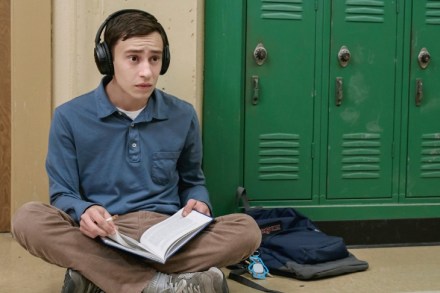
Most new Netflix series are greeted not merely with acclaim, but with a level of gratitude that the returning Christ might find a little excessive two minutes before Armageddon. In this respect, then, Atypical is proving rather atypical. The reason for the mixed reception is that its 18-year-old protagonist, Sam, has autism — and, as we know, in these righteous times fictional characters are judged not on whether they’re convincing individual creations but whether they’re virtuous enough as representatives of an entire group. Happily for the bloggers, by that all-important criterion, Atypical was bound to fall a little short.

Norway’s noir

Television

Valkyrien (C4, Sunday) is the hot new Scandi-noir series, which is being billed as Norway’s answer to Breaking Bad. In this case, the anti-hero having his mid-life crisis is a brilliant surgeon called Ravn (Sven Nordin). He has become disenchanted with The System because the fancy hospital where he works won’t let him use the potentially life-saving treatment he has devised on his dying wife. (It might kill her, they say — which Ravn, quite understandably, considers a ridiculous, faux-ethical excuse.) So off he goes to sulk in his Batcave — a disused nuclear bomb shelter, accessible via an underground station — for what will no doubt be a series of clandestine medical adventures, using equipment he has nicked from his old lab.

In praise of Netflix

Television

All this week I have been trying, with considerable success, to avoid being bludgeoned by TV programmes telling me in various sensitive and imaginative ways just how brilliant, heroic and historically maligned homosexual men are. I achieved this by sticking to Netflix. One of the great things about Netflix (whose annual subscription costs just half the BBC licence fee, by the way) is that though it’s probably run by lefties it doesn’t try to ram its politics down your throat. Maybe this is one reason why its 100 million-plus subscribers are so much less resentful than BBC viewers: they’re being offered choice, variety, entertainment — not worthiness, race, gender quotas and compulsory indoctrination.

1967 and all that

Television

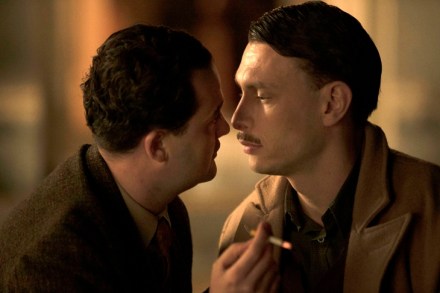
As you may have spotted, the BBC is marking the 50th anniversary of the decriminalisation of male homosexuality with an extended gay season. (And if you haven’t, I can only assume you’ve seen and heard no BBC trailers for months.) The centrepiece this week was Against the Law (BBC2, Wednesday), which dramatised the story of Peter Wildeblood, a Daily Mail journalist imprisoned for 18 months in 1954 for the possibly overlapping crimes of buggery and gross indecency. But — double entendre alert — Wildeblood didn’t take this lying down. After his release, he published a book making the case for legalisation.

Dethroned by feminism

Television

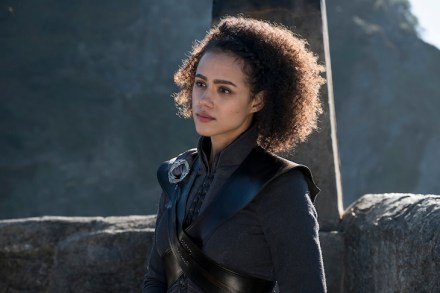
I’m a bit worried about Game of Thrones (Sky Atlantic). Not seriously worried: there’s too much money invested, too much narrative hinterland accrued, too much fan-loyalty not to frustrate, too engaging a cast, too brilliant an original conception for the makers to cock it up too badly. Nevertheless, there were a couple of things that troubled me about the first episode of season seven. One: Ed Sheeran. He’s not the first pop star to make a cameo appearance in Thrones — that honour fell a while back to purveyors of epic, weirdy-warbly, Icelandic whale-music-rock, Sigur Ros — but he’s definitely the most obtrusive.

Candid camera?

Television

Channel 4’s Catching a Killer offered the rare TV spectacle these days of a middle-aged white male copper leading a murder inquiry. Then again, it was a documentary rather than a drama. In its resolutely sober way, it also proved a riveting one, if at times piercingly sad. The programme followed the Thames Valley police as they investigated the killing of Adrian Greenwood in April 2016. The fact that Greenwood was an Oxford historian and book-dealer, and that the motive was the theft of a first edition of The Wind in the Willows, led one detective to suggest early on that ‘It’s like an episode of Morse.’ In the event, it proved a lot more straightforward, and a lot grimmer, than that.

In praise of braindead filth

Television

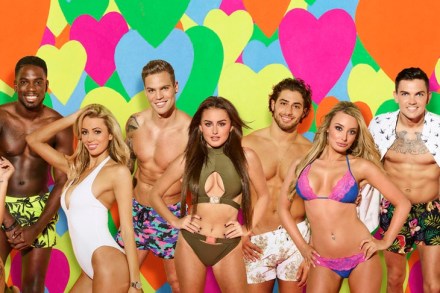
Melvyn Bragg on TV: The Box That Changed The World (BBC2, Saturday) was just what you would have expected of a critical appreciation of 75 years of TV, filmed at Bafta and presented by one of the BBC’s pre-eminent house luvvies. As an antidote I had to switch over to ITV2 to watch Love Island. Yes, I hate Love Island too — every episode leaves me feeling soiled. It’s a mating game show, in which couples compete to shag one another in Majorca for a £50,000 prize, and, with ratings of around 1.7 million, it’s probably the most talked about programme on TV, which fashionable people are pretending to enjoy to show how down they are with popular culture.

Mad about the girls

Television

It’s not unusual to see a pop concert on TV where teenage girls and a group of middle-aged men are separated by safety barriers, as the glow sticks wave and the band’s name is excitedly chanted. But in Storyville: Tokyo Girls (BBC4, Tuesday), there was one fairly major twist: the teenage girls were the band, and the middle-aged men their swooning fans. As this jaw-dropping documentary explained, the girls in question are known in Japan as ‘idols’. Their songs tend to be about how demure and innocent they are; and to prove it, they often perform in school uniforms — although with skirts a lot shorter, I suspect, than is traditional in most Tokyo schools.

Trouble in paradise | 22 June 2017

Television

‘Riviera is the new Night Manager,’ I read somewhere. No, it’s not. Riviera (Sky Atlantic, Thursday) is the new Eldorado — except, unlike the doomed early 1990s soap opera in which Tony Holland attempted to recreate the success of EastEnders on the Costa del Sol, it has at least been glamorously relocated to Nice, Monaco, New York etc. The settings are the best thing about it.

Never knowingly understated

Television

At one uncharacteristically low-key point in Sunday’s Poldark — back for a third series on BBC1 — Ross (Aidan Turner) left off the brooding and cliff-top galloping for a while to review his finances. They were, his genial banker Harris Pascoe told him, in good shape. Hearing that Ross’s marriage was going through one of its happier phases too, Harris then turned even more reassuring. ‘What could possibly go wrong?’ he concluded with a cheerful smile. Which just goes to show that Harris Pascoe must never have seen Poldark — because the answer to his question was, of course, ‘Almost everything’.

How the west coast was won

Television

There’s an incredibly addictive old iPhone game called Doodle God where you effectively invent civilisation from scratch by combining basic elements. So, for example, water plus lava creates steam; the steam, in turn, can be combined with another more advanced element, I forget which, later in the game to create steam power; and so on and on until, from the primordial ooze, you have, through continual experiment, created nuclear weaponry and computers and aeroplanes and all the things we take for granted today. I was reminded of it while watching part one (of two) of The Summer Of Love: How Hippies Changed the World (BBC4, Friday).

Heaven knows they’re miserable now | 1 June 2017

Television

On the face of it, the two new big drama series of the week don’t have a great deal in common, with one set in a determinedly present-day Britain, the other in a dystopian American future. What they do share, though, is a general air of classiness, some impressively understated central performances and, above all, an almost heroic commitment to unrelenting misery. In the first episode of Broken (BBC1, Tuesday), a typical scene consisted of single mother Christina — who’d just been sacked from her badly paid job and told she was ineligible for benefits — reluctantly selling off her wedding and engagement rings, before returning home to find her mother dead.

The great rock’n’roll swindles

Television

Birds have been giving me a lot of grief of late. There’s Tappy — the blue tit who has built his nest just underneath my bedroom window and makes rat-like scuffling noises that bother me at night and wake me early in the morning. And Hoppy, a mistle thrush fledgling who can’t quite fly yet, which means we have to keep the cat indoors, which means I have to deal with its horrible shit in the litter tray every day before breakfast. And the rookery in the big ash, whose inhabitants are very vocal, especially when one of their babies falls out of the nest and gets devoured by the dog. I may be only a couple of dawn choruses away from losing it altogether, as my fellow Brummie Ozzy Osbourne once famously did with a pair of white doves.

Police force

Television

I’ve often thought that a good idea for an authentic TV cop show would be to portray the police as neither dazzlingly brilliant (the traditional approach) nor horrifically corrupt (the traditionally subversive one) — but just a bit hopeless at solving crimes. There is, though, one thing that prevents the idea from being as original as I’d like: this is how the police already come across in many true-life dramas. Take, for instance, the harrowing and — given its high-profile scheduling — extremely brave Three Girls (BBC1, Tuesday to Thursday), which provided an unsparing and wholly believable account of the Rochdale child-grooming scandal.

Serial offenders

Television

Since completing season two of the brilliant Narcos, I’ve been unsuccessfully looking for a replacement serial drama that is more appealing than a bath and early bed. But the problem with TV these days is that series like Breaking Bad have set the bar so high that one ends up like a jaded emperor, forever rejecting good-but-not-quite-good-enough stuff for the most trivial of reasons. Better Call Saul (Netflix original), for example. I’ve tried getting into it a couple of times now (and probably will again because so many people rave about it) because I love Bob Odenkirk’s dodgy lawyer character. But I found he worked better as light relief in the context of Breaking Bad’s otherwise relentless and unforgiving bleakness.

Arms race | 4 May 2017

Television

Like most documentaries, Britain’s Nuclear Bomb: The Inside Story (BBC4, Wednesday) began by boasting about all the exclusives it would be serving up. Unlike most, it was as good as its word. What followed did indeed contain much previously unseen footage and interviews with people — including ‘this country’s bomb-maker in chief’ — who’ve never before spoken about the part they played in Britain becoming a nuclear power. It also did a neat job of fitting the story to our favoured national myth: the one about old-fashioned British pluck and know-how triumphing over both the odds and the shamefully professional ways of other countries. In the 1930s, for example, the race was on to split the atom.

The real deal | 27 April 2017

Television

The other day I had a very dispiriting conversation with a TV industry insider. It turns out that everything you see on reality TV is fake. It’s the ‘everything’ part that really bothered me. Obviously, we all sort of know that most TV is faked: that close-ups on wildlife documentaries are sometimes filmed in zoos and that the meerkat they pretend is the same meerkat is actually three different meerkats; that the chance meetings with colourful characters and experts are all prearranged and that when they answer the door and act surprised it’s often the third or fourth take; that the glamorous parties and realistic, totally unstilted dialogue on Made in Chelsea wouldn’t happen if the cameras weren’t there; and so on.

Psycho thriller

Television

Psychological thrillers — or ‘thrillers’ as they used to be known — have become almost as ubiquitous on television as they are in the average bookshop. On the whole, this is now a genre where contented domesticity exists solely to be undermined, and where the chief function of the past is to come back and haunt people — which is clearly what it’s going to do in Channel 4’s Born to Kill, even if Thursday’s increasingly intriguing first episode was in no hurry to explain exactly how. To begin with, 16-year-old Sam (Jack Rowan) seemed to be on a solo mission to overturn all preconceptions about teenage boys.

Look back in anger | 12 April 2017

Television

‘What we really need is a faux-historical drama series about police brutality and black activism set in 1970s London,’ said no TV viewer, ever. But TV commissioning editors have more important priorities, these days, than mere plausibility, entertainment or value-for-subscription fee. So naturally, when the chance arose to make Guerrilla (Sky Atlantic, Thursday) — a six-parter about Black Panther-style revolutionaries, starring Idris Elba and written by the guy who did 12 Years a Slave — the senior luvvies at Sky were on it like a mistimed high-five. I like Idris Elba.

Age as allegory

Television

Sky Atlantic — available only to Sky customers — has the cunning/infuriating policy of broadcasting the kind of programmes most likely to appeal to people who pride themselves on not being Sky customers. (Basically, the liberal, metropolitan you-know-what.) Now, to a list that includes Veep, Curb Your Enthusiasm, Girls and Last Week Tonight with John Oliver, we can add The Trip, whose third series Sky has poached from the BBC. Like the first two — set in the Lake District and Italy — The Trip to Spain (Thursday) is directed by Michael Winterbottom and features Rob Brydon and Steve Coogan playing versions of themselves that feel teasingly close to the truth.

Oh! What a lovely Waugh

Television

Jack Whitehall could have been perfectly awful as Paul Pennyfeather in Decline and Fall (BBC1, Fridays). He has spent most of his career comically playing up to a common person’s idea of what a posh person looks like: the stand-up who went to the same public school (Marlborough) as Kate Middleton; JP, the Jack-Wills-wearing yah character from Fresh Meat, who went to Stowe; Alfie, the impeccably upper-middle-class, Mumford & Sons-loving history teacher, in Bad Education. But Evelyn Waugh’s class humour is more sophisticatedly snobbish than that, written for a more discerning audience in the days — sigh — when even semi-educated people knew the order of precedence between a duke, a marquess, an earl and, say, a common-or-garden baron.

Beyond belief | 23 March 2017

Television

As we know from all those newspaper articles and actress interviews, there’s a scandalous lack of high-profile British TV dramas starring women over 40. Indeed, if it wasn’t for No Offence, Unforgotten, Silent Witness, Last Tango in Halifax, The Fall, NW, Agatha Raisin, Broadchurch, Happy Valley and Apple Tree Yard, there’d really only be Vera, which returned to ITV on Sunday. The Vera in question is DCI Vera Stanhope, who, in the teeth of fierce competition, may well be the most implausible cop on television — even if she does fit snugly into a thriving sub-genre featuring sharp but kindly policewomen whose male colleagues spend much of the time shaking their heads in disbelieving admiration.

Let’s hear it for the boys

Television

Girls creator Lena Dunham has received criticism from all sides. Detractors on the right see her as an exhibitionist provocateur. Those on the left see her as a privileged narcissist, who can’t help but see feminism through a white middle-class prism — and who unforgivably rooted for Hillary Clinton over Bernie Sanders. The HBO show that made Dunham’s name, which she has written and starred in since her early twenties, is on its final season. It has portrayed the young lives and friendships of four millennial women trying to succeed, or just subsist, in New York, and how their dreams either lose grandeur when they come true or don’t come true at all.

To die for

Television

Down the Mighty River with Steve Backshall (BBC2) was perfect Sunday-night TV — one of the most enjoyable adventure travelogues I’ve watched in ages. So I was quite surprised to see it reviewed lukewarmly by another critic. One of the critic’s objections was that the scene where Backshall spots a bird of paradise through his binoculars by the Baliem river in Papua New Guinea was a bit crap. Why couldn’t we have seen it in loving close-up detail, as you would on a David Attenborough? But this is precisely what I loved about the documentary. It had a roughness, an unpredictability, a spontaneity that you rarely find on TV any more.

On the money | 9 March 2017

Television

Fans of tough investigative journalism should probably avoid Channel 4’s How’d You Get So Rich? Presenter Katherine Ryan’s main tactic is to ask wealthy people how much they paid for something and, when they tell her, to repeat their answer in a tone of wondering admiration. Yet, despite her best efforts to keep it shallow, the programme does end up shedding some light on our peculiar attitudes to the very rich — and in particular our capacity to feel superior and inferior to them at the same time. Ryan, a Canadian comedian who’ll be familiar to anybody who’s watched virtually any panel show, began Monday’s opening episode at the Shropshire pile owned by Steve Smith, the founder of Poundland.