Culture

Culture

The good, the bad and the ugly in books, exhibitions, cinema, TV, dance, music, podcasts and theatre.

Just another Sunday soap

Television

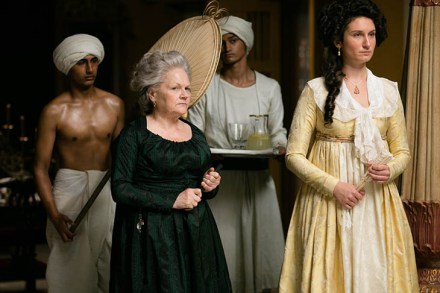
ITV’s new drama Beecham House is set in late 18th-century India where the British and French were still battling it out for supremacy. Its opening credits feature the east at its most exotic, with a montage of ceremonial elephants parading, sari-clad women gliding and lotus flowers opening. The hero is John Beecham (Tom Bateman), a hunky Englishman who proves honourable to the point of mild priggishness as he navigates his way through a world of dusky beauties, inscrutable orientals and treacherous Frenchies. If there were any Indians around at the time who weren’t gorgeously attired rich people, violent bandits or servants who took real pride in their work, we’ve yet to meet them.

What women want | 20 June 2019

Television

Six hundred and thirty years ago, Chaucer revealed in ‘The Wife of Bath’s Tale’ that what women really want is to be totally in charge of everything. With Girl now back home permanently having done her A levels, I can confirm that this is true: no longer am I in control of what we watch on TV, not even when I plead that it’s my job and how else am I going to be able to afford the extensive tour of Magaluf and Bali etc. that she’s got planned this summer? But I don’t mind really because it means I’m forced to watch stuff there’s no way I would have seen otherwise. And in doing so I become a better and wiser person because of all the fascinating things it teaches me about the female psychopathology.

Stranger things

Television

Usually, the return of Killing Eve would be pretty much guaranteed to provide the most unconventional, rule-busting TV programme of the week — where genres are mixed so thoroughly as to create a whole new one. This week, though, there were two new series that were even harder to classify. One was ITV’s Wild Bill: a show so bonkers that the fact it stars Rob Lowe as the recently appointed chief constable of East Lincolnshire mightn’t be the weirdest thing about it. When the resolutely American Bill Hixon (Lowe) first arrived in Boston, Lincs, it looked as if we’d be in for a standard fish-out-of-water comedy, with the traditional differences between Brits and Yanks played for knockabout laughs. And for much of the opening episode we were.

Blast from the past | 6 June 2019

Television

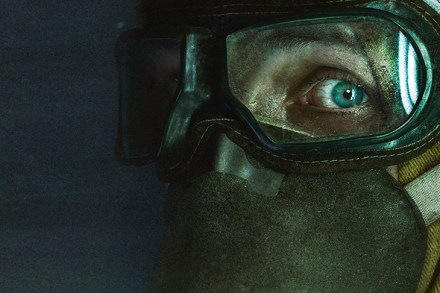
How many people do you think died at Chernobyl? 10,000? 50,000? 300,000? The correct answer, according to the never knowingly understated World Health Organisation — in a thorough report released nearly 20 years after the 1986 explosion — was ‘fewer than 50’. Ah, but what about all the mutant babies who ended up with two heads and webbed feet? What about the inevitable epidemic of cancers? Well, yes, it’s true that 4,000 more cases of thyroid cancer were loosely attributable to Chernobyl, mainly in children and adolescents. But the survival rate was 99 per cent.

Here comes the sun

Television

When you see the opening caption ‘4.6 billion years ago’, it’s a pretty safe bet that you’re watching a programme presented by Professor Brian Cox. And so it proved again this week, as his latest exploration of the solar system began on BBC2, with an episode about Mercury and Venus. Being an officially designated ‘landmark’ series, The Planets (Tuesday) has many of the features you’d expect: lush music, an impressive CGI budget, a ten-minute behind-the-scenes segment at the end. More surprising is Cox’s willingness to anthropomorphise the planets — and to regard the ones that aren’t lucky enough to be Earth with a touching level of sympathy. After all, it’s not their fault they’re so lifeless.

Get your kit off

Television

After its new costume drama You Go, Girl! (Sundays) about how amazing, empowered and better-than-men women are, especially if they are lesbians, the BBC ran its first ever Nike ad. At least that’s what I thought initially: rap music, moody shots of athletes, very high production values. Then I saw they were all grim-faced women and the word ‘RISE’ in flames and I thought: ‘Big new drama series? About girls who’ve been sucked into this very strict Christian cult, a bit like the Handmaid’s Tale, maybe?’ Then I noticed they were all wearing football kit and kicking balls around, and went back to my original Nike idea. Finally came the big reveal. It said: ‘#CHANGE THE GAME. FIFA WOMEN’S WORLD CUP 2019.

Thinking inside the box | 16 May 2019

Television

These days, a common way of introducing radio news items is with the words ‘How worried should we be about…?’ The trouble with this formula is not just the strange notion that anxiety has apparently become some sort of moral duty — even a badge of honour. It’s also that we generally know what the answer will be: we should be very worried indeed. Now, in Russell T. Davies’s Years and Years (BBC1, Tuesday), the same formula serves as the premise for a television drama. The first episode began by introducing us to three adult siblings, scrupulously chosen to represent modern Britain — at least as seen on TV. (The publicity material duly calls them ‘an ordinary British family’.

All in the worst possible taste

Television

‘Unfunny, boring and utterly unrelenting,’ says the Guardian’s one-star review of Chris Lilley’s new sketch series Lunatics (Netflix). And if that’s not incentive enough, our woke critical chum goes on to declare the series ‘problematic’. That’s a weaselly way of saying ‘this triggered all my snowflake sensitivities’ but in such a way as to make it sound like a loftily objective judgment. In truth, Lunatics is only problematic if a) you have no sense of humour and b) you’d prefer all comedy to be politically correct, inoffensive and utterly devoid of satirical edge. Sometimes, Lunatics is so cruel that it’s almost too painful to watch.

The end is in sight

Television

Channel 4’s When I Grow Up had an important lesson for middle-class white males everywhere: you’re never too young to be held up as a git. The series, billed as ‘a radical experiment in social mobility’, gets a group of seven- and eight-year-old children from different backgrounds to work together in a real-life office setting — which in Thursday’s first episode was, rather unexpectedly, Hello! magazine. The editor-in-chief Rosie Nixon began by announcing, in the tones of one making a brave stance against prevailing social attitudes: ‘I do feel passionately about diversity.

Off the Boyle

Television

‘I spend a lot of time helping teenagers who’ve been sexually abused…’ — beat — ‘…find their way out of my house.’ You’d scarcely imagine, listening to Frankie Boyle now, that this was the kind of joke he was telling on TV as recently as this decade. I wouldn’t believe it myself if I didn’t have written evidence of it, in the form of a 2011 TV review of his now-forgotten shocker of a Channel 4 show, Tramadol Nights. Boyle was great back then because he went to places few other comics dared to tread. He joked about everything from cancer (‘What is it about people with cancer thinking they’re suddenly going to run a marathon?

Goodbye to all that | 17 April 2019

Television

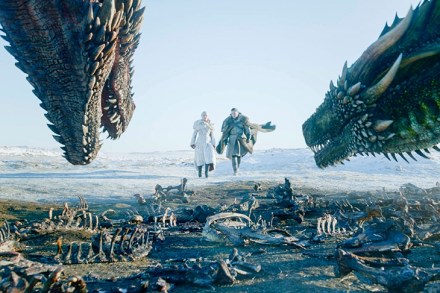
If you’ve ever faced the social embarrassment of having to admit that you’ve never seen Game of Thrones (Sky Atlantic, Monday), then imagine what it’s like when you’re a TV reviewer. The customary excuse of ‘There really isn’t time to keep up with everything on telly’ might work for most series. But now that GoT is officially a programme that everybody watches (apart from all the people who don’t), it’s beginning to feel a bit feeble for this one. So it was that, after swotting up as best I could on the scores of backstories over the weekend, I decided to give the final series a go. I was, of course, expecting the show to have an epic feel.

Planet propaganda

Television

If you liked Triumph of the Will, you’ll love this latest masterpiece of the genre: Our Planet. The Netflix nature series exploits the prestige, popularity and swansinging poignancy of Sir David Attenborough to promote an environmental message so relentlessly dishonest and alarmist it might have been scripted by the WWF. ‘Walruses committing suicide because of global warming.’ That was the nonsense from episode two repeated uncritically by all the newspapers, none of which seems to have been much interested in questioning the veracity of the claim. You’ll never guess what it was that really drove those walruses over the edge of the cliff...

The wisdom of the crowd

Television

On Sunday a drama began with ED905 being stolen by an OCG who’d faked an RTC that required IR, little realising that they had a UCO in their midst. So yes, Line of Duty (BBC1) is back in all its jargon-laden glory — and, judging from the first episode, it’s lost none of its ability to grip either. For those a bit rusty on their police abbreviations, that opening scene featured the female member of an organised crime group pretending she’d crashed her car with a baby inside, causing the woman in charge of a passing police convoy to stop and help. The rest of the gang then appeared in regulation Line of Duty balaclavas, killed three officers and drove off with the lorry-load of heroin the police were escorting.

The secret of their success

Television

Which of the Beatles would you most like to have been? Not either of the dead ones, presumably. Nor the one continually derided for his alleged lack of talent. Definitely not the embarrassing, gurning, two-thumbs-up uncool one… Anyway, it’s a trick question. The correct answer, at least it is for me after watching The Beatles: Made on Merseyside (BBC4, Friday), is Pete Best — the drummer who got ousted just before the band got big because he was too good-looking, too quiet and, some say, because Brian Epstein couldn’t handle his mum’s pushiness. Best, I’d always imagined, was the unluckiest man in history.

Mummy porn

Television

What can parents do about the avalanche of pornography available to their children on tablet, phone and laptop? This question was the starting point for a documentary series that began on Wednesday — and the answer proved unexpected. Having gathered five mothers together and shown them a hair-raising selection of online filth, the programme blithely declared that the best way for these women to ‘make a change’ was ‘by making their own mum-approved porn film’, which they’d then screen for their families and friends. If this premise struck anyone involved in Mums Make Porn (Channel 4, obviously) as at all questionable, they didn’t mention it.

Secrets and lies | 14 March 2019

Television

Halfway through the first part of Channel 4’s extraordinary documentary Leaving Neverland (Thursdays), I flicked through the comments on social media in order to gauge the global reaction. Surely, I thought, Michael Jackson’s reputation will never recover from these bombshell revelations. If you sat, squirming, though Dan Reed’s excruciatingly prurient documentary you’ll know what I mean. Lots of those who didn’t have been justifying their decision to ignore it with excuses like ‘Yeah, but we knew this already. Michael Jackson was a paedo. It’s hardly news, is it?’ But this strikes me as glib and dishonest.

Comedy returns

Television

BBC2’s MotherFatherSon announced its status as a classy thriller in the traditional way: by ensuring that for quite a long time we had no idea what was going on. At first it looked as if the focus would be on a missing teenager whose phone we saw abandoned in the woods. But then we cut to an American called Max (Richard Gere, no less) arriving in London by private jet on an apparent mission to choose our next prime minister. Then to a younger man running fast and screaming. Then to a veteran female journalist being sacked — and not only because she’d just lit a cigarette at her desk. Then back to the young screamer, who by now had revealed himself as the newspaper’s coked-up editor. Then to a woman working in a homeless centre.

Accidental hero | 28 February 2019

Television

Steve Coogan is back as Alan Partridge but frankly who cares? Like Ali G, I’ve long thought, he’s one of those ‘classic’ 1990s comedy characters funnier in recollection than ever he was in reality. He should have been confined to brief sketches — like Paul Whitehouse and Harry Enfield mostly did with their cheesy has-been DJs Smashie and Nicey — not cruelly exposed in endless TV series where you’ve got the joke in the first five minutes and the rest is pure cringe. Actually, though, This Time with Alan Partridge (BBC1, Mondays) is genuinely funny, clever and enjoyable because finally he has scriptwriters who don’t hate him.

Let’s twist again

Television

What’s the best way to start a six-part thriller? The answer, it seems, is to have a bloke of a certain age pottering about at home when he’s suddenly and shockingly murdered by asphyxiation. You then roll the opening credits, forget about the dead guy and introduce the main character, who’s asked to take part in some sort of mission — and agonises about whether to accept or to leave the whole series somewhat stranded. At least, this is exactly what happened in both of this week’s big new Sunday-night dramas: BBC1’s Baptiste and Channel 4’s Traitors.

Putting the Boot in | 14 February 2019

Television

‘I know, let’s repaint the Sistine Chapel. But this time we’ll get it done by Banksy.’ Perhaps this wasn’t the exact phrase used in the early production meetings for the Sky Atlantic reboot (ho ho) of Das Boot (Wednesdays). It does describe pretty well the net result, though. Yes, I know James Walton covered it last week but I’m going to have to strongly disagree with him: Das Boot — Wolfgang Peterson’s 1980s miniseries about life on a U-boat during the Battle of the Atlantic — is my favourite wartime TV drama ever. And I’m damned if I’m going to let this travesty of a new version through the net.

A romp through royal hits and misses

Television

You might well expect a royal documentary on Channel 5 to be unashamedly gossipy. You might also expect it to go for the simultaneous possession and eating of cake — lamenting the endless scrutiny the poor Windsors are subject to, while adding a fair amount of its own. What you mightn’t expect, however, is for the presenter to be Jeremy Paxman. But in Paxman On The Queen’s Children all three things are true. Stranger still, the result is undeniably enjoyable, thanks largely to Paxo himself, who comes across rather as Robert De Niro did in films like Meet the Fockers: as a man who, after decades of the serious stuff, is visibly having fun slumming it for a while.

Relative values | 31 January 2019

Television

Boy often likes to rebuke me for having impossibly high standards when it comes to TV. ‘Why can’t you just enjoy it?’ he says. This is disappointing. One reason I ruined myself to give him an expensive education is so I wouldn’t have to share my viewing couch with a drooling moron happy to gawp at any old crap. Worse, whenever I try to draw his attention to stuff I consider to be extra specially worth watching — Fauda, Babylon Berlin, etc. — he rejects it because it has been tainted by my recommendation. So the next brilliant thing he won’t get to see is Gomorrah (Sky).

The man who would be king

Television

Last year on Who Do You Think You Are?, Danny Dyer — EastEnders actor and very possibly Britain’s most cockney man — discovered that he was a direct descendant of Edward III. Luckily, nobody had the heart to tell him that for somebody of English stock the chances of not being are estimated at 0.0000000000000000000000000001 per cent, and Dyer reacted with a memorable mix of excitement, delight and overwhelming pride. Now, in the two-part Danny Dyer’s Right Royal Family, both he and BBC1 are milking his regal lineage for all it’s worth in what might well be the oddest TV show of recent times.

Target practice | 17 January 2019

Television

As the Allies advanced towards Germany in September 1944, their supplies were brought all the way from western Normandy in a constant shuttle convoy known as the Red Ball Express. If you were making a realistic movie about this, three quarters of the truck drivers would be played by black actors, because that’s how it was in real life. Similar rules would have to apply to any remake of Zulu or Zulu Dawn. It is an awkward but inescapable historical fact that there was no diversity whatsoever among Cetewayo’s Impis: they were all, resolutely, from the same African tribe.

Beat it

Television

Here’s a tricky quiz question for you. What word completes this sentence from a BBC4 documentary on Friday: ‘The world as we know it was created by the…’? The answer, bizarrely enough, is ‘backbeat’ — because the documentary in question was On Drums… Stewart Copeland!, in which the former Police percussionist took a fiercely drum-centric view of well, more or less everything. This was a programme, for example, that compared Elvin Jones’s stick work for John Coltrane to Moses’s parting of the Red Sea; that attributed the Beatles’ success largely to Ringo; and that put forward Dee Dee Chandler as one of the key figures of 20th-century global history.

Heaven knows we’re miserable now

Television

Jimmy McGovern’s one-off drama Care (BBC1, Sunday 9 December) began with a loving grandmother called Mary having a lovely time with her loving grandchildren. During a laughter-filled visit to the chip shop, she also tested their maths by asking how much their order would cost, and they answered with impressive aplomb. So could it be that McGovern — whose previous work (The Lakes, The Street, Broken etc.) has never been difficult to distinguish from a ray of sunshine — was getting into the festive mood? Well, no. As she drove away from the chippy, Mary slumped forward on to the steering wheel as the children screamed and the car headed towards a roadside skip.

One for the girls

Television

Don’t watch The Sinner (originally on Netflix; now on BBC4) because, despite your better judgment, you’ll only get addicted after its irresistibly grabby opening. A pretty if slightly distraite mother called Cora Tannetti — Jessica Biel — is on a lakeside beach with her bearded beta cuck husband and their little boy, surrounded by other relaxed groups of weekend picnickers. Suddenly, she takes huge exception to a hunky male sitting nearby and derangedly stabs him to death with a fruit knife. Why? That’s why it’s being sold as a new genre — the ‘whydunit’ — because obviously we know whodunit already.

Secrets and lies | 29 November 2018

Television

Shortly before her husband’s funeral, the undertaker told the eponymous main character in Mrs Wilson (BBC1, Tuesday) that, ‘We’re here to make this tragic time as straightforward as possible.’ By then, though, we already knew this remark was the kind that, in a school set book, would soon be underlined with the words ‘Dramatic irony!!’ written in the margin. That’s because in its quiet way — devoid of both globetrotting locations and international terrorism — Mrs Wilson is as tangled and morally ambiguous as The Little Drummer Girl. The opening episode began in the far-off days of 1963: so far off, in fact, that Alison Wilson (Ruth Wilson) was first seen nipping home from her office typing pool to make lunch for her husband Alec.

Just say yes

Television

Narcos is back on Netflix, set in Mexico this time, with a cool, world-weary, manly voiceover swearily lecturing us at the beginning that if we smoked sensemilla in the 1970s, then we were partly responsible for the bloody, endless drug wars that went on to kill more than half a million people. Oh really? Sensemilla (derived from the Spanish for ‘without seeds’) is the kind of product of human ingenuity and free markets we should be celebrating, not decrying. It’s more compact than bog-standard weed, making it easier for entrepreneurs to ship, thereby increasing their profit margins. It affords a sweeter-tasting hit and a more euphoric high, thereby giving greater pleasure to the consumer.