Culture

Culture

The good, the bad and the ugly in books, exhibitions, cinema, TV, dance, music, podcasts and theatre.

SAS: Who Dares Wins is harsh, gruelling and transgressively countercultural

Television

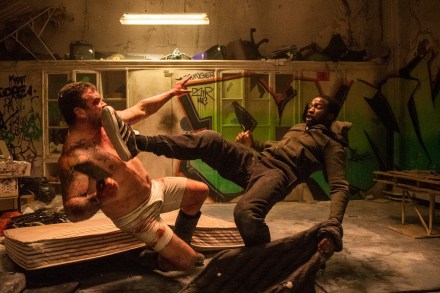
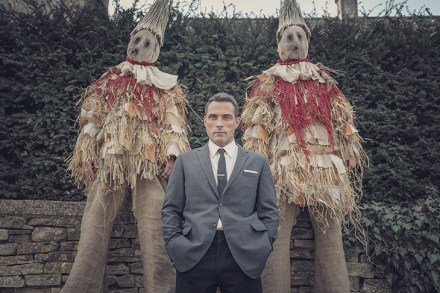
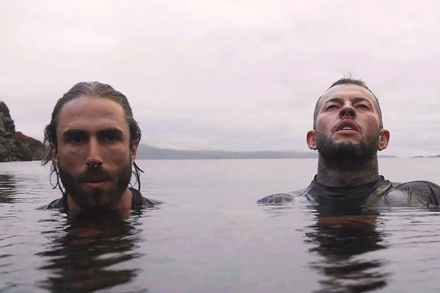
SAS: Who Dares Wins (Channel 4, Sundays) is literally the only programme left on terrestrial TV that I can bear to watch any more. And I’m only slightly exaggerating. Where else, anywhere from the BBC to Channel 4, would you see a woman being punched in the face and made to cry by an ex-SAS soldier for your amusement and delectation? Where else would the competition not be rigged in one way or another so as to ensure that the appropriate race and gender mix made it through to the end? Yes, of course it was shocking a few weeks back watching midwife Louise Gabbitas, 29, get thumped several times in the head by a bloke. Especially when we viewers knew that he was in fact undercover ex-special forces and had been sent to spy on her.

Understated, unashamedly patriotic and heartbreaking: The Windermere Children reviewed

Television

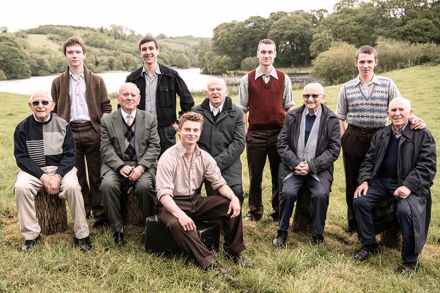
One of the many astonishing things about the BBC2 drama The Windermere Children (Monday) was that the real-life story it told isn’t better known already. In August 1945, 300 Jewish children, who just a short time before had been starving in Nazi concentration camps, arrived at a converted seaplane factory in the Lake District. None, as far as they knew, had any family left, and none could speak any English. Waiting to welcome them was Leonard Montefiore of the Central British Fund for Jewish Relief who’d raised the money to turn the factory into a carefully thought-out rehabilitation centre — and amid the wreckage of Eastern Europe had liaised with the Red Cross, the RAF, the Czech authorities and the British Home Office to fly them in.

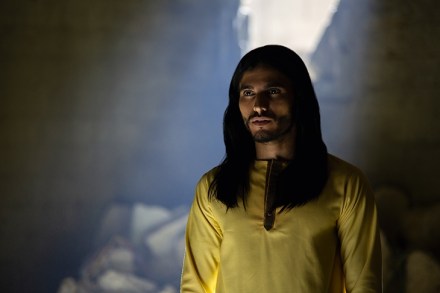
Netflix’s Messiah is a great concept undermined by implausible politics

Television

Sky’s latest bingewatch potboiler Cobra can’t quite make up its mind whether it wants to be an arch, knowing House of Cards-meets-The Thick Of It satire about parliamentary intrigue. Or a full-on post-apocalyptic thriller in the manner of Survivors or The Walking Dead. It ends up succeeding in neither. The premise is that a powerful solar flare is heading towards Britain, leaving the government little time to prepare, and subsequently causing all manner of chaos: plane crashes, hotel fires, escaped prisoners, mass blackouts. Will mild, likeable Conservative prime minister Robert Sutherland (a miscast Robert Carlyle), his fractious cabinet and his civil service prove up to the job of extricating Britain from a new Dark Age?

Undeniably eye-popping: BBC2’s Louis Theroux – Selling Sex reviewed

Television

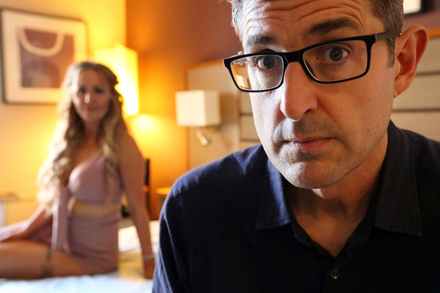
Victoria, a single mother in her early thirties, is getting her children ready for school — ensuring an equitable distribution of toast and issuing a series of determinedly patient instructions. (‘Listen to Mummy, you need to put your socks on.’) Once they’re gone, she then heads to a hotel to meet the first man that day who’ll be paying her £250 for sex. ‘It’s the perfect job for me,’ she explains cheerfully. ‘Very flexible.’ Victoria was one of three women featured in Louis Theroux: Selling Sex (BBC2, Sunday) for which Louis furrowed his familiar brow, adopted his finely honed bemused expression and set off to investigate transactional sex in digital-age Britain.

Did everyone in punk sell out?

Television

For many people of a certain age (full disclosure: mine), punk has been a weirdly persistent presence. These days, we may not often be tempted to sit down with a glass of wine and an album by the Cortinas, Chelsea or Eater. We may even have belatedly realised that the most revolutionary record of 1977 — the year punk officially conquered Britain (and, incidentally, the country’s five bestselling singles were by Wings, David Soul, Julie Covington, Leo Sayer and David Soul again) — was Donna Summer’s ‘I Feel Love’. Nonetheless, the sight of Joe Strummer barking out a load of heartfelt if incomprehensible lyrics while the Clash thrash away in the foreground still somehow feels like a thrilling homecoming. But what to make of the whole business 42 years on?

The only way to survive Christmas TV is to avoid anything seasonal and watch Giri/Haji

Television

The key to surviving the next couple of weeks of TV is to avoid like the plague anything that smacks of seasonal viewing. So, no Christmas specials (such as the semi-celebrity, elderly grown-ups version of University Challenge where the questions are even more laboriously PC than on the student edition), no Harry Potter, no adverts featuring tinsel, dragons and patronisingly diverse families making merry. Basically, you want to steer clear of terrestrial TV altogether — but with one exception. You may use BBC iPlayer to download the only decent drama series that slipped through the net: Giri/Haji. Joe Barton’s blackly comic Anglo-Japanese thriller was by some margin the most original and inspired thing on the BBC all year. But it was a bit unlucky with the reviews.

Why on earth did Glenda Jackson give up acting? BBC1’s Elizabeth is Missing reviewed

Television

Watching BBC1’s Elizabeth Is Missing made one of the more puzzling decisions of recent decades seem more puzzling still. Entirely her call of course, but why on earth did Glenda Jackson give up acting (something she was better at than pretty much everybody else in the world) to become an unremarkable Labour MP (something that any number of people could surely have done just as well) for more than 20 years? Whatever her thinking, though, Jackson’s first TV role since 1992 was an overwhelmingly powerful and therefore quite sad reminder of what we’ve been missing.

The only bearable TV series these days are the ones with subtitles, like Der Pass

Television

True to the Andrew Roberts rule that the only bearable series on TV these days are ones with subtitles, I’ve started watching Der Pass (Sky Atlantic). Not unlike The Bridge and The Tunnel, it starts with a dead body exactly straddling a border, thus requiring the intervention of detectives from two national jurisdictions. This time, it’s a shambolic male Austrian and a perky blonde German. It’s fascinating to see what quirks foreign authors choose to give their detective characters.

Is the patriarchy as all-powerful as it’s cracked up to be? The Baby Has Landed reviewed

Television

Anybody who watched the opening episode of The Baby Has Landed (BBC2, Wednesday) might have found themselves wondering if the patriarchy is quite as all-powerful as it’s cracked up to be. The programme follows ‘six families over six life-changing weeks’ as they welcome a new member — and on the whole features women who radiate authority and men who do what they’re told. The most experienced parents are Nigel and Helen Pierce, first seen embarking on a lengthy quest for shoes as they tried to get their four children under five out of the house so that Helen could go to hospital and have a fifth. As old hands, they passed the time during labour doing crosswords. (‘Breed of hunting dog? You have your contraction and get back to me.

War of the Worlds is as bad as Doctor Who

Television

Edwardian England deserved everything it got from those killer Martian invaders. Or so I learned from the BBC’s latest adaptation of The War of the Worlds (Sundays). Everything about that era, apparently, was hateful, backward and ripe for destruction: regressive attitudes to women and homosexuality; exultant white supremacy (cue, a speech from a government minister on the superiority of the Anglo-Saxon race); a general prevailing bone-headedness and stuck-upness; stiff, stuffy, relentlessly brown clothing with superfluous belts; and as for those ridiculous bristling moustaches… Still, I don’t think H.G. Wells would have been totally appalled by this travesty of his 1898 potboiler.

Patronising, clichéd and corny: BBC1’s Gold Digger reviewed

Television

Some last taboos, it seems, can remain last taboos no matter how frequently they’re confronted. Grief, the menopause, masturbation, mental illness are all routinely described that way whenever they get depicted on television — i.e. quite often. But perhaps the sturdiest last taboo of the lot is that older women can have sexual feelings: something that appears to come as a rather patronising surprise to TV folk every time they tackle it — i.e. quite often. The latest example of such bravery is Gold Digger (BBC1, Tuesday), a drama keen for us to understand that a woman of 60 can still be both desirable and a goer — although not so keen as to cast a woman of 60 in the role.

God awful: BBC1’s His Dark Materials reviewed

Television

‘Here’s your new Sunday night obsession...’ the BBC announcer purred, overintoned and mini-orgasmed, like she was doing an audition for a Cadbury’s Flake commercial, ‘... a dazzling drama with a stellar cast.’ My hackles rose. Did no one ever mention to her the rule about ‘show not tell’? And my hackles were right. His Dark Materials has indeed become my Sunday night obsession: how can the BBC’s most-expensive-ever drama series possibly look, sound and feel so clunkingly, God-awfully, disappointingly flat? Yes, I know Philip Pullman’s trilogy is an extended, bitter rant against Christianity disguised as children’s entertainment.

BBC wildlife documentaries are just a chance to tell us all off

Television

Older readers may remember a time when landmark BBC wildlife documentary series were joyous celebrations of the miraculous fecundity of the planet we’re lucky enough to find ourselves living on. Well, not any longer. In our more censorious age, they’ve become another chance to essentially tell us all off. So it was that Seven Worlds, One Planet (BBC1, Sunday) began with Sir David Attenborough presenting the usual highlights package of the wonders to come, with each episode focusing on a different continent. But then he put on his special serious voice to add the dark warning that ‘This may be the most critical moment for life on Earth since the continents formed.’ (Quite a long time, I think you’ll agree.

If we do get a good Anglo-American trade deal, we should thank Trump’s mother

Television

In an uncharacteristic fit of almost-robustness, Culture Secretary Nicky Morgan has said she is ‘open-minded’ about scrapping the BBC licence fee and replacing it with a Netflix-style subscription service. Good idea. What would we actually miss if we didn’t subscribe? Not an awful lot in my view. Some people cite David Attenborough’s nature documentaries but I certainly wouldn’t now that they have become so obtrusively propagandistic. The problem with the BBC isn’t — and never has been — lack of talented filmmakers, wildlife camera crews, presenters, actors, writers or production teams. It’s that, from news to drama, the BBC’s woke politics now subsume and corrupt its entire output.

Should we be playing the surveillance state for laughs? Celebrity Hunted reviewed

Television

One of the many great things about The Capture was that we could never be sure whether the British authorities’ capacity for virtually blanket surveillance was a nightmare vision of the future or a nightmare portrait of the present. Celebrity Hunted, though, suggests a third possibility: that virtually blanket surveillance is simply proof of how marvellous the authorities are, and so untroubling that it can be played for laughs. This third series is, once again, part of Channel 4’s annual Stand Up to Cancer season, and features four teams of two, whose job is to go on the run for a fortnight and avoid capture by intelligence experts equipped with the latest snooping technology.

Pure, undiluted genius: Succession reviewed

Television

I have never ever watched a TV series I have enjoyed more than Succession (Now TV). There’s stuff I’d put in the same league, maybe — Fauda, Babylon Berlin, Band of Brothers, Utopia, Gomorrah, Breaking Bad, The Sopranos, and so on — but absolutely nothing beats it. It is, quite simply, a work of pure, undiluted genius. Which wasn’t what I expected when my friend Toby recommended it to me a few weeks ago. ‘It’s about this media dynasty, a bit like the Murdochs. And the kids spend their whole time scheming and competing as to which one is eventually going to take over the company from the bullying patriarch Logan Roy,’ he said. This all sounded a bit grown-up, earnest and worthy to me.

A solid costume drama but Dame Helen has been miscast: Catherine the Great reviewed

Television

It’s possibly not a great sign of a Britain at ease with itself that the historical character most likely to show up in a TV drama now seems to be Oswald Mosley. But the week after his starring role in Peaky Blinders ended, there he was again, right at the beginning of BBC1’s next Sunday-night drama. World on Fire opened with Mosley addressing a 1939 Manchester rally, where he duly whipped up his supporters and reminded the rest of us of the dangers of extremism. Luckily, there were two people in the hall brave enough to protest: salt-of-the-earth northern lass Lois Bennett and her much posher and therefore much stiffer boyfriend Harry Chase.

Gloriously un-PC: Ronan Bennett’s Top Boy reviewed

Television

Sir Lenny Henry, the former comedian, is wont to complain to anyone who’ll listen that there isn’t enough ‘diversity’ on TV. Really, he should watch Top Boy (Netflix). Apart from the odd token walk-on whitey — skanky crack addicts, nasty immigration officers — it’s wall-to-wall BAME casting opportunities. The protagonist, Dushane (Ashley Walters), is black. So are all his friends, family and associates (his mandem, as they are colloquially known). So, mostly, is the urban music soundtrack, the work of various grime artists curated by the show’s co-producer, Canadian rapper Drake. What Sir Lenny might find not ooookaaaaay, I suppose, is that pretty much all the characters are ruthless, murderous, drug-dealing gangland thugs.

Abba, Twitter vs Instagram, and papal selfies: the modern face of the Catholic Church

Television

As a lifelong Catholic, I’ve often thought that two of the Church’s chief characteristics are a) how weird it is when you think about it; and b) how weird it is that so few people in it think how weird it is when you think about it. Happily, if a little smugly, I have to say that nothing in the first episode of Inside the Vatican (BBC2, Friday) caused me to revise this theory. There was a time, of course, when allowing TV cameras to film your institution was a risky strategy, as St Paul’s cathedral and the Royal Opera House can testify after those fly-on-the-wall series of the 1990s showed us their dirty laundry with some glee.

With these documentaries, the BBC has lost any claim to impartiality

Television

Because the rise of the Nazis is a topic so rarely mentioned these days, least of all in schools, the BBC has produced a helpful three-part explainer of that title (BBC2, Mondays) showing why the story of Hitler is even more relevant today than it was in the 1930s. Back in the day, the BBC might have been content to strive for an objective take on the subject, perhaps with a voiceover by Samuel West and lots of period footage. But the danger of that approach, the BBC has since realised, is that it runs the risk of viewers making up their own minds what to think. Some of them might not be aware, for example, of the obvious parallels between Hitler, Nigel Farage, Donald Trump, Brexit and, to a lesser extent, Michael Gove.

I have no clue what’s going on but can’t wait to find out: BBC1’s The Capture reviewed

Television

How did the police ever solve any crimes before CCTV? That was the question which sprang to mind watching the first episodes of two highly promising new crime dramas this week. It’s also the central question now facing the detective in one of them. Part police officer, part career women, Rachel Carey in The Capture (BBC1, Tuesday) is being fast-tracked through the system to the traditional disapproval of her grizzled, old-school boss DCI Alex Boyd — imaginatively known as Boydy. Fortunately, Rachel (Holliday Grainger) won’t be with his unit for long. Having saved Britain from a deadly terrorist attack while working for special ops, she’s been sent there temporarily to see how she might handle a high-profile murder or kidnapping.

I like Brassic but the reason it’s getting such glowing notices is depressing

Television

Brassic (Sky One) feels like the sort of TV comedy drama they last made about 15 years ago but would never get commissioned now, certainly not by the BBC. Almost all of the main characters — apart from love interest Michelle Keegan — are white, male and heterosexual. And it’s set in the kind of Lancashire market town surrounded by rolling sheep country where the opportunities for plausible diversity casting are really quite limited. So how come it has been getting such glowing notices from all the previewers and reviewers? You’ll be depressed when I tell you. Well, it has depressed me anyway. The main character Vinnie — played by Joe Gilgun — is bipolar.

The Octopus in My House left you with an overwhelming sense that octopuses are astonishing

Television

Professor David Scheel, the presenter of a BBC2 documentary on Thursday, instantly brought to mind that American scientist in The Fast Show: bearded, bespectacled, softly spoken and willing to try an experiment just for the hell of it. A marine biologist in Alaska, Scheel has been studying octopuses (his own preferred plural, incidentally) for 25 years. But what, he whispered excitedly, ‘would I find out if I invited an octopus into my house?’ Well, one obvious answer we got from the starkly titled The Octopus in My House is that a TV film crew would be happy to show up and record what happened — which was essentially that he and his 16-year-old daughter Laurel spent a lot of time peering wonderingly into the animal’s tank.

Rave revolution

Television

Jeremy Deller’s Everybody in the Place: an Incomplete History of Britain 1984-1992 (BBC4) began with some footage of kids queuing up outside a warehouse rave in Stoke-on-Trent in 1991. It was at once banal and extraordinary: everyone was white; nobody was overweight; none of the clothes were designer, expensive or branded; nobody wore facial hair. This was the England of my late youth and I remember it vividly. But it feels so remote from the present that it might just as well have been a lithograph of extravagantly side-burned men in stiff woollens captioned: ‘The Camp before Balaklava’. Deller is probably a bit more left-wing than me — how could he not be?

Perfectly grim, and gripping

Television

My favourite epithet about my favourite TV series was the headline in a review by the Irish Times: ‘Gomorrah. Where characters die before they become characters.’ The review appeared to suggest that this was a bad thing. But I disagree. What made Game of Thrones so original and compelling, especially in the early seasons, was its refreshing willingness to break convention by murdering key players at the drop of a hat. Gomorrah (Sky Atlantic) merely pushes that troubling edginess a step further: whether you’re the head of the Neapolitan mob, an adorable, cute child, or just some random, decent civilian briefly introduced in vignette, there is never a guarantee that you’ll survive the episode.

How not to make TV

Television

BBC2’s How the Middle Classes Ruined Britain (Tuesday) began rather promisingly. ‘I’m a working-class comedian who voted Leave,’ announced presenter Geoff Norcott, ‘and I think it’s about time you lot heard some home truths.’ But then came the programme itself — which turned out to be the TV equivalent of a footballer who, faced with an open goal, dribbles about aimlessly before falling over. The first bit of aimless dribbling followed the shock news that middle-class parents often try to get their children into the best local schools, sometimes by claiming to live nearer to them than they do.

Saints and sinners | 18 July 2019

Television

I’m beginning to feel like Donald Sutherland in Invasion of the Body Snatchers: almost the last person on Earth who hasn’t been assimilated by the evil, shapeshifting, floral pod creatures from outer space. Losing my comrade Christopher Booker the other day didn’t help. Nor did turning to the once robustly sceptical Sun newspaper this morning to find a spread on how to cut your carbon footprint and recycle. The final ‘reeeee!’ moment (fans of the movie will get the reference) will no doubt come when I next bump into Matt Ridley and he tells me: ‘We really must heed the wise things the Prince of Wales and Greta Thunberg are telling us about climate change!

Rocket men | 11 July 2019

Television

As the title suggests, 8 Days: To the Moon and Back (BBC2, Wednesday) comprehensively disproved the always questionable idea put forward by Elton John’s ‘Rocket Man’: that being an astronaut is ‘just [a] job five days a week’. More importantly perhaps, by concentrating purely on how Apollo 11’s lunar voyage unfolded over the eight days in question, without any pesky hindsight or analysis, it stirringly reminded us how uncomplicatedly thrilling the first moon landing was at the time. And also, you couldn’t help noticing, how madly risky. A key piece of equipment throughout the mission appears to have been the seat of the pants.

Go, West

Television

My plan to cut the BBC out of my life entirely is working well. Apart from the occasional forgivable lapse — that excellent Margaret Thatcher documentary; Pointless and Only Connect because they’re the only programmes we can all watch together as a family — I find that not watching or listening to anything the BBC does is making me calmer, happier and better informed. I’m also learning stuff about myself that I never imagined possible. Like the fact that I have a massive man crush on the rap star Kanye West.