Culture

Culture

The good, the bad and the ugly in books, exhibitions, cinema, TV, dance, music, podcasts and theatre.

Recipe for success | 3 May 2018

Television

From time to time, a TV show comes along which is so thrillingly original, so wildly imaginative, that you can’t even begin to think where the makers got the idea. Britain’s Best Home Cook (BBC1, Thursday) isn’t one of them. Nevertheless, it has a serious claim to being the most important new programme of the week — if only to the BBC which, despite the failure of The Big Family Cooking Showdown (whose title I just had to check via Google), clearly hasn’t given up on the possibility of finding a way to replace The Great British Bake Off. But in fact there’s another series that some viewers might feel is lurking in the background here — and that’s W1A.

Missing the point | 26 April 2018

Television

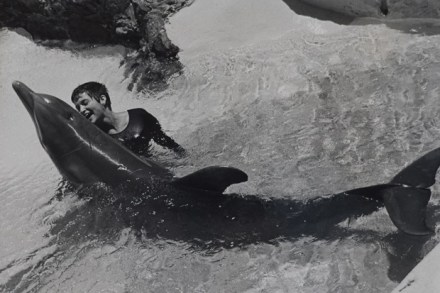
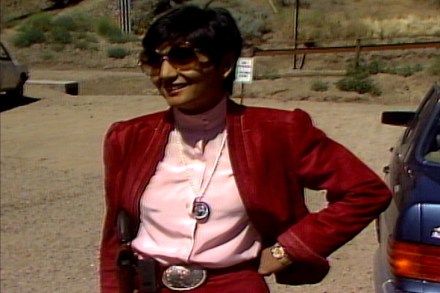
Because I’m a miserable old reactionary determined to see a sinister Guardianista plot in every BBC programme I watch, I sat stony-faced through much of Cunk On Britain (BBC2, Tuesdays). Philomena Cunk (played by Diane Morgan) is a spoof comedy character who used to appear on Charlie Brooker’s Weekly Wipe and has now been given a full series. Though the character is amiable enough — a heroically thick Northern woman in a smart jacket who goes around Britain making stupid observations and asking celebrity historians dumb questions — I can’t quite work out what the point of the joke is. Is it a send-up of dumbed-down Britain? Is it designed to make TV history experts look pompous?

The great pretenders | 19 April 2018

Television

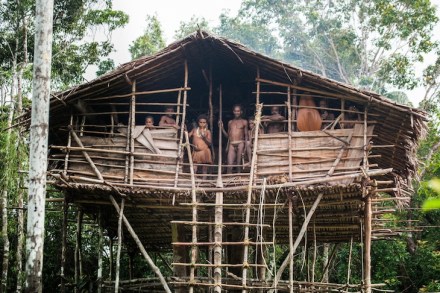
For a while now, the Korowai people of Western Papua have been the go-to primitive tribe for documentary-makers. The Korowai were unknown to the outside world until the 1970s — but they’ve certainly made up for it since, with their Stone Age tools, jungle treehouses and penis gourds becoming almost as familiar to TV viewers as Brian Cox on top of a mountain. No wonder, then, that Will Millard’s introduction to My Year with the Tribe (BBC2, Sunday) smacked of mild desperation as he sought to distinguish his new series from its many predecessors. (No fixers laying on anything in advance! Not just one snapshot of Korowai life, but four over 12 months!) In the event, however, he needn’t have worried.

It’s a cult thing

Television

I have decided to set up a cult, which you are all welcome to join, especially those of you who are young and very attractive or stupendously rich. The former will get exclusive membership of my JiggyJiggy Fun Club™, while the latter will be essential in financing all the cool shit I need on my 500-square-mile estate, viz: hunt stables and kennels, helipad, private games room with huge comfy chair, water slides, grouse moor, airstrip, barracks for my cuirassiers, volcano with battery of rockets inside, and so on. What gave me the idea was this new Netflix documentary series everyone is talking about called Wild Wild Country.

Friday night refreshment

Television

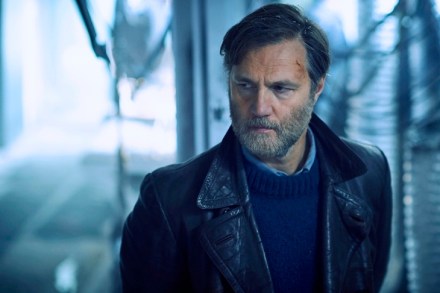
BBC2 has a new drama series for Friday nights. The main character is a world-weary middle-aged police inspector with an unshakeable commitment to smoking. His work partner is a feisty female officer in her twenties who combines salt-of-the-earth irreverence with being a damn good cop. Between them, they’re investigating the murder of an attractive young woman who their colleagues immediately assumed was a prostitute, and whose death reminds the inspector of a previous investigation that continues to haunt him — which is why his boss is constantly trying to take him off the case. But if this makes you think that The City & The City is yet another identikit crime drama, then you couldn’t be more wrong.

Village voice

Television

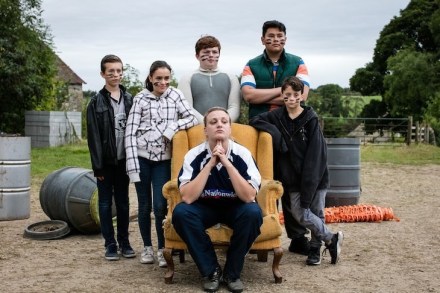
Sometimes — really not often but sometimes — a programme that’s good and honest and true slips under the wire of the BBC’s jealously guarded PC agenda and makes a home run. The latest to do so is a deadpan comedy series called This Country (BBC3). It’s so deadpan that it’s easy to see why an earlier pilot episode for ITV crashed and burned. If you were channel-hopping and lingered on it for five minutes, you might easily mistake it for an earnest, worthy, achingly tedious fly-on-the-wall documentary series about the poverty and despair of left-behind rural England. This impression is enhanced by screeds that occasionally appear on screen giving you, say, statistics illustrative of the funding crisis in healthcare outside the big cities.

Sunday best

Television

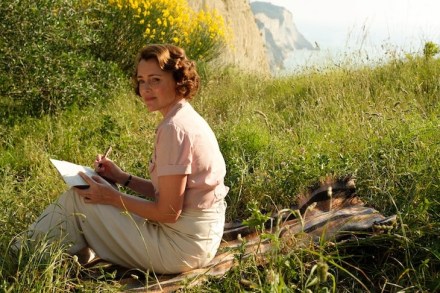
For as long as I can remember, Sunday nights have been the home of the kind of TV drama cunningly designed to warm the sternest of heart cockles. Think, for example, of Robert Hardy cheerfully bellowing his way through almost every scene of All Creatures Great and Small (‘PASS THE SALT, JAMES!’). Or of Pop Larkin’s impressive commitment to chuckling indulgently in The Darling Buds of May. Or of Heartbeat somehow racking up 372 episodes. Even so, ITV has now taken this tendency to surprising new lengths, with not one but two Sunday-night dramas that run consecutively and contain such traditional elements as gorgeous sun-dappled scenery, cute animals, gruff old-timers with hearts of gold and any number of lovable eccentrics. First up, at 8 p.m.

The beautiful and the damned

Television

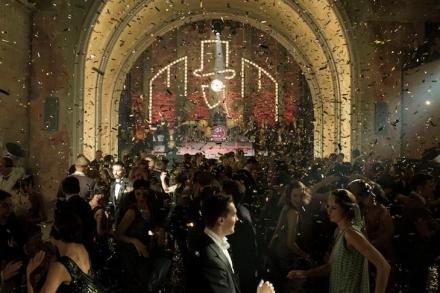
Babylon Berlin (Sky Atlantic), the epic German-made Euro noir detective drama set during Weimar, is so addictively brilliant that I’d almost advise you not to start watching it. After the two seasons to date you’ll be left feeling like the morphine-addicted hero Gereon Rath (Volker Bruch) when deprived of his fix.

Fashion victim

Television

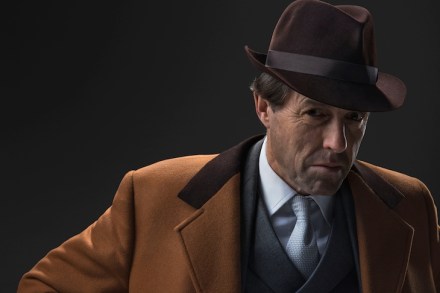
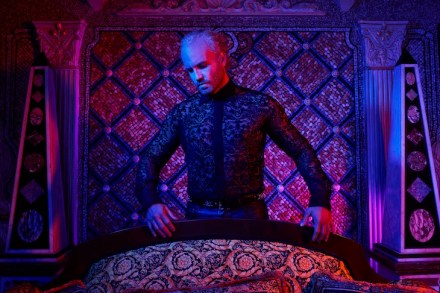
By common consent, including Bafta’s, The People v. O.J. Simpson: American Crime Story was one of the best TV dramas of 2016. Produced by Ryan Murphy, it laid out the story in a beautifully clear, largely chronological way that made us appreciate, all over again, just how strange the whole O.J. business was — not least thanks to the wider social forces at work. Now, we’ve got The Assassination of Gianni Versace: American Crime Story (BBC2, Wednesday), also produced by Ryan Murphy and also tackling an event from the 1990s that manages to seem both shockingly particular and neatly revealing of more general trends. At which point, all similarities end, because here Murphy (who also directed the first episode) takes a far more fragmented and less viewer-friendly approach.

O tempora! O mores!

Television

Most of the history I know and remember comes from my inspirational prep school teacher Mr Bradshaw. History was taught so much better in those days. It was all kings and queens, battles and dates, with no room for any of that nonsense like,‘Imagine you are a suffragette going to protest the oppressive male hegemony at the races. Describe how it feels to be crushed by the king’s horse.’ Nor was there any question that you were participating in some kind of collaborative learning experience. Your ‘master’ taught; you listened and learned — and occasionally made distracting jokes and got bits of chalk chucked at you. That was the deal and it worked very well.

Losing the plot | 22 February 2018

Television

ITV’s Marcella (Monday) represents another triumphant breakthrough in the portrayal of female cops on television. Of course, thanks to more or less every other crime show around, we already know that women in their forties can be senior police officers. But what Marcella makes even clearer than, say, Vera or No Offence is that so can women in their forties who are entirely unsuited to being senior police officers. For a start, the eponymous heroine suffers from regular mental collapses during which she often turns violent before handily forgetting — and forgiving herself for — anything bad she may have done. She also seems to specialise in cases where she hasa deep personal involvement that might cause a lesser woman to worry about a conflict of interests.

Hare-brained

Television

Shortly after my rave review of McMafia eight weeks ago, I got a long message from an old friend chastising me for being so horribly wrong. Could I not see that the series was boring, convoluted and badly acted? Was I aware of how many better series there had been on Amazon and Netflix recently because, if I wasn’t, she could give me a few recommendations… Several other people wrote to me in a similar vein and I felt terrible. Life is short and TV production is so voluminous these days that now more than ever we need critics to sift the bullion from the dross. Sure, reviews are a snap judgment, usually based on just one episode and written under pressure. Even so, if you can’t be trusted to get it right, say, 90 per cent of the time, that makes you a critical fail.

Girls on film

Television

To mark the 100th anniversary of women’s suffrage — if a little oddly — Channel 4 on Tuesday brought us a special girls-only edition of The Secret Life of Five-Year-Olds. The cast were a mix of new faces and old hands from previous series: among them Jet who, like a primary-school version of a traditional Hollywood actress, has been playing a five-year-old on the show since 2016. Still, you can see why the producers keep calling — because, by now, Jet has got the tomboy role required of her down pat. ‘It’s hard to make friends with just girls,’ she declared early on, hitting the word ‘girls’ with exactly the right degree of scornful emphasis.

Friends reunited | 1 February 2018

Television

Perhaps you missed the fuss because there has been so little publicity about it. But last week, at Davos, the President of the United States was granted the extraordinary privilege of an audience with Britain’s leading interviewer, media communicator and cultural icon, the David Frost de nos jours Piers Morgan. On Sunday night we finally saw the result and what an unbelievable masterpiece of a scoop it was. We knew this because every few minutes the show’s star kept popping up in voiceover form to tell us. ‘I knew the first international televised interview with President Trump was going to be special. But I hadn’t expected the commander-in-chief to be quite so candid,’ Piers congratulated himself at one point.

Old hat | 25 January 2018

Television

These days, when it comes to people who used to be on the telly, the answer to the classic newspaper question ‘Where are they now?’ tends to be a fairly predictable one: they’re still on the telly — if, that is, you look carefully enough. They’re also quite likely to be travelling abroad with a few of their peers while wearing a large hat. The BBC started the trend — possibly even the genre — with The Real Marigold Hotel. ITV has provided the weirdest example so far, with Gone to Pot, in which the likes of Christopher Biggins and Pat Butcher from EastEnders investigated the legalisation of marijuana in California by smoking bongs and giggling a lot.

Mash-up of all mash-ups

Television

It’s a terrible thing for a TV critic to admit but I just don’t know what to make of Britannia, the new Sky Atlantic drama set during the Roman invasion of Britain, scripted by Jez Butterworth, starring a top-notch cast including David Morrissey, Zoë Wanamaker and Mackenzie Crook, and heavily touted as the next Game of Thrones. Is it really in the Thrones’s league? I’d say not. You remember how Thrones started, all those seasons ago: the scouting party in the creepy frozen wood; the dead child with milky-blue glowing eyes; the shockingly draconian punishment meted out by Ned Stark to the party’s sole survivor. Within the first ten minutes it was all there: the gnawing tension, the ‘anyone can die’ cruelty and horror.

Thinking outside the box

Television

These days a genuinely controversial TV drama series would surely be one with an all-white, male-led cast that examined the problems of a bunch of middle-class people. (Just imagine the Twitter outrage!) But while we await that — possibly for a while yet — we’ve now got two highly promising new shows of the more approved ‘controversial’ kind: where racial issues are tackled in a thoughtful and scrupulously responsible way. Kiri (Channel 4, Wednesday) has the distinct advantage of starring Sarah Lancashire, whose character Miriam proves that TV mavericks needn’t always be doctors, lawyers or cops. They can, it seems, also be social workers. So it was that Miriam was first seen adding something a little stronger to her breakfast coffee.

Licensed to thrill

Television

My third most fervent New Year wish — just after Litecoin goes to £20,000 and Jacob Rees-Mogg becomes PM — is for the BBC to retire to its study with its service pistol and a bottle of whisky and finally do the decent thing. After all, as lots of people are beginning to notice, when you spend 40 per cent of your viewing time watching your £79-a-year Amazon Prime, and another 40 per cent on £96-a-year Netflix, your compulsory £145.50 licence fee starts to look like a lot of money to pay for the remaining 20 per cent’s worth of diversity outreach, anti-Brexit whining and green propaganda. That’s why I was so very disappointed by the BBC’s first big New Year offering. McMafia (Tuesdays) is so brilliant that it almost disproves my point.

Men behaving badly | 13 December 2017

Television

BBC1’s The Miniaturist (26/7 December) is a lavish two-part adaptation of Jessie Burton’s bestseller. It’s also further proof that almost any geographical and historical setting can be conscripted to tell us what’s apparently the only story we’re interested in these days: an alliance of plucky and unfailingly virtuous black people, gay people and women taking on the repressive forces of straight white blokes. The main character, Nella (Anya Taylor-Joy), is ostensibly a young 17th-century Dutchwoman who’s been married off to a rich Amsterdam merchant. On closer inspection, though, she turns out to be a 21st-century feminist who’s somehow been transported back in time to show our benighted forebears the error of their patriarchal ways.

Women on top | 7 December 2017

Television

Boy came to me the other night in a state of dismay. ‘Dad, I just turned on Match of the Day to watch England vs Kazakhstan and guess what: they never mentioned this, but it’s the women’s game.’ What bothered him was not so much being forced to watch a slower, less athletic, duller version of real football — though obviously that too — as that the BBC was being so utterly disingenuous about it. This policy of pretending there’s absolutely no difference between men’s and women’s international sporting fixtures has, I know, been operational for some time. But for those of us living outside the PC metropolitan bubble — i.e. most of the BBC’s actual audience — it still feels insulting, hectoring and dishonest.

Living dolls

Television

This week on Channel 4, we watched a cheery 58-year-old American engineer called James going on a first date. He was meeting Harmony, an extravagantly shapely blonde who was obliging enough to be wearing a low-cut crop top and tiny shorts, and who greeted him with a charming smile. After a spot of small talk and a dumb-blonde joke, she then alternated between assuring him how great he was and inviting him to masturbate over her. ‘You’re awesome,’ a visibly smitten James declared — apparently not at all bothered that Harmony was a robot.

Family favourites | 23 November 2017

Television

It’s a weird sensation getting your child back for an extended period when for the previous decade you’ve been packing him off every few weeks back to boarding school. Obviously, it’s quite pleasant, amusing and enlightening to study at close hand and at length this alien thing that you’ve bred. At the same time, though, they don’t half become a discombobulatingly overbearing presence. For example, in the old days I would definitely have reviewed Howards End, even though I can’t stand E.M. Forster or the ghastly pinko Schlegel sisters. But now that the Fawn and I no longer have the house to ourselves, we have to fall in with Boy’s viewing schedule, which is largely comprised of quiz shows. Any quiz show, pretty much.

Adult entertainment | 16 November 2017

Television

Any readers of the Sun who excitedly tuned in to Howards End on Sunday night with their pause button at the ready will, I fear, have been in for a disappointment. Before the programme went out, the paper had assured them that this new BBC1 adaptation would ‘do a Poldark’, with ‘a hot cast’ providing ‘a sexed-up remake’ of the 1992 Merchant Ivory film. (The sub-editors may have missed a trick by not headlining the piece, ‘It’s E.M. Phwoar-ster!’) In the event, what they got was a quietly thoughtful exploration of Edwardian intellectual life. The first episode, in fact, didn’t differ very much from the non-sexed-up film version — and when it did, it was generally by being even more faithful to the book.

Oh, Jeremy Corbyn

Television

This week I want to put the boot in to Gogglebox (Channel 4, Fridays). Not the mostly likeable, everyday version, whose stars include our very own and much-loved Dear Mary, where ordinary-ish people are filmed reacting amusingly to the week’s TV. I mean the recent celebrity special, featuring former Oasis singer Liam Gallagher, a cricketer, a footballer, Ed Sheeran, Ozzie and Sharon Osbourne, the actress formerly known as Jessica Stevenson and Jeremy Corbyn. The last couple were filmed together sitting on a yellow sofa at a smart-looking terrace address in Edinburgh. No explanation was given as to what the leader of the Labour party was doing with the former star of Spaced — Jessica Hynes, as she’s now known.

Paradise lost | 2 November 2017

Television

Anybody who wants to maintain a strong and untroubled stance against mass migration to Europe should probably avoid BBC2’s Exodus: Our Journey Continues. In theory, the case for limiting the numbers may be more or less unanswerable — but this is a joltingly uncomfortable reminder of what it can mean in practice. Any viewers suspicious of the BBC’s pinko tendencies will presumably have noticed that all the refugees we’ve met so far are completely lovely. Yet, faced with Thursday’s episode, even they might have found it tricky to preserve a steely primacy of head over heart. Or not to notice that these are people very much like us — only a lot unluckier in where and when they were born.

Pass the sick bag

Television

The opening of Gunpowder (BBC1, Saturdays) was just about the most knuckle-gnawingly tense ten minutes I’ve ever seen on TV. It’s 1603 and James I is on the throne. At the Warwickshire great house of Baddesley Clinton, a group of aristocratic Catholics, including Robert Catesby (Kit Harington) and Anne Vaux (Liv Tyler), are celebrating Mass illicitly when a party of armed men begins hammering at the door. Quickly, the various guerrilla priests — a senior Jesuit Henry Garnet and two young acolytes — are bundled into hiding, two in a priest hole set behind some panelling, one in a chest. The search party enters, led by an implacable witchfinder-general type who pursues his task with sadistic relish and grim efficiency.

Saints and sinners | 19 October 2017

Television

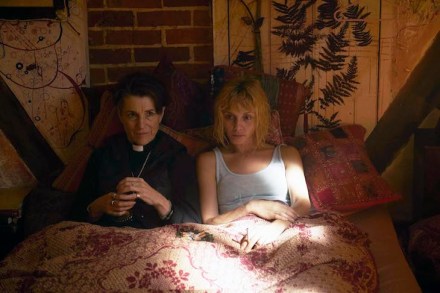
Any rival reality-TV makers watching Channel 5 on Thursday will, I suspect, have been both mystified and slightly embarrassed at not having thought up Bad Habits, Holy Orders themselves. After all, the concept is a blindingly obvious one. Take five young women whose primary interests are selfies, booze and clubbing and make them live like nuns for a month. And not metaphorically either: the five are staying with the Daughters of Divine Charity at the Convent of the Sacred Heart in Swaffham, where days filled with prayer, reflection, manual work and wholesome play end at a 10 p.m. bedtime.

When in Rome… | 12 October 2017

Television

I know I keep saying that in Decline of the West terms we’re all currently living in Rome, circa 400 AD. But now, on TV, there is actual proof of this in the form of a truly appalling reality series called Bromans (ITV2, Thursdays). Bromans is like a cross between Love Island and Carry On Cleo, so shamelessly low, tacky and brain-dead that it makes Geordie Shore look like Kenneth Clark’s Civilisation. Basically, a bunch of ridiculously buff lads strip off and participate in crap gladiatorial contests in which no one dies (thus entirely defeating the object), while their hot blonde girlfriends smoulder pointlessly in scanty outfits, and say stupid things like ‘I’ve gone 2,000 years back. I’ve never lived that far back.

Playing it safe | 5 October 2017

Television

BBC1’s latest Sunday-night drama The Last Post, about a British military base in Aden in 1965, feels like a programme on a mission: that mission being to avoid getting shouted at by either the Guardian or the Daily Mail. To this (possibly doomed) end, it goes about its business very gingerly, with an almost pathological devotion to balance, and a safety-first reliance on the trusty methods of the well-made play, where each scene makes a single discrete point and the characters are as carefully differentiated as the members of a boy band. The first episode opened with the base’s new captain landing at Aden airport with his wife. ‘It must be a hundred degrees,’ she said scene-settingly as they descended from the plane.