Culture

Culture

The good, the bad and the ugly in books, exhibitions, cinema, TV, dance, music, podcasts and theatre.

A convincing and hair-raising depiction of showbiz at its most luridly weird: I Hate Suzie reviewed

Television

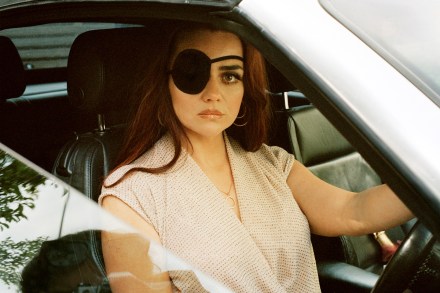
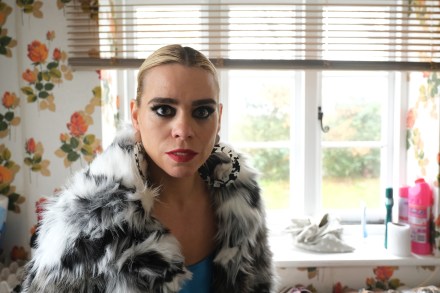
Fifteen minutes into the first episode of I Hate Suzie, main character Suzie Pickles was doing a photoshoot in her country cottage for Esquire magazine. ‘We don’t know what we’re looking for right now,’ the photographer told her. ‘We’re just going to cycle through some feelings and see where we are.’ What he didn’t know, but we did, was quite how many feelings Suzie (Billie Piper) had already had to cycle through by then. The programme began with her thrilled to hear that she’d bagged a Disney film role and cracking open the champagne.

Ludicrous – and the makers know it: Sky One’s Prodigal Son reviewed

Television

‘By the way, my name is Max. I take care of them, which ain’t easy, because their hobby is murder.’ Back in the early 1980s, when everything was lovelier, we were all so innocent that our idea of a brilliant and original new detective formula went like this: they’re sleuths — but they’re also rich and married! (Or, in the case of Magnum: he’s a sleuth — but he has a moustache and he lives on Hawaii! Or, with Bergerac: he’s a sleuth —but he lives on Jersey and is named after a region of France. Etc.) These days, we are a lot more jaded and knowing and series creators have to work harder when devising their high-concept set-ups.

Takes us deep into an unknown world: Channel 4’s Inside Missguided reviewed

Television

If it’s a test of a good documentary series that it takes us deep into an unknown, even unimaginable world, then Inside Missguided: Made in Manchester passes with flying colours — especially for the more middle-aged viewer. Missguided, it turns out, is a fast-fashion company, which means that it spots what celebrities are wearing online and then designs, makes and sells much cheaper versions within days — all while indignantly denying the outrageous charge that ‘we just rip off other people’s designs’. The target market apparently consists of young women obsessed with Instagram and Love Island. And so, on the whole, does the staff, who have names like Treasure, Zee and Karolina, and are keen for us to understand how excited they are at all times.

The only things left worth watching on the BBC are foreign buy-ins like The Last Wave

Television

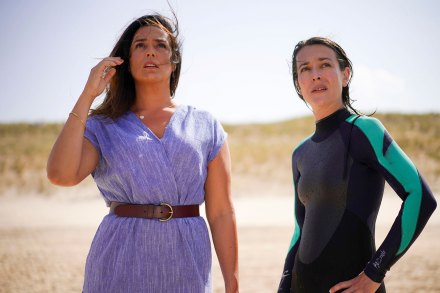
Soon, very soon now — even sooner than I imagined, if A Suitable Boy turns out to be as lacklustre as some critics are saying — the only things left worth watching on the BBC will be old repeats and foreign buy-ins like The Last Wave. A bit like The Returned (Les Revenants), The Last Wave concerns the effect of a supernatural event on a small community, not in the Alps this time but in a seaside resort on the Atlantic coast famed for its surf. During a competition, ten surfers are enveloped by a mysterious sausage-shaped cloud and disappear in the sea for five hours. They re-emerge, apparently unharmed yet subtly changed. One little boy’s eyes have turned electric blue; he also no longer requires glasses and can see through solid objects.

Sumptuous and very promising: A Suitable Boy reviewed

Television

Nobody could argue that Andrew Davies isn’t up for a challenge. He’d also surely be a shoo-in for Monty Python’s Summarise Proust competition. After turning both War and Peace and Les Misérables into satisfying, unhurried six-part drama series, he’s now taken on Vikram Seth’s 1,300-page novel A Suitable Boy. The first episode started with a wedding that immediately established the programme’s visual sumptuousness, while also serving as a handy introduction to the main characters. The groom’s rebellious brother Maan, for example, chafed at the idea that he was supposed to be next.

Why I love French telly

Television

There’s a scene in the French espionage series The Bureau — about the DGSE, France’s equivalent of the CIA or MI6 —where one of the characters loses a limb while on active service. ‘Excellent,’ jokes the station boss on his return. ‘This will greatly improve our diversity quota for disabled employees.’ This is why I prefer foreign language dramas to homegrown ones. You can’t imagine a joke like that making it into a BBC drama, can you? When, in 2015, the first season of The Bureau was shown to members of the real DGSE (Direction générale de la sécurité extérieure) they gave it a standing ovation.

Michaela Coel’s dazzling finale reminds me of Philip Roth: I May Destroy You reviewed

Television

It might seem a bit of a stretch to see deep similarities between Michaela Coel (young, female, black and currently very fashionable indeed) and the late Philip Roth (increasingly discredited as an embodiment of all those phallocentric white guys who once ruled American fiction merely because they were great writers). Nonetheless, this week’s television made it hard not to. On Tuesday night, as an adaptation of Roth’s The Plot Against America began on Sky Atlantic, Coel’s I May Destroy You was serving up a dazzling final episode that confirmed how Rothian the series has been.

A documentary about the M25 that will make your heart soar

Television

When a 90-minute documentary is introduced with the words ‘This is the M25’, you’d be within your rights not to feel your heart soar. Nor would you necessarily expect what follows to be full of wonders of all kinds — natural, historical, literary and scientific. Yet this is exactly what happened in BBC Four’s The Hidden Wilds of the Motorway, presented by Helen Macdonald. Macdonald is best known for her 2014 bestseller H is for Hawk, which mixed memoir and falconry with a biography of the author T.H. White. In Tuesday’s programme, she was on similarly genre-blending form as she set off on a television journey that, in a rare twist, was an actual journey: clockwise around the M25 from junction one in Kent.

Pure poison: BBC1’s Talking Heads reviewed

Television

The big mistake people make with Alan Bennett is to conflate him with his fellow Yorkshireman David Hockney. But whereas Hockney’s art is generous, warm, bright, life-affirming, Bennett’s is crabbed, catty, dingy, insinuating. The fact that the BBC-led establishment keeps telling us he’s a National Treasure tells us more about the BBC-led establishment than it does about Bennett. Bennett is typical of the English intelligentsia Orwell anatomised in his ‘The Lion and the Unicorn’ essay: ‘It is always felt that there is something slightly disgraceful in being an Englishman and that it is a duty to snigger at every English institution, from horse racing to suet puddings.

A fine, even rather noble drama: BBC1’s The Salisbury Poisonings reviewed

Television

This week, BBC1 brought us a three-part dramatisation of an ‘unprecedented crisis’ in recent British life. Among other things, it featured a lockdown, an extensive tracking and tracing programme, much heroism from people on the front line, and much confusion among scientists as to how to provide the facts when they didn’t really know them. The Salisbury Poisonings (Sunday–Tuesday) was presumably made well before you-know-what. Yet watching the programme in the current circumstances, it wasn’t easy to decide whether the timing was good or bad luck for the makers. The obvious parallels did lend a haunting, drone-note resonance to proceedings. On the other hand, they sometimes threatened to overshadow what was a fine, even rather noble drama in its own right.

Jeffrey Epstein really was a streak of slime

Television

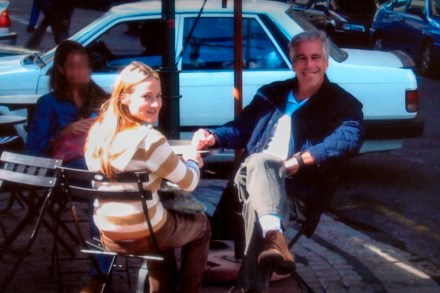
Did Jeffrey Epstein kill himself or was he murdered — and frankly who cares? Actually, having watched the four-part Netflix series — Jeffrey Epstein: Filthy Rich — about his secretive, sordid life, I care very much. Sure, his squalid death in jail, apparently from suicide while awaiting trial for numerous sex crimes, was thoroughly deserved. But justice would have been far better served if this noisome creep had spent the rest of his days rotting in prison, deprived for ever of all sexual activity save the involuntary variety provided in the showers whenever he dropped the soap. I hadn’t expected to respond quite this viscerally to the Epstein tale. Indeed, before I watched the documentary I was inclined to think that perhaps the nefariousness had been overdone.

Another drama about how women are great and men are rubbish: C4’s Philharmonia reviewed

Television

On the face of it, a French-language drama about a Parisian symphony orchestra mightn’t sound like the most action-packed of TV watches. In fact, though, Philharmonia (Sundays) is pretty much Dallas with violins. The first episode began with the eponymous orchestra blasting out a spot of what Shazam assured me was Dvorak, before its elderly conductor dropped his baton and collapsed to the floor, never to rise again. Cue a pair of Gallically elegant female lower legs making their way through the airport as one Hélène Barizet arrived from New York to take over the role. David was left in a tartan bag in Belfast; Helen was discovered in a tartan bag in a Dundalk phone box Not that her appointment was universally welcomed.

I so wanted to enjoy White Lines but it’s spectacularly uninvolving

Television

If I could live my life over again my plan used to be that I’d make my fortune very early, spend my winters fox hunting through the season and my summers taking loads of ecstasy in Ibiza and having meaningless sex with beautiful strangers. But having seen the first two episodes of White Lines I’m not so sure about the second part of that equation: it all looks a bit sordid and depressing and really not much fun. ‘Do you know this is not making me want to live in Ibiza AT ALL,’ said the Fawn, as we watched, morosely. And I have to admit, I agree. I so wanted to enjoy this series.

One of the more disturbing films I’ve seen: Arena’s The Changin’ Times of Ike White reviewed

Television

Arena: The Changin’ Times of Ike White (Monday) had an extraordinary story to tell — but one that, halfway through the documentary, already seemed to be complete. So, you might well have thought at that point, how would it fill the rest of the time? The answer, it transpired, was by taking an even more jaw-dropping turn. In the 1970s, Ike White was serving life for murder in a Californian prison when reports of his musical talent reached the record producer Jerry Goldstein. A prodigy on guitar, bass, drums and keyboards, White had until then been making most of his music in the prison’s gas chamber, which he was allowed to use as a rehearsal room.

Netflix’s Caliphate is all too frighteningly plausible

Television

Sweden is now properly celebrated as the Land that Called Coronavirus Correctly. But in the distant past, those with long memories may recall, it had a less flattering reputation as the Land Absolutely Ruddy Swarming With Jihadists. Caliphate — an eight part Swedish-made drama on Netflix — takes you back there in vivid and compelling detail. Partly, it’s an edge-of-seat thriller about a major terrorist attack on Swedish soil —from its conception in Isis-held Raqqa to its execution (or its foiling by the security services: I haven’t got there yet so I don’t know) by a mix of radicalised locals and hardened Isis killers flown in from Syria.

Not merely funny but somehow also joyous: Sky One’s Brassic reviewed

Television

Danny Brocklehurst, the scriptwriter for Sky One’s Brassic, used to work for Shameless in its glory days — although if you didn’t know that already you could probably guess. For a start, the central characters are another close-knit group of ducking-and-diving working-class northerners not overburdened with a social conscience. But there’s also the fact that, no matter what they get up to, they’re clearly supposed to be lovable — coupled with the rather more mysterious fact that they are. However dark the storylines theoretically become, the programme presents them with such an infectious swagger, and such a thorough blurring of realism and wild imagination, that the result is not merely funny but somehow joyous.

Superbly convincing: Unorthodox reviewed

Television

When I lived briefly in Stamford Hill I was mesmerised by the huge fur hats (shtreimel) worn by the local Hasidic Jews, and the wigs worn by their wives, and the almost tubercular pallor of their children. I often wondered how such a remote, aloof and archaic sect could possibly relate to 21st-century London. The answer, of course, was that they didn’t: they were like ghosts from another age, walking the same streets but not of this world. I wished I could get a glimpse of their private lives — and now, thanks to Unorthodox (Netflix), we all can. Loosely based on a memoir by Deborah Feldman, it tells the story of 19-year old Esther ‘Esty’ Shapiro (Shira Haas) who flees her ultraorthodox Jewish sect in Williamsburg, Brooklyn, for a new life in very secular Berlin.

Classic tangled thriller: Sky’s Gangs of London reviewed

Television

There were plenty of TV shows around this week designed to cheer us up. Sky Atlantic’s Gangs of London, however, wasn’t one of them. After decades of desensitisation, it’s not easy for any film or television programme these days to make its screen violence genuinely horrifying. Yet, by my reckoning, Thursday’s first episode managed to do it at least twice before the opening credits had even rolled. By the time they did, it was clear that two terrified Welsh lowlifes from some kind of travellers’ camp had been tricked into carrying out a hit on Finn Wallace (Colm Meaney), London’s most powerful criminal boss — rather than, as they’d fondly imagined, ‘just some paedo’. But that was clear only to us.

The Amazon Prime doc that will convert anyone to cricket

Television

Imagine rooting for the Australian cricket team. If you’re Scottish, Welsh or Irish — or Australian obviously — it might not be such a stretch. But for an Englishman, I suspect, it’s nigh on impossible. It would be like supporting Germany in the (football) World Cup. Or yearning for the All Blacks to win the rugby. We invented cricket, after all. And in that particular sphere, Australia is our natural enemy. They burned our bails in 1882 — ‘the Ashes of English cricket’ — and quite properly we have never forgiven them. But if that’s how you feel — and I really don’t blame you — then you should treat yourself to the marvellous Amazon Prime series The Test: A New Era for Australia’s Team.

An extraordinary tale: BBC2’s The Countess and the Russian Billionaire reviewed

Television

There can’t be many programmes that bring to mind quotations from both Henry Kissinger and Boney M., but BBC2’s The Countess and the Russian Billionaire was one of them. While Kissinger’s idea that ‘power is the ultimate aphrodisiac’ may be a little out of fashion in the #MeToo age, it was hard not to think it played a part in the eye-popping events that Wednesday’s documentary laid out with some relish. As for Boney M., rarely has ‘Oh, those Russians’ from ‘Rasputin’ felt so penetratingly insightful. The programme began filming in 2015, with the apparent aim of providing a ringside seat at a fight between an excitingly wealthy British-based couple and the Russian government.

A Formula 1 doc for people who hate Formula 1

Television

Some years ago I was invited to the British Grand Prix at Silverstone courtesy of a watch manufacturer. As freebies go it was one of the best: endless champagne, overnight in a posh hotel near the track (wife invited too), then a trip by helicopter so as to avoid all the frightful traffic jams. All was going swimmingly until the actual race… God, it was boring. Noisy too. You’re stuck in an elegant marquee with endless booze and as many gold-plated, jewel-encrusted lobsters as you can force down your gullet, but it’s impossible to relax or chat or enjoy yourself because screaming endlessly in your lughole is the ‘neeaaawwww’ noise of those stupid bloody racing cars.

Perfectly serviceable – at points even charming: Four Kids and It reviewed

Television

This film contains flying children, time travel and a sand monster that lives under a beach — yet the most incredible thing of all is that a family get to go on holiday. They actually leave their house, drive down an actual motorway, rent an actual seaside cottage and go for actual walks, passing well within two metres of actual other people! And not once do Derbyshire police film them with a drone, then post intimidating footage of it on the internet. The movie’s producers couldn’t have known they’d be releasing their creation into a locked-down world, but now that they have, who’s to say more people won’t watch it at home than would have watched it at the cinema? We are literally a captive audience.

Riveting documentary about a remarkable man: Harry Birrell Presents Films of Love and War reviewed

Television

First shown on BBC Scotland, Harry Birrell Presents Films of Love and War (BBC4, Wednesday) was the documentary equivalent of a William Boyd novel, showing us a 20th-century life shaped by 20th-century history. The programme was made by Harry’s granddaughter Carina, who’d been eight when he died, and known him only as ‘a lovable, frail, blind old man’. But then she came across 400 carefully labelled reels of film in the family shed, together with an equally well-organised collection of diaries. Exactly — or even vaguely — when this discovery took place was one of many details that Carina tantalisingly failed to disclose. (Now and again, we did see her dusting off old cannisters with a look of surprise, but this felt distinctly like re-enactment.

Old-school Sunday-night family viewing: ITV’s Belgravia reviewed

Television

The world may be going to hell in a handcart but some things remain reassuringly unchanged: Julian Fellowes period dramas about feisty dowager duchesses, social climbing and snobbery, say. I like and admire Fellowes so I don’t want him to take this the wrong way. But when I say that his new series Belgravia (ITV) borrows from the same template he employed so successfully with Downton Abbey, and before that Gosford Park, and also in that series set on the Titanic that didn’t do quite so well, I’m not trying to suggest he’s a one-trick pony. More that he’s a canny chap who understands his market, has found the perfect formula and is damned if he’s not going to milk it for all it’s worth.

The creators of Breeders are locked into a game of How Far Can You Go

Television

Sky One’s Breeders (Thursday) bills itself as an ‘honest and uncompromising comedy’ about parenting. To this end, the opening scene featured Martin Freeman as Paul trying to do some work while his two children under seven made a bit of noise a couple of rooms away. Having given himself a little pep talk about not screaming at them, Paul then screamed at them — bursting in on their blameless fun to yell: ‘Jesus fucking Christ! How many times do I have to tell you to be quiet?’ He further informed them that he was going to leave home and they should ‘tell mummy that daddy’s gone cos he couldn’t stand the fucking noise anymore.

Too edgy and clever to be wasted on kids: Netflix’s Locke & Key reviewed

Television

One of my perpetual gnawing terrors is that I’ll recommend a series that looks initially promising but turns out to be total rubbish, meaning I’ll for ever have thousands of viewers’ wasted lives and disappointment on my conscience. But my even greater fear is that I’ll peremptorily condemn something after one or two episodes which subsequently reveals itself to be a near-masterpiece. This almost happened with Locke & Key (Netflix). ‘You realise I’m watching this on sufferance. The second you’ve seen enough to review, we’re moving on to something else,’ declared the Fawn. And I could sort of see her point.

Sharp family saga with a thriller uneasily attached: ITV’s Flesh and Blood reviewed

Television

As in many thrillers, the characters on display in Flesh and Blood (ITV, Monday to Thursday) often seemed locked in a fierce competition as to which of them we could trust the least. The early front runner was Mark (Stephen Rea), a retired surgeon whom the not-long widowed Viv (Francesca Annis) introduced to her three grown-up children as her new boyfriend. But was Mark all he appeared to be? And if not, was this necessarily a bad thing — given that what he appeared to be was spectacularly shifty? Soon, though, the grown-up children had plenty of other people to worry about, including themselves, as they messed up their lives in an impressive variety of ways.

The appeal of psychopaths

Television

Ever since the end of Gomorrah season four (Sky Atlantic) I have been bereft. I eked it out for as long as I could, going whole weeks without watching an episode — rationing it and savouring it as you do when you’re down to your last Rolo. But eventually I could put off the climax no longer, I watched them all die — as everyone always does in Gomorrah, so I’m not spoiling anything — and now I’m on the hunt for a substitute. So far the most obvious candidate is Narcos: Mexico season two (Netflix). This contains most of the same key ingredients: bling, convoys of vehicles ripe for ambush, drugs shipments, betrayal, tense stand-offs that could end up either in extreme violence or a cunning, game-changing new arrangement, torture, etc.

Odd but gripping: BBC1’s The Pale Horse reviewed

Television

Not much was clear in the opening scenes of The Pale Horse (BBC1, Sunday), which even by current TV standards were admirably committed to confusing us with a series of baffling fragments. One thing that did seem apparent, though, was that Mark Easterbrook (Rufus Sewell) wasn’t having much luck with the ladies. In one fragment, he cradled the corpse of his new wife who’d just electrocuted herself in the bath. A few fragments later — some of them featuring an old woman lying in bed with her hair falling out — he woke up in a Soho starlet’s flat to find a rat dead in the sink and the starlet dead in the bed.