Culture

Culture

Deep water Winslow

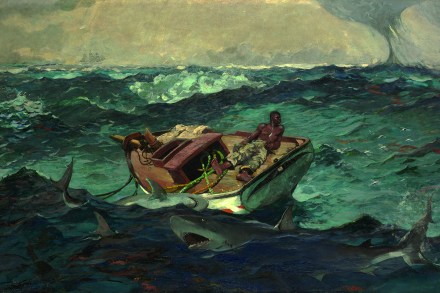
The advance buzz on Winslow Homer: Crosscurrents wasn’t good. “Woke Winslow” — that’s how observers, online and through the grapevine, pegged the Metropolitan Museum of Art’s new exhibition of paintings and watercolors by Winslow Homer (1836-1910). The stalwart purveyor of maritime adventure and manly pursuits, woke? One glance at the enlarged black-and-white photo displayed at the front end of Crosscurrents — a blurred portrait of Homer in his Maine studio — makes clear that the fusty man with the impatient glare is no one’s idea of a social-justice warrior. Looks aren’t everything, of course. Truth to tell, Homer’s art does touch upon important aspects of American history.
winslow homer
zimmer

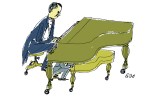
Is Hans Zimmer a genius or a charlatan?

If you have visited a cinema in the past two decades, you will know the work of the film composer Hans Zimmer. Since he emerged in 1988 with his score for the Oscar-winning film Rain Man (he recently won his second with Dune, among twelve total nominations), Zimmer has created the music for more than a hundred films, television series and other multimedia projects. His eclecticism both startles and amuses. He is surely the only person alive to have collaborated with the reclusive director Terrence Malick (on The Thin Red Line) and to have composed music for a soccer-based video game, FIFA 19. He has scored romantic comedies, sweeping epics, cartoon animations and thrilling action films.

paradise

Throwing curveballs

"This mob is not the people,” declared Henry J. Raymond in his paper, the New York Times, about the Draft Riots in July 1863. Blue-collar workers in New York, mostly Irish, had begun by protesting a new conscription law, but anti-war sentiment quickly became a pretext for widespread destruction, looting and racial violence. Blacks were hunted, their homes and businesses trashed, and scores of them lynched. Raymond wanted no quarter for the rioters: “Give them grape[shot] and plenty of it.” The new musical Paradise Square imagines a “little bit of Eden” in the Five Points slum of downtown Manhattan, July 1863, where, we are told, blacks and Irish did not just coexist peacefully for a time but flourished.

worst

The final word on the millennial generation

More than anything else, the phrase “I’m still figuring it out” defines the millennial generation. Floating from passion to passion, job to job, lover to lover, possible spouse to possible dead end. In Joachim Trier’s The Worst Person in the World, Renate Reinsve plays Julie, a person that most of us would recognize from life, and certainly from the last ten years of media: approaching thirty; romantic and flighty to a fault (in the prologue, she drops out of medical school to become a philosopher and then a photographer); beginning to feel a void she doesn’t know how to fill.

techwokery

America’s ‘techwokery’ is infecting its allies

America’s racial angst is transforming the politics of the West. The world is watching as Biden’s ambitious “whole-of-government equity agenda” actively repudiates key elements of the American creed. The “equity” agenda conflates equal outcomes with equal opportunities. “Justice” is thus imposed by technocratic elites who, like the apparatchiks of the empire the US defeated in the Cold War, are a class with special privileges. As Vice President Kamala Harris explains, under the new “equity” regime, all Americans will “end up in the same place.” An unholy alliance of technocratic management and the woke sacralization of historically oppressed groups is creating a new form of American governance: call it “techwokery.

Princeton fires professor who opposed ‘anti-racist’ agenda

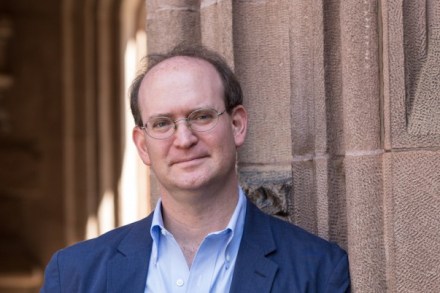
Princeton University’s Board of Trustees voted to fire tenured classics professor Joshua Katz on Monday — and the reason why has Cockburn adjusting his monocle to look a bit closer at the circumstances. Katz first came under scrutiny in 2018 for a consensual sexual relationship he had with a student at least a decade prior. At the time, he was suspended from his job for a year without pay. Then, new allegations arose that Katz had not been fully honest nor had fully cooperated with the previous investigation. Much to the chagrin of any frat guy looking to him for advice on how to score, Princeton gave him the boot.

joshua katz

Fleeing dysfunctional America

America is sorting itself out by class and kind, back to blood and political pedigree. The demographic trend favors the so-called red states and the metro nodes inside these dominions. Austin, Reno, and Nashville beckon. Meanwhile, academic towns like Eugene, Chapel Hill, and Burlington draw gentry blues trying to escape crazy and crime but who are not in tune with Tulsa or Fargo. For big-city emigrants, fatigue with misgovernment, ill-spent government largesse, and racial disorder are part of the picture. As much as they are seeking uncrowded real estate, runaways are searching for courts, authorities, teachers, and stable neighbors whom they can trust.

Netflix changes woke course after Chappelle attack

Cockburn has always said that when the going gets tough, the tough gets going…to a bar. But when the going gets tough for giant corporations — in this case, “tough” meaning $50 billion in lost subscriptions for Netflix — companies tend to get going in whatever direction will induce the mob to keep paying for their goods and services. Netflix has done just that by updating its “corporate culture memo” to let employees know they may have to work on material that triggers them. And letting them know if they don’t like it, they can leave. Over the course of the last several months, as he kept searching in a stupor for The Crown in the wee hours, Cockburn began to notice an increase in the amount of Netflix programming featuring in-your-face progressive messaging.

The diversity monster is loose

Monsters, of course, come in a variety of shapes and forms, but they have some deep commonalities. Among these are a voracious appetite, an affinity for darkness, and a talent for evasion. They are hard to kill and very dangerous, especially to the innocent and the naive. Often they inspire a perverse kind of worship. I have been thinking about monsters as I contemplate the Diversity, Equity, and Inclusion mandates that have swept through the nation’s schools, colleges, and businesses, and nearly every other institution of note. The National Archives has a “Diversity and Inclusion Program.” So does Major League Baseball. So does the American Public Gardens Association. One is hard put to find a significant public body that is not committed to DEI.

Having fun again on Derby Day

The woes of the world are a’plenty. People are anxious, stressed-out, and burned-out. It seems that no matter what side of the political aisle you gravitate toward, there’s a new battle to be fought at the dawn of each day. Even innocent settings — school board meetings, comedy shows, the Magic Kingdom itself — are not immune from partisan vitriol. Luckily for us, though, this is Derby Day, which means it’s the perfect time to do something about the very real but underreported disorder that’s been plaguing our society for a while now: we’ve forgotten how to have fun. It’s a contagious disease that affects brain function and mood, and if left untreated, could result in everyone becoming a smug, humorless elitist (a prognosis worse than Covid).

When ‘words are violence’ turns to actual violence

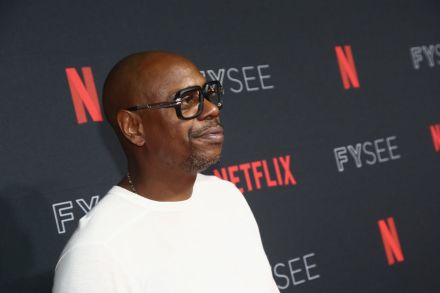
In the wake of comedian Dave Chappelle’s Netflix special The Closer, activists both online and off warned that Chappelle’s jokes about the trans community would lead to real-world harm, even murder. Instead the trans community has struck first by attacking Chappelle onstage. In his special, Chappelle tells the story of a trans person and friend who defended his stand-up material. Chappelle offered his friend career help by having her open for him on stage. Yet after being bullied by the trans mob for supporting Chappelle, his friend committed suicide. Earlier this week, Chappelle himself was physically attacked at the Hollywood Bowl in Los Angeles, during a comedy set that saw many famous faces, including Elon Musk and Chris Rock, in the audience.

NASCAR is where free speech crashes and burns

It’s Cinco de Mayo, and if you so much as think about using this day to indulge in Chili’s Margarita of the Month, I will have you undergoing sensitivity training faster than you can say “extra salt on the rim.” You see, applying a firm image to a person, thing, or group is wrong (even if it means massive profits for our Mexican neighbors by way of 335,000 gallons of tequila consumed on a single May 5). Or at least NASCAR thinks so, as the corporation plays politically correct whack-a-mole with drivers who say things they don’t like. The latest victim of almost-cancel culture is Denny Hamlin. Last Sunday’s race at Talladega Superspeedway ended with Kyle Larson “battling for the win approaching the start-finish line,” reports the Charlotte Observer.

Against the ‘concept restaurant’

My wife and I live in Northern Virginia, in Fairfax County. Whenever we go out to eat, we almost always go somewhere in the suburbs. Fairfax, along with neighboring Montgomery County in Maryland, is home to a wealth of restaurants serving cuisines from all over the world. Just last January, Bon Appétit wrote that “to travel DC’s Beltway is to sample the flavors of the world,” and the New York Times declared that “America’s next great restaurants are in the suburbs.” You could argue that the suburban food scene in the DC metro area surpasses that of the city itself. Nonetheless, DC is widely seen as a “foodie city,” and its restaurants generally get more coverage and hype than their suburban counterparts.

My raging case of ‘climate anxiety’

Recently, I came down with a severe case of climate anxiety. Not because I was worried about global warming but because the globe wasn't getting warm enough. It has been an unseasonably cold spring here on the East Coast. As recently as two weeks ago, a winter storm thrashed the Northeast, while last week the temperature here in Virginia kept getting stuck the 50s. Of course, our science-positive betters insist that a single spell of cold weather can't be used to challenge the climate change "consensus." But then they also seize upon every drought, heat wave, wildfire, hurricane, tornado, flood, derecho, hailstorm, rainstorm, power outage, riot, and coup in Myanmar to argue in favor of climate change. So no wonder some are feeling a little on edge.

When sex ed is a crime against children

Over the last month, Florida governor Ron DeSantis and his like-minded legislature have escalated a feud with the Walt Disney Company. Last week, the state stripped Disney of its unique land privileges and tax advantages. What began over a contested Florida’s Parental Rights in Education law has grown into a cautionary tale in corporate woke. The law prohibits sexual orientation and gender identity lessons in kindergarten through third grade and — this feature has been far less publicized — forbids school personnel from concealing “healthcare services” for older kids from their parents. Dubbed the “Don’t Say Gay” bill by media partisans, the law has become a parents' rights lightning rod.

Drag Queen Story Hour

The white guilt in your coffee

How do you take your coffee? With cream? Sugar? A splash of white shame? “The unbearable whiteness of coffee” is the click- and race-baiting headline of a Fast Company article that’s making the internet rounds (my innocent online purchase of Chemex coffee filters must have prompted this suggested guilt trip). I really didn’t want my most sacred morning ritual — and bright spot of many afternoons, for that matter — to be added to the list of things I shouldn’t enjoy because it’s racist. So I poured myself a large mug of fortifying Joe — potentially my last — and gripping it tightly, read the dreaded article and did some digging.

coffee

Exclusive: Pat McCrory appointee helps Biden restrict charter schools

A North Carolina school board member appointed by former Republican governor Pat McCrory appears to be backing the Biden administration on anti-school choice policies. McCrory, who is running for the open North Carolina Senate seat, appointed Eric Davis to the state school board in late 2014. Davis has been the school board chair since 2018. As The Spectator World reported in March, Davis was responsible for pushing Critical Race Theory in statewide education curricula, including approving a vote on teaching CRT to disabled pre-schoolers. He has referred to racism as a "social pandemic" and stated that "schools are not immune from these societal imperfections which diminish the education of every child in our state.

The island that time forgot

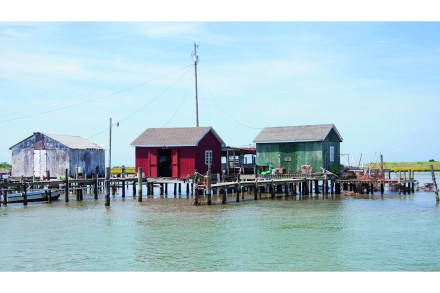
James Eskridge cuts a defiant figure as he rides around Tangier Island on his motorbike. The weathered, garrulous water man known to all as “Ooker” is the mayor, spokesman and public face of one of America’s most endangered communities. Buffeted by rising sea levels and relentless erosion, Tangier is not so slowly sinking into the shallow waters of the Chesapeake Bay, threatening its ancient community of crab-hunting, God-fearing, Cornish-sounding fishermen with extinction. The Chesapeake, site of the first British settlements in America, has some of the highest relative sea rise on the planet. If Tangier disappears beneath its waves, America will lose a living link to its pre-revolutionary past.

tangier

Lincoln’s hideaway

I hope Abraham Lincoln rests in peace. He got little of it as president. What solace he did find often came during stays in what today is known as President Lincoln’s Cottage, a thirty-four-room Gothic Revival home three miles north of the White House. This little-known site is where he, his wife Mary and son Tad lived for thirteen months during summers and falls from 1862 to 1864 — key periods when he wrote the Emancipation Proclamation, when the Battle of Gettysburg was fought, and when he was struggling to win reelection. Lincoln escaped to this 300-acre hideaway, the former home of a banker set on a wooded breezy plateau, to flee the heat — and the White House. His son Willie had died there of typhoid at just eleven, shortly before his first stay.

Lincoln

The assorted joys of nasturtiums

It’s still amazing to me how Instagram photos can bring such unexpected responses. And instantly! It happily happened to me last May and my creative juices — green, yellow, orange — started flowing. I had just posted a photo of the nasturtium pesto I’d made from the flowers and leaves in a nod to the exigencies of Covid-19: self-quarantining, fear of food shopping and the constant barrage of advice for oldies like me to not mix or mingle. I was going to forage for food, fool about with flavor and fun. Within minutes, Caroline, the flower girl at my Swiss wedding fifty years ago, commented, “Do you remember that you and Maman would take me foraging in the meadows above Lausanne for wild nasturtiums for salads?

nasturtium

In praise of the country store

In our age of branded everything, I suppose it should not surprise that the country store, that artifact of an older rural landscape, should have gotten the treatment too. Play the word-association game with Americans today and for “country store” you’re likely to get “Cracker Barrel™,” the publicly traded chain of folksy restaurants/retail emporia strung along the interstate system and specializing in a long menu of so-called comfort food, clean restrooms and rockers on the porch. Do not be deceived. Lunch at Mosley’s Store in Pintlala, Alabama, sixteen miles south of Montgomery on US Route 31, the old Mobile Road, bespeaks a different reality. It has to do with food, tangentially.

country
cartier

Jewel aid

In the late 1890s, the workshop of Maison Cartier adorned its Belle Époque clients in “garland-style” jewelry fashioned from white diamonds in platinum settings shaped like curled ribbons and bows. Soon, however, a more streamlined style began to emerge. In 1904, the workshop produced a small, rhomb-shaped brooch, decorated with smaller rhombs in diamonds and rubies. By the 1920s, Cartier was regularly producing polychromatic jewelry in a linear, abstract style made up of interlocking or tessellated triangles, squares, lozenges and other geometric shapes that had rarely been seen in Western jewelry. The craftsmen also combined brightly colored stones such as turquoise, coral and jade, and they experimented with enamel. What prompted this dramatic change?

Mingus

Charles Mingus at 100

"All the Things You Are” is an essential jazz standard, but in 1960 the bassist Charles Mingus gave it an update: “All the Things You Could Be by Now If Sigmund Freud’s Wife Was Your Mother.” It doesn’t take a psychoanalyst to peek under the hood of this composition. Like many Mingus tunes, the loose adaptation is fairly bipolar, picking up and dropping off in fits and starts, alternating between vacuum-tight swinging sections and meandering, tempo-less squabbles between members of the four-piece band. Mingus isn’t for the faint of heart, but on the centenary of his birth it’s worth confronting his life’s work, which surely places him among America’s most important composers.

music

Midcult madness

On the same Broadway block as MJ: The Musical is the tale of another song-and-dance man hailing from Gary, Indiana: Harold Hill, doctor of music, huckster of band equipment and Meredith Willson’s titular Music Man (1957). Well, that’s not quite the case: Professor Hill is a lying crook, and his Hoosier backstory is a fabricated ruse. He claims to be a graduate of the Gary Conservatory of Music, class of ’05, but the town of Gary was only incorporated in 1906. Played by Hugh Jackman, this smooth criminal sails into River City, Iowa, promising the Ewarts and Eulalies of the town he’ll make disciplined bandspeople out of their darling Winthrops and Amarylisses.

masterpiece around

Around and around the world

Kudos to Masterpiece’s new eight-part series Around the World in 80 Days, if only for nudging me to read Jules Verne’s original tale of an eccentric Englishman who sets out from London in 1872 on a strict deadline to girdle the globe, as well as to revisit Michael Todd’s Oscar-winning 1956 movie version. Bad translations and Disney movies long consigned much of Verne’s prodigious output to the realm of juvenile entertainment, in the popular mind anyway. Serious critics tell us that we should think again — that in a novel like Around the World in Eighty Days (1873) there is indeed a lot going on. The character of Phileas Fogg has layers beneath his serene reserve, as his passage around the world begins to reveal.

spring breakers

Beach for America

I don’t know how I first came across Harmony Korine’s Gummo (1997), but in this cult film about the foibles and joys of small-town life, I found a director who understood the cinematic merits of American seediness. Gummo, which features amateur actors in debauched scenes, hosts a collection of freaks unsurpassed in modern cinema, including skinhead brothers, a boy dressed in a bunny suit (he goes by “Bunny Boy”), and a gay dwarf. Though mostly repulsive, Gummo has a transgressive charm that makes it impossible to turn away. Like Korine’s Mister Lonely (2007) and Trash Humpers (2009), Gummo is less about plot and theme than feeling and sensibility. It is an aesthetic experience that stylizes grime to capture the essence of characters one hopes not to encounter in real life.

parental rights

Children’s lives depend on parents’ rights

Yaeli Galdamez was a “girly girl,” her mother Abigail Martinez said in a recent interview. As a child growing up in El Salvador and California, she dressed in princess costumes and later had crushes on boys. But after she was bullied for her appearance in middle school, Yaeli began developing symptoms of depression. In eighth grade, she attempted suicide by overdosing on pills. Her mother was desperate to get her the help she needed. So as a sophomore Yaeli began regularly seeing the psychologist at her local high school. But the family says that her counseling for depression was accompanied by a focus Abigail knew nothing about: the school psychologist spent two years encouraging Yaeli in a male identity, Andy (sometimes Andrew).