Culture

Culture

The good, the bad and the ugly in books, exhibitions, cinema, TV, dance, music, podcasts and theatre.

Meet the man who says improvisation is the key to Mozart

Classical

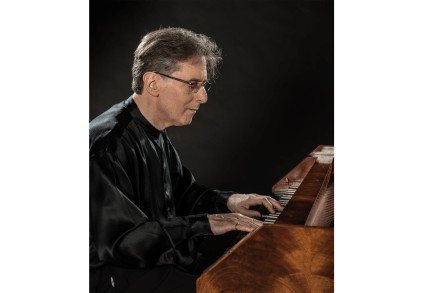
In August 1993, the pianist Robert Levin sat down in Walthamstow Assembly Rooms with the conductor Christopher Hogwood and the Academy of Ancient Music (AAM) to record the complete piano concertos of Wolfgang Amadeus Mozart. Mozart was big – the bicentenary celebrations of 1991 had made a global impact. And Hogwood and the AAM were big too. After their groundbreaking period-instrument Mozart symphony cycle a decade earlier, the 27 piano concertos seemed like a wholly achievable ambition. What could go wrong? ‘For Mozart’s contemporaries, what surpassed even his virtuosity was his ability to improvise’ Only, as it turned out, the entire classical record industry. The project was meant to take a decade but in 2000 the record label, Decca, lost its nerve and pulled the plug.

Across Britain punters are lapping up ultra-trad opera – the Arts Council will be disgusted

Classical

Another week at the opera, another evening with an elitist and ethically dubious art form. I love it; you love it; but the authors of the Arts Council’s recent report on opera in England are less enamoured. One issue they identified was that ‘the stories which opera and music theatre tells are failing to connect fully with contemporary society’. Possibly the memo never reached the promoters of Ellen Kent’s spring tour, which since January has visited 40-odd venues not typically served by major opera companies, and has done so without public subsidy. You might imagine that the only commercial outfit to make live opera pay in Wolverhampton, Ipswich and Sunderland would have featured prominently in the Arts Council’s research, but they don’t appear to have been consulted.

The mutilation of Radio 3

Classical

On Saturday 12 December 1964, Harold Wilson addressed his first Labour party conference as prime minister, George Harrison was photographed with his new girlfriend in the Bahamas, Pope Paul VI told Catholics they could drink alcohol ‘in moderation’ before Midnight Mass and, according to the Mirror, ‘two strip-tease girls fought in the nude in their dressing room after finishing their fan dance at a night club’. The station has become little more than a Spotify playlist interrupted by the disc-jockey burbling It was also the day that Record Review arrived in its Saturday morning slot on the BBC’s Third Programme, now Radio 3. And there it remained.

Baffling and vile: ETO’s Manon Lescaut reviewed

Classical

In 1937, John Barbirolli took six pieces by Henry Purcell and arranged them for an orchestra of strings, horns and woodwinds. Nothing unusual about that: arranging baroque music for modern symphony orchestras was what famous conductors used to do. Beecham and Hamilton Harty re-upholstered Handel. Mahler did something similar with Bach, then directed the result from a grand piano, and wouldn’t you give anything to have heard him? All good clean fun in those innocent days before the advent of historically informed performance. ‘Can you tell me what was happening?’ asked a woman on the way out It’s unusual to hear these things revived now, and curiouser still when the person doing the reviving is Thomas Adès, currently artist in residence with the Hallé.

What would Tanner say?

Classical

On the train home from the Royal Festival Hall I learned of the death of Michael Tanner, who wrote this column from 1996 to 2014 and beyond. The Orchestra of the Age of Enlightenment had been playing Sibelius’s Fifth Symphony, and it’s not strictly true to say that the news made me wonder about his likely reaction to their performance, had he been able to hear it. But that’s only because, for anyone who came of age reading his criticism, asking ‘What would Michael say?’ is already a reflex – and will be for as long as we think or write about music.

In defence of noise music

Classical

It’s curious to consider what a venerable old thing noise music is. That this most singularly untameable of musics – the place where melody, harmony and pulse all go to die – is an Edwardian invention. It first arrived in this country 110 years ago when futurists Filippo Marinetti and Luigi Russolo set up camp at the London Coliseum a month before the start of the first world war and, over ten consecutive nights, blasted the West End audience with their ‘noise-tuners’ or intonarumori, alongside diverse variety acts. I say blasted but making a decent racket was the one thing these homemade instruments were incapable of doing. ‘It could have been drowned easily by a good tympanist,’ noted the Musical Times. The artist C.R.W.

Death of a choir

Classical

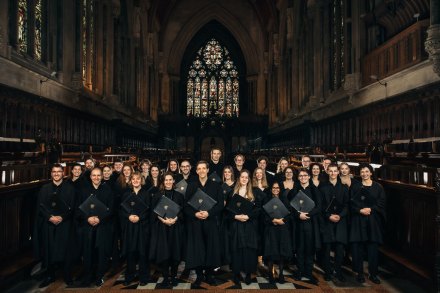
Always make your redundancy announcement when the people at the receiving end of it are on a high. This seems to be the favoured method of today’s managing executives, who perhaps imagine that adrenalin will somehow anaesthetise the blow of getting the sack. For the Cambridge student choir St John’s Voices, the news of its imminent disbanding and the redundancy of its director Graham Walker came just two minutes after the light was switched off at the end of a three-day recording session of Russian choral masterpieces last week. Does egalitarianism have to be promoted at the expense of up-and-running excellence?

It’s disturbing how proud some music-lovers are about detesting Bruckner

Classical

There was a pleasing simplicity about the Glasshouse’s Big Bruckner Weekend. Five concerts, five major works, just one composer. You went big or you went home, and in truth that’s usually the deal with old Anton; in the words of the The Bluffer’s Guide to Music: ‘Bruckner just didn’t write pleasant little recommendable pieces.’ But it was striking how much more manageable he felt in this context. With a single work per concert, even the most obstinate Brucknerphobe was confronted with no more than 80 minutes of music at a sitting. No distractions, then – with the added sweetener of hearing a state-of-the-nation showcase of four leading British orchestras before teatime on Sunday. It certainly made for a fascinating thought experiment.

In Bermondsey I heard the future – at the Barbican I smelt death: new-music round-up

Classical

To Dalston to witness the worst gig of my life. The premise of the Random Gear Festival was simple and rather inspired: gather some arbitrary objects; get people to play them. In previous iterations, the offerings had included an ice skate, a wet baguette and an exercise bike. This time we had a trampoline, a microwave, a dead fish. I kept an open mind. I was reminded that years ago at Cafe Oto I had seen the then chief conductor of the BBC Scottish Symphony Orchestra Ilan Volkov rub two blocks of polystyrene together with the subtle virtuosity of Martha Argerich at a Steinway. I was reminded too of what the composer Hector Berlioz had declared in his 1844 Treatise on Orchestration: ‘Every sounding object employed by the composer is a musical instrument.

One of the great contemporary symphonies: The Hallé – Desert Music, at Bridgewater Hall, reviewed

Classical

Steve Reich describes his Music for Pieces of Wood (1973) as an attempt ‘to make music with the simplest possible instruments’. At the Bridgewater Hall five performers stood in a pool of light, each holding a pair of claves: plain sticks of wood. At first, unsurprisingly, it’s all about rhythm. Patterns weave and dissolve, building into a clattering digital tapestry of sound. You start to hear new timbres – even harmonies – and the mind locks on, allowing Reich to play tricks on the ear. Players drop out unnoticed, then re-enter in a flash of colour before you realise they’ve gone. By the end, you’re so thoroughly inside the music that even the final abrupt silence feels like high theatre. The Manchester audience gave an astonished gasp.

Top oratorio-mongering: Elijah, at the Barbican, reviewed

Classical

As a young music critic, Bernard Shaw poked fun at anyone who thought Mendelssohn was a genius. Shaw conceded that Mendelssohn was capable of touching tenderness and refinement and sometimes ‘nobility and pure fire’, but his music was marred by kid-glove gentility, conventional sentimentality and – worst of all – ‘despicable oratorio-mongering’. Shaw’s pet hate was St Paul, with its ‘Sunday-school sentimentalities and its music-school ornamentalities’. He was only slightly less catty about Mendelssohn’s other oratorio, Elijah. Although he acknowledged its ‘exquisite prettiness’, he concluded that its composer was ‘a wonder whilst he is flying; but when his wings fail him, he walks like a parrot’.

In Mumbai, orchestras are playing western classics without apology

Classical

Choosing a concert opener is an art in its own right. Fashions shift: the traditional overture has fallen from favour in recent years, and you might go seasons now without hearing such one-time favourites as The Thieving Magpie or Euryanthe. The opening slot is more likely to contain something short and contemporary, or worthy and obscure (cynics call it ‘box-ticking repertoire’). Or it might be empty, tipping you straight into a symphony or concerto the way a Michelin-starred chef presents his signature creation – unadorned, on a bare white plate. The Symphony Orchestra of India began its latest UK tour with John Williams’s ‘Imperial March’ from The Empire Strikes Back – and goodness alone knows why.

Simply not as good as Mozart’s: RCM’s Don Giovanni Tenorio reviewed

Classical

In Bernard Shaw’s Man and Superman, Don Giovanni finds himself in hell, chatting to the sentient Statue that dragged him to his doom. ‘It sounds rather flat without my trombones,’ admits the Statue, conceding that once you remove the genius of Mozart from the mix, you’re left with a trite (if titillating) morality tale. You could draw the same conclusion from the opera Don Giovanni Tenorio, by Giuseppe Gazzaniga (1743-1818), and if you haven’t heard of him you might wonder why not. Institutional racism? Patriarchal hegemony? Not this time. Gazzaniga was a Neapolitan composer of perfectly adequate operas that simply aren’t as good as Mozart’s. Anyway, Don Giovanni Tenorio made an amusing end-of-term show at the Royal College of Music.

Eloquent, understated poetry: Llyr Williams, at the Wigmore Hall, reviewed

Classical

Imagine being a concert pianist and choosing your own programmes. All those possibilities; all that power! ‘I am the orchestra!’ declared Hector Berlioz, imagining himself inside the head of Franz Liszt. ‘I am the chorus and conductor as well. My piano sings, broods, flashes, thunders.’ The heart lifts when a pianist thinks a little differently about their recital programmes and tries to make connections and tell stories beyond the familiar tramlines of Bach, Beethoven and late Schubert. Don’t get me wrong; the Austro-German big boys are a healthy part of a balanced musical diet. It’s just that – well, you know. There is a world elsewhere. Solo piano recitals leave me cold.

Funny, faithful and inventive: Scottish Opera’s Barber of Seville reviewed

Classical

A violinist friend in the City of Birmingham Symphony Orchestra used to talk about an orchestra’s ‘muscle memory’; a collective instinct that transmits itself, unspoken and unconscious, among the members of the ensemble. The occasion was a return visit from Sir Simon Rattle, a good decade and a half after he’d left Birmingham. At that point, perhaps only one third of the musicians had been present when Rattle last conducted this particular work. No matter. ‘You know how we play this,’ said Rattle, and sure enough they did, slipping as one into the exact articulation and dynamics that Rattle had instilled all those years ago. As with the human body, cells are replaced, but the individual remains the same.

Modest means, but striking results: Opera North’s La rondine reviewed

Classical

Opera North is ending its autumn season with a big-hearted production of a lopsided opera. There’s much to love about Puccini’s La rondine, and much to drive you up the wall. This bittersweet love story about an older woman and a younger man, set in Paris and Nice and channelling the operetta sweetness and sparkle of Puccini’s great friend Lehar, ought to sweep you off your feet. Instead, it tempts critics into that most shameless form of condescension, the armchair rewrite. Giacomo, old chap, isn’t five minutes into Act One a bit soon to be introducing your big hit aria? We’re halfway through Act Two: shouldn’t the lovers be together by now? And isn’t this basically just La traviata played for lower emotional stakes? Come on, man, you wrote Bohème.

The miracle of watching a great string quartet perform

Classical

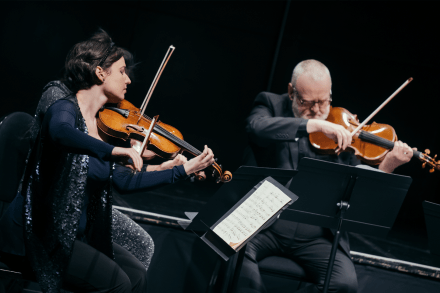
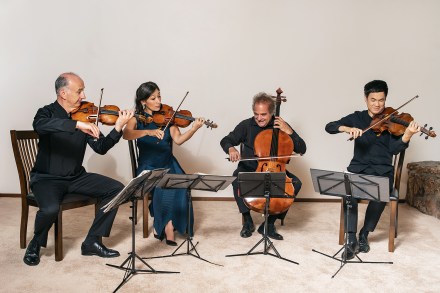
Joseph Haydn, it’s generally agreed, invented the string quartet. And having done so, he re-invented it: again and again. Take his quartet Op. 20, No. 2, of 1772 – the first item in the Takacs Quartet’s recital last week at the Wigmore Hall. The cello propels itself forward and upward, then starts to warble like a bird on the wing. The viola sketches in a rudimentary bass line; the second violin – higher than the cello on paper, but actually playing at a lower pitch – shadows the melody in its flight. The first violin? Nothing: the leader (or so you might imagine) of the group is entirely silent until finally, blissfully, he isn’t. It’s the opposite of how a string quartet is supposed to begin, and it’s perfect.

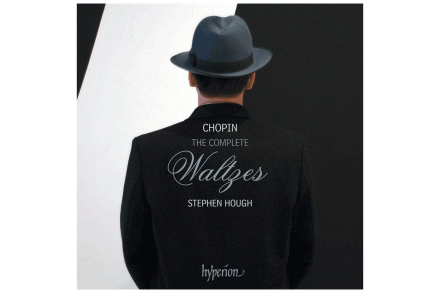
Rejoice that Hyperion’s impeccable back catalogue is finally available to stream 

Classical

At the beginning of the 1980s a former ice-cream salesman called Ted Perry drove a London minicab to raise money for his dream project: the world’s most smartly curated classical record label. For the first time these magnificent recordings are arriving on Spotify, Apple Music and other platforms He called it Hyperion, after the Greek sun god, and by the time he died in 2003 it had acquired its own mythology.

Every crumb of Kurtag’s music is a feast: Endgame, at the Proms, reviewed

Classical

The fun starts early in Beckett’s Endgame. Within minutes of opening his mouth, blind bully Hamm decides to starve his servant. ‘I’ll give you just enough to keep you from dying,’ he tells Clov. One biscuit and a half. Which feels positively lavish compared with what composer Gyorgy Kurtag feeds us musically in the first 20 minutes of his operatic adaptation (receiving its British première at the Proms). Crumbs, we get. One single lonely tone, from one instrument, every few seconds, all so spaced out that it almost sounded like the orchestra was on tiptoe, glutes clenched, attempting a heist perhaps, trying to half-inch some notes from somewhere. Every crumb of Kurtag’s music is a feast.

A euphoric meat-and-two-veg programme: Tonhalle-Orchester Zürich/Paavo Jarvi, at the Proms, reviewed

Classical

We used to call it a ‘meat and two veg’ programme, back in my concert planning days: the reliable set menu of an overture, a concerto and a symphony. It was an unfortunate term. No artistic planner likes to feel that they’re playing it safe, still less (and sources report that this goes double at the BBC) that they’re giving the public what they want. Traditional formats, familiar warhorses, dead white males: yawn! Then Paavo Jarvi and the Tonhalle-Orchester Zürich rock up at the Proms with a Beethoven overture, a Tchaikovsky concerto and Dvorak’s New World symphony and what do you know? The Royal Albert Hall was packed.

Doesn’t get better than this: The Threepenny Opera, at Edinburgh International Festival, reviewed

Classical

It’s the Edinburgh International Festival, and Barrie’s back in town. Once, Edinburgh was pretty much the only place that you could see Barrie Kosky directing in the UK; there was a satisfyingly transgressive thrill about an opera director whose priorities were so self-evidently about the whole art form that he’d happily stage Monteverdi as a tango-powered revue. In recent years, Baz the Knife has supplied increasingly rare moments of discovery amid the EIF’s all-you-can-eat buffet of touring orchestras and reheated prestige productions. But he’s not the rare bird he was. In fact, with a Carmen in rep at Covent Garden and a new London Rheingold coming soon after his Dialogues des Carmélites at Glyndebourne and the Proms, he’s starting to look like a fixture.

A brilliantly cruel Cosi and punkish Petrushka but the Brits disappoint: Festival d’Aix-en-Provence reviewed

Classical

Aix is an odd place. It should be charming, with its dishevelled squares, Busby Berkeley-esque fountains, pretty ochres and pinks. Yet none of it feels quite real. It’s as if an AI bot had been asked to design a Provençale city. Everything is suspiciously perfect. And then you notice all the Irish pubs and American student clones. It’s the prettiness of a Wes Anderson set – with the charm of an airport. In this uncanny valley, however, lies what continues to be one of the world’s classiest opera festivals. The major new commissions this year were two British chamber operas. George Benjamin and Martin Crimp were returning with Picture A Day Like This, their third collaboration for Aix.

Imagine a school concert hosted by Bela Lugosi: Budapest Festival Orchestra and Ivan Fischer, at the Proms, reviewed

Classical

‘Audience Choice’ was the promise at the Budapest Festival Orchestra’s Sunday matinee Prom, and come on – who could resist the chance to treat one of the world’s great orchestras like a colossal jukebox? Actually, this wasn’t the latest wheeze of some clueless BBC head of music: it’s a favourite party trick of the BFO and its conductor Ivan Fischer. The audience has a ‘menu’ of some 275 individual works and symphonic movements; they vote for six of them and the BFO plays their selection, unrehearsed, on the spot. Orchestral musicians never do anything unrehearsed. They hate it. But the BFO does it anyway, because they’re the best, and they know they are.

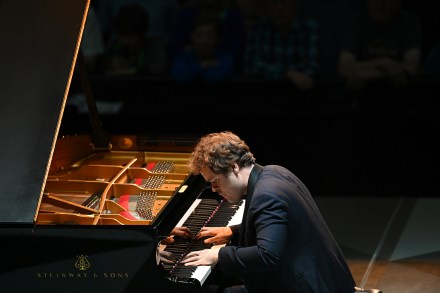
Why is this genius playing to a half-empty Royal Albert Hall? Benjamin Grosvenor Prom reviewed

Classical

There were times during last Friday’s First Night of the Proms when it felt as if we’d been transported back to Ohio during the Eisenhower administration. We could have been in Severance Hall, Cleveland, listening to its orchestra under George Szell – and there’s no higher compliment I can pay the BBC Symphony Orchestra, because the irascible maestro drilled his musicians to parade-ground perfection. You could tell the BBC orchestra was at the top of its game from the first snarls of the brass in Sibelius’s Finlandia – a more interesting piece of programming than it sounds. This was the choral version, in which the choir sings of Finland’s refusal to bend under Russian oppression.

The greatest female composer you’ve never heard of

Classical

One of the most intriguing piano concertos of the late 19th century is unknown to the public – and no wonder: so far as I can work out, it has only been recorded once, on a speciality label devoted to neglected French repertoire. As I write this, there are only 11 copies available from Amazon and I recommend that you grab one quickly, because the Second Piano Concerto of Marie Jaëll (1846-1925) demands repeated listening. If you want proof women of the era could move beyond well-carpentered clichés, listen to Marie Jaëll The concerto’s harmonic language is superficially conventional: sweeping tunes decorated by arm-swinging arpeggios.

Florid flummery: ETO’s Il viaggio a Reims reviewed

Classical

Lightning sometimes strikes twice. English Touring Opera hit topical gold last spring when, wholly by coincidence, they found themselves touring with Rimsky-Korsakov’s Russian anti-war satire The Golden Cockerel. Now the company’s general director Robin Norton-Hale insists that their current tour of Rossini’s Il viaggio a Reims – written in 1825 to celebrate the coronation of King Charles X of France – was fixed long before this month’s events at Westminster Abbey were even a glint in the Earl Marshal’s eye. Really? In truth, opera planning cycles generally operate in years rather than months. On the other hand, Il viaggio a Reims is an extravagant heap of dramatic (if not musical) flummery.

The coronation music was – mostly – a triumph

Classical

Sir Hubert Parry was upgraded from knight bachelor to baronet by King Edward VII in 1902, and my goodness he earned it. His anthem for Edward’s coronation, I was Glad when they Said Unto Me, begins with a thrilling brass fanfare – or it has done since George V’s coronation in 1911: Parry’s original introit wasn’t sufficiently attention-grabbing, so he beefed it up. But the most spine-tingling moment has been there from the beginning. ‘I was…’ sings the choir on the tonic chord of B flat major – and then the word ‘glad’ bursts out where we aren’t expecting it, in G major.

Emperor Bokassa might have been a cannibal but his coronation music is worth a listen

Classical

If being asked to write music for the coronation of a king is an honour, then doing it for an emperor is even more so, you might think. That was certainly the view of Jean-François Le Sueur (1760-1837), an opera composer who was made director of music at Notre-Dame by Napoleon. At the self-coronation of the ‘Emperor of the French’ in 1804, two choirs and orchestras performed pieces by Le Sueur, who dined out on it for the rest of his life. Fortunately for him, the French authorities, perhaps keen to forget the vulgar spectacle, never got round to clarifying who wrote what.

The last unashamedly happy masterpiece: Haydn’s The Creation, at Ulster Hall, reviewed

Classical

Haydn’s The Creation is Paradise Lost without the Lost. True, the words aren’t exactly up there: translated into German by Haydn’s pal Baron van Swieten and subsequently retro-translated into some of the clumsiest, most endearingly rococo English ever set to music. But you get the idea. Near the start some demons get consigned (very efficiently) to the outer darkness, and at the end the angel Uriel gives Adam and Eve the briefest of warnings – despatched in a brisk recitative before the chorus of angels floods the heavens, once more, with sunlight and praise. Basically, though, it’s optimism. It’s freshness. It’s a universe founded on faith, and with it, joy.