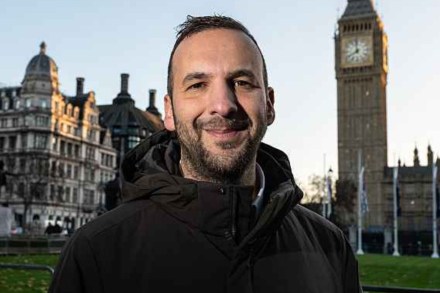
Zack polanski

Does British politics have a problem with the ‘omnicause’?

51 min listen

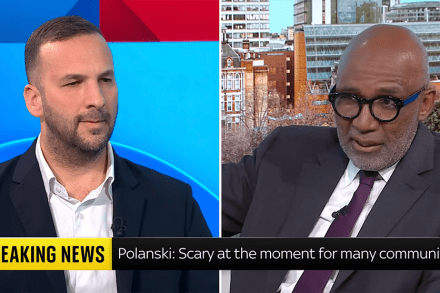
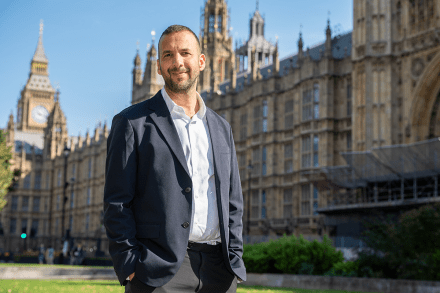
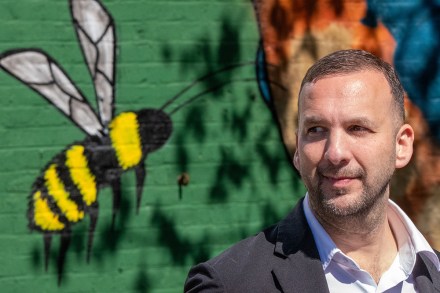
It is undoubtable that – under the leadership of Zack Polanski – the Green Party have soared to new heights. Having won their first parliamentary by-election in February, polls consistently show them as a force to be reckoned with on the left of British politics. Much of their success has come at the detriment of Labour, with disgruntled further-left progressive voices opting to vote Green. This, though, is a brand of eco-populism that comes at the expense of the Green Party’s roots, or so argues Angus Colwell in the Spectator‘s cover article this week. Have the Greens ceded the issue of the environment? For this week’s Edition, host William Moore

Does British politics have a problem with the 'omnicause'?

The Tories are the real green party

You might describe it as the Polanski paradox. The party which calls itself Green, which has concern for the environment as its raison d’être, has never been more popular. Four Green MPs returned at the last general election. Victory in the recent Gorton and Denton by-election. Local election gains in May predicted to be sweeping. Running second in many national opinion polls, and in the projected seat tally for the Scottish parliament. And yet while the Green party surges ahead, green issues fall by the wayside. As Angus Colwell explores in this week’s cover piece, Zack Polanski has focused the Green party away from the environment and turned it into

How the Green party abandoned its environmental roots

In the summer of 1972, Lesley Whittaker walked into a pub in rural Warwickshire. She had something for her husband Tony. It was a copy of Playboy magazine. In that issue, there was an interview with the biologist Paul R. Ehrlich, who died this month aged 93. In it, he repeated the thesis of his 1968 book The Population Bomb, where he wrote that ‘in the 1970s hundreds of millions of people will starve to death’. There were simply too many of us. Worldwide famine was imminent. Lesley and Tony were terrified. Along with a local businessman, Michael Benfield, and his future wife, Freda Sanders, they talked about it over

Badenoch can show Polanski what a real green party looks like

Freed from the burden of choosing a prospective government, by-elections are an opportunity for voters to tell the political class how they really feel. It is therefore no great surprise that the people of Gorton and Denton, until now a solid Labour heartland, have called on the uber-left Greens to give the status quo a kicking, with Reform coming in second. For the Conservatives, the more interesting story is not the Greens’ success in outer Manchester, but what the Green surge at the national level says about the voters who have been drifting into Zack Polanski’s orbit. The Greens have previously benefited from the agreeable vagueness of their brand. Green

Green surge: could Labour lose London?

15 min listen

Deputy political editor James Heale and deputy editor of The House magazine Sienna Rodgers join Patrick Gibbons to discuss the challenge the Greens pose to Labour in London. James’s political column this week explains how the shockwaves of the Gorton and Denton by-election have reached the capital. Could Labour’s ‘strongest heartland’ fall to the Greens through their coalition of ‘urban professionals, young Muslims and the economically disaffected’? Plus: as Sienna reveals Zack Polanski’s podcast tastes – in an exclusive interview for The House‘s cover (out Monday) – we extend an interview to the Green Party leader to join us on Coffee House Shots. Produced by Patrick Gibbons.

Green surge: could Labour lose London?

The young women hypnotised by Polanski

A friend mentioned to me last week that a third of young women in the UK are planning to vote for the Green party under its wonderful new leader, Zack Polanski. Bad as I tend to expect things to be, even I thought that surely things can’t be that bad. However I dutifully entered the terms ‘Polanski’ and ‘young women’ into Google, and promptly fell down a different rabbit hole. Defining my search terms a little more clearly, it turned out that my informant was correct. So badly deranged are the youngest cohort of female voters in this country that a third of them really do believe that they have

‘We must not be the Tory party 2.0’: Nigel Farage on his plans for power

Nigel Farage is signing football shirts when I arrive at Reform’s campaign headquarters in Millbank Tower, the building where New Labour prepared for power before 1997. The black shirts are emblazoned with ‘Farage 10’ in gold. ‘Someone called them Nazi colours,’ the leader complains. ‘This always happens when we do well.’ As favourite to be the next prime minister, Farage is sanguine. ‘They’re a special edition, £350 each.’ How many is he signing? ‘—king hundreds,’ he says, pulling his punches on the profanity. Seven hundred to be precise, a cool £245,000 for party coffers. This is the same week the party registers a £9 million donation from the crypto millionaire

Trump’s gilded age, the ‘hell’ of polyamory & is Polanski Britain’s Mamdani?

31 min listen

A year on from his presidential election victory, what lessons can Britain learn from Trump II? Tim Shipman writes this week’s cover piece from Washington D.C., considering where Keir Starmer can ‘go big’ like President Trump. Both leaders face crunch elections next year, but who has momentum behind them? There is also the question of who will replace Peter Mandelson as ambassador to the United States. Can Starmer find a candidate who can get the Americans on side? Host Lara Prendergast is joined by The Spectator’s political editor Tim Shipman, features editor Will Moore and commissioning editor Mary Wakefield. As well as the cover, they discuss Mary’s piece urging us

Is Zack Polanski our Zohran Mamdani?

Like Zohran Mamdani in New York, Zack Polanski offers the thrill of cost-free rebellion. Mamdani leapt to prominence at the end of June by unexpectedly winning the Democratic party nomination in the New York mayoral race, and doing so as an avowed socialist who claims that by taxing the rich he will relieve ‘the despair in working-class Americans’ lives’. Polanski has made waves since the start of September as the new leader of the Green party of England and Wales, using a rhetoric calculated to appeal to left-wing activists, while proclaiming himself the champion of plumbers and hairdressers. He has conjured up an alliance between utopian socialists like himself and

The Ultras: meet Britain’s new Islamo-socialist alliance

Ayoub Khan seemed delighted. Last Thursday, it was announced that fans of the Israeli football club Maccabi Tel Aviv would be banned from attending their match against Aston Villa next month, an outcome that Khan, the MP for Birmingham Perry Barr, had been lobbying for since September. That night, Khan took himself on a broadcast round to celebrate. Keir Starmer had said the ban was the ‘wrong decision’, but on Newsnight Khan told him to back off. ‘The Prime Minister should stay out of operational matters,’ he said. ‘That’s not a matter for him, sitting in No. 10.’ It has been a satisfying 15 months for Khan since his election.

Asylum reform: is Labour bold enough?

18 min listen

Danny Shaw and Tim Shipman join Lucy Dunn for today’s Coffee House Shots to talk about the government’s reforms to the asylum system. Having worked with Yvette Cooper before, Danny argues that the reforms are a great approach for a long-term solution – but he worries that they are not bold enough for the public mood. Is Labour putting procedure above politics? And, with the migrant hotel issue bubbling under the surface, is the public’s patience wearing thin? Plus: as Zack Polanski is elected leader of the Green Party, is Labour about to be out-flanked by two radical populists to its left? The Greens and Jeremy Corbyn’s new party could

Why haven’t the Greens cut through more?

19 min listen

The Green Party leadership election is underway, pitting new MPs Adrian Ramsay and Ellie Chowns against London Assembly Member Zack Polanski. The Greens achieved their best ever result at the 2024 general election, but they’ve remained static in opinion polls ever since. Lucy Dunn and Luke Tryl of More in Common join Patrick Gibbons to try to make sense of this. As Luke says, the dynamics within the leadership election are symptomatic of a wider divide over party strategy – two of the seats they won last year come from more liberal, traditionally left-wing seats, while two others come from traditionally conservative-leaning, rural shires. Plus, does Corbyn’s new party complicate