Andy Pearce

Andy Pearce is an associate professor at the UCL Centre for Holocaust Education.

What too few people know about the Holocaust and Operation Barbarossa

From our UK edition

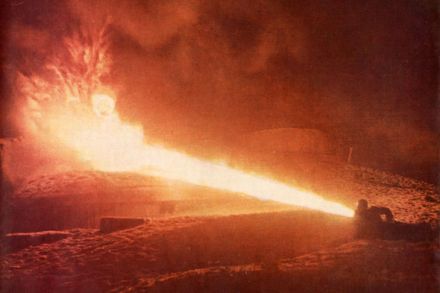
On this day, 85 years ago a seismic event in world history took place. At 4am on the 22 June 1941 a massive land force of 3.5 million men, supported by thousands of tanks and aircraft, invaded Soviet territory. Led by Nazi Germany and codenamed ‘Operation Barbarossa’, the significance of the incursion was not lost on contemporaries. ‘We have reached one of the climacterics of the war,’ Prime Minister Winston Churchill told the nation in a radio address delivered that night. Not for the first time, Churchill would be proved right.

Are we failing to learn lessons from the Holocaust?

From our UK edition

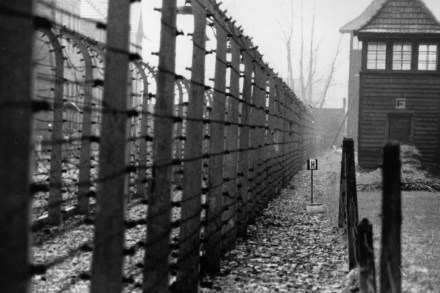
Ninety years ago this week, the acting chief of the Munich Police Department held a press conference. The new man had been busy. On assuming office a few days earlier, the chief had tried to get to grips with what he saw as acute political unrest in the city by authorising a wave of mass arrests. The primary targets were leading figures in the Communist Party and paramilitary groups made up of trade unionists, liberals, and social democrats. According to the chief, it was no longer possible to guarantee the security of such people, and so scores of them were unceremoniously taken into so-called ‘protective custody’. However, a new problem had emerged. The round-ups were performed with such zeal that the city’s prison cells were now bursting at their seams.

Why teaching the Holocaust still matters

From our UK edition

Pretzsch is a normal small town on the River Elbe, 35 miles north east of Leipzig, with little or nothing to suggest its dark past. Eighty years ago, in the spring of 1941, it became a mustering point for a cadre of men who would perform ‘special tasks’ during the forthcoming Nazi invasion of the Soviet Union. Over the spring and early summer months, around 3,000 men arrived in Pretzsch. Quartered in SS accommodation, the men eventually learnt they would be part of four Einsatzgruppen — special task forces — who were to move behind the German front line. Their task was framed as maintaining security and eliminating resistance.