Wine

The glory of German wines

I have had three recent conversations, all lively if unrelated – and all well lubricated. The first concerned Anglo-Saxon England around ad 700. Recent discoveries of coin hoards suggested that economic activity during that period of the Dark Ages was more extensive than had been supposed. Without damaging the coins, it had been possible to establish that some of their silver content had come from Byzantium. Every timeI drink a German wine I am convinced that one should do so more often The main discussants were a couple of academics who had been disciples and friends of Philip Grierson, one of the greatest numismatists of all time: a scholar, collector and major benefactor of the Fitzwilliam in Cambridge. That reminded me of an embarrassing meeting.

A fitting overture to Holy Week

Holy Week, but not everywhere. After reading that the diocese of Birmingham wanted to hire staff to help with deconstructing whiteness, only one conclusion is possible. Large parts of the C of E have become a theological and liturgical wilderness. The Devil is in charge and it is unholy week, 52 weeks a year. Anglican friends assure me that this is overdoing the pessimism. There are sound clerics – even the occasional sound bishop – and in some areas, traditions survive. Certainly Sherborne Abbey has just put on a superb Palm Sunday, and the procession included a donkey, the sweetest-natured of animals and a perpetual outlet for sentimentality.

A French symposium

From our US edition

Just as night watchmen are constrained by duty to make their rounds, so are writers about wine. Sometimes the rounds are seasonal. Beaujolais Nouveau, for example, is released every year on the third Thursday of November at 12:01 a.m., just a few weeks after the September harvest. Gamay, the grape that makes Beaujolais, can be fresh, floral and ruby-like in this nymphet incarnation. Beaujolais Nouveau lacks the depth, succulence and complexity of more mature instances of Gamay — especially in Morgon and Côte du Py — but it is an agreeable, undemanding picnic wine that goes well with your preferred instantiation of déjeuner sur l’herbe.

wine

There is good news in the world – and it is mostly about wine

My last piece began with a one-word sentence: ‘Gloom.’ A dear friend reproached me. ‘In a world already abundant with gloom, surely you can find a way of cheering us up. After all, you’re not writing about politics – or at least you’re not supposed to be.’ I promised to try harder to propagate good news. When it comes to wine, that is not impossible. Twenty years ago, in Lisbon, I was treated to a bottle of Barca Velha. I was told that the Portuguese regarded it as their Château Latour. Needless to say, it was not that good but I remember thinking that it was a jolly decent drop of stuff, and – in those days – excellent value. Only half of that judgment still holds true. I tried a 2012 the other day and it was excellent: as good as a Bordeaux second growth.

‘As good as you will find in London’: Noble Rot Mayfair, reviewed

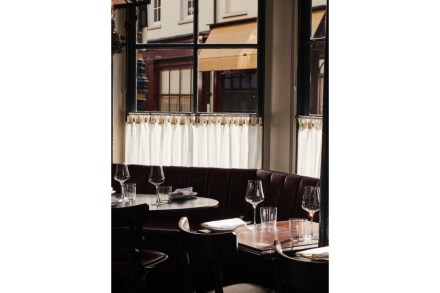
Noble Rot, which is named for a sickness that afflicts grapes, a self-aware name for a restaurant in London, is becoming a chain. Don’t get me wrong. The Rots in Lamb’s Conduit Street and Greek Street (which replaced the Gay Hussar that died in sympathy with the intelligent left) are two of the best restaurants we have. My only complaint is that, like the Plastics in Mean Girls, they know how lovely they are and have their own promotional magazine. This food has a loving intensity to it, and it is as good as you will find in London Now they have expanded into Mayfair – but the least horrifying part, which is Shepherd’s Market.

Idris Elba’s champagne makes the world seem less troubled

Gloom. Relentless rain out of a sullen sky enhanced an already pessimistic mood. We were talking geopolitics and agreeing that the West ought to brace itself for a hard landing. Try as we might, we could find no good news, anywhere. Where is the self-belief of the Reagan/Thatcher years? Instead, a culture war is taking place Some of us were veterans, one or two of whom had spent time in Washington in 1980, the build-up to the Reagan era and the prelude to the most successful decade in modern peacetime history, in which Margaret Thatcher played a crucial role.

Truffle shuffle

From our US edition

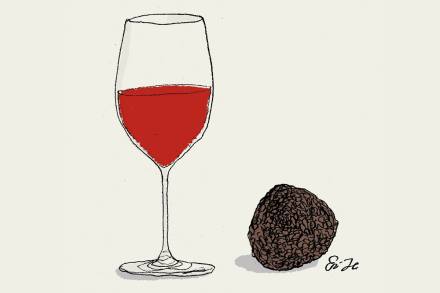
Regular readers may recall the trip we took to St. Émilion on the right bank of the Gironde-Dordogne river system a while back. It being truffle season, some enterprising chaps organized a dinner revolving around that delectable fungus and one of the very best wines from St. Émilion, Château Angélus, a Premier Grand Cru Classé A, and its second label, Carillon d’Angélus. Note the bell motif: a single bell features on the label of Château Angélus, three on that of Carillon d’Angélus, so named because in the vineyards one can hear the bells from three neighboring churches ringing out that prayer to Mary (Angelus Domini nuntiavit Mariæ...) in the morning, noon and around vespers. Those of you who were along for our last foray to St.

truffle

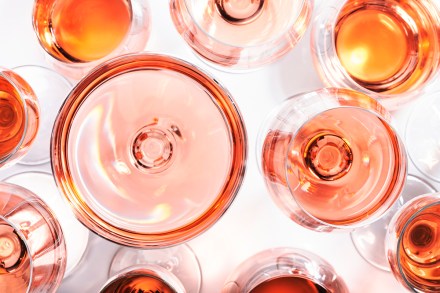
I’m a rosé convert

Paris is more than a city. It is a state of mind, an aspiration. Though it glorifies the military, it remains feminine and beguiling. Its heroes moved effortlessly from triumphs on the battlefield to triumphs in the boudoir. The very stones of Paris seem redolent of the dreams and ecstasies of past lovers, and of their frustrations, follies and pains. Heloise and Abelard loved and suffered here. We had come to perform two simple tasks: sitting in judgment over wine and food In many respects, alas, contemporary Paris has fallen a long way from romance. Everyone has stories of rubbish, dirt and rats. The days when bon chic, bon genre set the tone for the Grands Boulevards are long gone. Today, the scruffiness is enhanced by McDonald’s and Starbucks. The very crimes lack grandeur.

The miracle of limoncello

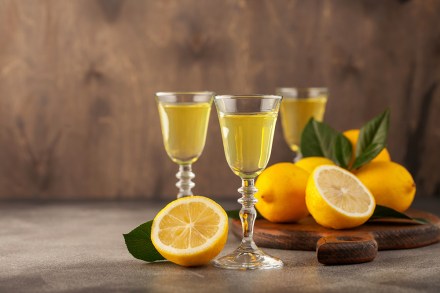
Consider the paradox of lemons. In Italy, one associates them with scented groves. A few years ago, Helena Attlee wrote the book The Land Where Lemons Grow, in which citrus fruits become a golden thread running through the history of Italian agriculture. Yet though the lemon is arguably the most beautiful of fruits, its tart taste is bracing. A spremuta di limone finds a swift route to any shaving nicks. Most limoncello is produced on the Amalfi coast but there is an outlier from Godalming But the lemon can be sweetened, in the form of limoncello, an after-dinner drink of no great subtlety, good for pouring over puddings but hardly a match for the fortified wines of the Iberian peninsula. That said, there is an exception.

Drinking during pregnancy just isn’t the same

From our US edition

There are many cruel ironies in life. One of them is getting pregnant (and intending to keep it) at just the age at which you begin to understand how and where to drink good booze and feel justified in spending money to do so. So, finding myself with a bun in the oven just after my forty-first birthday this summer, I had to bring to a screeching halt the habits of the last few years: drinking really good wine, sometimes quite a lot of it, fairly regularly. Indeed, I spent the first week of pregnancy in the Languedoc drinking a bottle a night, plus the odd gin and tonic, because of course I didn’t know. Just last year I made a special journey to an industrial park outside Brussels to collect six bottles of 2013 white Bordeaux — it was that good.

pregnancy
wine

The rise of English wine

From our US edition

Sometimes, I pretend that I worked the wine beat thirty or forty years ago. I picture myself in formal wear, kicking back in gilded settings, sipping perfectly aged first growth, trading bons mots with winemakers. We’d spend hours solemnly considering the slow, steady, seemingly eternal rise of wine culture, and how inevitably it would soften the cruder edges of society. It would be so merry, yet cerebral — but also something we could feel good, even morally superior, about participating in. Instead, I’m in 2024 wearing yoga pants and guzzling mineral water (must hydrate!) by myself holding Zooms with winemakers, sweating over the fact that scientists say climate change imperils up to 73 percent of the world’s current wine-growing regions.

winter

A Champagne winter

From our US edition

Most readers will come to this column in February. “That’s the dead of winter,” you say (if you are in the Northern hemisphere, anyway). But I write at the absolute nadir of daylight. For some years now, I have kept a daylight diary. I generally start in mid-October and go through the return of daylight-saving time in March. It takes that long to convince me that summer really is on its way back. When I started, I simply noted the time the sun rose, when it set and how much daylight we had that day. I eventually got a little more elaborate, noting the phases of the moon and such, and making very brief annotations about significant events. Every year (so far), it’s been a story with a happy ending.

I’m raising a glass to the Tory party’s future

Wine stimulates the wits, emboldens debate, and inspires the mind. Judicious quantities, abetted by judicious quality, encourage the participants to attack the important questions. Thus it has been over the past few days, discussing God and the Universe. I was talking to an astronomer, whose day is spent contemplating the vastness of interstellar space. Consider one single light year, and how far that would take us from our own celestial neighbourhood. Then let your mind give way before the unimaginable distances. Already daunted, move onwards to the queen of the sciences, theology, and the question posed by that outstanding 20th-century theologian, Mr Prendergast in Decline and Fall. He could not explain why God had bothered to make the world.

My adventures in rosé

During the festive season, I usually spend far too much time thinking and talking about politics. But the latest was an exception. One hostess fixed me with a gimlet eye and announced that she had forbidden any discussion of Israel/Palestine. At a recent dinner party, the table had been repeatedly banged, someone had stormed out and others were now on non-speaks. I quoted the late Clarissa Eden. During the Suez crisis, she felt that the Canal was running through her drawing-room. This girl gave a hearty nod in agreement. I was happy to agree with the ban, but declared my surprise. How could anyone be so sure of the solution? The most I could come up with was ruminative gloom.

Could a 100-bottle limit help me cut down on drinking?

My New Year’s resolution is to cut down on my drinking. I’m not talking about bringing it within the NHS’s recommended limit, obviously. I’ve never met anyone who confines their alcohol intake to 14 units a week, which amounts to a bottle and a half of wine, ideally spread over many days. I’m thinking of something more in the region of two bottles a week. Why not simply stop altogether? Partly because I’ve tried that before and don’t have the willpower. The longest stretch I’ve gone without a drink was in the two years leading up to my marriage in 2001, because I didn’t think Caroline would go through with it if I didn’t take the pledge.

A craft beer revolution in Grand Cru Country

From our US edition

If the dozens of cartoonish stereotypes that flood my mind when I think of France — grand Bordeaux estates, snails and frog legs dripping in garlic butter, elegant women striding down the Champs-Élysées, a glittering Eiffel Tower at night — a stein of hoppy beer is nowhere to be found. France is not known for its pints. And yet, much to the concern of its vineyards and winemakers, that could be changing. “There has been a real explosion of breweries all over France in the past few years,” says Alexandra Berry, a Paris-based beer and hops sales consultant and the author of From Earth to Beer: The Expression of Terroir in a Glass. “General sales in wine have started to decrease in France in part because the industry has started to seem a little dated and overrated.

beer
madeira

Madeira, our onetime national drink

From our US edition

Does America have a national drink? It once did — not officially, quite, but in fact. And what was that national potation? Madeira. The wine, John Hailman writes in Thomas Jefferson on Wine, “symbolized to Americans a common patriotism and spirit of independence.” It was, he continues, the “mother’s milk of the American Revolution,” the “virtual national beverage after the Revolution.” Madeira was used to toast the signing of the Declaration of Independence. Jefferson dispensed it at his inauguration. Washington, Hamilton and Benjamin Franklin all loved the stuff. John Adams remarked that a few glasses of Madeira made anyone feel capable of being president.

Opening a bottle with… chef Heros de Agostinis

From our US edition

“Stealth wealth” became A Thing in 2023. TikTok was awash with “get the look!” fashion videos; magazines full of think pieces on crisp white shirts and camel cashmere. The idea is to ooze money — or at least look like you do — in classic, understated cuts and colors. What the Streeps and Paltrows have been doing for decades is now the standard for the aspirational and chronically online.  The trend came to mind as I tumbled into Rome’s five-star Anantara Palazzo Naiadi during the Cerberus heatwave. Slick with sweat, a suitcase half my size and missing one wheel, toenails unpainted and there to interview chef Heros de Agostinis, I wished I’d paid more attention. There are fancy hotels, then there are stratospherically fancy hotels like this one.

heros de agostinis

I hope David Cameron will find time to drink the odd good bottle

Back in 1989, a most unsatisfactory fellow called General Aoun started a civil war around Beirut in the hope of seizing control of the Maronite Christian portions of Lebanon. He ended up with political wreckage, which has endured. Château Berliquet 2015 is a fruity St Emilion that deserves to be better known During the fighting, I spent a few days cut off in the British ambassador’s summer residence, watching the battle going on below. We felt safer than we probably were, partly because Pauline Ramsay, the ambassador’s enchanting wife, tried to turn the crisis into a house party. So British: so best of British. We watched, helpless, as one block of flats was regularly hit by shells.

A very Sherry Christmas

From our US edition

Early on in his classic Notes on a Cellar Book, the literary scholar George Saintsbury writes that “no reasonable person should quarrel if we begin with Sherry, even as the truly good and wise usually do at dinner.” That was in 1920. Can you imagine anyone writing that today? The answer is no. But that only tells us how fickle are the revolving fashions of taste. For us, Sherry is an antique taste, quaint if not fusty. By and large it’s something that maiden aunts drink between knitting projects and jumble sales. At its best, Sherry has a fading academic aroma. When I was in graduate school, I had a semester-long tutorial on Plato with the eminent Platonist Robert Brumbaugh.

Sherry