Wine

Revisiting the Devin Nunes winery

From our US edition

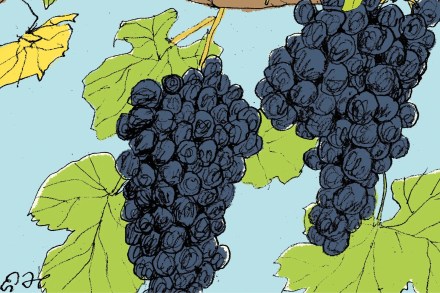
Anyone who writes about wine for a while finds himself coming back to old friends as the years go by. This wine here was actually fuller and more sumptuous in that vintage five years ago, while that wine over there really came into its own in the most recently released vintage. Just as with people, some wines with early promise somehow go astray and never amount to much, while others that were disorganized and introverted when young suddenly blossom and turn outward as they age, the magic sunflowers of viticulture. Most writers about wine will have similar stories. It’s a bit rarer for most of us, however, to get in on the ground floor and stand by while a new vineyard, fawn-like, is born, manages to stand up on its own and then goes trotting off.
Nunes

Drink early, drink often

As readers will be aware, and without sounding too immodest, this column is absolutely committed to diversity. In an earlier era, that might have seemed unnecessary. A British oenophile did not need to search out bottles from great distances. He could merely take his pleasure from the first growths of Bordeaux and the grands crus of Burgundy, with perhaps a little dalliance on the Rhine or the Rhône. Nor was this only a British modus operandi. I covered the French election of 1981 from Burgundy (there were good political reasons for doing so, as well as other ones). The Burgundians knew that wine was made on the banks of the Gironde, but when I assured them the best of it was excellent, there was polite scepticism.

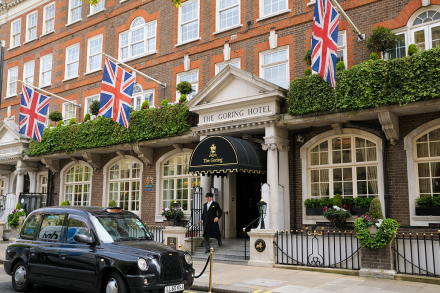
The glory of the Goring

Last weekend, I was in England: among two very diverse aspects of the nation. In recent months, every Saturday, central London has been plagued by demonstrations. I suppose that there must be a right to protest. But what about the right to mosey around Westminster and Whitehall without blocked roads and with any hope of peace and quiet? Last Saturday saw the largest manifestation of all: less of a protest than an English uprising – a flag-waving two-fingered revolt against the liberal intelligentsia. I kept well clear, having no wish to be caught up or kettled, and later there were attacks on the police. This should lead to jail sentences. Two conclusions could be drawn.

Sebastian Faulks looks back on youth and lost idealism

I must say, calling a book Fires Which Burned Brightly promises much. At best, from the jaded reviewer’s point of view, an autobiography of delusional self-aggrandisement; at worst, a wild mismatch between the, well, incendiary language of the title and the potentially humdrum contents. It might have been dreamed up by a master satirist intending to inflict maximum damage to the reputation of that noted gentleman of letters, Sebastian Faulks. I once invented a novelist named Julian Sensitive, whose only claim to fame was an autobiographical novel called, after T.S. Eliot’s Prufrock, ‘My Trousers Rolled’. That was a crude joke compared with the hilarity inspired byFaulks’s title.

The best bargain burgundies

From our US edition

Apropos the subject of this column, videlicet, wine, a friend told me an arresting story about the once-famous British theater critic and playwright Kenneth Tynan (1927-1980). Sometime in the 1960s, when the prickly Gamal Abdel Nasser ruled Egypt, Tynan went sailing on the Nile. One night, he came ashore to enjoy dinner at the Luxor Hotel. The wine list was impressive. He ordered a famous bottle that cost practically nothing. The head waiter swept over to tell him, so sorry, they’d drunk the wine out. Tynan manfully looked again at the list and asked for the second best bottle. Alas, the waiter replied, that wine, too, had been exhausted. “Well, what do you recommend?” Tynan asked. To which the answer was: “We have no wine of any kind.” That hasn’t happened to me yet.

Burgundy

Is God a Thatcherite?

Autumn: surely one of the most beautiful words in the language. All the other seasons are expressive, almost even onomatopoeic, worthy of being serenaded by Vivaldi, but autumn has a gentle resonance. Mists and mellow fruitfulness, not to mention the grouse season. School and university accustomed most of us to think of the year beginning at the Michaelmas term rather than in January. This is reinforced now that parliament is back – though with Sir Stumbler in charge, it is more a matter of fogs and sour fruitlessness. That brings up memories of a different era, one which was immensely fruitful though never mellow. The 100th anniversary of Margaret Thatcher’s birth is approaching. I was having dinner with my old friend John O’Sullivan and of course we talked of the Lady.

The remote Spanish wine region that rivals Rioja

A.E. Housman once wrote that the English villages of Clunton and Clunbury, Clungunford and Clun ‘are the quietest places under the sun’. He’s almost right. I grew up in Clunton and the only place I’ve felt a deeper sense of quiet is Escaladei, a village high up in the mountainous Priorat region of Spain, which is home to the Cellers de Scala Dei vineyard. Getting there from Barcelona isn’t for the faint of heart, as the roads weave erratically along the hillsides. Driving there, I gripped the steering wheel tightly and drowned out my fears with music from a local reggaeton station. Once safely at the vineyard, Roger, our guide, impressed on us the importance of two things in Priorat: Garnacha and monks.

The English pinot noir that rivals Burgundy

England is now and history. The other day, in the Weald of Kent, now was England and pleasure. We were visiting the Balfour Winery, near Staplehurst, on an enticing midsummer day. This was a quintessential English landscape. To the left, a wood with classically English trees. To the right, a country house. In the distance, an oast house. We were viewing all this from a balcony, after an excellent lunch based on local ingredients, with wine pairings, that I reckon was worth a Michelin star. The scallops were as good as I have ever tasted. The locals are aware of the neighbouring asset: the previous Saturday, the restaurant had served 750 guests. But the kitchen has a problem. Jake Goodsell, the chef, is only 25. A splendid fellow, he is full of ambition.

Exploring Edinburgh, from Princes Street to Pitlochry

From our US edition

I’m blinking through floor-to-ceiling windows that perfectly frame a pristine view of Edinburgh Castle, standing magnificent against an improbably cloudless Scottish sky. The elegant writing desk in the Archibald Signature Suite at 100 Princes Street hotel has all the makings of an elevated “work-from-home” set up, but the scenery – and the collection of aged single malt I know to be upstairs – make concentration an uphill battle. This luxury townhouse right on, you guessed it, iconic Princes Street was made for luxuriating, not hunching over laptops. Ducking into the entrance on Princes Street feels exclusive, like knowing a secret.

pitlochry

The wait is worth it at Le Veau d’Or

From our US edition

The story of the golden calf is preserved in Exodus 32. Moses had gone up into the mountains to see a man about the law. He tarried. The people grew restless. Eventually they turned to Aaron, Moses’s elder brother, and said, “How about it?” Aaron could see trouble brewing as well as the next chap. “There’s lots of gold in them there earrings,” he said, looking around at the multitude. “Give me the gold and I’ll make you something to worship.” Hence the golden calf, which the people rallied round, much to the irritation of Moses and the higher authorities when they caught wind of it.

Le Veau d'Or

Wine to pass the cricket Test

What to drink while watching cricket? Beer or even Pimm’s for the village green, but I think that a Test match on television demands wine. What a series we are having: likely to go down in the record books as a great example of the greatest of games. Cricket incites memories. The current Indian side have a claim to be world champions. In this last Test, they thumped England even though they rested Jasprit Bumrah, probably the best bowler in the world today. But I recall earlier days when they were usually easy victims in England, with one exception: Sunil Gavaskar’s match. This was in 1979 at the Oval and Mike Brearley set the Indians 438 to win. That was a nominal target. In reality Skipper Brearley was giving his side plenty of time to bowl India out.

To rehydrate, drink beer

‘The nuisance of the tropics is/the sheer necessity of fizz.’  Over the past few days, during which England endured sub-tropical sweltering, it was more a matter of beer. I do not wish to denigrate water, which is all very well in its place. I often drink it. But for urgent, nay life-saving, rehydration, nothing beats beer. Now that almost all beer is properly made, I just tend to order any pint that catches my eye. In recent temperatures, the eyes have been busy. As I may have written before, there is one curiosity about beer. The Belgians, Czechs and Germans – plus other European countries – produce lager-style beers that are both satisfying and potent. In the UK, lager has often meant some of the worst beer ever made.

Grape Britain: English wine is having its moment in the sun

Our homegrown wine was, until fairly recently, regarded internationally as a bit of a joke. Peter Ustinov could quip that he imagined hell to be ‘Italian punctuality, German humour and English wine’. Likewise, Lord Jay, serving as a diplomat in Paris, recalled the British ambassador rubbing up against resistance from the home side – let alone foreigners – as he sought to be an early advocate. The ambassador was hosting Edward Heath, President Giscard d’Estaing and the governor of the Bank of France for lunch: ‘I remember [ambassador] Ewen Fergusson saying, ‘Sir Edward, wonderful that you’re here. I am tempted to serve you a delicious English white wine”. “I hope, ambassador, that you’ll resist that temptation,” was his reply.

The lure of St James’s 

Procrastination may be the thief of time, but in the right circumstances, it can be fun. The other day, I was enjoying myself in St James’s, my favourite London arrondissement. There are delightful contrasts, from the grandeur of the royal palaces and the St James’s Street clubs to the charming, intimate side streets and alleys with their pubs and restaurants. The late Jacob Rothschild would often cross from his palatial office in Spencer House to Crown Passage, in order to lunch at Il Vicolo (regularly praised here). His Lordship never bothered to reserve a table. Instead, he would send someone across with his form of booking: a bottle of Château Lafite. Crown Passage is also home to the Red Lion, one of the oldest hostelries in London.

Wine highlights from a weekend shooting party

From our US edition

Do you know Charlotte Mulliner’s charming poem “Good Gnus”? It was transcribed by P.G. Wodehouse in his short story “Unpleasantness at Bludleigh Court.” I went shooting with friends last weekend at a magnificent rural fastness in a semi-secure, undisclosed location near Millbrook, New York. Although we were shooting clays, not pheasants or other fauna, the opening of “Good Gnus” nevertheless floated into my mind like a tocsin with its irrefragable psychological insight.

shooting

The loveliness of Ligurian wine

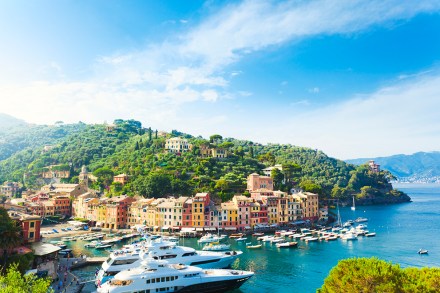
We were talking about Italy: where and when to sojourn. I confessed to so many gaps. It is years since I visited Genoa and I know that the Ligurian coast has innumerable hidden treasures. There are the well-publicised places, such as Portofino and San Remo, which I am sure are pleasant enough out of season. But for many months they are likely to resemble an eastern extension of Monaco. Small is the key word. We are not dealing with the mighty names from Piedmont. In Liguria many of the local wine producers have tiny plots, sometimes only a couple of acres. They will supply the local restaurants which also draw on local ingredients and recipes: just as nonna made it. Visitors are welcomed. These people are confident in their own way of life.

Letters: how to clean up ‘Scuzz Nation’ Britain

Decline and brawl Sir: Gus Carter’s insightful portrayal of ‘Scuzz Nation’ (‘Streets of shame’, 10 May) is less of a howl of anguish about Starmer’s Britain than an indictment of previous governments of all stripes since the late 1970s. It is also, to me, a call for more sophisticated thinking about the nature of governance in the 21st century. Carter shows, using lots of telling examples that we all recognise, that neither the state in its current form nor the private sector can cope with the multiplicity of challenges posed by a modern society. Of the state’s impotence, the current government is not the principal offender. To illustrate my point, just listen to a week’s worth of the Today programme and all the requests for extra funding that are heard every day.

The art of the political lunch

We had been discussing Ukraine, Gaza, Iran, the possibility of a nuclear exchange across the Punjab and other trifling matters. It was decided to change the subject. A youngster was planning to write a piece on lunching and suggested I might know something about that. I did not disagree. In the old days, lunching was a vital part of the political process. It was a good way of getting to know politicians, so that contacts would ripen into friendships. That said, it was not an efficient method of discussing complex matters. Lunch was forgossip and general political impressions. If detailed rumination was necessary, the place for that was in the minister’s office, equipped with a notebook. The 1980s were particularly fruitful.

Beaujolais is the ideal summer wine

From our US edition

It’s been a while since we have traveled to Beaujolais, that ancient wine growing region along the Saône River north of Lyon. Since summer is nigh, it’s time for another visit. Beaujolais is an ideal summer red wine. It is almost always made exclusively from the Gamay grape, a cross between Pinot Noir and an ancient white varietal called Gouais. It is light, flowery, full of pleasing acidity and fruitiness, satisfying by itself and notably food friendly. Of course, anyone who writes about Beaujolais these days has to begin by issuing a little advisory, like the Surgeon General’s warning on packs of cigarettes and certain medications. A few decades back, Beaujolais was plagued by scandal.

beaujolais

My new-found love for Marsala

Western Sicily is one of the most wonderful places on Earth. From the Greek temples in the south to the Arab-Norman architecture and frescos around Palermo, there are endless treasures and glories. There are also records of fascinating characters, especially the Emperor Frederick II Hohenstaufen, Stupor Mundi. Historians still argue whether he was a prototype of a Renaissance ruler, with a distinct flavour of the Enlightenment, or merely among the most remarkable men of the high Middle Ages. He was a polymath, but one of his most distinguished qualities ultimately limited his inheritance. He found it impossible to stop fighting, not least against a succession of popes. In that particular phase of the conflict between papacy and Holy Roman Empire, Frederick could not win a decisive victory.