Wine

Grateful for my grateful friend

The phone rang. ‘You are the last person in the world I should be talking to’, proclaimed an old friend from the States. ‘How have I offended you this time?’ was my surprised reply. ‘Not you personally. My beef is with your hero Donald Trump.’ ‘That is not true. In any jurisdiction, I always like to support the most right-wing legal party, so I keep on hoping that the President will calm down and stop twittering. Then one could relax and enjoy his capacity to infuriate whining leftist belly-achers. But he is devaluing his office and demeaning the great republic: no hero of mine.’ ‘Oh well, I forgive you and anyway I need your help, on Rousseau.’ ‘I’m not sure I’ve much to offer.

A vintage in retreat

We were pondering the relationship between military history and wine vintages. It is extraordinary to think that the French managed to make wine throughout both world wars. In the late 1980s, Alan Clark had David Owen and me to lunch at Saltwood, his castle near Hythe. It is a proper castle; the stones are still marked by the rust of medieval warfare. According to legend, the knights who slew Thomas à Becket made their final preparations there. How appropriate for a future Clark residence. There was some dispute as to whether Alan went over to Rome on his deathbed, but during the years of swaggering health his sympathies would have been with the swordsmen, not the croziers. He would have had little use for turbulent priests. Anyway, he produced a swagger wine.

The best whisky distillery tours in Scotland

Speyside Speyside, north of Aberdeen, is the true heartland of whisky. From Cragganmore, with its complex blends and exclusive clubroom (think roaring fire and lots of antlers) for connoisseur whisky tastings, to Glenlivet, which sits in a remote glen and organises a variety of tours, from classic distillery poke-arounds to luxury samplings. Speyside is also home to Strathisla, which is the oldest working whisky distillery in Scotland (established in 1786) and, with its distinctive pagodas, may also be the most beautiful distillery in the country. The recent success story of the region is Copper Dog, a blended-malt created in 2016 at the beautiful 19th century Craigellaiche Hotel.

Evening service

It was a culinary triumph. My hosts do not spend much time in the UK, and are determined to entertain stylishly during their visits. This Christmas they succeeded, blending tradition and radicalism. The planning began in Pall Mall on the third lunching-day in advent. We addressed the major strategic question: satiation. After bird plus pud, there is barely the energy to fall asleep in front of an old film and the rest of the day can be unsatisfactory. In recent years, I have noticed a tendency to deal with this problem by de-fanging the pudding. There is a new girlie-man breed of Christmas puds which lack the embrandied pomp of previous generations. In my friends’ case, this was not an option.

The wines of a lifetime

In longevity, great wine can march with human life. Creating (better still, maintaining) a fine cellar really is a compact between the dead, the living and those not yet able to appreciate serious claret. There is a sort of comparison with trees and houses, yet in those cases, the time-scales transcend the shortness of our lifespan. I have a number of friends who plant trees in the serene and stoical knowledge that, one day, the offspring of their husbandry will spread a benison over the surrounding countryside, though they themselves will not be here to see it. Nunc dimittis. Houses are even more germane. One of the glories of England is the number of buildings which have survived in family hands for centuries, preserving a fair proportion of their contents.

Gender in fluid form

I have lost faith in British boyhood. In mixed schools, young males have failed to seize an opportunity that previous generations would have killed for. Imagine the scene, and to add piquancy, let us locate it in a headmistress’s study. Some hulking youth, a pillar of the rugger scrum, who already needs to shave almost every day, sidles in looking embarrassed. If the headmistress had any gumption — a big ‘if’ these days — she would already be on the alert. But these days that might avail her naught. The lad would have the spirit of the age on his side. ‘Please miss: I don’t know how to put this, but I have been so anxious. I’ve decided that I’m really a girl.

All’s fair in love and Waugh

I was reminded of Wild West films from boyhood. Then, the beleaguered garrison scanned the horizon; would the US cavalry arrive in time to save them from being scalped? (John Wayne always did.) Now, one was hoping for relief, not from the Injuns, but in the form of an Indian summer. This is of especial interest to those who have a tendresse for Somerset cricket. Its paladins usually have a charmingly amateur quality. As Cardus wrote of an earlier cricketing vintage: ‘[They are] children of the sun and wind and grass. Nature fashioned them rather than artifice.’ Somerset needs a match or two in order to gain points and avoid relegation. That said, the way we were playing earlier in the season, being rained off was the best hope.

Thank Evans for good wine

There was an entirely forgotten leftist called Allen Ginsberg, a so-called beat poet (surely an oxymoron) who once produced a work entitled ‘Howl’. That was appropriate. It reads like a wolf on hallucinogens. The author whined that he had seen the best minds of his generation destroyed. ‘Best minds’: how would he have known? This was hardly Dunbar lamenting the makars of his era. Such of their verse that survives may now be an unyielding read. But in their day they were names to conjure with. Nor did they put their minds up their noses, or inject their hopes into ravaged veins.

Review: Winemaker’s Lunch with Chapel Down

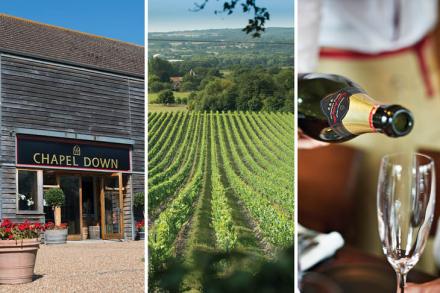
Mark Harvey, Chapel Down’s managing director of wines, was in great form last week at our Spectator Winemaker’s Lunch, held as usual in our boardroom. And I must add that Mark’s wines were in equally tiptop shape. With vineyards across Kent and a winery near Tenterden, Chapel Down is well-known as the largest producer of fine English wine. Although most of us around the table had enjoyed Chapel Down’s wares before, the one or two guests who hadn’t were taken aback by the wines’ quality, style and, well, sheer panache. We started with the 2011 Three Graces, a fabulous fizz blended from Chardonnay, Pinot Noir and Pinot Meunier (the said three graces) and aged on the lees for four years.

Uncorking the past

I have been thinking about the Dark Ages. This has nothing to do with Theresa May or Jeremy Corbyn. A friend of mine, Chase Coffin-Roggeveen, has a doctoral thesis in mind about the increasing use of wine for liturgical purposes during the English Dark Ages. Like all scholars who address that period, he has to wrestle with slender sources. Those who do not leave documents tend to be written out of history: think of the Wends. There are revisionists, such as Sally Harvey, who contrast the surviving beauties of Saxon civilisation — consider the manuscripts — with the Normans’ brutality. There is an obvious three-hour essay question: ‘How dark were the Dark Ages?’ Chase is well qualified to address such topics.

Rosé-tinted glasses

It was a typical bank holiday. Usual English weather: glorious, until you leave home without a brolly. Then fickleness supervenes — just like the opinion polls. I was pressed by anxious enquiries. ‘You’re supposed to know about these things. There’s no chance of Corbyn winning, surely?’ On the assumption that enough of the sovereign people are still in their right wits, I was able to sound reassuring. But as I did so, a memory came back: Quintin Hogg in 1964, proclaiming that anyone who voted Labour was stark, staring bonkers. These days, that would be called a gaffe. The once and future Lord Hailsham was famous for gaffes. As he would now be called a national treasure, it is unlikely that any harm was done. But Harold Wilson still won.

Kentish wine

As a wine bore, holidays abroad are a battle with the family to cram in as many vineyard visits as possible when all they want to do is go to the beach. But it’s only recently that I have begun to take advantage of the riches on my doorstep. I wonder how many Londoners realise that half an hour from St Pancras is one of the world’s most dynamic wine regions — Kent. My previous reluctance might have something to do with the weather. As you leave London on the M20, there always seems to be a moment of sunshine that lights up the countryside before it starts to rain again. No matter. While many wine regions can be ugly — the Médoc is a drained swamp — Kent is lovely, even in the drizzle.

Dear Mary | 18 May 2017

Q. My mother always told me that only boring people are bored. However she never got stuck at a drinks party discussing the pros and cons of HS2 or the impact of Crossrail on people’s commute. What is the best way of extricating oneself from a painfully dull conversation? Getting a drink is dangerous (they’ll want one too), the loo technique never fools anyone, and taking a phone call is rather vulgar. Are there any foolproof excuses I’ve missed? — C.U.S., London W2 A. How about sudden sharp intake of breath, then ‘Oh my goodness! Sorry, I must go and hide — my first boyfriend/girlfriend has just walked in. Will you excuse me?’ Cringe as you head for a more densely packed section of the party. Q.

The fall of Paris

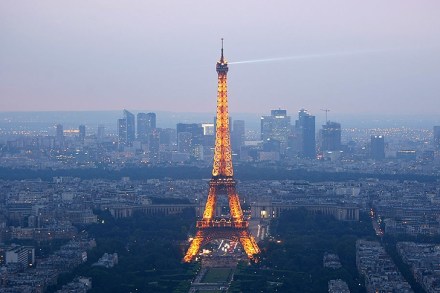
Paris used to be the most self-confident city in the world. Brash, assertive, boastful: Manhattan claimed to be the best. Cool, elegant, sophisticated, supercilious: Paris knew that it was the best. This is no longer true. Paris has lost its élan, and that has created a love-hate relationship with the UK. Everyone seems to know someone who is working in London. The ones left in Paris cannot decide whether to punish us or join us: to hope that Brexit fails — or to fear that Brexit might fail, and keep able young Frenchmen from job opportunities in London. Flics everywhere, tattiness, tension: one is reluctant to acknowledge the successes of evil, but terrorism is at the core of Paris’s problems.

A vintage that tastes of Old Possum

Eliot. After 50 years trying to make sense of his verse, and at the risk of admitting to rampant philistinism, I propose three conclusions. At his best, he is one of the finest poets in the language. Partly because he is straining language and thought to the uttermost — an analogy with the final Beethoven piano sonatas — he is sometimes incomprehensible: sometimes, indeed, falls into arrant pseudery. Finally, his anti--Semitism before the war, his rejection of Animal Farm after it: this great man and devout Christian was not exempt from original sin. Gerontion. ‘The Jew squats on the window sill, spawned in some estaminet of Antwerp.’ We turn our eye from the page in revulsion and pity.

Cats and clarets

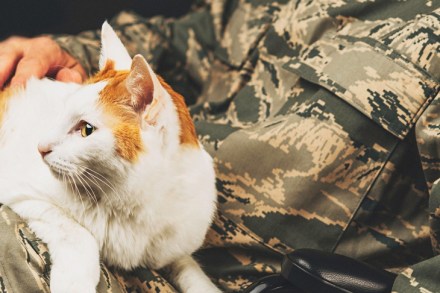
Call me a sentimental old whatever, but watching a four-year old hearing The Tale of Samuel Whiskers for the first time, read by someone who could do the police in different voices, took one as far from the Waste Land as is possible. It also made me think about moggies, which brought back memories of a trip to Kabul. Outside the Portakabin where we were billeted, there was a notice: ‘Please do not bring cats into the living quarters.’ No one puts up an instruction like that without the expectation that it will be disobeyed. One can imagine why, and how very British. It is to the credit of the brutal and licentious, living in cramped conditions, exposed to constant danger, that they had sentimentality left for local felines.

Letters | 5 January 2017

Yet another kind of snob Sir: May I offer another definition of a ‘snob’ to the one described by Bryan Appleyard (‘A different class of snob’, 31 December)? I have always believed that a snob is someone who has risen in the world and now looks down with disdain on those they have left behind. This is an altogether more cynical and divisive form of elitism than that of the serial narcissists Mr Appleyard describes in his article. In the United Kingdom the abolition of grammar schools and the incursion of cheap foreign labour have damaged the legitimate aspirations of those wishing to improve their lot in life, stalled social mobility, and polarised society.

Do I hang myself out to dry again?

And so it begins again. This time last year, I decided to see how long I could last without alcohol. Not just a dry January for me. Oh no. I saw myself lasting right the way through till the following December. According to a doctor friend, your liver only really regenerates after 12 months. Less than that and the health benefits of not drinking are negligible. You know how this story ends, although, to be fair, I lasted until 8 February. I’d been booked to give an after-dinner talk to a group of head-teachers at one of England’s most prestigious private schools and I assumed that the wine would be so good — it was an elite group of about a dozen top heads — that I’d have to abandon my teetotalism for one night.

Letters | 29 December 2016

Unencumbered Sir: Matthew Parris’s bizarre reference (‘Unforgiven’, 10 December) to the UK economy as merely ‘medium-sized’ is a classic instance of Remainers’ tendency to pass Britain off expediently as a vulnerable country on the margins of Europe, which couldn’t survive without our EU umbilical cord. The UK is actually the fifth or sixth largest of the world’s nearly 200 national economies. If we are only medium-sized, how can all the world’s ‘even smaller’ economies — such as India, Canada, South Korea or Australia — possibly hack it as independent sovereign states outside any supranational governance bloc like the EU? How have they managed so far?

Harry, Jeffrey and Benoit

I first ate at the London version of Harry’s Bar in the early 1990s. Back then, Jeffrey Archer and I would give each other dinner about three times a year. It was my turn and he suggested Harry’s, where he was a member but I could pay (on expenses, needless to say). I remember the meal vividly because it was awful. Choosing the same dishes, we started with a risotto, which was just rice plus ingredients. Then there was a leg of lamb for two, grossly over-salted. Had I been the nominal host as well as the real one, it would have gone back to the kitchen with a flea in its ear. Two glasses of competent champagne were followed by a nothing-special Chianti: bill, £208 — to repeat, at early 1990s prices.