West end

Why is this low-grade Ayckbourn play in the West End?

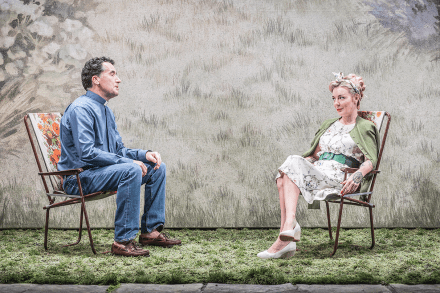
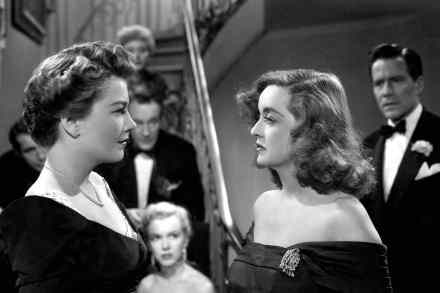
Woman in Mind is a dyspeptic sitcom set in 1986 starring Sheridan Smith as Susan, a moaning Home Counties housewife who slips into a Yorkshire accent when she gets cross. Susan sunbathes in her leafy garden sipping coffee and carping about everyone close to her. She loathes her scowling sister-in-law, Muriel. She can’t bear her husband Gerald, a cerebral vicar, and she refuses to revive their moribund sex life. She constantly badmouths their grown-up son, Ricky, who lives with a community of mute hermits in Hemel Hempstead. How did this scout-hut show reach the West End? In Act One we learn that the rules of Ricky’s community forbid him from speaking to his parents. But in Act Two the story changes.

The age of the strongman, Tesla under attack & matinee revivals

35 min listen

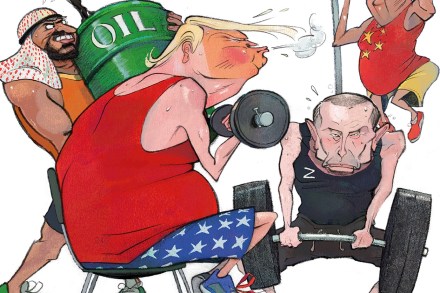
This week: welcome to the age of the strongman ‘The world’s most exclusive club… is growing,’ writes Paul Wood in this week’s Spectator. Membership is restricted to a very select few: presidents-for-life. Putin of Russia, Xi of China, Kim of North Korea and MBS of Saudi Arabia are being joined by Erdogan of Turkey – who is currently arresting his leading domestic political opponent – and Donald Trump, who ‘openly admires such autocrats and clearly wants to be one himself’. ‘This is the age of the strongman,’ Wood declares, ‘and the world is far more dangerous because of it.’  Despite their bombast, these ‘are often troubled characters’, products of difficult childhoods.

London e-bike blight

The past few weeks have been spent in the enclosed rehearsal spaces of the Ambassadors Theatre in London’s West End, preparing and finally opening in Private Lives. Shut off from the world as I am, we could have become a colony of North Korea for all I know. And yet some things do penetrate – who could fail to be horrified and appalled by the twin disasters in North Africa recently? These two devastating events have resulted in the deaths of an ever-rising number of tens of thousands of people. And yet they already seem to have dropped off our news coverage. Has the enormity of the 2004 Indian Ocean tsunami made the western world immune to such disasters? How can the latest news from the Strictly studio occupy more space in news outlets than Morocco or Libya? Madness.

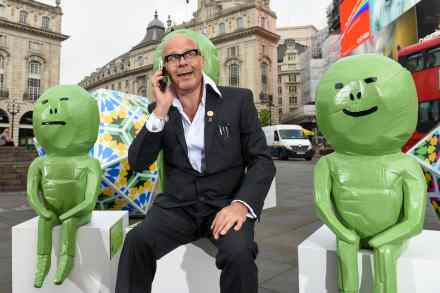
Why Harry Hill’s little green aliens are popping up all over London

Sitting in a posh office overlooking the Royal Academy, the comedian Harry Hill is deploying one of his lesser known modes: introspection. ‘I suppose I’m one of a growing number of celebrities who do art,’ he says, one hand fiddling with his trademark oversized shirt-cuff. His point – which he returns to several times – is one of definition: as much as he enjoys making art, and as much art as he makes, he can never quite see himself as an artist. In his defence, he isn’t alone. After more than a decade as the face of one of the most-loved comedy shows this century, Hill can probably count himself among the ten most recognisable comics in Britain.

In praise of understudies

The actor Ronald Fraser was famous for two things: his comic timing and his liking for a drink. On one occasion in the 1960s, he was happily sitting three sheets to the wind in a local hostelry, when he remembered that he was supposed to be on stage at a matinee. After walking unsteadily to the theatre, he stood in the wings and heard someone else in his role: the understudy, holding the audience in the palm of his hand. His name was Donald Sutherland, and he was revealing the quality that took him from bit parts on the London stage to worldwide stardom. The importance of understudies and covers has been elevated to new heights by the Covid pandemic. Leading men and ladies are dropping out the world over.

How the British musical conquered the world

What do Henry VIII’s wives, a Rastafarian musical icon and a drag queen have in common? They are all the subjects of new stage shows that are heralding a golden age of the British musical. Let’s start with the court of Henry VIII. A pair of friends at Cambridge University, Toby Marlow and Lucy Moss, decided to write their own musical four years ago because the student theatre society couldn’t afford to pay the royalties for an existing one. They based it on the life stories of the six women who were unfortunate enough to marry Henry VIII. Six, as this debut effort came to be known, opens on Broadway this week, with huge advance ticket sales already achieved. ‘Historically, Britain was a place of Shakespeare, and new plays.

The history of the Theatre Royal Drury Lane is the theatrical history of England

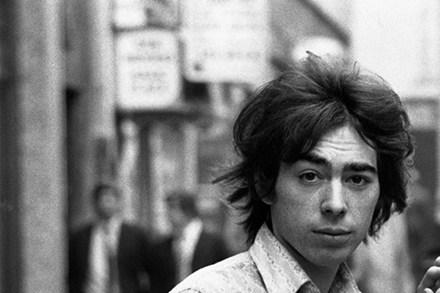
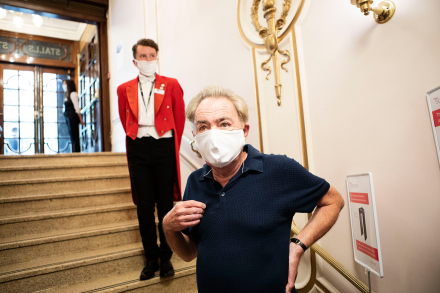
Andrew Lloyd Webber has not been in the best of moods lately, largely thanks to all the Covid delays to his new musical Cinderella, now finally about to open — for the umpteenth announced time — at the Gillian Lynne Theatre. The bigger news, however, is that his theatre at the other end of Drury Lane, the grand old Theatre Royal, is finally finished after massive renovations. Lloyd Webber has spent an awesome £60 million on the rebirth of his Grade I-listed theatre, known to show folk as ‘the Lane’, with his wife Madeleine heavily involved and in cahoots with the heritage expert Simon Thurley and the great theatre architect Steve Tompkins. The result? Oh my goodness! The sheer elegance of its 1812 Greek revival design by Benjamin Wyatt is drop-dead.

How real is the performing arts exodus?

Think back 12 months to when you first felt the pandemic. Not when you first read about Covid-19, but the moment of impact — the lurch in the stomach as it hit you that this time, it really wasn’t going to be OK. For Emma Cook, a freelance stage manager on the John Cleese farce Bang Bang!, the moment came during a rare week off. ‘I was sitting in a restaurant near the Bush Theatre in London, waiting to go and see The High Table, and I got a message from a friend who had just flown back from overseas: “Why are the theatres all closed?”. I thought, no they’re not, I’m about to see a show. So I walked over to the theatre and they told us: “No, sorry. We’ve had to stop everything.” And that was when Covid suddenly became big and real.

When theatres reopen they’ll resemble prison camps

‘Give us a date, mate!’ That was the sound of Andrew Lloyd Webber begging Boris Johnson to announce when the West End can return to normal. He made his plea at the London Palladium on 23 July, where he was testing a new set of Covid-compliant measures during a one-hour solo show by Beverley Knight. It was the first indoor live performance in the capital since lockdown began. The impresario’s advance preparations had been exhaustively thorough. He arranged for the entire venue to be hosed down with an anti-viral fluid that kills the bug for up to four weeks. Every door handle had been fitted with a special cover that exterminates bacteria with silver ions. The audience were given staggered arrival times and they used a one-way system as they moved around the theatre.

Theatre closures are not necessarily a disaster – they offer a chance to remake culture

Theatre stands on the brink of ruin, says Sonia Friedman. And if you believe Twitter, so is my career. I'm apparently 'a disgrace to my profession'. 'Not fit to do my job'. I wear 'grubby' oversized T-shirts, dare to have 'an anagram for a name' (sorry for being foreign) and possess the face of an 'etiolated ferret' and, naturally, for all this, I should be fired.  Leaving aside for a moment my funny name, ferrety face and baggy clothes (all criticisms not without some merit), what was my crime? To suggest that theatre being on the brink of ruin might not be such a disaster. That tongue was firmly lodged in cheek was of course wilfully overlooked. Hey-ho. This is Twitter. Leaping on the most uncharitable interpretation of a tweet is the default setting.