War

Can the Kremlin afford to fix Russia’s oil crisis?

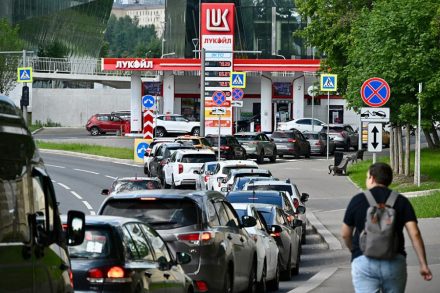
For a country that pumps roughly nine million barrels of oil a day – the third highest of any country in the world – Russia has managed to achieve something genuinely remarkable: it cannot keep its own gas stations stocked. More than half of its regions are now reporting shortages, the consequence of a Ukrainian drone campaign that has struck with increasing frequency and precision at the refinery infrastructure on which the country's civilian economy depends. The sometimes hours-long lines that have appeared – even in Moscow, for what may be the first time in the war – carry a symbolic weight that no amount of official reassurance from the Kremlin has managed to dispel. How this has come about is obvious enough.

oil

There will be blood – the vital work of field transfusion units

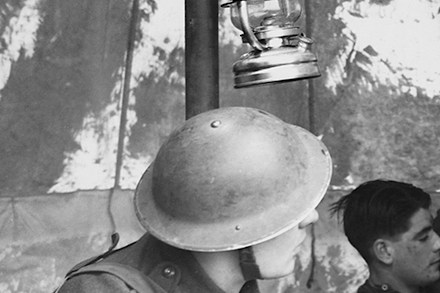
Most conventional World War Two military histories focus on weapons, materiel and even the manpower needed for a decisive victory over Hitler and the Axis powers. Little has been written about blood as a strategic resource. However, a pioneering service of specially trained medics who worked dangerously close to the front lines, pumping blood into the veins of battle casualties, not only saved lives but contributed significantly to winning the war. They did this by returning men to the front line and boosting morale by persuading them that, if wounded, they had the maximum chance of life.

blood

The real ‘Thucydides Trap’ Beijing and Washington must avoid

These are good times to be a scholar of the classical world. Last summer, Donald Trump issued an order that all federal architecture needed to be “beautiful,” noting that the Founding Fathers “wanted America’s public buildings to inspire the American people and encourage civic virtue.” George Washington and Thomas Jefferson had therefore “consciously modeled the most important buildings in Washington, DC, on the classical architecture of ancient Athens and Rome.” It was time to go back to these principles, said Trump. From now on “classical architecture shall be the preferred and default architecture for Federal public buildings” in the District of Columbia.

Trump’s threat to destroy Iran is detailed and credible

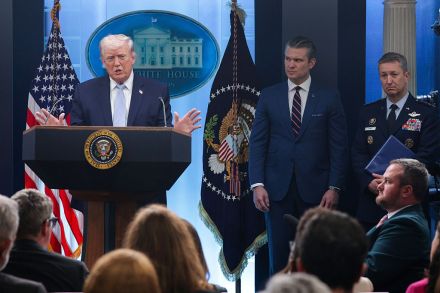
Monday’s White House press conference came in two distinct parts. The first was an extraordinary tale of heroism in the rescue of two downed pilots. America’s military and intelligence leaders provided details that were new to the public. The danger of a daytime rescue mission in the face of enemy fire. The harrowing climb by one officer to a crevice in the mountains. The technical sophistication needed to find him. And the misdirection executed to confound Iranian forces in the area, determined to capture the American serviceman before help arrived.  It was impossible to listen to that tale of bravery and professional excellence without an overwhelming sense of patriotic emotion, suffused with gratitude for the men and women who have pledged their lives to keep America safe.

Trump
Hegseth

Is Pete Hegseth waging a Christian Zionist war?

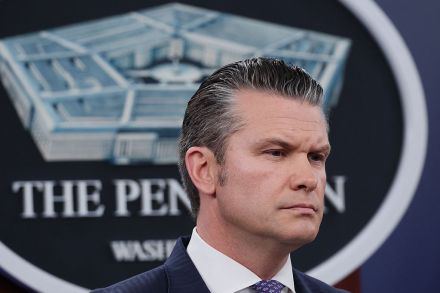
In his war briefings, Pete Hegseth pushes religion almost as much as US military might. This has raised questions about whether the War Secretary is a Christian Zionist – and if he views current events in the Middle East as prophetic of the end times. His Pentagon updates often include prayers, Bible readings and religiously-inflected statements about pursuing “overwhelming violence of action against those who deserve no mercy.” When asked during his 2025 Senate confirmation hearing if he was a "Christian Zionist," Hegseth affirmed, "I am a Christian, and I robustly support the state of Israel.

Will Trump really obliterate Iran on Tuesday?

Was Donald Trump’s profane and threatening tweet, which included an F-bomb and an allusion to Iran’s leaders as "crazy bastards," on Easter Sunday itself a bunch of BS? Trump is riding high after the daring rescue of an American airman from Iran, but its leadership doesn’t appear to be overly impressed by his tweet threatening a major attack on Tuesday if the Strait of Hormuz is not reopened. On Saturday, Iran’s military leadership indicated that it had no intention of complying with Trump’s demands, dismissing his vow to destroy its infrastructure as a "helpless, nervous, unbalanced and stupid action.

Trump

Russia has its eyes on Svalbard

From our UK edition

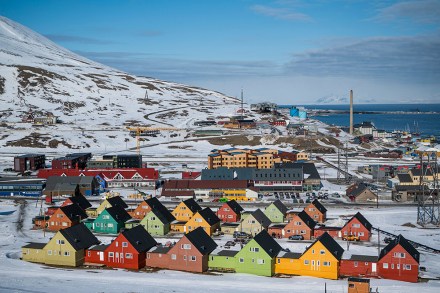
Svalbard The quiet hillside by Longyearbyen’s church gives visitors to the capital of Norway’s Svalbard archipelago an austere but beautiful panorama of the bay that cradles the town. Tall, sharply steep mountains, blanketed with snow, collide with the blue-grey waters of the Arctic below. From that hillside, I watched the quiet bustle of Longyearbyen. Since Donald Trump threatened Nato with the biggest crisis in the alliance’s history by stating his desire to take control of Greenland in the name of US ‘national security’, Svalbard’s residents have been uneasily looking westward. The US President has repeatedly claimed that only he can prevent the island, which is just 185 miles from Svalbard, being used as a staging post for an attack on the West by Russia or China.

The surreal drama of Helsinki’s history

From our UK edition

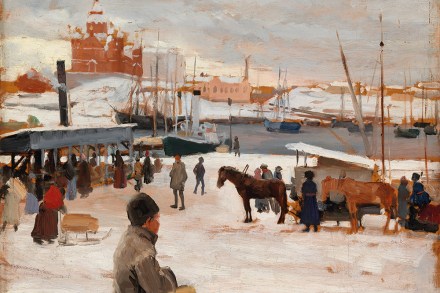
In 1920, the young Finnish architect Alvar Alto flew over Helsinki for the first time. He was aghast. ‘An aviator can see where the monkeys have been and destroyed so very much,’ he recalled. Alto’s aerial view reflected a story of fragmentation and occupation spanning some five centuries, now surveyed by the historian Henrik Meinander. The capital, explains the author, was bashed about by a series of bad actors – Swedes, Russians and Germans – until Finland stood its ground and became an independent nation in the early 20th century. Helsinki is ‘a city shaped by the sea, a city best seen from the sea’, writes Meinander. ‘Wherever you are in Helsinki’s inner city, you will always be close to the water.

Did Robert McNamara know Vietnam was unwinnable?

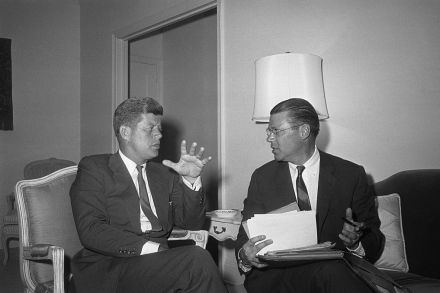
Former US defense secretary Robert McNamara was known in Washington as a relentless, humorless taskmaster or even “a computer on legs.” Then on February 9, 1962, a little over a year after taking office, McNamara made headlines when he danced the twist with Jackie Kennedy at a White House party. A few days later, the then-first lady sent by hand to McNamara a lighthearted Valentine collage she had made from the news coverage of their dance. After her husband’s assassination, their friendship deepened. Jackie’s opposition to the Vietnam War grew, as did her conviction that McNamara secretly opposed it.

mcnamara

How Germany is preparing for war

From our UK edition

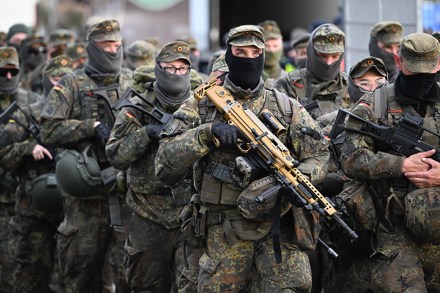
Hamburg What would happen if Russia was planning an attack on Estonia, Lithuania or Latvia – and the threat was sufficiently great that Nato felt the need to send troops east across Europe to face off against Moscow? This was the scenario the German Bundeswehr spent several days rehearsing last month, working out how the army would transport its soldiers towards Nato’s eastern flank in the event of conflict in the Baltics. For three days, the port city of Hamburg played host to the exercise Red Storm Bravo: 500 soldiers, along with roughly 300 members of the emergency services and other civilian organisations, took part – the largest military exercise in the city since the end of the Cold War.

Tim Shipman, Colin Freeman, Rachel Clarke, Michael Gove & Melanie Ferbreach

From our UK edition

40 min listen

On this week’s Spectator Out Loud: Tim Shipman interviews shadow justice secretary Robert Jenrick (plus – Tim explains the significance of Jenrick’s arguments in a special introduction); Colin Freeman wonders why the defenders of Ukraine have been abandoned; Rachel Clarke reviews Liam Shaw and explains the urgency needed to find new antibiotics; Michael Gove reviews Tom McTague and ponders the path that led to the UK voting to leave the EU; and, Melanie Ferbreach provides her notes on made-up language. Produced and presented by Patrick Gibbons.

Ukraine’s Foreign Legion was doomed from the start

From our UK edition

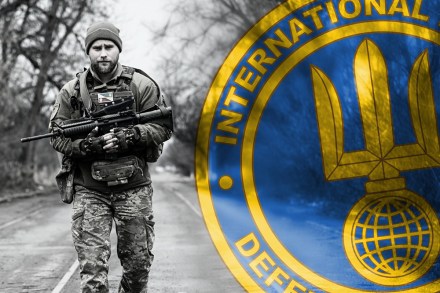
It seems that people would rather fight for a death cult than a democracy. At most, 15,000 foreigners have fought in Ukraine over the past three years. By contrast, an estimated 35,000 foreign fighters joined Islamic State, despite the risk of prosecution when they returned home. Why have so few westerners joined up, given that Ukraine’s Polish border is just a £50 Ryanair flight away? The answer is that despite having a master showman like Volodymyr Zelensky as its recruiting sergeant, Ukraine’s International Legion was a disorganised shambles from the start. Zelensky announced the Legion’s creation just three days into the invasion. ‘This is the beginning of a war against Europe,’ he said, ‘against democracy, against basic human rights.

The power of BBC’s The Narrow Road to the Deep North 

From our UK edition

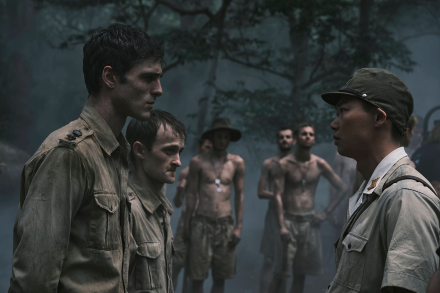
It’s been a good week for fans of TV dramas that are set partly in Syria, feature poetry-lovers confronting extreme violence, like to keep their viewers in the dark (sometimes literally) and have main characters with Australian accents (sometimes accidentally). But there are also significant differences between the two examples on display – with The Narrow Road to the Deep North the much more sombre and The Veil the considerably more bonkers. Adapted from Richard Flanagan’s Booker-winner, The Narrow Road began in Syria in 1941. Through what would prove the programme’s characteristic murk, a group of Australian soldiers led by one Dorrigo Evans could just about be seen rescuing a young boy and joshing about the respective size of their penises.

Donald Trump needs a history lesson

From our UK edition

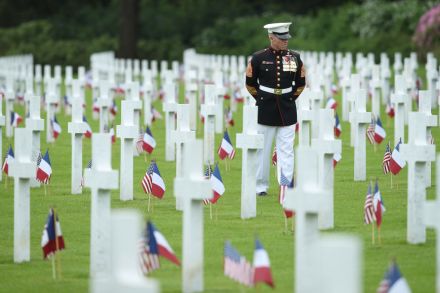
President Donald Trump has again demonstrated his less than impressive grasp of history with a statement on his Truth Social site on the 80th anniversary of VE Day – the end of the Second World War in Europe – claiming that the US ‘did more than any other country by far’ to win the global conflict. In terms of cold statistics, it was the Soviet Union that did most to defeat Nazi Germany, suffering the colossal loss of 24 million military and civilian lives before the Red Army entered the ruins of Berlin to end the Third Reich. The US lost a total of 418,500 dead in fighting Japan and Germany after Hitler unwisely declared war on America following his Japanese ally’s attack on Pearl Harbor in December 1941.

The Lindsey Hilsum Edition

From our UK edition

34 min listen

Lindsey Hilsum is the International Editor for Channel 4 News, where she has worked for over 25 years. Having started her career as an aid worker in Latin America, she transitioned to journalism, and she has now reported from six continents for over three decades. She has covered many major conflicts including Kosovo, Iraq, Syria, Ukraine and across the Middle East during the Arab Spring. Her third book I Brought the War with Me: Stories and Poems from the Front Line is out now. On the podcast Lindsey tells Katy Balls about starting out her career in Guatemala and in Kenya, what it was like being the only English-speaking journalist in Rwanda when the genocide broke out in 1994, and why she is drawn to studying human behaviour in extreme situations.

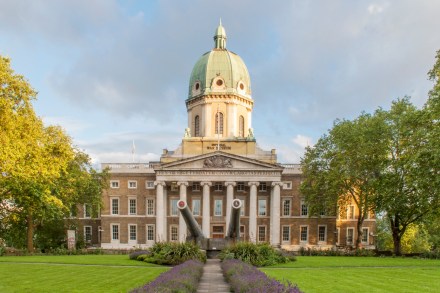
The Imperial War Museum’s betrayal of history

From our UK edition

The news that the Imperial War Museum is closing Lord Ashcroft’s Victoria Cross and George Cross gallery is sadly not a great surprise. It’s the latest act in the ‘wokeification’ of this once outstanding museum. Writing in the Daily Telegraph last week, Lord Ashcroft said that the IWM didn’t even have the ‘courtesy to inform’ him of the closure. Rather, it issued a statement in which it thanked him for his generous 15-year loan but said the exhibition will shut permanently on 1 June. The reason, explained the IWM, is to create new space ‘to allow us to share more stories of conflicts that are within many of our visitors’ living memory’.

Is Trump right about Ukraine?

From our UK edition

24 min listen

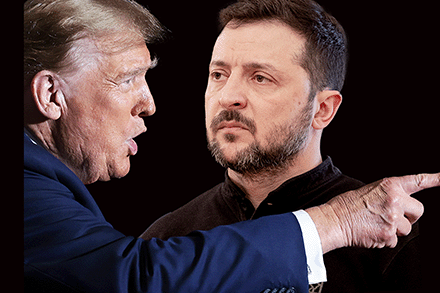
Donald Trump attacked the Ukrainian President overnight, describing him as a 'dictator' and saying he's done a 'terrible job.' In return, Zelensky has accused Trump of 'living in a disinformation space.' The West has invested a huge amount of capital in the fight against Russia – and failed to secure peace. Is Trump using these offensive and odious methods in order to secure an end to the conflict? Is he the only person with the power to do so? Freddy Gray discusses with The Spectator's Russia correspondent Owen Matthews, and Sergey Radchenko, historian and author.

The art of war

From our UK edition

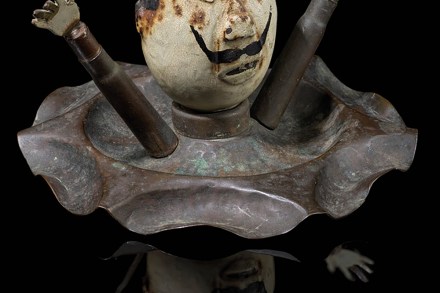
On his deathbed, the Austrian writer Karl Kraus remarked of the Japanese attack on Manchuria: ‘None of this would have happened if people had only been more strict about the use of the comma.’ The implication being that by channelling rage into the ordering of small things, we might stay away from violence on a colossal scale. Unable to restrict ourselves to matters of punctuation, alas, humanity is often at war: with itself, and others, however hallucinatory. Two current exhibitions come at rage from very different starting points. War and the Mind demonstrates the devastating psychological impact of war on those who fight it and those who have no choice but to suffer it.

Letters: The army that Britain needs

From our UK edition

Common ground Sir: Katy Balls asks ‘Lawyer or leader?’ (Politics, 25 January), but it became fairly clear which Keir Starmer is when he appointed as his Attorney General Lord Hermer, a human rights lawyer. As was mentioned, Lord Hermer has often represented those rejecting British values rather than standing up for them. Sir Keir and Lord Hermer show a clear preference for international law over Britain’s common law. They ignore the reality that common law has served the nation brilliantly over the centuries. It relies on the precise written word and precedent, being non-political, transparent, predictable and fair. British laws are enacted by our democratically elected parliament which can amend or repeal them.

Britain isn’t ready for space and AI warfare

From our UK edition

How safe will this country be under Labour? The Strategic Defence Review (SDR) is supposed to provide the answers. It hasn’t been published yet, but may already be out of date. It’s expected to make the case for defence spending to rise from 2.3 per cent of GDP to 2.5 per cent – but that won’t be enough for Donald Trump, who has asked allies to devote 5 per cent of their national wealth to the military. And it’s not only what we spend but how we spend it that the government are struggling to get right. The upcoming SDR will be the fourth review in a decade. On past showing, it will very probably fail to focus on the right questions, let alone give the right answers, on how to rebuild Britain’s military.