Vietnam

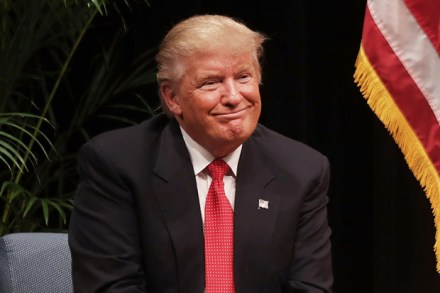
Smirking, the infamous facial expression of the far-right

The students of Covington High School, Ky., were the subject of a recent viral video which shocked me to my very core. Everything about this encounter triggered me. Their obvious disrespect of a proud Native American as he bravely made his way towards this group of vile, contemptuous MAGA hat-wearing teenage boys, banging his Ceremonial Drum of Peace and chanting a mystical tribal incantation (presumably in order to ward off the sickening Aura of Trumpism) disturbed me so greatly that I actually did a small vomiting. The final straw came when the courageous Native American Vietnam veteran came to a stop and peacefully hammered on his drum directly into a young boy’s disgustingly smug face. What did this hateful Apostle of Trump do?
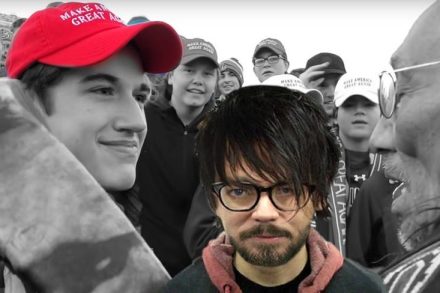
godfrey elfwick smirk

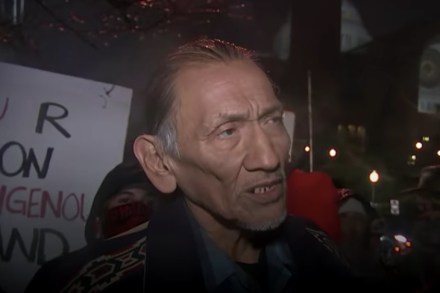
Who is the real Nathan Phillips?

The Native American man with the drum who – now so infamously – approached a group of high schoolers from Covington, Ky., on Friday has been widely identified as a Vietnam veteran. But he isn’t one. The man is called Nathan Phillips, and he identifies with the American Indian Movement, an extremist separatist organization tied to at least one murder. He was singing their song when he approached the kids. He told the Washington Post that he was ‘blocked’ by the students, though later video evidence suggests that that was an exaggeration, to put it mildly. Phillips remains adamant that the boys should be punished for what they did to him, and has refused to meet with them.

nathan phillips

Life, death and everything in between

From our UK edition

The most striking and difficult aspect of this novel is its incredible scale. How can a reviewer best discuss an enterprise containing a vast survey of life in Germany, Britain and the United States and the transformations of these societies from the end of the 19th century to the 1980s? Two volumes cover the experience of age and youth, the rise of the Nazis in Mecklenburg, the second world war, life and death in a small German town, the evolution of East German communities and the emergence of a Soviet state after the war. The New York Times appears in more or less every chapter, as the conveyer of the story of the Vietnam war and events in the city of New York itself. There are accounts of Mafia dealings and other street crimes.

The unwinnable war

From our UK edition

Many wars have outsized and enduring effects on the societies that fight them, but for Americans the Vietnam war has one attribute that guarantees its longevity as a suppurating wound in the national psyche: it was a loss. Analyses have been numerous and perennial, from David Halberstam’s contemporary portrait of the policymakers who led the country into war, The Best and the Brightest, to last year’s mammoth ten-part documentary series by Ken Burns and Lynn Novick, The Vietnam War.

Delusions of the deserters

From our UK edition

‘Keep my name out of it’, was the fairly standard reply when Matthew Sweet started researching the story of the GIs who deserted from Vietnam. People’s concern, it turned out, however, was not about being associated just with desertion, but with a more complex story of duplicity, abuse and insanity. Over time, the American Deserters Committee (ADC), the welfare group established to support the deserters in neutral Sweden, developed into a series of increasingly militant organisations. These were then infiltrated by the CIA. Sweet tracks the changing nature of desertion ‘from an individual act of conscience or cowardice to a political step that GIs could take together’.

BBC4’s The Vietnam War was unique, informative and shattering

From our UK edition

The Vietnam War BBC4 The BBC should be praised for showing all ten episodes of this unique, informative and shattering American series on the Vietnamese war, despite screening eight fewer hours than in the original. Before each episode the BBC warned that 'some viewers may find some scenes upsetting'. Which ones? A frog jumping in a pool of blood from the head of a dead Vietcong (NLF) fighter? The Saigon police chief shooting a prisoner in the head? The American colonel offering a case of whiskey to the first man to bring him the severed head of an enemy soldier? Which he gets. The eager US soldier on his first day in Vietnam noticing strings of what he thought were leaves, which he realised were the ears of dead enemies?

Saints and sinners | 19 October 2017

From our UK edition

Any rival reality-TV makers watching Channel 5 on Thursday will, I suspect, have been both mystified and slightly embarrassed at not having thought up Bad Habits, Holy Orders themselves. After all, the concept is a blindingly obvious one. Take five young women whose primary interests are selfies, booze and clubbing and make them live like nuns for a month. And not metaphorically either: the five are staying with the Daughters of Divine Charity at the Convent of the Sacred Heart in Swaffham, where days filled with prayer, reflection, manual work and wholesome play end at a 10 p.m. bedtime.

The rise of toytown pop

From our UK edition

Pop’s counterfactuals tend to be built on questioning mortality: what if Jimi Hendrix had lived? Or Buddy Holly? Rarely does geopolitics enter into the speculation. Nevertheless, there’s a case for arguing that the landscape of British pop would have been markedly different had Harold Wilson acceded to the wishes of President Lyndon Johnson and sent British forces to Vietnam. That’s worth contemplating now, ahead of the latest reissue — deluxe and expanded and remastered, as these things always are — of Sgt. Pepper’s Lonely Hearts Club Band, released last week for the 50th anniversary of the original album.

The war in the shadows

From our UK edition

I once spent an evening, back in the mid-1980s, with William Colby, the legendary spy and director of the CIA. I was an undergraduate at the time, and the CIA’s Iran–Contra debacle was in the news. Lured by the agency’s mystique, I was eager to ask him about the fabled Phoenix programme he directed — a top secret initiative to target and eliminate Viet Cong who had infiltrated South Vietnamese villages, often conducted by Americans who had crossed over some invisible line, leaving behind them the normal life that comprised my world. To my disappointment, Colby demystified Phoenix. He was very proud of the programme, and while he never said so, I distinctly remember feeling convinced by him that the CIA should have run the whole war in Vietnam.

Short – but far from sweet

From our UK edition

Like his Pulitzer Prize-winning first novel, The Sympathisers, the stories in Viet Thanh Nguyen’s The Refugees are set largely among the Vietnamese diaspora on the west coast of America, where Nguyen himself lives, having fled to the US from Vietnam with his family in 1975. They mostly feature characters juggling the lives they’ve made in their adopted culture with their memories of — and loyalties to — the old land. In one story, set in the Reagan era, a penny-pinching woman who runs her family’s New Saigon grocery store is reluctantly moved to donate money to the futile guerrilla war against communism back in Vietnam.

The McMaster plan

From our UK edition

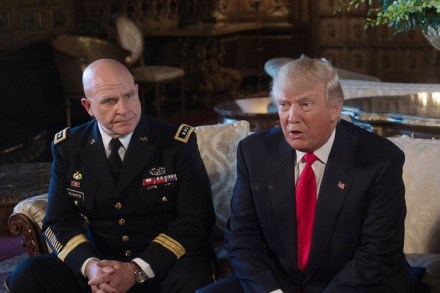
When Lt Gen H.R. McMaster was appointed by Donald Trump to the post of national security adviser, newspaper reports hailed him as a military strategist. It’s not fully clear what the phrase means: not, presumably, that he originated a big idea akin to Alfred Thayer Mahan’s theory of seapower or Billy Mitchell’s conception of strategic bombing. More likely it is supposed to mean ‘a soldier who thinks’. Or more crudely, ‘not a knuckle-dragger’. Or ‘preferable to the cretin who Trump just fired’. Of course, the responsibilities of the position to which McMaster now ascends extend well beyond mere military matters. The national security adviser operates (or should operate) in the realm of ‘grand strategy’.

The legacy of Vietnam

From our UK edition

At first glance, Robert Olen Butler’s Perfume River seems like an application for a National Book Award. Its protagonist, Robert, a 70-year-old history professor, lives in comfortable ennui with his semiotician wife, Darla: tenure, sabbaticals, staring through separate study windows in their sprawling Florida home. It’s a life of carefully brewed coffee and uninterrupted research. All is well, save for the growing distance in the marriage, man and wife siloed into their respective Kindle-glows at night. But a chance meeting with Bob — a homeless man Robert assumes to be a veteran — reveals the reason for the disconnect: Robert’s unacknowledged guilt about his war in Vietnam.

The quiet moment in a Vietnamese church that saved my career

From our UK edition

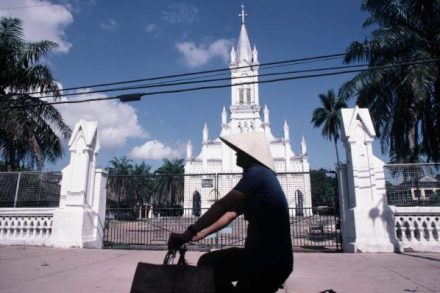
I believe it was Christmas 1971, and I was up in Phu Bai, north of Danang, south of Hue. It was a miserable time, I was lonely and my career as a journalist was going nowhere. There wasn’t even any fighting going on to keep one’s mind occupied. On Christmas Eve I went to a Catholic church and was the only round-eyed man there. I prayed rather hard and after that, as by miracle, all my prayers were answered. I became a roving correspondent for an American weekly and have never looked back.

Arms and the woman

From our UK edition

In August 1939, Clare Hollingworth, a 28-year-old aid-worker, had been employed as a reporter for less than a week by the Daily Telegraph when she landed her first serious journalistic coup. Using feminine wiles and diplomatic skills extraordinaire, she convinced a friend in the Foreign Office to lend her his chauffeured car. Stocking up with supplies in soon to be starving Poland, and charming the border guards, she crossed into Germany with nothing but her gut instinct and her smarts — the most important of a reporter’s tools (together with ‘ratlike cunning, a plausible manner and a little literary ability’, in the words of the late Nicholas Tomalin). She didn’t disappoint her editors.

Diary – 29 September 2016

From our UK edition

Monday night’s US presidential debate should convince a majority of American voters that Hillary Clinton is their only credible choice for the White House. Yet it may well fail to do so, in the new era of ‘post-truth politics’. The historian Sir Michael Howard suggests that on both sides of the Atlantic, we are witnessing a retreat from reason, an attempt to reverse the onset of the 18th-century Age of the Enlightenment, which banished superstition and religious faith as a basis for reaching conclusions. The progress of Donald Trump supports his thesis. I have just spent a fortnight in southern California, researching a book on the Vietnam war, and saw everywhere manifestations of Trumpery.

Where should the line be drawn over the famous Kim Phuc photograph?

From our UK edition

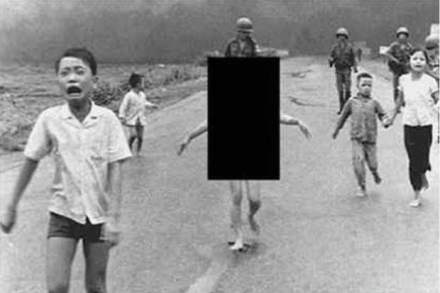
Can you imagine, in the wake of a terror attack in London, a tabloid, or any other kind of media outlet, publishing a photograph of a naked and distressed child caught up in the melee? It isn’t hard to answer the question. Of course they wouldn’t publish it. It would break every rule in the book. It is bizarre, then, to see Facebook accused of censorship for coming to exactly the same conclusion: that it wasn’t right to carry an image of naked and distressed child. It is even weirder to see Facebook attacked from a corner – the Guardian – which would normally be among the first to damn tabloid intrusion. The difference is that the photograph in question was not taken in London and was not taken in the recent past.

Time to change the record

From our UK edition

Back in the high optimism of the 2008 presidential campaign, one of Barack Obama’s more extravagant hopes was that ‘the psychodrama of the baby boom generation’ would finally be left behind: that no longer would the kind of radical late-Sixties politics ‘hatched on a handful of college campuses long ago’ be seen by both its supporters and its opponents as the key to understanding more or less everything about modern life. Sadly, though, if Obama needs proof of how comprehensively this hope has been dashed, he need only head to the V&A — where, with the supporters firmly in charge, the whole story of how great the late Sixties were, how much they’ve shaped today’s world, and how much they still could (fingers crossed!

High life | 18 August 2016

From our UK edition

An item in an American newspaper had me thinking of my father all last week. Old dad died 27 years ago, which means I have outlived him in age, the only thing I have ever outdone him in. His achievements were too many to list here, and everything I have I owe to him. Compared to his accomplishments, mine has been the underperformance of the century, not that he ever made it obvious. To the contrary, all he did was praise me. He was extremely generous to everyone, especially his employees, took care of those who couldn’t care for themselves, was a decorated hero during the occupation, and I’m proud to have inherited his sense of humour and his womanising. He’s never far from my mind, so I didn’t need the item in the newspaper to remind me of him.

Portrait of the week | 26 May 2016

From our UK edition

Home The government published a Treasury analysis warning that an exit from the EU would plunge Britain into a year-long recession and could cost 820,000 jobs. David Cameron, the Prime Minister, speaking with George Osborne, the Chancellor of the Exchequer, at B&Q’s head office in Hampshire, said that leaving ‘would be like surviving a fall then running straight back to the cliff edge. It is the self-destruct option.’ Downing Street said that leaving the EU would make an average holiday for four people to the EU £230 more expensive. Gillian Duffy of Rochdale, the nemesis of Gordon Brown, the former Labour leader, spoke in favour of the Leave campaign.

Wars on drugs

From our UK edition

‘Of all civilisation’s occupational categories, that of soldier may be the most conducive to regular drug use.’ The problem with this statement — the first words of this book — is the problem with the book as a whole: it may be correct, and there again it may not be. Even the captionless cover photograph is ambiguous: of an American soldier, in Vietnam perhaps, with a corncob pipe which may or may not contain a banned substance, though we are obviously meant to infer that it does. Then there is the inconclusiveness: ‘One may say that to a lesser or greater degree drugs shaped warfare.’ Yes, one may; but to a lesser or greater degree one may say that about almost everything.