Vietnam

Everything you always wanted to know about Sixties pop —and more

From our UK edition

It might seem an odd choice, but after reading Jon Savage’s new book, I think if I had a time machine I’d now be tempted to set its controls for 13 January 1966 and the annual dinner of the New York Society for Clinical Psychiatry. Andy Warhol had been booked to give a speech, but instead he put on a gig by the Velvet Underground and Nico at full uncompromising blast, with a couple of Factory favourites dancing alongside them. One shrink described the evening as a ‘torture of cacophony’; another — no less disapprovingly — as an ‘eruption of the id’. A third left hurriedly, with the explanation that ‘I’m ready to vomit.
Coming up for air

From our UK edition

The thing that the photojournalist Don McCullin likes best of all now, he tells me, is to stand on Hadrian’s Wall in Northumberland in a blizzard. He made his name in conflicts in Vietnam, Cambodia, Biafra, Uganda — hot places full of fury, panic and death — but these days he finds his greatest solace in the English landscape. I can see why he is drawn to that wild part of Britain: its isolated beauty, the feeling of being roughed up by the elements but not destroyed by them. Clean air, too: you must get a cool, fresh lungful up there. He’s 80 years old in October: talking to him at home in Somerset, I get the sense he’s been coming up for air all his life.

Complicated, but unfussy

From our UK edition

Amory Clay, photographer and photo-journalist, was born in 1908, only two years after Logan Mountstuart, writer, poseur and ‘scribivelard’. Amory died in 1983; Logan in 1991. Though shaped by the same era, their accounts of their lives are tonally worlds apart. Logan is flamboyant, self-regarding, lyrical, self-pitying; Amory plainer, braver, yet less self-revealing. Both, of course, are fictional, and both are protagonists woven by William Boyd into novels where they rub shoulders with historical characters. Amory, however, born into an era in which Vivians, Evelyns and Beverleys could be of either sex, is female. Boyd’s representation of a certain sort of female voice is pitch-perfect, chiefly because he is not trying too hard to signal Amory’s femininity.

A hero of our time

From our UK edition

I have met Dr Kissinger, properly, only three times. First, in Cairo, in 1980, when, as a junior diplomat escorting Edward Heath, I had to secure for an almost desperate former British prime minister a meeting with the former US secretary of state, also in town. Once with Kissinger, Heath promptly subsided into a deep slumber. I had the alarming experience of trying to keep the conversation going. The other occasions were more recent, but almost as scary. My hostess at the ‘secret’ (but much publicised) transatlantic talkfests which Kissinger (92 this year) still attends twice summoned me to sit beside the great man at dinner. On each occasion I felt like the luckless passenger in the Economist’s vintage television commercial.

The passing of a magnificent contrarian

From our UK edition

I see my Spectator colleagues have beaten me to it and republished a 1989 profile of Richard West, one of the finest foreign correspondents of the 20th century, who has died aged 84. Never mind. I'm determined to write about him. Annoyingly, I couldn't find a single picture of him on Google (I borrowed the one above from his Telegraph obit). That wouldn't have bothered him in the least. Dick, almost uniquely among Fleet Street legends, wasn't an egomaniac. He waded into war zones out of intense curiosity, not for byline glory. He once told me that he was about to be shot to pieces in Vietnam and it occurred to him that the only publication with whom he had a contract at the time was The Listener, a long-defunct and rather genteel BBC periodical.

The future was looking bleak for a poor little Greek Boy who had turned 30, but then I met Arnaud de Borchgrave

From our UK edition

I hate to start with a cliché, but Count Arnaud de Borchgrave d’Altena, who died in Washington DC last week, aged 88, was the last of the great foreign correspondents — trench coat, suntan, title and 17 wars under his belt included. One accomplishment none of his obituaries mentioned (perfectly understandably, mind you) was his role in introducing to journalism, and subsequently mentoring, the greatest Greek writer since Homer, yours truly — something Arnaud kept quiet about throughout our close 48-year friendship. Here’s how it began: it was May 1967, the Greek junta had taken over the government the previous April, and Arnaud had flown in to interview the Greek strongman Colonel George Papadopoulos.

A brief history of biker gangs at war – Islamofascist Iraq edition

From our UK edition

America and Britain are still fumbling for policies to deal with nationals joining the Islamic State in Iraq and Syria. In Holland, meanwhile, authorities faced a more cheering task: sorting out Dutch motorbikers who've joined the Kurdish Peshmerga against Isis. To accomodate freelance counter-jihadists, the ever-progressive Dutch have amended their rules against joining foreign armies, Agence France-Presse reports. The three Dutch Peshmerga we know of so far belong to a biker club called 'No Surrender',  whose chief concerns were heretofore limited to motorcycling and brawling with Hell's Angels. Speaking of Hell's Angels, Dutch hog-heads aren't the first to take interest in a foreign freedom-fight.

Four-wheel-drives are to ISIS what longbows were to the English at Agincourt

From our UK edition

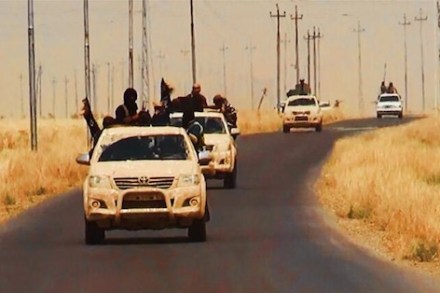
What exactly, I found myself wondering, would jihadists do without modern four-wheel-drives? Car ads are customarily shot on the French Riviera's Grande Corniche or on a very particular road in Tuscany that all art directors know. But the sight of 43 brand new and coruscatingly white Toyota Hiluxes rolling across the infernal Syrian-Iraq border added a hard-edge nightmare venue to the ad-man's soft-focus dreamscape. If there's a micron of comfort to be had from the horrors of the Middle East, it's that the medievalising ISIS has a keen admiration for the consumer goods their despised enemies manufacture. In an earlier conflict, The New York Times called the same Hilux 'the ride of choice' for Somali pirates.

The wars that really are about the oil

From our UK edition

Is international conflict really just a fight over oil? It sometimes seems that way. In Syria and Iraq, the militants of the so-called ‘Islamic State’ sell captured oil while battling to establish a puritanical Sunni theo-cracy. From Central Asia to Ukraine, Russia is contesting attempts (backed by the US) to minimise Europe’s dependence on Russian oil and natural gas. Meanwhile, Obama’s ‘pivot to Asia’ allows the US to threaten the choke points through which most of China’s oil imports must pass. Conspiracy-mongering petrodeterminists who try to reduce world politics to nothing but a clash for oil are too crude (pun intended). No shadowy cabal of oil company executives pulls the strings of world politics.

The wounded Kennedy – and the people who gave him strength

From our UK edition

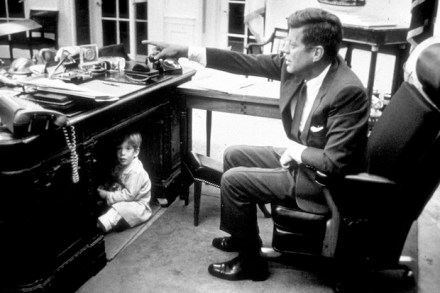
Ten years ago, a determined historian transformed our picture of John F. Kennedy. Robert Dallek had finally got his hands on the president’s medical records and discovered just how big a part JFK’s constant health problems played in his life. Instead of a young, fit, athletic leader, Dallek revealed a man racked with pain, suffering from Addison’s disease and excruciating spinal damage and swallowing a daily pharmacy of drugs and potions. During the Cuban Missile Crisis, for example, when his finger hovered over the nuclear button, he was pumped full of steroids and antibiotics, amphetamines and testosterone, ritalin and sleeping pills. He had been given the last rites on three occasions before he was 35.

Taki: Why JFK wouldn’t have steered clear of Vietnam if he had lived

From our UK edition

Everyone’s doing it, so I might as well jump in too. After all, I knew so many of the people involved, including JFK and his widow Jackie, and — sorry for the name-drop — even the actor Rob Lowe who plays the slain president in the film that’s coming out for the 50th anniversary of JFK’s assassination. I met Senator John Kennedy one year before he became president, at a party thrown by Alice Topping, a society dame of the time. The first and lasting impression was of his charisma and good looks. He was 39, the room was full of beautiful women, but he did take a minute or two to ask me about school and my plans for the future. It was not any different from most politicians’ chatter, but with a difference.

Reasons for optimism in the Middle East | 22 April 2011

From our UK edition

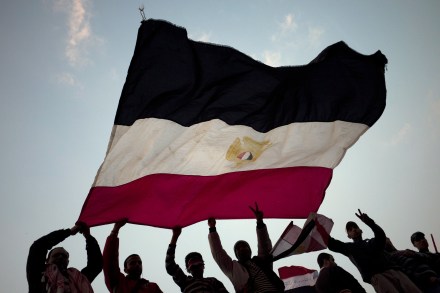
As the Libya crisis drags out, and Bashar al-Assad orders a crackdown in Syria, many have begun to doubt whether the changes seen in Tunisia and Egypt will actually spread to the rest of the Middle East. One former British ambassador recently suggested that perhaps the peoples of the Middle East preferred a mixture of authoritarianism and democracy — and that Britain should accept this; not impose its values and views.   But there is plenty of reason for optimism. The first is to look at the countries that have transformed themselves over the course of the last fifty years. Powerhouses like India and Brazil, but also smaller countries such as Vietnam, were mired in poverty, maladministration and the consequences of war.

Holbrooke’s war ends

From our UK edition

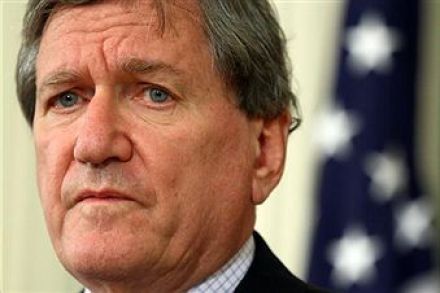
He was known as brash and abrasive. A gale force wind. The "bulldozer" some called him based on his time bullying Slobodan Milosevic during the Dayton negotiations to end the Bosnian War in the 1990s. However, veteran US diplomat Richard Holbrooke, who died last night, had a far greater register. When he visited London before assuming his latest post, as President Obama's AfPak envoy, he surprised the US embassy staff by travelling alone, with no bag-carrying entourage, and exhibiting none of the airs he was expected to have. His first experience of the Balkans was not as the all-mighty diplomatic trouble-shooter, but as a normal citizen eager to highlight the plight of the refugees. He braved sniper fire and dangerous roads to document Yugoslavia’s tragedy.

Mud, blood and jungle rot

From our UK edition

The Matterhorn, at 14,679 feet in the Alps, is said to be very difficult to climb. It is an apt military designation for a (fictional) jungle peak that United States Marines were ordered to assault, abandon and assault once more, against fierce opposition, to establish an artillery base near the North Vietnamese border during the Vietnam war. Matterhorn is also a suitable title for a formidable epic novel, which is arduous reading but well worth taking on, especially if there is any need for further testimony that war is a criminal waste of time, money and men. About 60,000 Americans died in Vietnam to prove the point. It is being demonstrated again, with carefully limited casualties, in Afghanistan, but even greater expense and popular misgivings.

Vietnam Watch: Ben Macintyre

From our UK edition

An occasional series deploring pundits' determination to treat the curret Afghan campaign as though it were a replay of the Vietnam War. Today's episode disappoints me since I have a considerable regard for Ben Macintyre. Nevertheless, his column in the Times today is, right from the get-go, a classic of the genre: An unquiet ghost stalks the White House Situation Room as Barack Obama, increasingly Hamlet-like, ponders what to do in Afghanistan: it is the spectre of the Vietnam War, America’s enduring historical hang-up. Oh dear. The most important parallels with Vietnam are neither tactical nor practical, but cultural and emotional. Americans are not backward-looking by nature, but the trauma of Vietnam is seared on the national memory like no other event in US history.

Despite Pundits’ Best Efforts, Afghanistan Stubbornly Refuses to be Obama’s Vietnam

From our UK edition

So, you see, Barack Obama is a Democratic president just like Jack Kennedy and LBJ and, right, there's a war going on in Aghanistan which is in asia, just like Vietnam! So the parallels are just uncanny. Right? Wrong. It's time, people. for a comprehensive ban on making facile comparisons between Afghanistan and Vietnam. Prospect's Tom Streithorst is only the latest fellow to warn that Afghanistan "could destroy Obama’s presidency, as Vietnam did Johnson’s." This seems extremely unlikely. Let's trot through some of the reasons: 1. 50,000 Americans died in Vietnam. The current figure for Afghanistan? 796. There may be quite a number of troops involved but Afghanistan is, by the standards of these things, a small and non-deadly war.

Reporting protest

From our UK edition

Anyone who has ever been on a protest march or felt the heady frission of student rebelliousness should check out Hugo Rifkind's piece in the Times today. A really subtle piece of reporting, with no hint of the usual establishment sneer. What's fascinating about his observations the history of student revolt is how similar the present wave of sit-ins is to the protests of the past. The latest generation of student revolutionaries use the Israeli action in Gaza as their starting point but their real gripe is with global capitalism. They know as little about the realities of life in Isreal's occupied territories as their precursors in the 1968 "events" knew about Vietnam. Their unwitting alliance with the Islamic extreme right is unfortunate.