Vaccine

Is AstraZeneca’s Covid jab effective against the South African variant?

From our UK edition

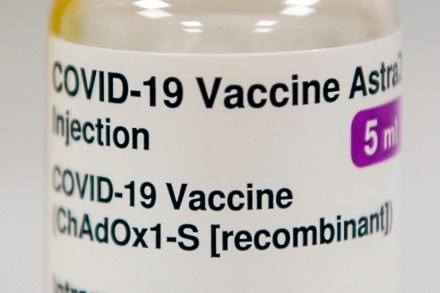
The AstraZeneca vaccine has been under attack ever since the results of its phase three trials were announced in December. When the results of US trials were released this week showing 79 per cent efficacy against symptomatic disease and 100 per cent protection from serious cases of Covid 19 – and failing to show up any serious side-effects – it seemed to help bolster its reputation.  Yet some of that was undone by subsequent accusations by the US Data and Safety Monitoring Board that AstraZeneca may have included out of date data in its trial results. The company has been asked to come back and present new calculations, using data gathered from its study up until March, rather than data up until February.
Should we vaccinate kids against Covid?

From our UK edition

Children could start getting Covid vaccines over the summer as part of the government's herd immunity strategy. As Katy Balls reported last month, the current thinking in government is that vaccinating the majority of the population is the best way to stop the virus in its tracks. But where does this leave parents like me who have concerns about giving their children the jab? NHS England’s chief executive Simon Stevens has already mooted the idea of combining the flu and Covid vaccinations into one dose. And streamlining the two vaccinations makes perfect sense for adults. But it could put parents in a difficult position.

Boris is right: ‘greed’ did give us the Covid vaccine

From our UK edition

Boris Johnson might have started back-pedalling furiously. He might have tried to dismiss it as an off-the-cuff comment. And the spin doctor might have preferred it to have remained private. Even so, the Prime Minister was surely right when he told MPs last night that ‘greed’ and ‘capitalism’ gave us the Covid-19 vaccine. And rather than backing away from the remarks, the PM should be doubling down on them. He was spot on. Free enterprise and the multinational corporation are getting us out of this mess, and we need to talk about that a lot more than we do. The pioneering MRNA technology used by BioNTech and Moderna was funded by Wall Street through years of hopeless losses It was typical Boris.

Merkel declares a ‘new pandemic’ as Germany locks down again

From our UK edition

A year on from the onset of the Covid crisis, Angela Merkel had grim news for Germans this morning: our country is in the midst of a 'new pandemic'. 'The British mutation has become dominant,' she warned, as she announced a strict new lockdown, which will shut almost all shops and churches over Easter.  The new lockdown rules were thrashed out in a tetchy 12-hour meeting between the chancellor and Germany’s state premiers. It used to be EU summits that prevented Merkel from catching some sleep. Not any longer. The leaders struggled to find common ground on an approach to contain the spread of coronavirus, amidst a worrying spike in infections which has seen cases climb to 7,500 a day.

Is Boris right about a third wave?

From our UK edition

Covid deaths fell to 17 on Sunday, the lowest daily figure since 28 September and no higher than the levels being recorded throughout much of last summer. Deaths are down over 40 per cent on the week, hospitalisations down 21 per cent. Yet the better the news on vaccinations and serious illness, the longer the road seems to be out of lockdown. The latest potential roadblock seems to be the threat of a third wave in Europe. The Prime Minister said this lunchtime: 'On the Continent right now, you can see, sadly, there is a third wave under way. And people in this country should be under no illusions that... when a wave hits our friends in Europe it washes up on our shores as well. I expect we will feel those effects in due course.

Oxford vaccine gets a boost from US study

From our UK edition

The hesitancy of many European countries to use the AstraZeneca vaccine (between bouts of complaining the company hasn’t delivered enough doses) has been widely reported. Less discussed is the delay in US authorities approving the vaccine for use there. But with the reporting of results from a US trial, that should now be a formality. The trial, run by Rochester and Columbia universities, involved 32,449 volunteers in the US, Peru and Chile. Two thirds were given the actual vaccine and the rest a saline placebo. In all, 141 people developed a symptomatic Covid illness. Those who were given the vaccine, however, were found to have their risk of developing symptomatic infection cut by 79 per cent. Their risk of developing serious illness was reduced by 100 per cent.

Is India to blame for the UK’s vaccine delay?

From our UK edition

The UK vaccination programme has been such a success to date that until yesterday evening it seemed a formality that the government would achieve its target of offering all adults at least a first dose of a Covid vaccine by July. Indeed, on Monday it looked as if this date might be brought forwards when it was announced that there would be a huge uplift in vaccine shots available, thanks to the arrival of a large consignment of AstraZeneca vaccine from India. Instead of 2 million doses a week, the vaccination programme would be able to deliver 4 million doses. On Wednesday evening, however, that hope was shattered. Firstly, Ursula von der Leyen renewed her threat to block exports of the Pfizer vaccine, British supplies of which are sourced from a factory near Brussels.

Europe’s reckless caution over AstraZeneca

From our UK edition

The first smear campaign against AstraZeneca, when Emmanuel Macron falsely claimed at the start of the year that the jab was ‘quasi--ineffective’ in over-65s, did serious damage to public confidence in the Oxford vaccine across Europe. The latest concerted action by the leaders of Germany, France, Italy, Spain and the Netherlands may have destroyed it altogether. The decision temporarily to ban Astra-Zeneca originated in the German health ministry, which was spooked by reports of cerebral venous sinus thrombosis, and was blindly followed by other European leaders. This is a scandal whose roots are political, not medical, and it will have terrible consequences.

Germany’s vaccine debacle goes from bad to worse

From our UK edition

Germany's decision to stop using the AstraZeneca Covid vaccine has been condemned internationally. It has also gone down badly with Germans. Once again, the country's health minister Jens Spahn is under fire.  A year into the pandemic, Germans are fed up with what they see as a government which is too cautious to use its only weapon out of this crisis. Even before the suspension of the vaccine this week, the rollout was painfully slow. While Britain has issued 22million doses, Germany is lagging way behind: only 9.3million of its people have received their vaccinations. This latest hold-up will only further slow down the vaccine programme. And Germans fear that this means the anticipated end of most corona-related restrictions by summer is now more and more unlikely.

Don’t blame the EU for the latest Covid vaccine clash

From our UK edition

Far from subsiding, as it seemed to be doing last week, the European war over the AstraZeneca vaccine has intensified. Over the past few weeks, EU leaders have swung from accusing the company – and Britain – of hoarding the vaccine and failing to supply it to EU countries, to claiming that it is ineffective, back to accusing us of hoarding it again. But the decision by several European countries to suspend rollout of the vaccine over fears of blood clots is the most serious challenge yet. This time, however, the blame cannot be laid at the door of the EU – the European Medicines Agency continues to declare the vaccine to be safe and has said that any negative side-effects are outweighed by the benefits.

Europe’s vaccine suspensions could come back to bite Britain

From our UK edition

Germany is the latest country to suspend the Oxford-AstraZeneca coronavirus vaccine over concerns about possible side effects. The Netherlands and Ireland have taken similar steps. So too has Denmark, Norway, Bulgaria and Iceland, while Italy and Austria have halted the use of certain batches of the drug as a precautionary measure.  Britain has done many things wrong in its handling of the pandemic, but it has done one thing well: the rollout of the jab. It's the one place where we have useful lessons to teach the world in Covid-19. Europe, in particular, does not appear to be listening. Vaccine programmes as ambitious as the one needed now require joined-up international co-ordination and action.

My Covid-19 vaccine jab means I love NHS managers

From our UK edition

I am 45. That means I’m old enough to have been writing about politics at a time when political attacks on ‘NHS managers’ were a routine part of political debate and media coverage, standing alongside ‘yobs’ and ‘asylum-seekers’ as the nation’s villains. It’s also old enough to get me a Covid-19 vaccine, injected into my arm on Saturday morning at a GP surgery in south London by a student doctor from a nearby teaching hospital. Watching the performance of the vaccine centre, doling out hundreds of vaccines each hour, I was reminded of all those promises from all those politicians about getting rid of fat cat NHS managers.

Poles apart: why the Polish community doesn’t want the vaccine

From our UK edition

There is a joke going around Poland at the moment which encapsulates the national character perfectly. A German is told he has to have the Covid vaccine. He is uncertain. ‘It’s an order,’ the doctor says, and so he agrees. A British man is told the same. He wavers. ‘Do it for Queen and country,’ the doctor says. He agrees. A French man is told ‘It’s the fashionable thing to do’, and he agrees, too. Finally, a Pole has his turn. The doctor says: ‘You’re Polish, you definitely won’t take the vaccine.’ The Pole replies: ‘Don’t tell me what I think. Give me that vaccine!’ Anyone who knows Poles (I’m half Polish, so I do) will find it unsurprising that they are sceptical about the vaccine.

Which TV interviews have attracted bigger audiences than Harry and Meghan’s?

From our UK edition

Good for the goose The government indicated that it will ban foie gras, out of animal welfare concerns. While it is often thought of as a French product, its origins have been traced back to Egypt in 2500 bc — thanks to a bas-relief at the Necropolis of Saqqara outside the ancient city of Memphis. The painting depicts workers holding geese around the necks and feeding them — although there is no great sign of force being used. Viewer discretion ITV reported an audience of 11 million for Harry and Meghan’s interview with Oprah Winfrey. In the US 17 million were said to have watched. What are the previously most-viewed TV interviews (combined US and UK audiences)?

Israel’s changing global fortunes

From our UK edition

Israel has been working closely with other countries and international companies, developing and producing vaccines against Covid-19. At the same time, the Middle Eastern country is rapidly improving relations with its Gulf neighbours, the latest evidence being the appointment of a new UAE ambassador to Israel. A major shift has taken place in Israel — 20 years ago the country was under siege from terrorists, with bus bombings rocking Jerusalem and terror attacks in the heart of Tel Aviv. Just a few years ago Israel was fighting a major war in Gaza against Hamas, a war that is the subject of an inquiry by the International Criminal Court. For many years Israel has attempted to re-brand itself using public diplomacy and showcasing its tech sector and vibrant society.

Vaccines are testing Central Europe’s loyalties to the EU

From our UK edition

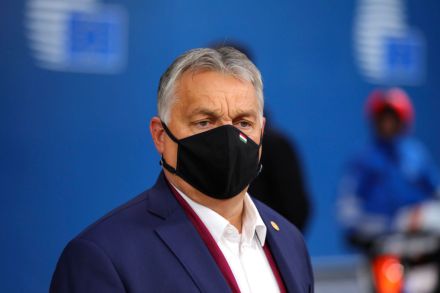
In a fresh embarrassment for the EU in its vaccine rollout, breakaway member Hungary is now at the top of the bloc’s vaccine league table. The Czech Republic, Hungary’s Visegrád Four ally, languishes near the bottom of the list, having so far stuck with the EU’s centralised procurement programme. Meanwhile neighbouring Slovakia has now opted for the Hungarian approach, having taken delivery of its first shipment of Sputnik V vaccines last week. Problems are certainly piling up for Brussels – and in Central and Eastern Europe, a region with a long history of EU rebellion, the idea of ‘going it alone’ is heightening tensions between pro- and anti-EU factions.

Corruption affects everything in Palestine – even vaccines

From our UK edition

Visit certain parts of the West Bank and you’ll encounter mansions owned by senior officials in the Palestinian Authority (PA). By any standards – let alone those to which ordinary citizens are accustomed – they are impressive, with arches, colonnades and tall windows. If you’d been watching them in recent weeks, you might have seen vaccines being quietly delivered to these residences in unmarked cars, having been skimmed off the supply intended for medical workers. Those, at least, were the allegations made by a number of Palestinian human rights and civil society groups. Last week, the Palestinian health ministry was forced to come clean.

The EU’s ugly vaccine nationalism

From our UK edition

We have to rid the world of vaccine nationalism. No one is protected until we are all protected. And we need, above all, solidarity to fight a virus which by its nature does not respect borders or boundaries. Over much of the last year, European Union officials, led by the President of the Commission Ursula von der Leyen, have led the world in grandiose rhetoric about how we have to lead a global effort to fight Covid-19, contrasting its own noble internationalism with the grubby self-interest of the likes of Donald Trump or indeed Boris Johnson. But hold on. After much speculation, the EU has itself started firing the first shots in the vaccine wars, permitting Italy to block the export of 250,000 doses of the Oxford-AstraZeneca jab to Australia.

The word ‘like’ is in crisis

From our UK edition

‘Blame Kingsley Amis,’ said my husband, with the carelessness of one defying a man out of earshot. The blame, such as it was, lay in the title of the novel Take a Girl Like You (1960). The ambiguity in the title, he maintained, was between like meaning ‘such as’ and like meaning ‘resembling’. There is something in what he says. Like has been in crisis for a generation on several fronts. The most hated is probably like as an oral filler, along with you know or sort of. A second annoying usage is stranger: like introducing a made-up quotation serving as an adjective. An example would be to replace ‘He was angry’ with the construction: ‘He was, like: “Just leave me alone”.

The moral debate over Covid jabs for children

From our UK edition

Israel has the world’s attention, becoming the first country to achieve mass vaccination. What it does now may be followed worldwide. The first big development has been the use of immunity ID cards which give vaccinated Israelis access to gyms, indoor restaurants and — soon — holidays in Greece. Britain is preparing to follow suit, with Michael Gove considering UK vaccine certificates ahead of the great unlocking on 21 June. He’s widely expected to come out in favour of IDs in some form. But the other idea attracting interest in Whitehall is Israel’s plan to vaccinate children. Israel’s deputy health minister Yoav Kisch has said those aged 12 to 16 could start to be vaccinated next month, pending regulatory approval.